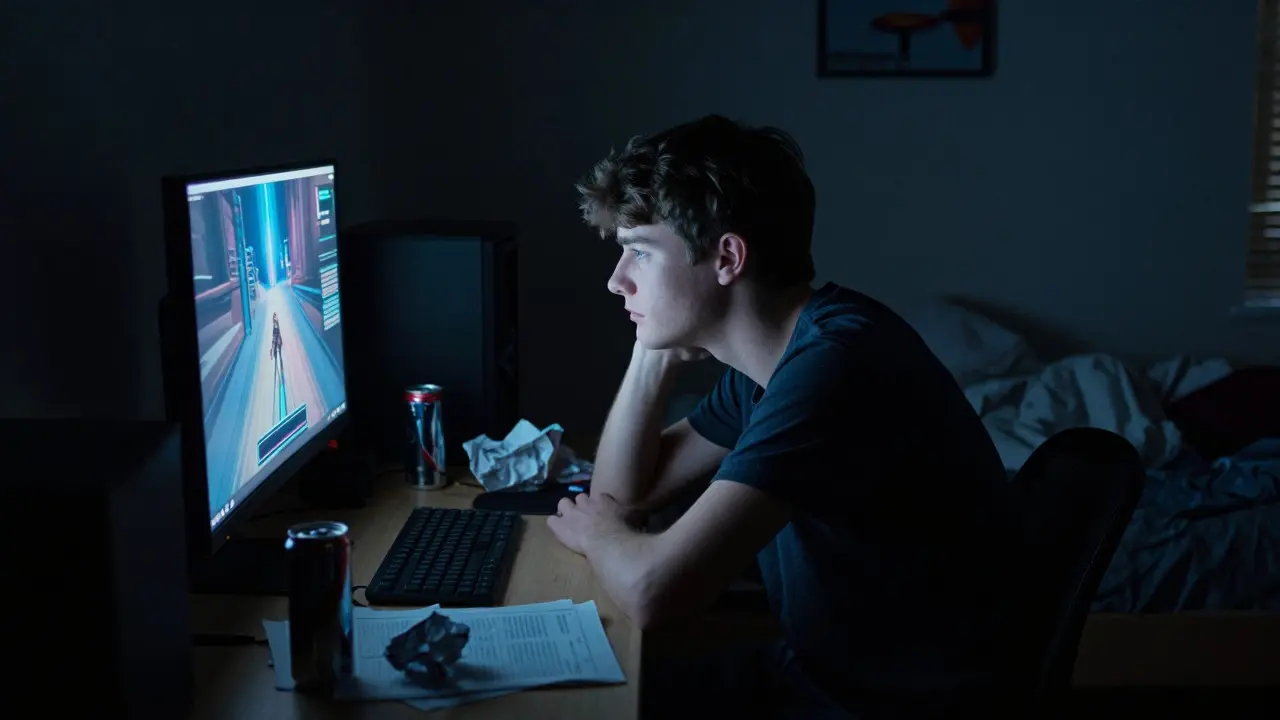
Imagine waking up at 3 AM not because you’re anxious about school, but because your brain is screaming for one more match. That was the reality for a high school junior in Portland who logged 88 hours of gaming in a single week. It sounds extreme, but for millions of families, it’s becoming a quiet crisis. This isn’t just about "too much screen time"; it’s about a neurological hijack that leaves teens isolated, exhausted, and unable to function in the real world.
Gaming addiction is a behavioral condition where video game usage becomes compulsive, leading to significant impairment in personal, family, or academic functioning. Unlike casual play, which provides relaxation, this state traps the player in a cycle of escape and reward. The World Health Organization officially recognized Gaming Disorder in the ICD-11, signaling that this is no longer a fad but a clinical concern requiring serious attention.
The Neurology of the Loop
To understand why a teen might choose a virtual victory over a real-world friendship, we have to look at the brain. Video games are engineered to deliver rapid, predictable rewards. When a player levels up or wins a raid, the brain releases dopamine, a neurotransmitter associated with pleasure and motivation. In moderation, this feels good. In excess, it rewires the brain’s reward system.
The problem lies in the contrast. Real life is slow, uncertain, and often painful. School assignments don’t give instant feedback. Friendships require effort without guaranteed outcomes. For a struggling teen, the game offers a controlled environment where effort equals reward. Over time, the baseline for satisfaction rises. A normal day starts feeling dull, boring, or even painful by comparison. This is known as anhedonia, the reduced ability to feel pleasure from non-gaming activities. The teen doesn't stop playing because they love the game; they stop living because everything else feels gray.
Signs It Has Gone Beyond Hobbies
How do parents know when it’s just fun and when it’s a disorder? The line is drawn by functionality. If gaming interferes with sleep, hygiene, or social obligations, it’s a red flag. Here are the specific markers that distinguish healthy play from addiction:
- Sleep Displacement: Staying up until 4 AM or later regularly, resulting in chronic fatigue during the day.
- Social Withdrawal: Canceling plans with friends or family repeatedly to stay online.
- Irritability on Withdrawal: Anger or agitation when the console is turned off or internet is cut.
- Deception: Lying about how long they’ve been playing or hiding their progress.
- Physical Neglect: Skipping meals, poor hygiene, or neglecting physical health due to sedentary behavior.
In the case of the 88-hour week, the teen had stopped showering daily and missed two weeks of school. The transition from hobby to compulsion happened gradually, making it hard for parents to pinpoint exactly when things went wrong.

The Role of Modern Game Design
We can’t blame the teen entirely. Modern video game design uses psychological principles borrowed from slot machines. Features like loot boxes, daily login bonuses, and seasonal passes create variable ratio reinforcement. You never know if the next spin will yield a rare item, so you keep spinning. This keeps players engaged far longer than intended.
Additionally, the social component of multiplayer games creates a powerful tether. Leaving the game means leaving your squad, your guild, or your team. For many teens, the game lobby is their primary social hub. Quitting feels like quitting a friend group. This social pressure makes breaking the habit incredibly difficult without a structured plan.
Intervention Strategies That Work
Taking away the controller usually backfires. It leads to conflict, secret play, and resentment. Effective intervention requires collaboration. Here is a step-by-step approach that has shown success in clinical settings:
- Open Dialogue, Not Interrogation: Ask questions instead of making accusations. "How does it feel when you have to log off?" works better than "You're addicted."
- Set Clear Boundaries: Agree on specific times for gaming. Use apps to enforce these limits objectively, removing the parent-child negotiation battle.
- Replace, Don't Just Remove: Fill the void left by the game with engaging offline activities. Sports, creative hobbies, or family outings help rebuild real-world connections.
- Seek Professional Help: If the teen shows signs of depression or anxiety, consult a therapist specializing in adolescent behavioral health.
The goal isn’t zero gaming. It’s balance. Many recovered gamers go on to have healthy relationships with video games, treating them as one of several leisure activities rather than the center of their universe.

Rebuilding Life After the Screen
Recovery is a marathon, not a sprint. The first few weeks are the hardest as the brain adjusts to lower dopamine levels. Teens may feel bored, irritable, or sad. This is normal. It’s the withdrawal phase. Parents need to provide patience and consistency during this period.
As the dust settles, focus on rebuilding identity. Who is this person outside of the avatar? Encourage exploration of interests that were previously ignored. For some, this means rediscovering music, art, or coding projects that don’t involve endless grinding. The key is to find sources of pride and achievement that exist in the tangible world.
| Aspect | Healthy Gaming | Addictive Behavior |
|---|---|---|
| Duration | Consistent, within agreed limits | Uncontrolled, often exceeds 6+ hours |
| Impact on Sleep | Minimal, routine maintained | Severe disruption, chronic fatigue |
| Social Life | Balanced with offline friends | Offline isolation, online priority |
| Emotional State | Relaxed, positive mood | Irritable when stopping, depressed otherwise |
Frequently Asked Questions
Is gaming addiction a real medical diagnosis?
Yes. The World Health Organization includes Gaming Disorder in the International Classification of Diseases (ICD-11). It is characterized by impaired control over gaming, increasing priority given to gaming over other activities, and continued use despite negative consequences.
What is the average amount of gaming time considered safe for teens?
There is no single universal number, but pediatricians often suggest keeping recreational screen time under 2 hours per day on school days. However, the quality of interaction matters more than the raw hour count. If the teen is socially active and physically healthy, slightly higher amounts may be manageable.
Should parents take away the console immediately?
Usually, no. Abrupt removal often leads to rebellion and secret play. A gradual reduction with clear, mutually agreed-upon boundaries is more effective. The console should remain a tool for leisure, not a source of constant conflict.
Can gaming addiction cause physical health problems?
Yes. Sedentary behavior linked to excessive gaming increases the risk of obesity, poor posture, and eye strain. Lack of sleep disrupts hormonal balance and immune function. In severe cases, prolonged immobility can lead to muscle weakness and joint issues.
What role do social media platforms play in gaming addiction?
Social media amplifies the effect by creating FOMO (Fear Of Missing Out). Highlights of wins, live streams, and community chatter keep the game top-of-mind even when not playing. Limiting exposure to gaming content on social feeds can help reduce the urge to play.