
Key Takeaways for Your Privacy
- Anonymity reduces the shame that often prevents people from seeking help.
- Digital footprints in support groups can be permanent if not managed correctly.
- Pseudo-anonymity (using nicknames) is the gold standard for peer support.
- Privacy boundaries prevent "trauma dumping" and maintain group safety.
Dealing with a compulsive relationship with games isn't just about putting the controller down; it's about the psychological weight of the secret. For many, the only way to move forward is through shared experience. But how do you open up when your digital identity is tied to your real-world reputation?
The Psychology of the Mask
There is a strange paradox in human nature: we are often more honest when we are wearing a mask. In the world of recovery, this is known as the "disinhibition effect." When you remove your real name, your job title, and your face from the conversation, the walls come down. You aren't "John the Accountant" anymore; you're just "Player88," someone who struggles with a dopamine loop.
This level of Anonymity is the state of being not identifiable within a group. In support settings, it acts as a safety net. If you can speak without fear of professional or social retaliation, you're more likely to be honest about your triggers. If you lie to protect your image, you're essentially lying to your own recovery process.
Think about a typical scenario: a person struggling with an addiction to Gacha games might feel a deep sense of shame about the money spent. If they join a group where everyone uses aliases, that shame transforms into a shared data point. They realize they aren't a "failure"; they are experiencing a known neurological response to variable ratio reinforcement schedules.
Digital Privacy in Modern Support Spaces
Most gaming recovery today happens online, which introduces a whole new set of risks. While a physical meeting in a church basement is private, a Discord server or a Reddit thread is a permanent digital record. If you use your main gaming handle-the one tied to your Steam account or your Twitch channel-you aren't actually anonymous.
To truly protect yourself, you need to separate your "recovery identity" from your "gaming identity." Using a dedicated email address and a unique username that has never been used on any other platform is the only way to ensure that a curious acquaintance can't find your posts via a simple Google search. Many people make the mistake of using the same nickname across platforms, creating a breadcrumb trail that leads straight back to their real identity.
| Setting | Anonymity Level | Pros | Cons |
|---|---|---|---|
| In-person Meetings | High (Visual) | Immediate human connection | Travel time, physical exposure |
| Pseudonymous Forums | Medium/High | Global reach, low pressure | Risk of data leaks/doxxing |
| Verified Groups | Low | Higher accountability | High fear of judgment |
Establishing Safe Boundaries
Anonymity isn't just about hiding your name; it's about managing the information you leak. In the heat of a breakthrough, it's easy to overshare. You might mention your specific city, your niche job, or the name of a local gaming cafe. This is called "identity leaking," and it can lead to someone in the group figuring out who you are even if you never gave your name.
A healthy recovery group should have a Code of Conduct that explicitly forbids the sharing of other members' information outside the group. This creates a "sacred space." When a group agrees that "what is said here stays here," it builds a level of trust that allows for deeper emotional work.
For example, instead of saying, "I'm a lawyer in downtown Seattle and I can't stop playing League of Legends," a privacy-conscious member would say, "I work in a high-stress professional role in a big city, and I use gaming to numb the anxiety." You've communicated the emotional truth (stress, anxiety, numbness) without giving away the data that could compromise your life.

The Role of Peer Support and Accountability
How does anonymity affect accountability? Some worry that if you can just delete an account and disappear, there's no incentive to stay sober. However, Peer Support-the act of receiving help from people with similar lived experiences-doesn't actually require your legal name to be effective. It requires vulnerability.
The accountability comes from the social contract of the group. When you tell a group of ten strangers that you've been clean for three days, the desire to maintain that status within that community is a powerful motivator. The "mask" of anonymity actually makes the bond stronger because it is based on shared struggle rather than shared social status.
This is similar to how the Twelve-Step Program model works. By focusing on the disease and the recovery rather than the individual's external identity, the group strips away the ego. In gaming recovery, this means moving the focus away from "I am a Gold-rank player" or "I am a CEO" and toward "I am someone who is reclaiming my time."
Navigating the Risk of Doxxing
In the gaming community, Doxxing-the act of searching for and publishing private information about a particular individual-is a persistent threat. Because gaming culture can sometimes be toxic, a recovery group that is accidentally leaked can become a target for harassment.
To mitigate this, look for groups that use encrypted platforms or have strict vetting processes for new members. Avoid groups that require you to link your social media profiles to join. If a group admin asks for your real ID or a linked LinkedIn profile as a "security measure," be very cautious. True anonymous sharing should not require you to hand over the very keys to your identity.
A good rule of thumb: if the barrier to entry is too low (e.g., a public Discord link posted on a Twitter thread), the privacy is likely low. Seek out "closed" communities where members are invited or vetted through a brief interview process. This ensures that everyone in the room is there for the same reason and respects the boundary of privacy.
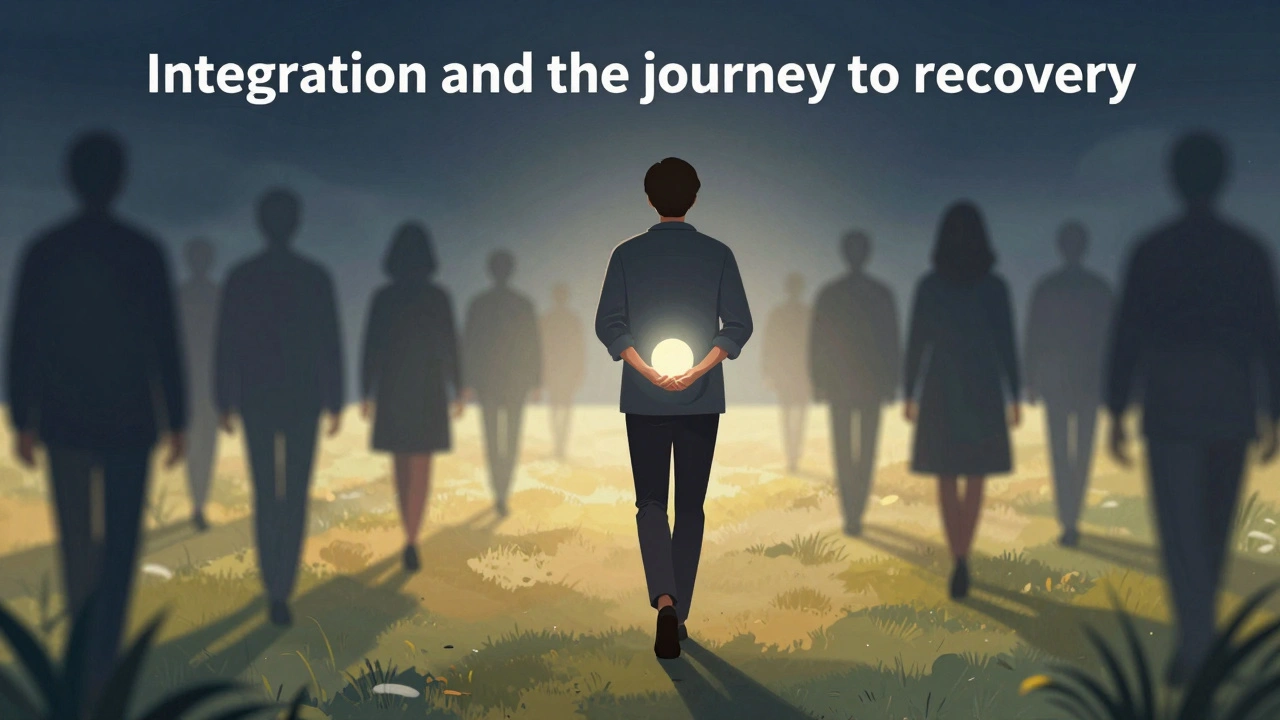
Moving from Anonymity to Integration
Eventually, the goal of recovery is to integrate your healthy self back into your real world. You don't want to live a double life forever. The anonymous group is the training ground. It's where you learn how to talk about your addiction, how to identify your triggers, and how to handle a relapse without spiraling into shame.
Once you've built a foundation of strength in an anonymous setting, you can decide who in your "real life" earns the right to know your story. Maybe it's a spouse, a therapist, or a close friend. The beauty of anonymous sharing is that it gives you total control over the faucet. You decide when to open it, how much to let out, and who gets to see the truth.
Can I stay completely anonymous in an online support group?
Yes, but it requires effort. You must use a unique username, a separate email address, and avoid mentioning specific life details that could identify you. Avoid linking your social media or gaming accounts to the platform you use for recovery.
Does anonymity make recovery less effective?
Actually, for many, it makes it more effective. Anonymity removes the fear of judgment and shame, which are the biggest barriers to honesty. As long as you are honest with the group, your real name isn't necessary for the healing process to work.
What should I do if someone in the group tries to find out my real identity?
Immediately report the behavior to the group moderators. In a healthy recovery environment, attempting to "out" another member is a severe violation of trust and usually results in an immediate ban. You are not obligated to share your identity with anyone in the group.
Are there specific platforms that are better for anonymous recovery?
Platforms that allow for pseudonymity and have strong privacy controls are best. While Discord is popular, using a private forum or an encrypted messaging app (like Signal) for smaller, vetted groups provides a higher level of security against data mining.
How do I handle the transition from an anonymous group to telling my family?
Use the group as a rehearsal space. Practice the words you want to use and get feedback from peers who have already gone through that process. This allows you to move from a controlled, anonymous environment to a vulnerable, real-world one at your own pace.
Next Steps for Your Privacy Journey
If you're just starting out, don't feel pressured to jump into a public forum. Start by creating a "recovery-only" digital identity. Set up a ProtonMail or another encrypted email service, pick a username that has zero connection to your past gaming handles, and browse a few different communities to see which one has the strictest privacy rules.
If you find a group where people are constantly asking for "proof" of identity or pushing others to share their social media, move on. The right space for you is one where your presence is valued, but your identity is protected. Recovery is a marathon, not a sprint, and feeling safe is the only way to ensure you stay in the race.