
You know that feeling when you tell yourself, "Just one more round," and suddenly three hours have vanished? It’s not just a lack of willpower. It’s your brain getting hacked by specific psychological traps designed to keep you clicking. Gaming addiction is often misunderstood as simple laziness or poor time management. In reality, it is a complex interplay of behavioral patterns reinforced by cognitive biases that exploit the brain's reward systems. If you are trying to break free, understanding these mental shortcuts is the first step toward reclaiming your time.
Most gamers don't realize they are fighting against algorithms engineered by behavioral psychologists. These developers understand how variable rewards work better than most therapists do. To overcome this, we need to dismantle the specific biases that keep us glued to the screen. This isn't about banning games; it's about recognizing when your judgment is clouded by psychological tricks.
The Dopamine Loop and Variable Rewards
At the heart of gaming compulsion lies the dopamine loop, a neurological feedback mechanism where anticipation triggers pleasure chemicals in the brain. Unlike eating a meal, where satisfaction eventually stops the hunger, gaming offers unpredictable rewards. You might get a legendary item after ten minutes or five hours. This unpredictability is key. B.F. Skinner’s research on operant conditioning showed that variable ratio reinforcement creates the strongest habits. Your brain doesn't crave the win; it craves the *possibility* of the win.
This bias makes quitting feel physically painful. When you stop playing, dopamine levels drop below baseline, creating irritability and restlessness. This is withdrawal, plain and simple. Recognizing this as a chemical reaction rather than a moral failure helps reduce shame. Shame fuels the cycle because it makes you want to escape back into the game for relief. Instead, view the discomfort as evidence that your brain is recalibrating.
The Sunk Cost Fallacy in Progression Systems
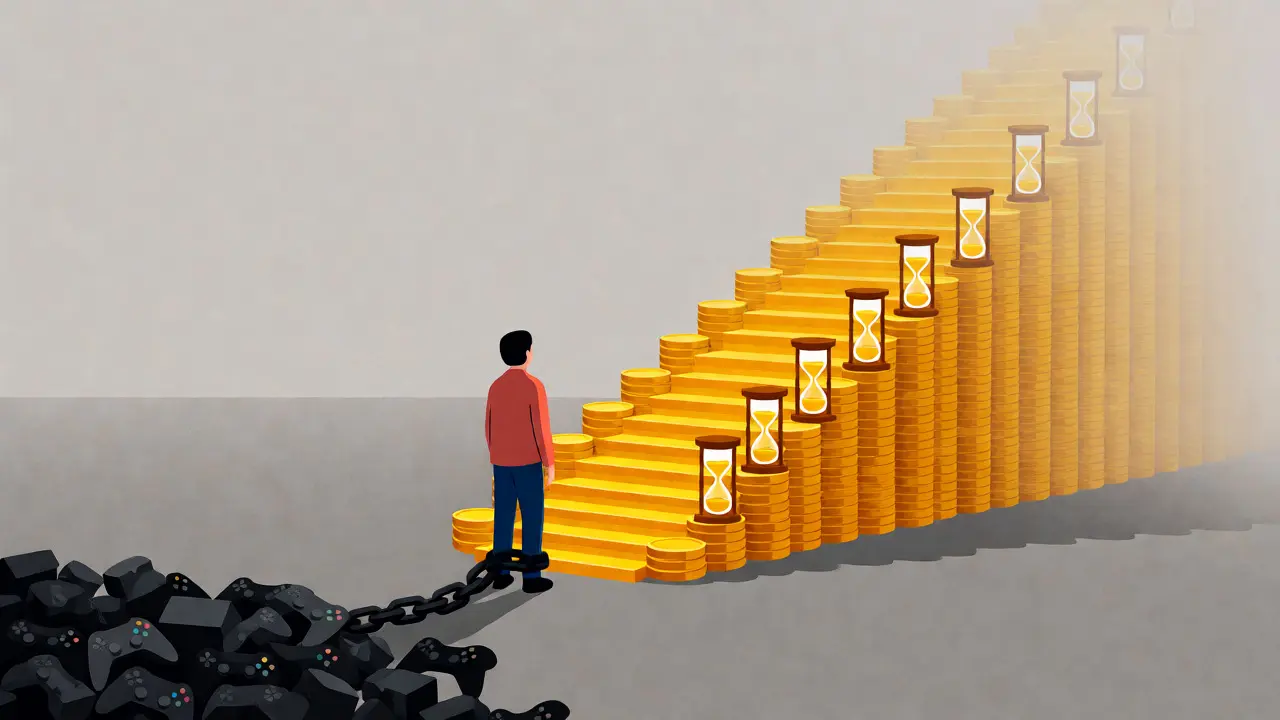
Why do you keep playing a game you no longer enjoy? The answer often lies in the sunk cost fallacy, a cognitive bias where past investments influence future decisions despite no guarantee of future returns. Modern MMORPGs and live-service games are built on progression systems. You spend hundreds of hours leveling up a character or collecting skins. Walking away feels like wasting that investment. But here is the hard truth: those hours are gone regardless of whether you play another hour or quit today.
- Time Invested: 500 hours in World of Warcraft cannot be recovered by playing 100 more hours if the fun has stopped.
- Financial Investment: Buying a $70 battle pass doesn't obligate you to use it if you’re bored.
- Social Capital: Guild obligations shouldn't override personal well-being.
To counter this, ask yourself: "If I started this game today with zero progress, would I still play it?" If the answer is no, you are paying for the privilege of remembering what used to be fun.
FOMO and the Scarcity Bias
Fear Of Missing Out (FOMO) is weaponized effectively in modern gaming. Limited-time events, exclusive drops, and seasonal passes create an artificial sense of urgency. This exploits the scarcity bias, which causes individuals to assign higher value to items perceived as rare or limited in availability. Developers know that humans hate missing out more than they love gaining things. This loss aversion keeps players logging in daily, even during busy weeks, just to secure a cosmetic hat.
The problem is that these digital assets hold no real-world utility. A missing skin does not affect your career, health, or relationships. Yet, the anxiety of missing a deadline can spike cortisol levels. Breaking this bias requires reframing scarcity. Real-life opportunities-like a weekend hike in Portland or a dinner with friends-are truly scarce because time is finite. Digital cosmetics are infinitely reproducible code. Prioritize the finite over the infinite.
The Illusion of Control and Near Misses
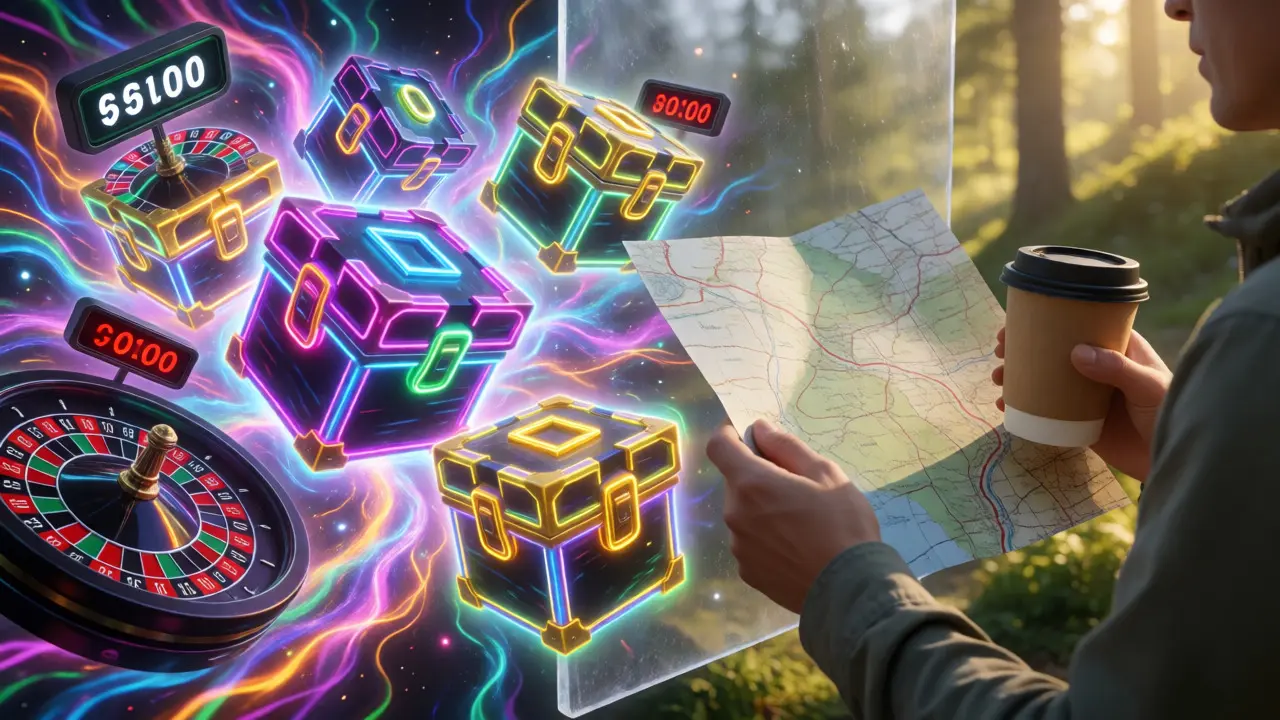
Casino-style mechanics have bled into mainstream gaming through loot boxes and gacha systems. These rely heavily on the illusion of control, a cognitive distortion where people believe they can influence random outcomes through their actions. You might think tapping the screen faster increases your chances of a critical hit, or that choosing a specific chest improves your luck. Statistically, these choices are irrelevant. The outcome was determined by a random number generator before you clicked.
Near misses amplify this effect. When you almost win, your brain reacts similarly to winning. This keeps you engaged, hoping the next roll will be the lucky one. In recovery, identifying near misses is crucial. When you feel that surge of excitement from a close call, pause. Acknowledge it as a trick of perception, not a sign that success is imminent. This awareness disrupts the automatic response to continue betting time or money.
Practical Recovery Strategies
Understanding the psychology is half the battle. The other half is implementing concrete changes. Here is a structured approach to breaking the cycle without going cold turkey, which often leads to rebound bingeing.
| Bias | Game Mechanic Exploiting It | Counter-Strategy |
|---|---|---|
| Dopamine Loop | Variable Reward Schedules | Set fixed play times; remove notifications |
| Sunk Cost Fallacy | Leveling/Progression Bars | Ask: "Would I start this today?" |
| Scarcity Bias | Limited-Time Events | Prioritize real-world scarcity over digital items |
| Illusion of Control | Loot Boxes/Gacha | Accept randomness; set strict spending caps |
Step-by-Step Implementation
- Audit Your Triggers: Keep a log for one week. Note when you feel the urge to play. Is it boredom? Stress? Loneliness? Identifying the emotional trigger helps address the root cause.
- Friction Engineering: Make gaming harder to start. Uninstall the game. Put the controller in a drawer. Log out of accounts. Adding seconds of delay gives your prefrontal cortex time to intervene.
- Replace, Don’t Just Remove: Your brain needs stimulation. Find high-dopamine but low-addiction activities. Exercise, learning a new skill, or social sports provide similar neurochemical benefits without the endless grind.
- Set Hard Boundaries: Use app timers or physical alarms. When the alarm goes off, stop immediately. Do not finish the match. Ending mid-game breaks the completionist bias and reduces the "just one more" trap.
Reframing Identity Beyond the Gamer Label
Many struggling gamers tie their self-worth to in-game achievements. Rank, level, and gear become proxies for competence and status. When you step away, you may feel a loss of identity. This is normal. Rebuilding involves finding sources of validation outside the virtual world. Volunteer work, creative projects, or professional development offer tangible proof of capability.
Remember, overcoming gaming addiction isn't about hating games. It's about moving from compulsive consumption to intentional leisure. You choose when to play, not the algorithm. By dismantling these cognitive biases, you regain agency over your attention and your life.
Is gaming addiction recognized as a medical condition?
Yes, the World Health Organization included "Gaming Disorder" in the International Classification of Diseases (ICD-11) in 2018. It is characterized by impaired control over gaming, increasing priority given to gaming over other activities, and continuation despite negative consequences.
How long does it take to reset dopamine sensitivity?
While individual experiences vary, many experts suggest a period of 30 to 90 days for significant neural adaptation. During this time, natural rewards like food, social interaction, and hobbies begin to feel satisfying again as receptor sensitivity normalizes.
Can I ever play video games again without becoming addicted?
For some, moderation is possible. However, those with severe addiction often find that certain genres (like MMOs or Gacha games) act as strong triggers. Many recoverers succeed by switching to single-player narrative games with clear endings, avoiding endless progression loops.
What is the difference between passion and addiction?
Passion enhances life; addiction detracts from it. If gaming interferes with sleep, work, hygiene, or relationships, and you continue despite these negatives, it leans toward addiction. Passion allows for flexibility; addiction demands rigidity.
Do mobile games contribute more to addiction than console games?
Mobile games often employ more aggressive monetization and engagement loops due to accessibility. The ability to play anywhere anytime removes natural barriers to entry, making them particularly prone to exploiting the sunk cost and scarcity biases.