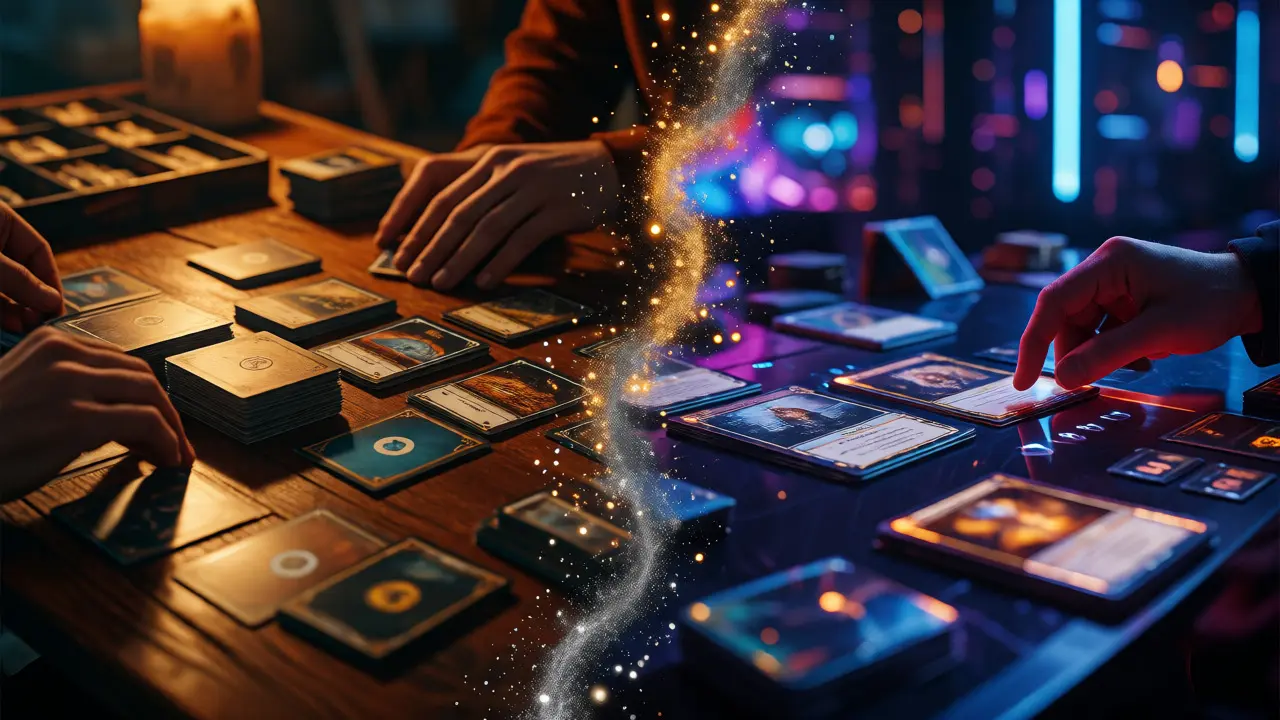
You lose a run in Slay the Spire because you drew three useless cards in a row. Or maybe you win a match in Hearthstone thanks to a lucky top-deck that turns the tide instantly. It feels unfair, right? But here is the twist: that frustration is exactly what keeps you clicking "Play Again." The line between card battlers and deck-builders isn't just about who shuffles when; it's about how developers balance chaos against control to hook your brain.
If you've ever wondered why some games feel like a grind while others feel like a puzzle, you're looking at two distinct design philosophies. One leans into the thrill of the unknown (randomness), and the other leans into the satisfaction of optimization (reward loops). Understanding the difference helps you pick the right game for your mood-and explains why you can't put down that one mobile title you downloaded last week.
The Core Difference: Agency vs. Adaptation
Let's clear up the confusion first. While people often use these terms interchangeably, they refer to different mechanical pillars. A deck-builder, like Dominion or Slay the Spire, focuses on constructing your arsenal during the game. You start with a weak set and buy better cards turn by turn. Your skill lies in recognizing synergies early and pruning bad cards later.
A card battler, such as Hearthstone or Legends of Runeterra, usually assumes you bring a pre-constructed deck to the fight. Here, the randomness happens during combat. You don't build the engine mid-fight; you pilot it. The core loop isn't about acquisition; it's about execution under pressure.
| Feature | Deck-Builders | Card Battlers |
|---|---|---|
| Primary Skill | Optimization & Synergy Planning | Tactical Execution & Resource Management |
| Randomness Source | Reward Selection & Shop Offers | Draw Order & Opponent Play |
| Progression Loop | Short-term (Run-based) or Meta-progression | Long-term (Collection Building) |
| Frustration Point | Bad luck in rewards (RNG hate) | Bad luck in draws (Top-deck grief) |
Why We Love the Chaos: The Psychology of RNG
Random Number Generation (RNG) gets a bad rap, but it’s the heartbeat of these genres. In a pure strategy game like Chess, if you lose, it’s entirely your fault. That’s heavy. In a card game, RNG provides an excuse. "I didn't lose because I'm bad; I lost because I didn't draw my counter-card." This psychological buffer reduces tilt and keeps players engaged longer.
But not all randomness is created equal. There are two types:
- Input Randomness: Things happen before you make a decision. For example, seeing which cards are offered in a shop in Slay the Spire. You have full agency once you see the options.
- Output Randomness: Things happen after you commit. You play a spell, and there’s a 50% chance it hits. If it misses, you wasted mana. This creates high-stakes tension.
Good designers lean heavily on input randomness. It feels fairer because you can adapt. When a player complains about "bad luck," they’re usually mad at output randomness. They wanted to execute their plan, but the dice disagreed. Developers mitigate this by adding "luck mitigation" mechanics-like mulligans in Hearthstone or rerolls in Inscryption.
The Dopamine Hit: Reward Loops That Stick
If randomness is the spice, reward loops are the main course. Why do we keep playing even when we’re losing? It’s variable ratio reinforcement-the same psychology behind slot machines. You never know exactly when the big payoff will come, so you keep pulling the lever.
In deck-builders, the reward loop is tight and immediate. You kill a monster, get gold, buy a card, and immediately test if that new card makes your next fight easier. The feedback loop is seconds long. In card battlers, the loop is stretched out. You might spend weeks collecting dust to craft one legendary card. The anticipation builds over days, making the eventual win feel earned rather than given.
Consider Balatro, a recent hit that blends poker with roguelike deck-building. Its genius lies in compounding rewards. A small multiplier card seems insignificant alone. But stack ten of them, and suddenly your score explodes from 1,000 to 100,000 points. That exponential growth triggers a massive dopamine release. Players chase that specific feeling of "breaking the math."
Designing for Engagement: Balancing Luck and Skill
So, how do developers ensure the game doesn’t feel like a coin flip? They use a technique called "skill ceiling preservation." Even with high randomness, skilled players should still win more often than novices over time.
Here’s a simple heuristic used in many modern titles:
- Early Game: High randomness. Everyone starts equal. Mistakes are cheap.
- Mid Game: Moderate randomness. Choices matter more. Bad decisions compound.
- Late Game: Low randomness. The best decks consistently beat average decks. Skill dominates.
This structure prevents novices from being crushed instantly while ensuring veterans feel rewarded for their knowledge. If a game remains too random until the end, it feels shallow. If it becomes deterministic too quickly, it feels like homework.
Pitfalls to Avoid: When RNG Feels Broken
We’ve all been there. You play perfectly, but the AI gets three critical hits in a row. You rage quit. This is the danger zone for any card game. To avoid this, successful titles implement "pity timers" or guaranteed drops.
For instance, in Monster Train, certain powerful abilities guarantee specific outcomes after enough uses. In Hearthstone, the "crystal" system ensures you always have resources to play cards, preventing soft-lock situations where you can’t act due to bad draws.
Another common trap is "analysis paralysis" caused by too much choice. If every card in a deck-builder has a unique effect, new players get overwhelmed. Good UI design hides complexity behind tooltips and color-coding. Red means damage, blue means defense, green means heal. Simple visual cues reduce cognitive load, letting players focus on strategy rather than reading text boxes.
Choosing Your Next Game: What Fits Your Style?
Not sure which genre suits you? Ask yourself these questions:
- Do you prefer planning or reacting? If you like optimizing a machine, try deck-builders (Slay the Spire, Monster Train). If you like tactical duels, try card battlers (Marvel Snap, Legends of Runeterra).
- How much time do you have? Deck-builders often offer shorter, self-contained runs (30-60 minutes). Card battlers require daily logins to manage collections and climb ranks.
- Do you hate losing progress? Roguelike deck-builders reset everything each run. Some players find this liberating; others find it exhausting. Card battlers let you keep your collection forever.
Ultimately, both genres thrive on the delicate dance between chaos and order. The best games don’t eliminate randomness-they frame it. They turn bad luck into a story worth telling and good luck into a victory worth celebrating.
What is the main difference between a deck-builder and a card battler?
The primary difference is when you construct your deck. In deck-builders like Slay the Spire, you build your deck progressively during the game session. In card battlers like Hearthstone, you bring a pre-constructed deck to the match and focus on tactical play during combat.
Why does RNG feel unfair in card games?
RNG (Random Number Generation) feels unfair when it involves "output randomness," where the outcome depends on chance after you've made a strategic decision. Players perceive this as undermining their skill, especially if they lose despite playing optimally due to unlucky draws.
Are deck-builders harder than card battlers?
Neither is inherently harder, but they test different skills. Deck-builders require strong long-term planning and synergy recognition within a single run. Card battlers demand quick tactical adaptation and resource management against a live opponent.
What is a "reward loop" in gaming?
A reward loop is the cycle of action and payoff that motivates continued play. In card games, this often involves killing enemies to gain currency, buying new cards, and using those cards to defeat stronger enemies, creating a satisfying progression curve.
Can you give examples of popular games in both genres?
Popular deck-builders include Slay the Spire, Monster Train, and Inscryption. Popular card battlers include Hearthstone, Legends of Runeterra, and Marvel Snap. Many modern games blend elements of both.