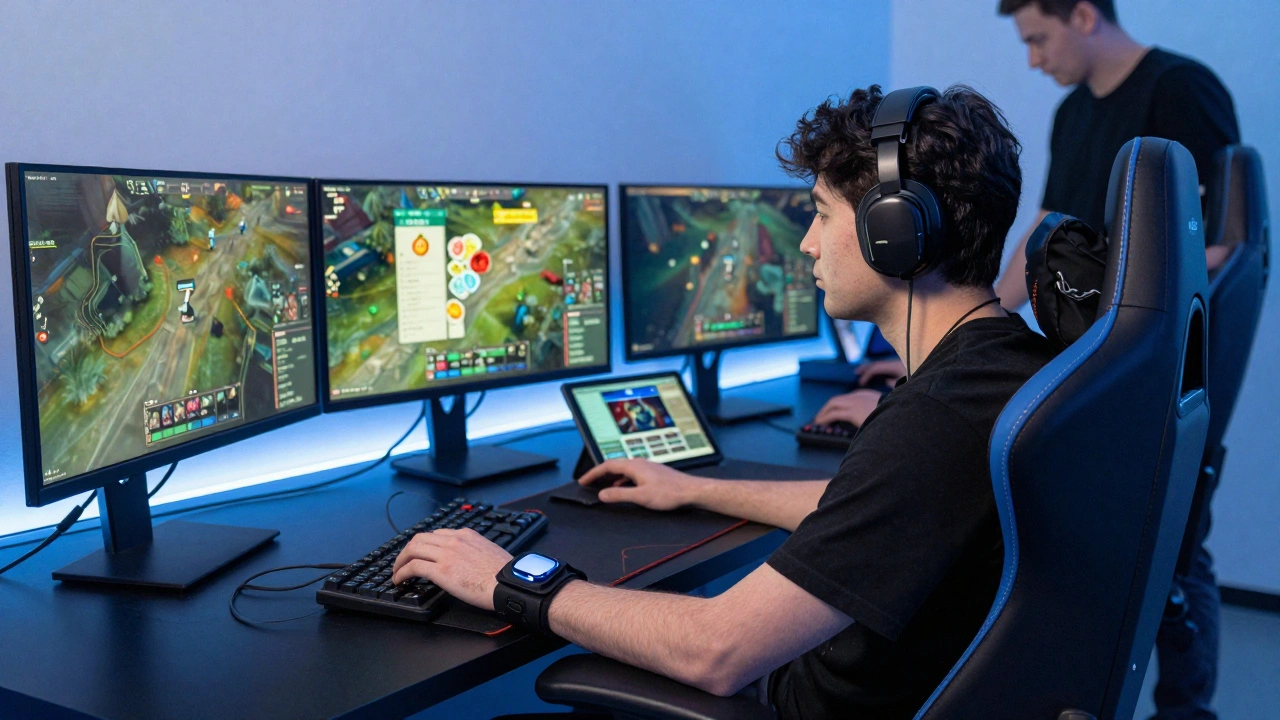
Professional gaming isn’t just about playing for fun anymore. It’s a real job-with salaries, contracts, health insurance, and career paths that look more like a corporate ladder than a bedroom setup. If you’ve ever imagined turning your gaming skills into a full-time income, here’s what it actually looks like in 2026.
How Professional Gaming Works Today
Back in 2015, being a pro gamer meant winning tournaments and hoping sponsors showed up. Now, it’s a multi-layered industry. Top players earn money from team salaries, tournament prize pools, streaming subscriptions, brand deals, and even content licensing. The global esports market hit $2.1 billion in 2025, and over 60% of that comes from media rights and sponsorships-not just prize money.
Teams like Team Liquid, Gen.G, and T1 don’t just field players. They have nutritionists, mental performance coaches, physiotherapists, and data analysts. Players train 6-8 hours a day, five days a week, with structured rest schedules and sleep tracking. This isn’t a hobby. It’s an elite sport.
Paths Into Professional Gaming
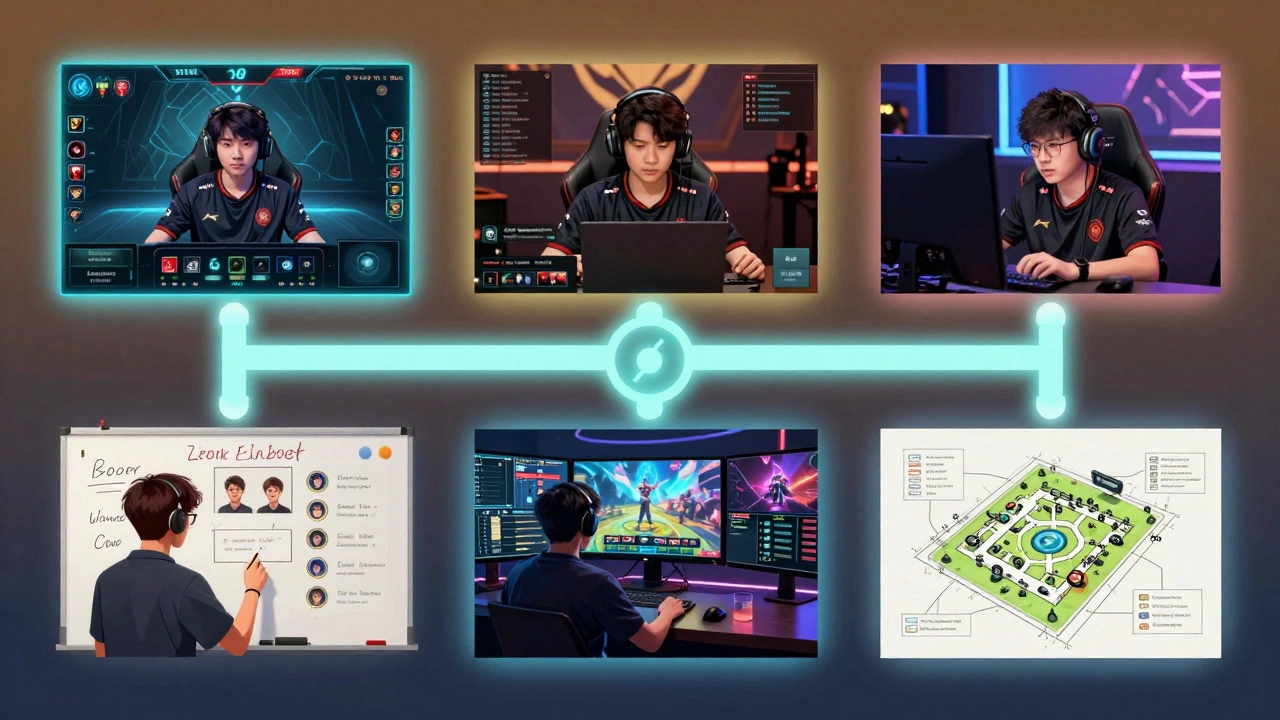
There are five main career tracks in competitive gaming, each with different entry points and long-term outcomes.
- Competitive Player - The classic path. You climb ladder rankings, join amateur leagues, get scouted by academy teams, and eventually sign with a pro roster. Games like League of Legends, Counter-Strike 2, and Valorant have structured academies. In 2025, over 8,000 players were on active pro contracts worldwide.
- Streamers and Content Creators - You don’t need to win tournaments to make money. Platforms like Twitch and YouTube Gaming pay out based on subscribers, ad revenue, and donations. Top streamers earn $50,000-$500,000 a month. The key? Consistency. The average successful streamer posts 4-5 hours daily, five days a week, for at least 18 months before seeing real income.
- Esports Analyst and Coach - If you understand game mechanics deeply but don’t want to compete, this is your lane. Teams hire analysts to study opponent strategies, optimize team compositions, and review VODs. Coaches train players on positioning, communication, and mental resilience. Many start as former players or competitive scene commentators.
- Event Production and Management - Behind every tournament are teams running logistics, broadcasting, marketing, and ticket sales. Roles include event coordinators, streaming technicians, social media managers, and sponsorship liaisons. These jobs don’t require playing at all-just organizational skill and industry knowledge.
- Game Development and Esports Design - Some pros transition into designing new games or balancing existing ones. Riot Games, Valve, and Activision hire former pros as gameplay consultants. Their input shapes meta changes, map layouts, and competitive balance. This path often requires learning basic scripting or design tools like Unity or Unreal Engine.
What You Need to Succeed
Skills alone aren’t enough. Here’s what separates the pros from the hobbyists:
- Discipline - Top players track their sleep, hydration, and screen time. Many use apps like Playbuddy or Focusmate to structure training sessions and avoid burnout.
- Adaptability - Game patches happen weekly. A strategy that wins in January might be useless by March. Pros spend hours studying patch notes and testing new builds.
- Personal Brand - Even if you’re not streaming, having a social media presence matters. Teams look for players with engaged audiences. A clean, consistent online persona can get you noticed faster than a high rank alone.
- Physical Health - Repetitive strain injuries are common. Wrist braces, ergonomic chairs, and daily stretching routines are standard. Some pro teams have on-staff physical therapists who specialize in gamer-specific issues like carpal tunnel and neck strain.
Real Income Numbers (2025 Data)
Let’s cut through the hype. How much do people actually make?
| Role | Entry-Level | Mid-Tier | Top Tier |
|---|---|---|---|
| Competitive Player (Minor League) | $15,000-$30,000 | $50,000-$120,000 | $200,000-$800,000+ |
| Streamer (Twitch/YouTube) | $5,000-$20,000 | $60,000-$150,000 | $300,000-$1.2M+ |
| Analyst/Coach | $40,000-$60,000 | $80,000-$150,000 | $200,000-$400,000 |
| Event Coordinator | $35,000-$55,000 | $70,000-$110,000 | $130,000-$250,000 |
| Game Designer (Esports Focus) | $65,000-$85,000 | $100,000-$160,000 | $180,000-$300,000 |
Notice something? The highest earners aren’t always the ones on stage. Streamers and designers often out-earn even top-tier players. And most people in the industry never compete at all.
The Hidden Costs
There’s no free lunch. Professional gaming comes with trade-offs:
- Short Career Span - Most competitive players peak before age 24. After 27, performance drops sharply. That’s why many transition into coaching or content creation.
- Unstable Income - If your team gets dissolved, your salary stops. Many pros now have side gigs or invest in real estate to hedge against instability.
- Mental Health Pressure - Toxic fandom, public criticism, and performance anxiety are real. Top organizations now require mandatory therapy sessions. Teams like Fnatic and Natus Vincere have dedicated psychologists on staff.
- Time Commitment - You’re not just working. You’re always “on.” Even vacations are often filmed. Many pros say they haven’t taken a true break in over three years.
How to Start in 2026
Here’s a realistic roadmap:
- Choose one game. Don’t jump between five. Master one meta.
- Play 20+ hours a week for six months. Track your stats. Are you climbing ranked? Are you consistent?
- Start streaming or posting clips on TikTok/YouTube. Build an audience-even if it’s just 50 people.
- Join amateur leagues. Look for regional tournaments on Discord servers or sites like EsportsDB or Faceit.
- Reach out to academy teams. Send them your VODs and stats. Don’t wait to be discovered.
- Learn basic video editing and social media strategy. Even if you’re not a streamer, this skill opens doors.
- Invest in ergonomics. Buy a good chair, wrist support, and blue light filters. Your body will thank you.
Who It’s For (And Who It’s Not)
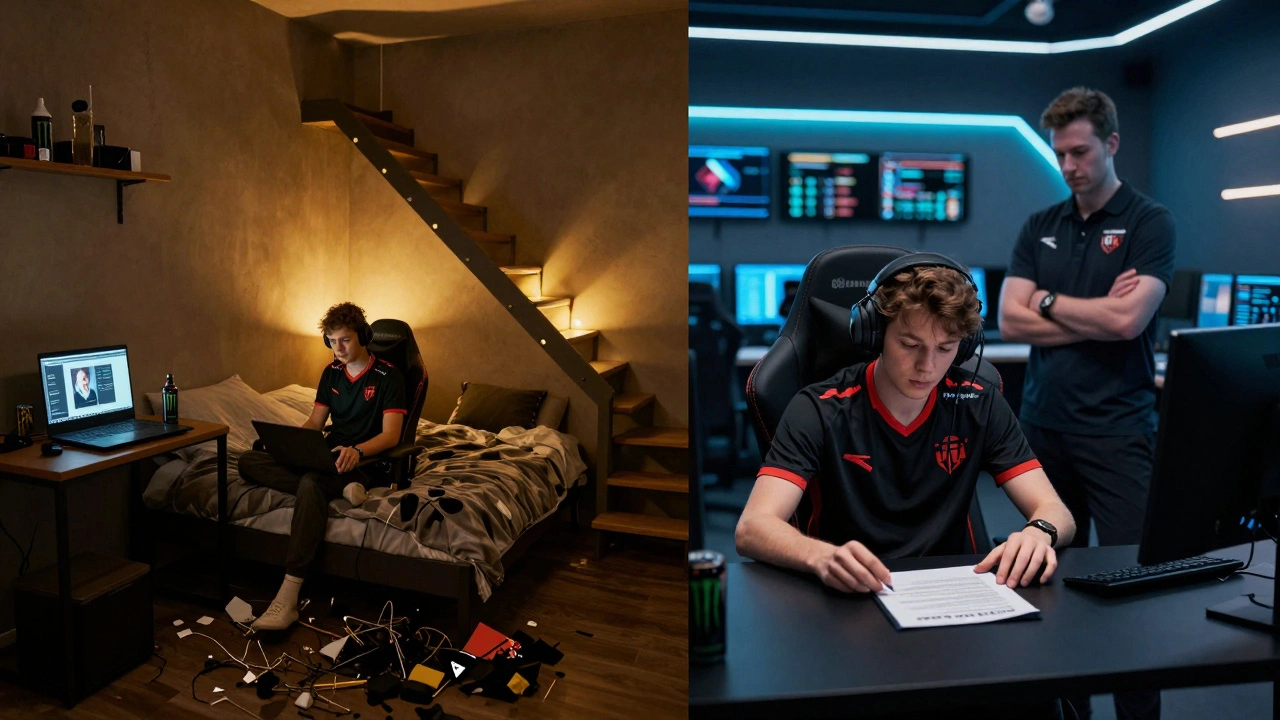
This path isn’t for everyone. It’s ideal if you:
- Love the game enough to play it for 8 hours straight without getting bored
- Can handle public criticism without shutting down
- Are willing to treat gaming like a job-even on weekends
- Have a backup plan (college, trade school, remote work)
It’s not for you if:
- You think fame will come quickly
- You hate routine or structure
- You’re okay with making less than minimum wage for years
- You don’t want to be watched, analyzed, and judged daily
What Comes Next?
After 3-5 years, most pros don’t retire. They pivot. Former players become coaches, streamers, content directors, or even start their own teams. The industry needs people who’ve been in the arena. That’s why longevity isn’t about how long you play-it’s about how well you adapt.
The future of professional gaming isn’t just about who’s fastest. It’s about who’s smartest, healthiest, and most adaptable. If you’re ready to treat your passion like a profession, the doors are open. But you’ll have to work harder than you ever imagined.
Can you make a living as a pro gamer without streaming?
Yes. Competitive players on pro teams earn salaries, bonuses, and prize shares without ever streaming. Teams like Cloud9 and Team Liquid pay players base salaries ranging from $30,000 to $250,000 annually, plus benefits like health insurance and housing stipends. Streaming helps, but it’s not required.
Do you need a college degree to work in esports?
No. Most roles in esports-coaching, event management, streaming, analysis-don’t require degrees. But having one in communications, business, or game design can help you land higher-paying staff positions, especially in corporate-backed organizations like Riot Games or Activision Blizzard. Many pros now take online courses in marketing or project management to boost their career options.
Is esports a sustainable career long-term?
As a competitive player? Usually not past age 28. But as a coach, analyst, content creator, or event producer? Absolutely. The industry is growing into a full ecosystem with roles in media, tech, HR, and marketing. The key is transitioning early. The best long-term careers aren’t built on winning tournaments-they’re built on building systems.
How do you get scouted as a player?
Scouting happens through stats, VODs, and community visibility. Top teams use platforms like EsportsDB and Overwolf to track performance metrics. If you’re consistently in the top 5% of your region, you’ll get noticed. Many players also join amateur leagues on Faceit or ESL, where scouts actively recruit. Don’t wait for a DM-send your highlights directly to team managers.
Are there age limits in professional gaming?
Most tournaments require players to be 16 or older. Some games like Valorant and CS2 have minimum age limits of 18 for major events. There’s no upper age limit, but performance declines after 24-26 in fast-paced games. Older players often shift to coaching or commentating roles. In slower games like StarCraft II, pros have competed into their 30s.
Final Thought
Professional gaming isn’t a shortcut to fame. It’s a marathon with no finish line. The people who last aren’t the ones with the highest K/D ratio-they’re the ones who learned how to take care of themselves, adapt to change, and build something beyond their wins. If you’re ready to do that, the industry is waiting.