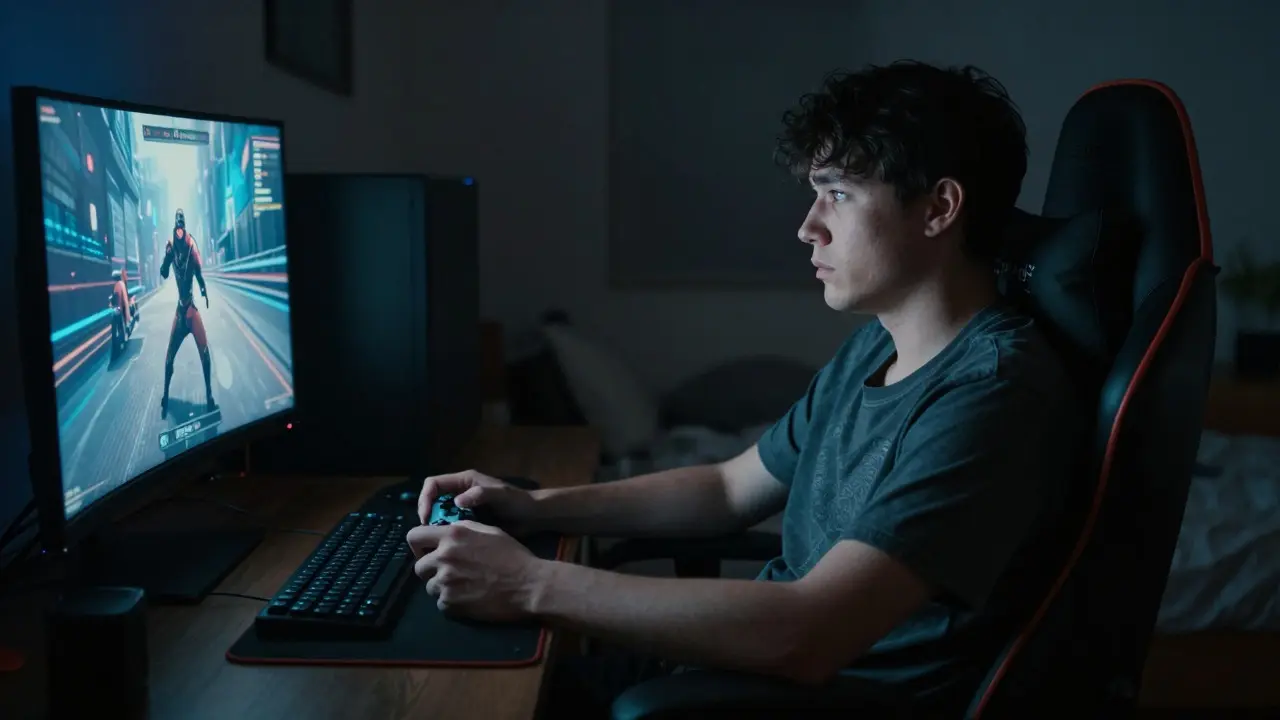
Imagine sitting at a desk, eyes glued to a monitor, the clock ticking past midnight. The game isn't just fun; it’s a shield against anxiety, boredom, or social pain. When that shield becomes a cage, Cognitive Behavioral Therapy (CBT) is often the first line of defense recommended by clinicians. But does it actually work? Is it just talk therapy with a video game twist, or is there hard data backing its effectiveness for gamers who struggle to log off?
The short answer is yes, but with nuance. CBT doesn't fix the game itself; it fixes the relationship between the player and the play. For many, the issue isn't the screen time alone, but the cognitive distortions driving the need to play. This guide breaks down how CBT targets these specific patterns, what the research says about its success rates, and when you might need to look beyond standard sessions.
Key Takeaways
- Cognitive Behavioral Therapy focuses on changing thought patterns rather than forcing abstinence from gaming.
- Research shows CBT reduces gaming hours and improves daily functioning in most patients.
- It works best when combined with family therapy or lifestyle changes for severe cases.
- Success depends on identifying the "function" of gaming (e.g., escape vs. social connection).
- Relapse is common, so maintenance strategies are as important as initial treatment.
Understanding the Link Between Thoughts and Play
To understand why CBT works, you have to look at what happens in the brain before the controller is even picked up. It rarely starts with a decision to "play too much." It usually starts with a trigger. Maybe it's a bad day at work, a conflict with a partner, or simple loneliness. In traditional psychology, we call this the antecedent. For a gamer, the response is immediate: open the app, join the lobby, enter the world.
Cognitive distortions are irrational beliefs that affect behavior, such as believing one must be perfect to be accepted or that real life is always painful. These are the core targets of CBT. A player might believe, "If I don't rank up today, I'm a failure," or "Real friends are disappointing, but guild mates get me." These thoughts aren't necessarily true, but they feel absolute. CBT helps identify these automatic thoughts and challenges them. Instead of fighting the urge to play, you learn to pause and ask: "What am I feeling right now? Is gaming the only way to handle this?"
This shift from automatic reaction to conscious choice is the heart of the method. It doesn't banish the joy of gaming; it removes the compulsion behind it. You stop playing because you *have* to, and start playing because you *want* to, within healthy limits.
How CBT Sessions Actually Work
If you walk into a CBT session for gaming issues, don't expect the therapist to judge your favorite genre. The process is structured and collaborative. Here is what typically happens:
- Assessment and Goal Setting: The therapist maps out your gaming habits. How many hours? What games? What triggers the binges? What happens when you try to stop? Together, you set realistic goals. Note: the goal is rarely "zero gaming." It's usually "gaming fits within my schedule without causing distress."
- Psychoeducation: You learn about the cycle of addiction: Trigger → Thought → Emotion → Behavior → Consequence. Understanding this loop gives you power over it.
- Cognitive Restructuring: This is the heavy lifting. You keep a thought record. When you feel the urge to play excessively, you write down the situation, the thought, the emotion, and the behavior. Then, you challenge the thought. If you think, "I need to grind to be worthy," you explore evidence for and against that belief.
- Behavioral Experiments: You test new behaviors. For example, you might agree to play for exactly two hours, then put the controller away and do something else. You track how anxious you felt and whether the catastrophe you feared (e.g., losing rank, feeling bored to death) actually happened.
- Problem Solving: Often, gaming fills a void. CBT helps you build skills to fill that void directly. If you game to avoid social anxiety, you practice social skills in therapy. If you game to manage stress, you learn relaxation techniques like deep breathing or mindfulness.
Sessions usually last 45-60 minutes, once a week, for 12-20 weeks. Homework is crucial. Without practicing the skills outside the office, the insights stay theoretical.

What Does the Research Say About Efficacy?
You might wonder if CBT is just a placebo effect. The scientific literature suggests otherwise. Multiple randomized controlled trials (RCTs) have examined CBT for Internet Gaming Disorder (IGD), the clinical term often used for gaming addiction.
A meta-analysis published in the Journal of Clinical Psychology found that CBT-based interventions resulted in significant reductions in gaming time and improvements in quality of life compared to waitlist controls. The effect sizes were moderate to large, indicating that the change wasn't trivial. Another study focusing on adolescents showed that CBT helped reduce comorbid symptoms of depression and anxiety, which are frequently linked to excessive gaming.
| Approach | Focus | Typical Duration | Best For |
|---|---|---|---|
| Standard CBT | Thought restructuring and behavioral control | 12-20 weeks | Moderate cases with clear cognitive triggers |
| Family-Based CBT | Involves parents/partners in therapy | 8-12 weeks | Adolescents and families with conflict |
| CBT + Pharmacotherapy | Therapy combined with medication (e.g., SSRIs) | Varies | Severe cases with comorbid depression/anxiety |
However, efficacy isn't guaranteed for everyone. Studies show that patients who engage fully with homework and attend sessions consistently see the best results. Drop-out rates can be high if the patient views therapy as "being told not to play." Framing CBT as a tool to optimize performance and well-being, rather than a restriction, improves engagement.
When CBT Might Not Be Enough
Cognitive Behavioral Therapy is powerful, but it's not a silver bullet. There are scenarios where it needs support or where other approaches might be more suitable.
Comorbid Mental Health Conditions: If the gaming is driven primarily by severe depression, PTSD, or ADHD, treating the root cause is essential. In these cases, CBT for gaming is often paired with medication management or specialized trauma therapy. Ignoring the underlying condition means the gaming will likely return once the behavioral controls fade.
Environmental Triggers: If your living environment makes avoidance impossible-say, you live in a small apartment with no other activities-behavioral changes are harder. Environmental design (changing where you sit, removing easy access to devices) is a critical component that CBT addresses but requires active implementation.
Peer Pressure and Social Dynamics: For many young adults, gaming is their primary social network. If quitting or reducing gaming means losing friends, the social cost is high. Group therapy or peer support groups can provide alternative social connections, making the transition less isolating.

Practical Tips for Applying CBT Principles Yourself
While professional guidance is ideal, you can start applying CBT concepts immediately. Think of these as micro-experiments in your own life.
- The 10-Minute Rule: When you feel the urge to binge, set a timer for 10 minutes. Do nothing but sit with the urge. Often, the intensity peaks and then subsides. If you still want to play after 10 minutes, allow yourself a defined period.
- Label the Function: Before you log on, ask: "Am I playing to connect, to relax, or to escape?" Write it down. If it's escape, ask: "What specifically am I escaping?" Naming the emotion reduces its power.
- Create Friction: Make gaming slightly harder to start. Unplug the console. Log out of accounts. Put the phone in another room. Small barriers give your prefrontal cortex time to catch up with your impulses.
- Track Your Mood: Use a simple spreadsheet or app. Record your mood before and after gaming sessions. Over time, you'll see patterns. Maybe gaming boosts your mood temporarily but crashes it later. This data is gold for challenging negative thoughts.
Building a Sustainable Lifestyle Beyond Therapy
Treatment ends, but life continues. The goal of CBT is to make you your own therapist. To maintain progress, you need a lifestyle that supports balance, not just restriction.
Diversify your sources of reward. If gaming is your only source of achievement, satisfaction, or social connection, it will always hold disproportionate power. Invest in other areas: exercise, creative hobbies, face-to-face friendships, career development. These aren't replacements for gaming; they're complements that make gaming one part of a rich tapestry rather than the whole fabric.
Also, normalize relapse. You will have days where you play too much. That doesn't mean you've failed. It means you're human. CBT teaches self-compassion alongside discipline. Acknowledge the slip, analyze what triggered it, and re-engage with your strategies. Perfection is the enemy of consistency.
Frequently Asked Questions
Does CBT require me to quit gaming completely?
No. CBT for gaming addiction focuses on moderation and functional impairment, not total abstinence. The goal is to regain control so that gaming enhances your life rather than dominating it. Many successful outcomes involve continuing to play but within set limits.
How long does CBT take to show results?
Most people notice initial changes in awareness and impulse control within 4-6 weeks. Significant improvements in gaming hours and daily functioning typically occur after 12-20 weeks of consistent therapy and homework completion.
Is CBT effective for children and teenagers?
Yes, but it is often adapted. Family-based CBT is highly effective for adolescents because it involves parents in setting boundaries and understanding the child's perspective. This approach reduces conflict and increases compliance with new habits.
What if I have both gaming addiction and depression?
In this case, integrated care is best. Treating the depression with medication or specialized therapy while using CBT to manage gaming behaviors yields better outcomes than addressing either issue in isolation. Consult a psychiatrist or psychologist experienced in dual diagnoses.
Can I do CBT on my own without a therapist?
You can use self-help CBT books and apps to learn the basics, which can be helpful for mild cases. However, for entrenched patterns or comorbid conditions, a trained therapist provides accountability, personalized feedback, and deeper insight that self-guided methods often miss.