
Imagine sitting across from a therapist who doesn't ask about your childhood trauma first, but instead asks how many hours you spent playing Minecraft last weekend. For parents and clinicians dealing with potential gaming disorder, this shift in focus is critical. The standard psychiatric intake often misses the specific behavioral patterns that define excessive screen time. Understanding exactly what professionals ask during a clinical interview helps families prepare better and ensures no red flags are overlooked.
The Diagnostic Framework Behind the Questions
To understand the questions, you need to know the ruler they use. In 2018, the World Health Organization (WHO) added "Gaming Disorder" to the International Classification of Diseases (ICD-11). Before that, it was largely treated as an impulse control issue or a symptom of depression. Now, it has its own definition: a pattern of persistent or recurrent gaming behavior characterized by impaired control over gaming, increasing priority given to gaming over other life interests, and continuation or escalation of gaming despite negative consequences.
Clinicians don't just look at hours played. A person can play 10 hours a day and be perfectly functional if they sleep, eat, and maintain relationships. Conversely, someone might play only 3 hours but skip work to do so. The interview focuses on impairment, not just duration.
Core Behavioral Questions: Control and Priority
The first section of the interview targets the core symptoms. You will likely encounter these specific probes:
- Control: "Do you feel like you want to cut down on gaming but find it hard to stop?" This tests the "impaired control" criterion. If the answer is yes, it suggests a loss of voluntary regulation.
- Priority: "Which comes first when there's a conflict: finishing a game level or attending a family dinner?" This assesses whether gaming has displaced essential activities like eating, sleeping, or socializing.
- Continuation: "Have you continued gaming even after being told by a doctor or employer that it was affecting your health or performance?" This checks for persistence despite negative outcomes.
Professionals listen for the nuance here. It’s not just about saying "yes," but describing the internal struggle. Do you feel guilt after gaming? Do you lie about how long you played? These details help distinguish between a strong hobby and a disorder.
Functional Impairment: The Real-World Impact
This is where the interview gets concrete. The clinician needs evidence that the gaming is causing damage in at least one major area of functioning: occupational, educational, or social.
- Sleep Disruption: "What time did you go to bed last night? Did you miss your alarm because you were still playing?" Sleep deprivation is a primary marker. If a patient is sleeping less than 6 hours consistently due to gaming, the risk of cognitive decline and mood instability spikes.
- Academic/Work Performance: "Have you received any warnings, demotions, or failing grades recently?" Clinicians look for a direct correlation between increased playtime and decreased performance. They may ask for specific examples, like missed deadlines or dropped courses.
- Social Isolation: "Who have you seen in person in the last week?" Gaming disorder often leads to withdrawal from face-to-face interactions. If the patient’s entire social circle exists online, the clinician investigates the quality of those connections versus offline ones.
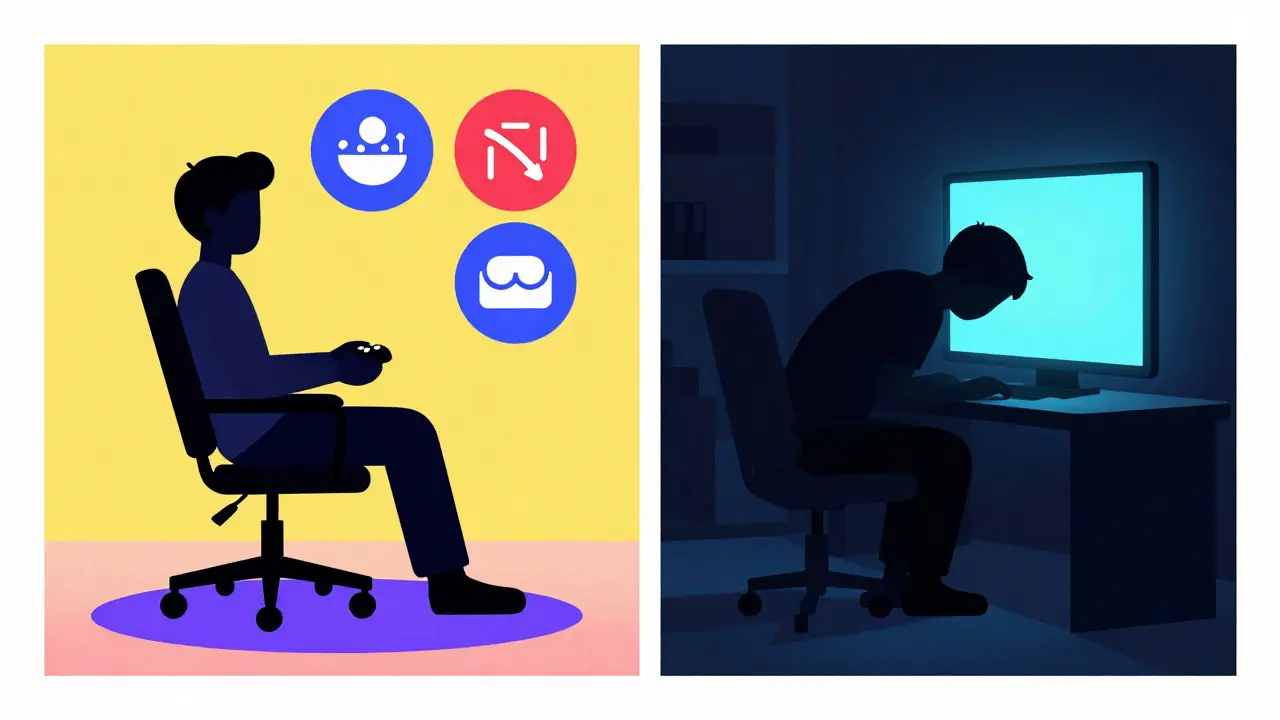
Psychiatric Comorbidities: Looking for Underlying Causes
Gaming disorder rarely happens in a vacuum. It is frequently comorbid with other mental health conditions. The interview will pivot to explore these links. Why is the patient escaping into the game? Is it to avoid anxiety, manage ADHD symptoms, or cope with depression?
A common question is: "How do you feel when you are not gaming?" If the answer is irritability, anger, or sadness, it points to withdrawal-like symptoms. This is distinct from simply feeling bored. Withdrawal suggests a physiological dependency on the dopamine hits provided by the game loop.
Clinicians also screen for Attention-Deficit/Hyperactivity Disorder (ADHD) and Major Depressive Disorder. Since both conditions share symptoms with gaming disorder (like difficulty focusing and low motivation), differential diagnosis is crucial. Treating the underlying ADHD might reduce the urge to game without requiring abstinence.
Family Dynamics and Environmental Factors
For minors, the clinical interview almost always includes a parent or guardian. The professional asks the family about their home environment. "Are there rules set for screen time? Are they enforced?" Inconsistent boundaries can exacerbate gaming issues. Parents are asked to describe their own relationship with technology. If parents are constantly on their phones, children often mirror that behavior.
The clinician also explores the role of gaming in the family unit. Does the family bond over games? Or does gaming serve as a solitary escape? If the latter, the interview digs into family communication patterns. Is there conflict at home that drives the child to retreat into the virtual world?

Comparison of Assessment Focus Areas
| Focus Area | Key Question Examples | Purpose |
|---|---|---|
| Behavioral Control | "Can you stop when you want to?" | Assess impaired control criterion |
| Functional Impact | "Has your job/school suffered?" | Verify significant impairment |
| Emotional State | "How do you feel when offline?" | Identify withdrawal or mood issues |
| Comorbidity | "Do you have trouble focusing elsewhere?" | Screen for ADHD/Depression |
| Environment | "Are there household rules?" | Evaluate external triggers/support |
Preparation Tips for Patients and Families
Going into the interview prepared makes the process smoother and more accurate. Here is what you should bring or think about before the session:
- Keep a Log: Track your playtime for three days before the appointment. Include start/end times and what you were doing outside of gaming. Data beats memory.
- List Consequences: Write down recent instances where gaming caused a problem (missed bill, argument, late arrival).
- Be Honest About Feelings: Don’t minimize your frustration when forced to stop. That irritation is a key diagnostic clue.
- Involve Family: If you live with others, agree beforehand on what facts to share. Discrepancies between patient and parent reports can confuse the diagnosis.
Frequently Asked Questions
How long does a clinical interview for gaming addiction usually take?
A comprehensive initial assessment typically lasts 60 to 90 minutes. Follow-up sessions may be shorter, focusing on progress monitoring and treatment plan adjustments. The length depends on the complexity of the case and the number of comorbid conditions being evaluated.
Is there a specific scale used to measure severity?
Yes, clinicians often use standardized tools like the Internet Gaming Disorder Scale (IGDS9-SF) or the Gaming Disorder Scale for ICD-11 (GDS-9). These provide a quantitative score that complements the qualitative data from the interview, helping to track changes over time.
Do professionals ask about specific video games?
They may ask which games are played to understand the mechanics involved. Competitive multiplayer games (MMOs) often create stronger social bonds and competitive pressures, while single-player narrative games might serve more as escapism. Knowing the genre helps tailor the intervention strategy.
What happens after the diagnosis is made?
Treatment usually involves Cognitive Behavioral Therapy (CBT) to change thought patterns around gaming, along with family therapy if applicable. Medication is generally reserved for treating comorbid conditions like ADHD or depression, not the gaming disorder itself. The goal is sustainable balance, not necessarily total abstinence.
Can a teenager be diagnosed with gaming disorder?
Yes, although clinicians are cautious with adolescents because brain development continues until age 25. Diagnosis requires clear evidence of impairment lasting at least six months. The focus is heavily placed on how the gaming affects school attendance and peer relationships during this developmental stage.