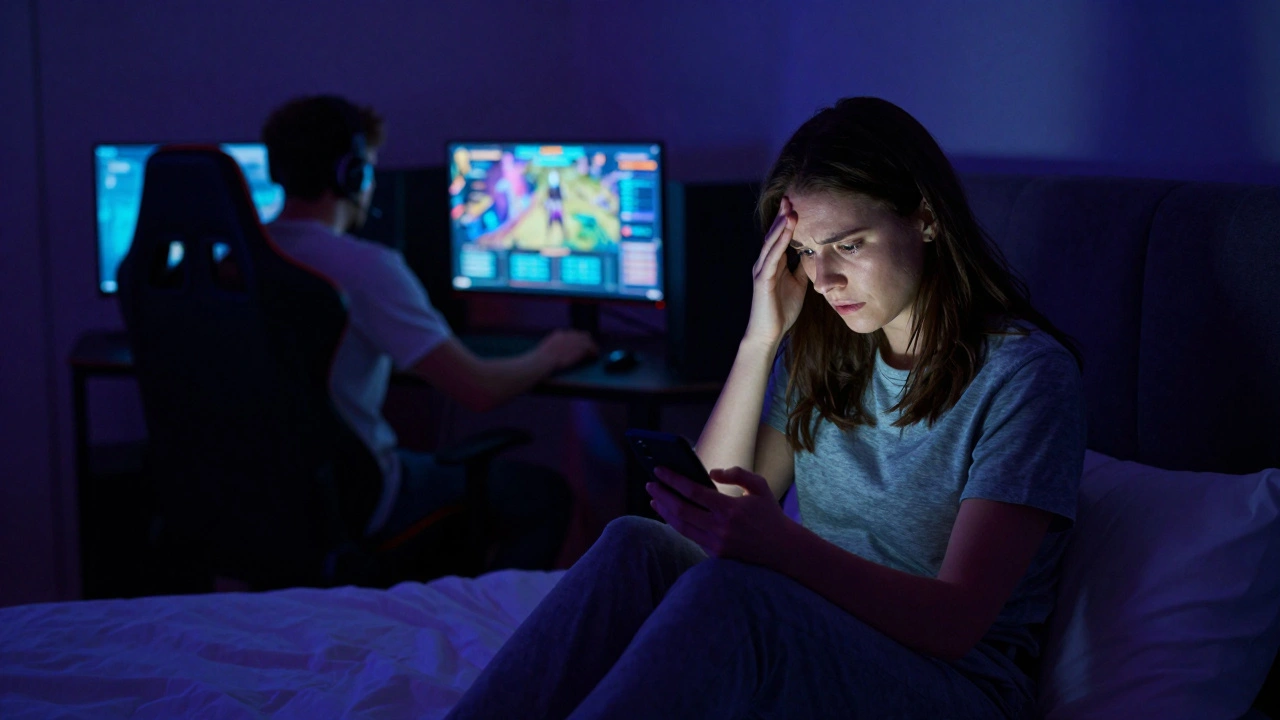
You check your phone. It’s 2 AM. Your partner is still logged into their favorite RPG, headset on, completely absent from the room you share. You feel a familiar mix of anger, exhaustion, and a strange sense of responsibility for their happiness. You’ve tried nagging, pleading, and even joining them to “connect,” but nothing changes. If this sounds like your reality, you aren’t just dealing with a tech habit; you might be navigating the complex web of codependency in a relationship strained by gaming addiction.
Gaming disorder is no longer dismissed as a teenage phase. The World Health Organization officially recognized it as a mental health condition in 2019, noting patterns of impaired control over gaming, increasing priority given to gaming over other life interests, and continuation despite negative consequences. When one partner falls into this trap, the other often unconsciously adopts a role that keeps the cycle alive. This isn’t about blame; it’s about understanding how two people can get stuck in a loop where one’s escape fuels the other’s anxiety.
The Anatomy of the Codependent Loop
To fix the problem, we first need to see the mechanics. Codependency isn’t just being “too nice.” It’s a dysfunctional dynamic where one person’s self-worth becomes tied to controlling or caring for another. In the context of gaming addiction, this usually manifests in three specific roles.
First, there’s the Enabler. This partner covers for the gamer. They call in sick to work for them, hide the bills so they don’t get stressed, or cook meals while the gamer ignores household duties. The enabler believes that if they just manage everything perfectly, the partner will have less reason to game. Instead, they remove the natural consequences that might prompt change.
Second, there’s the Controller. This partner tries to police the screen time. They unplug the router, delete accounts, or constantly monitor play sessions. This creates a power struggle. The gamer feels trapped and loses autonomy, which ironically increases their desire to escape into the virtual world where they have control. The controller feels more anxious because the behavior continues, leading to stricter control.
Third, there’s the Neglected Self. Both partners often lose themselves. The gamer neglects real-world relationships for virtual ones. The non-gamer neglects their own hobbies, friends, and needs to focus entirely on the relationship crisis. The result is a vacuum where intimacy dies, replaced by transactional interactions about screen time.
| Behavior | Gamer’s Perspective | Partner’s Perspective |
|---|---|---|
| Communication Breakdown | Feels misunderstood; games are safe. | Feels ignored; tries harder to reach out. |
| Emotional Regulation | Uses games to avoid stress/sadness. | Takes partner’s mood personally. |
| Responsibility Shift | Drops chores/social obligations. | Picks up slack to keep peace. |
| Conflict Style | Avoids conflict by logging in. | Pursues conflict to get attention. |
Why Games Become the Third Wheel
It’s crucial to understand why the game wins. Modern video games are engineered to trigger dopamine releases through variable reward schedules-similar to slot machines. For someone struggling with depression, anxiety, or social awkwardness, the game offers immediate feedback, clear goals, and a sense of competence that real life lacks.
In a codependent dynamic, the game becomes a refuge. When the non-gaming partner pressures for change, the gamer perceives this as an attack on their only source of relief. The pressure pushes them deeper into the avatar. Meanwhile, the non-gaming partner interprets the gaming as rejection. “You love the game more than me” becomes the narrative. But often, the issue isn’t love; it’s regulation. The gamer is using the game to regulate emotions they don’t know how to handle otherwise.
This creates a tragic irony: the partner’s attempt to save the relationship (by demanding less gaming) actually drives the wedge deeper. The gamer feels unsafe in the relationship, so they retreat to the only place where they feel safe-the server.
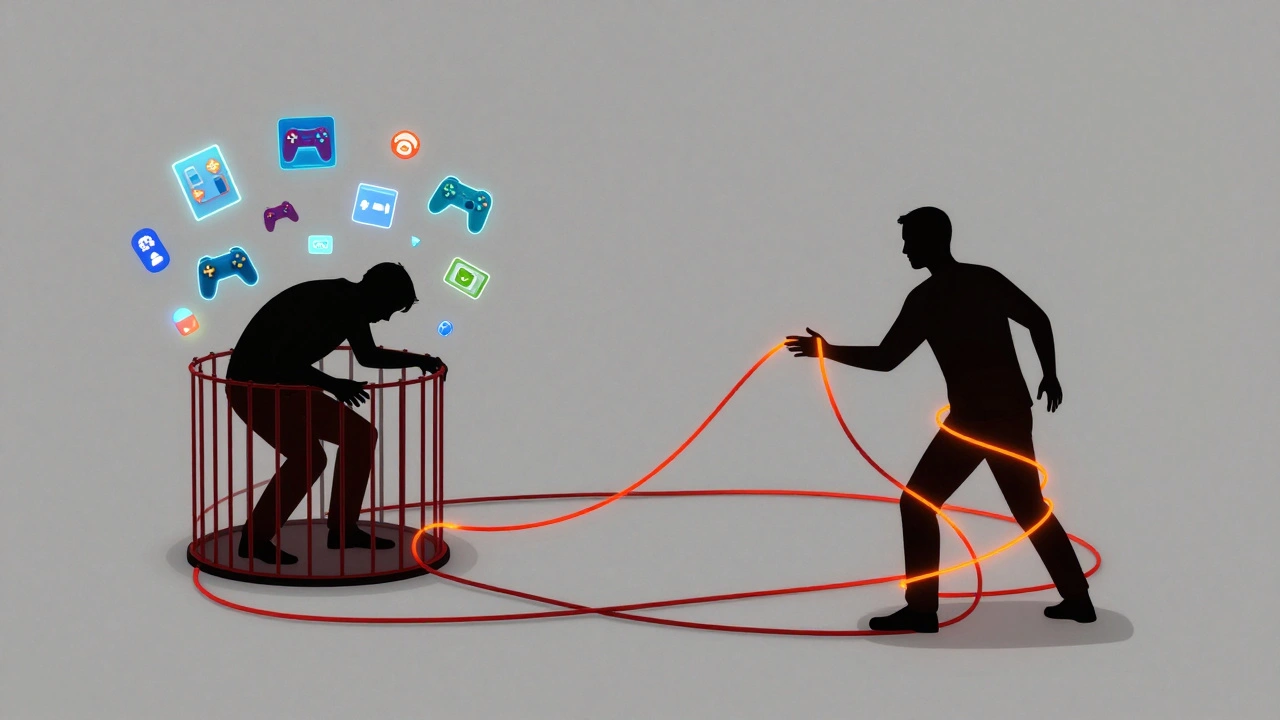
Breaking the Cycle: Steps for the Non-Gaming Partner
If you’re the partner watching the hours tick by, the urge to fix it is overwhelming. However, you cannot fix your partner’s addiction. You can only change your response to it. Here is a practical approach to shifting the dynamic.
- Stop Enabling Consequences: If your partner misses work because they gamed all night, do not call their boss. Let them face the disciplinary action. Natural consequences are powerful motivators. When you shield them, you signal that their choices don’t matter.
- Reclaim Your Identity: Codependency thrives when your life revolves around the addict. Join a gym, reconnect with old friends, pick up a hobby. This does two things: it reduces your resentment and shows your partner that you are not a captive audience. It breaks the “pursuer-distancer” pattern.
- Set Boundaries, Not Ultimatums: An ultimatum (“Quit gaming or I leave”) is often empty and breeds resentment. A boundary is about your actions. Say, “I am not available for conversation when you are playing. I will go for a walk instead.” Then, follow through. This removes the drama and places the responsibility back on them.
- Practice Detached Love: This is hard. It means caring about your partner without taking responsibility for their feelings or actions. You can say, “I care about you, and I’m worried about your health, but I can’t force you to stop. I hope you choose to seek help.”
Steps for the Gamer: Rebuilding Reality
If you are the one logging in, recognizing the problem is the hardest step. Admitting that your coping mechanism is hurting your relationship requires vulnerability. Here’s how to start rebuilding.
- Audit Your Triggers: Keep a journal. Do you game when you’re angry? Bored? Lonely? Identify the emotion preceding the login. Often, gaming masks underlying issues like workplace stress or social anxiety. Addressing the root cause reduces the need for the escape.
- Negotiate ‘Real Life’ Time: Work with your partner to schedule specific times for connection that are device-free. Start small. Thirty minutes of undivided attention. Treat this appointment with the same respect as a work meeting. Show up present.
- Find Analog Rewards: Games provide achievement loops. You need to replicate this in real life. Take up a sport, learn an instrument, or engage in creative projects that offer tangible progress. The goal is to rewire your brain to find satisfaction outside the screen.
- Seek Professional Support: Cognitive Behavioral Therapy (CBT) is highly effective for behavioral addictions. A therapist can help you develop healthier coping strategies and address any co-occurring conditions like depression or ADHD.
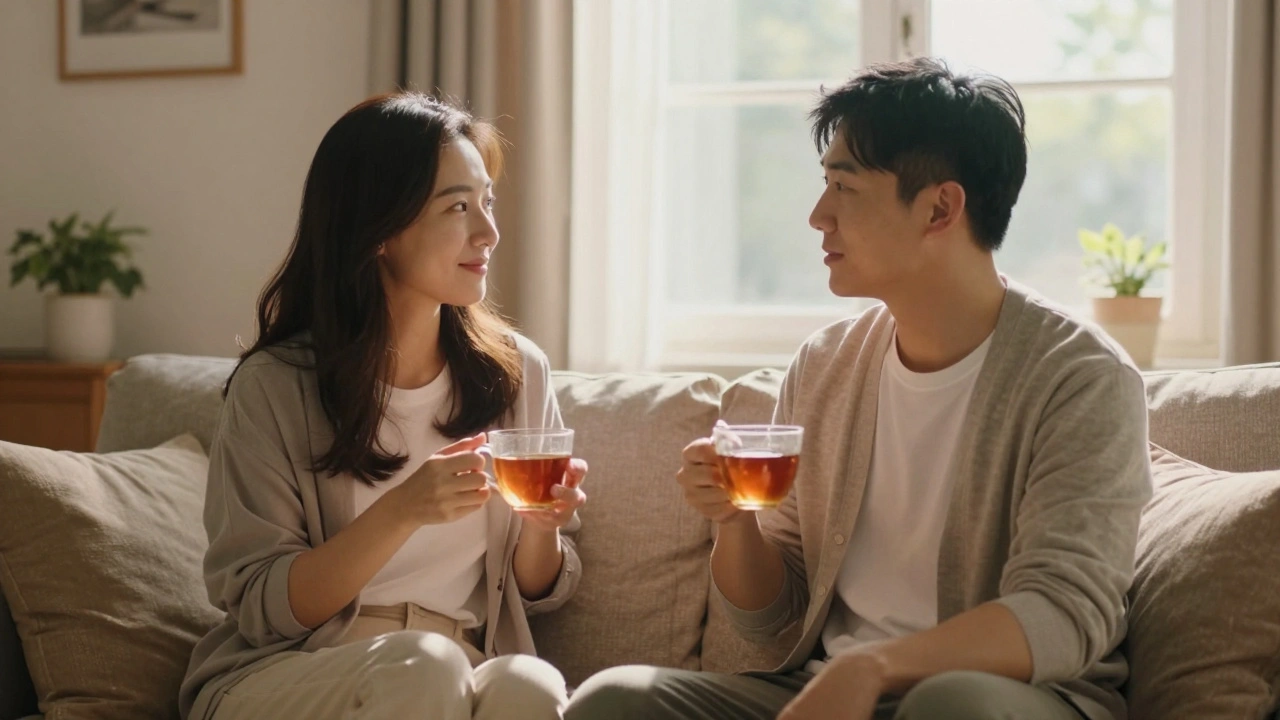
When to Seek Couples Therapy
Sometimes, the dynamic is too entrenched to break alone. Couples therapy can be transformative if both parties are willing. Look for therapists specializing in addiction or behavioral health. Standard talk therapy may not address the neurological hooks of gaming disorder.
In therapy, the goal isn’t just to reduce screen time. It’s to rebuild trust and communication. The therapist helps the non-gaming partner stop enabling and the gaming partner take accountability. It provides a neutral space to express pain without triggering defensiveness. If your partner refuses therapy, consider individual counseling for yourself. Learning to set boundaries and heal your own codependent tendencies can sometimes shift the entire relationship dynamic, even if your partner doesn’t change immediately.
Preventing Relapse and Maintaining Balance
Recovery isn’t linear. There will be bad days. Stress at work or a personal loss might trigger a binge. The key is how you respond. Have a plan. Agree on what happens if screen time exceeds limits. Is it a conversation? A timeout? A review of triggers?
Also, redefine what healthy gaming looks like. For many adults, moderate gaming is a harmless hobby. The difference between a hobby and an addiction is impairment. Does it affect sleep? Work? Intimacy? If yes, it’s a problem. If no, it might just be leisure. The goal isn’t necessarily abstinence, but balance. Healthy couples find ways to integrate interests. Maybe one partner teaches the other a cooperative game. Maybe they agree on “no-game zones” in the house. Flexibility prevents rigidity, which often leads to rebellion.
Is gaming addiction a recognized medical condition?
Yes. The World Health Organization (WHO) included "Gaming Disorder" in the International Classification of Diseases (ICD-11) in 2019. It is characterized by impaired control over gaming, increasing priority given to gaming over other activities, and continuation despite negative consequences.
How do I know if my partner is codependent rather than just supportive?
Supportive partners encourage independence and healthy boundaries. Codependent partners feel responsible for their partner's emotions and behaviors, often sacrificing their own needs to maintain harmony or control the situation. If you feel anxious when your partner makes independent decisions, you may be leaning toward codependency.
Can couples therapy help if one partner refuses to quit gaming?
Yes, but expectations must be realistic. Therapy can help the non-gaming partner establish boundaries and heal from the impact of the addiction. It can also improve communication, which may motivate the gaming partner to seek help. However, therapy cannot force someone to change their addictive behavior.
What are some healthy alternatives to gaming for stress relief?
Effective alternatives include physical exercise (which releases endorphins), mindfulness meditation, creative hobbies like painting or writing, and social activities. The key is finding activities that provide a sense of accomplishment or relaxation similar to gaming, but in the real world.
Is it possible to have a healthy relationship with a gamer?
Absolutely. Many couples enjoy gaming together or respect each other's solo gaming time. The issue arises when gaming impairs daily functioning, intimacy, or responsibilities. Healthy relationships involve mutual respect, open communication, and balanced priorities.