
Ever log into your favorite competitive game and see your rank has dropped-even though you didn’t play in weeks? You didn’t quit. You didn’t lose. You just… stopped. And now you’re behind. That’s not a glitch. That’s competitive ranking decay, and it’s designed to keep you playing.
How Ranking Decay Works
Most competitive games-like Valorant, League of Legends, Apex Legends, or Overwatch-don’t just lock your rank in place. They assume if you’re not playing, you’re getting worse. So every week, your rank slowly slides down. In Valorant, for example, your placement points decay by 10% every seven days if you don’t play. In League, your LP (League Points) decay kicks in after 28 days of inactivity. It’s not punishment. It’s pressure.
This isn’t about fairness. It’s about engagement. Developers need you to open the game every few days. If you vanish for two weeks, the game feels empty. Your friends are playing. New patches drop. New skins come out. And your rank? It’s slipping. So you log back in-not because you’re excited, but because you don’t want to lose what you worked for.
The Psychological Trap
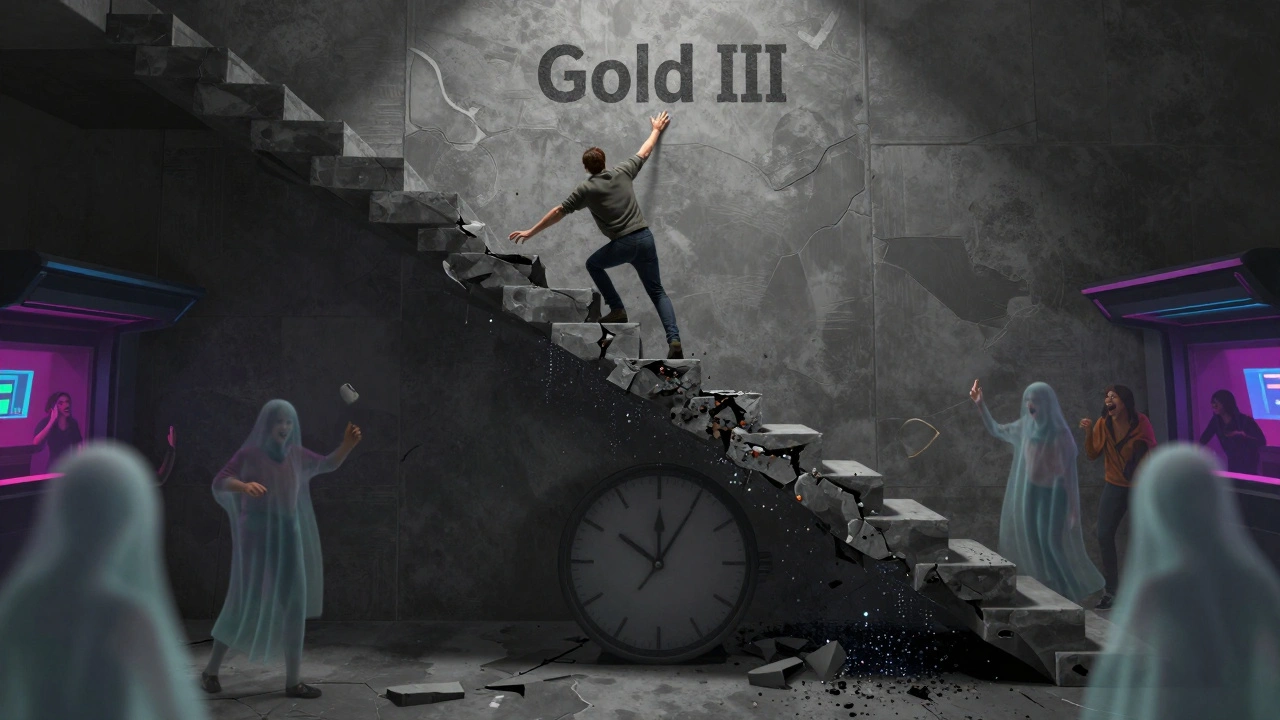
It’s not just about numbers. It’s about identity. When you spend 200 hours climbing to Gold III in CS2, that rank becomes part of who you are. Losing it feels like losing a piece of yourself. You don’t want to admit you’ve slipped. You don’t want to restart from Silver. So you play. Even when you’re tired. Even when you’re stressed. Even when you told yourself you’d take a break.
Studies from the University of California, Irvine show that players with decay-enabled rankings play 37% more frequently than those in static-rank systems. The fear of losing status is stronger than the reward of gaining it. That’s why games use decay: it’s more effective than bonuses, events, or loot boxes.
It’s Not Just About Skill
You might think decay is meant to reflect your real skill level. But it’s not. It’s a timer. Someone who plays once a month but is still Gold might be better than someone who plays daily but is stuck in Silver. But the system doesn’t care. It only sees inactivity. It sees your rank dropping like a rock.
That’s why you see players grinding 10 ranked matches after a week off, just to reset the decay clock. They’re not trying to climb. They’re trying to stop falling. It’s maintenance, not progression.
The Hidden Cost
There’s a cost to this system. Burnout. Anxiety. Guilt. You start checking your rank every morning. You feel bad for skipping a day. You play games you don’t enjoy just to keep your standing. You cancel plans. You lose sleep. You tell yourself, “Just one more match.” Then another. Then ten.
It’s not uncommon to hear players say, “I hate this game, but I can’t quit.” That’s the decay talking. It’s not fun anymore. It’s obligation.
Some games have tried to soften this. Rainbow Six Siege lets you bank a few wins to prevent decay. Dota 2 only decays after 30 days. But most still use the hard cut. Why? Because it works.
What’s the Alternative?
Some indie games skip decay entirely. Games like Among Us or Fall Guys don’t track long-term ranks. You play for fun, not status. And they’re still popular. Players don’t need a number to feel rewarded. They need connection, creativity, or chaos.
But big publishers? They need retention. They need daily active users. They need metrics that prove their game is “sticky.” Decay delivers that. It’s a quiet, invisible leash.
Can You Opt Out?
Yes-but it takes effort. Here’s how:
- Set a personal rule: “I only play if I want to, not because I’m scared of decay.”
- Turn off rank notifications. They’re designed to trigger anxiety.
- Play casual modes first. Reconnect with why you liked the game before ranks mattered.
- Accept that your rank is just a number. It doesn’t measure your skill, your worth, or your enjoyment.
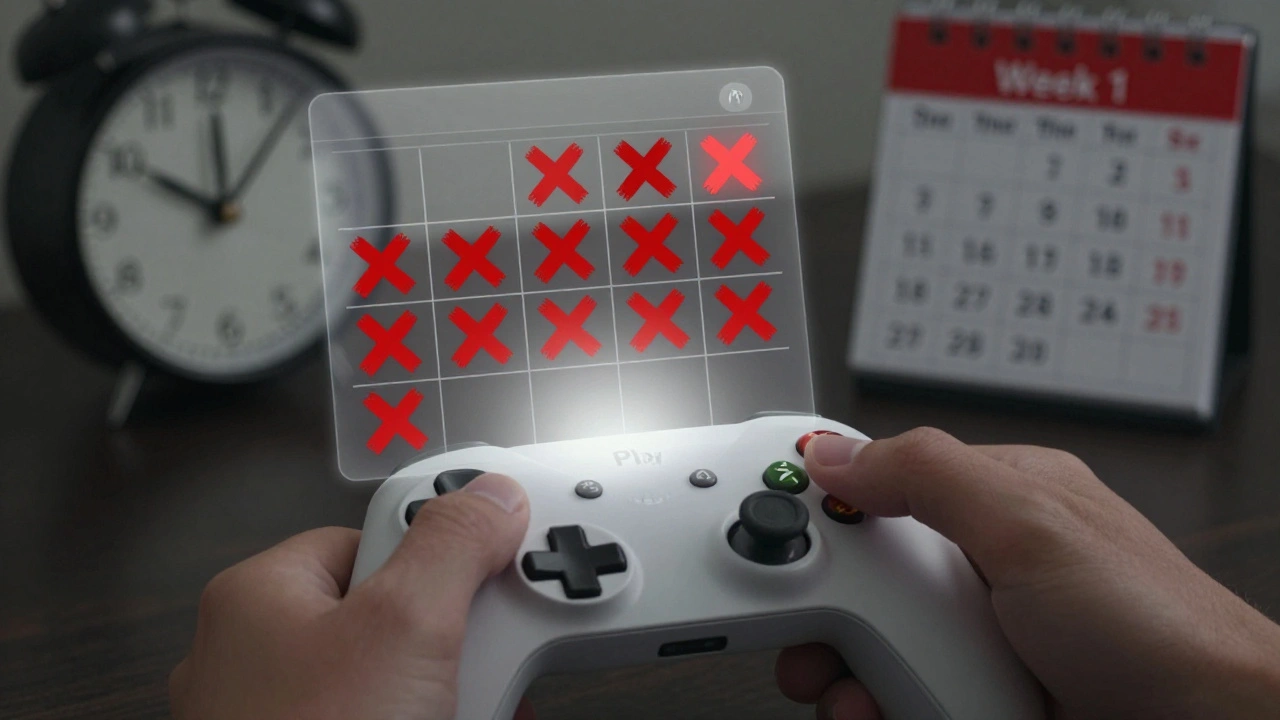
- Take a full month off. You’ll be surprised how little it matters. Most decay systems reset after 90 days anyway.
Some players who’ve done this report feeling lighter. Less tense. More in control. The game didn’t disappear. Their joy did.
The Real Enemy Isn’t the Game
It’s the system. The invisible clock. The silent countdown that turns play into chore. Competitive ranking decay isn’t about competition. It’s about control. It’s about keeping you hooked when the novelty fades.
You didn’t lose your rank because you got worse. You lost it because you stopped playing. And that’s exactly what they wanted.
Does competitive ranking decay apply to all multiplayer games?
No. Only games with ranked systems that track long-term progression use decay. Games like Rocket League, Valorant, and League of Legends do. Others, like Fall Guys or Overcooked, don’t have ranks at all. Even among ranked games, the rules vary. Some decay after 7 days, others after 30. A few, like Dota 2, only decay if you haven’t played in over a month. Always check the official patch notes for specifics.
Can you lose your rank entirely from decay?
Not usually. Most systems don’t let you drop below the lowest tier you’ve ever reached. For example, if you were Platinum once, you won’t fall back to Silver after inactivity. But your position within that tier-like Platinum III to Platinum V-can drop. Some games, like Apex Legends, reset your MMR (matchmaking rating) after long breaks, which can feel like losing your rank even if your tier stays.
Is ranking decay fair to casual players?
It’s not designed to be. Casual players who log in once a week get penalized compared to those who play daily. The system assumes constant playtime is normal. That’s why many casual players feel alienated. They’re not bad-they’re just not available 7 days a week. Some games now offer “casual rank” modes with no decay, but these are often separate from the main competitive ladder.
Do game companies admit that decay is for retention?
Rarely. Publicly, they call it a “balance mechanism” or “skill maintenance.” But internal documents leaked from Riot Games and Activision in 2024 show that decay was added after analytics showed a 42% drop in logins after two weeks of inactivity. The fix? Make players afraid to leave. It worked. Retention rose by 29% within six months.
What happens if I take a long break and come back?
You’ll likely be matched against players with lower ranks than you deserve. Your hidden MMR might still be high, but the visible rank is low. This can lead to frustrating games-you’re good, but the system thinks you’re not. Some games, like Overwatch 2, reset your rank entirely after 90 days of inactivity. Others, like Valorant, let you climb back faster if you’ve been high-tier before. Either way, you’ll need to grind to get back to where you were.