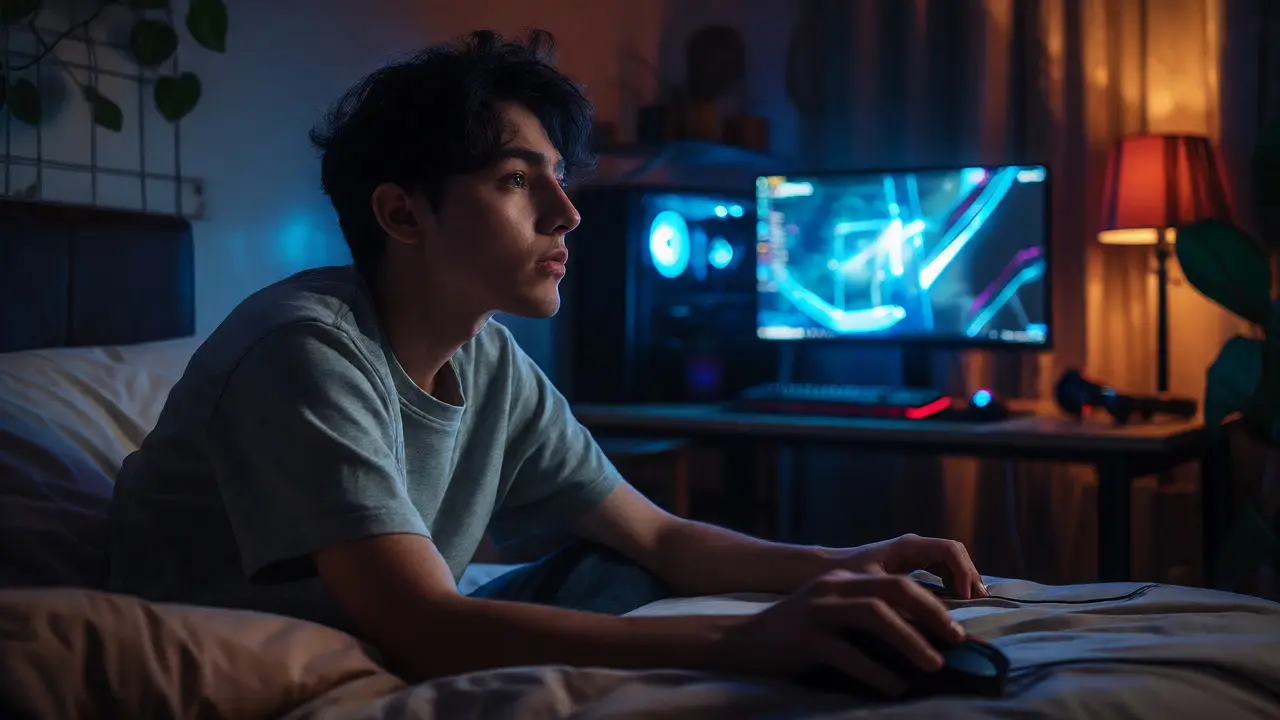
You know that feeling. It’s 10 PM on a Tuesday. You promised yourself you’d only play one match of League of Legends. But then your teammate blames you for a missed ward, and suddenly, it’s not about the game anymore. It’s about proving them wrong. Or maybe it’s just boredom. The couch feels too quiet, and the glow of the monitor is the only thing making sense. Before you blink, three hours have vanished, and your eyes burn.
This isn’t a failure of willpower. It’s a predictable loop. Video games are engineered to hit specific psychological buttons-dopamine hits from loot boxes, social validation from team wins, or the sheer escape from real-world stress. When we talk about Gaming Triggers, we’re talking about the cues that kickstart this loop. And if you want to break it, you don’t need more discipline. You need better alternatives.
Identifying Your Personal Triggers
Most people think they game because they like gaming. That’s rarely the whole truth. Usually, you’re gaming because something else is uncomfortable. To build effective coping skills, you first need to diagnose what’s actually pushing you toward the controller or keyboard. These triggers generally fall into four buckets:
- Emotional Regulation: Using games to numb anxiety, sadness, or anger. If you had a bad day at work and immediately boot up Cyberpunk 2077 to shut off your brain, that’s an emotional trigger.
- Social Connection: Many gamers feel isolated in real life but valued in their guilds. If loneliness spikes after 8 PM, that’s a social trigger.
- Boredom or Under-stimulation: Games provide constant feedback. Real life is slower. If you can’t sit through a movie without checking your phone, you might be under-stimulated.
- Habitual Cues: This is automatic. You come home, drop your keys, and open Steam before you even take off your shoes. There’s no emotion here, just muscle memory.
Try keeping a simple log for three days. Note the time you start playing and ask yourself: "What did I feel right before I clicked launch?" Was it stress? Boredom? Loneliness? Once you name the trigger, you can target it with a specific response.
The Concept of Urge Surfing
Here’s a counter-intuitive truth: trying to fight an urge usually makes it stronger. If I tell you not to think of a white bear, you’ll think of it instantly. In psychology, this is called Urge Surfing. An urge is like a wave. It rises, peaks, and eventually crashes and recedes. Most gamers panic when the wave starts rising. They think, "If I don't play now, this feeling will never go away." So they give in, which teaches their brain that gaming is the only way to lower the anxiety.
Instead, try riding the wave. When the itch to play hits, set a timer for 15 minutes. Tell yourself, "I can play after 15 minutes, but right now, I’m just going to notice how my body feels." Sit with the discomfort. Notice where you feel tension-in your jaw, your chest, your hands. Don’t judge it. Just observe it. Often, by minute 10, the intensity drops significantly. You realize the urge isn’t a command; it’s just a sensation. And sensations pass.
Physical Alternatives for High-Energy Triggers
If your trigger is high-energy stress or frustration, sitting still won’t help. You need to discharge that energy physically. Gaming provides a sense of agency and control, so your alternative needs to offer immediate physical feedback. Here are three concrete swaps that work well for high-arousal states:
| Trigger Type | Why Gaming Feels Good | Physical Alternative | Why It Works |
|---|---|---|---|
| Frustration/Anger | Immediate action/reaction loop | Box Breathing (4-4-4-4) | Forces physiological calm down quickly |
| Restlessness | Constant visual/auditory input | 30-Second Plank or Pushups | Provides intense somatic feedback |
| Tension | Dissociation from body | Cold Water Face Splash | Triggers mammalian dive reflex to slow heart rate |
Take the cold water splash, for example. It sounds simple, but it’s biologically powerful. Splashing ice-cold water on your face activates the vagus nerve, which slows your heart rate almost instantly. It’s a hard reset for your nervous system. If you’re spiraling after a rage-quit moment in Call of Duty, do this instead of queuing for another match. It breaks the physiological cycle of agitation.

Social Swaps for Isolation Triggers
If you game to connect with others, quitting cold turkey can feel incredibly lonely. The silence of an empty room is loud when you’re used to voice chat. But you don’t need to replace gaming with deep, meaningful conversations immediately. Start with low-stakes social contact.
Consider joining a local group that meets regularly, like a running club, a board game night, or even a volunteer shift. The key is structure. Gaming offers structured social interaction-you have roles, goals, and clear communication rules. Unstructured socializing can be exhausting for someone recovering from gaming dependency. Look for activities with built-in scripts. For instance, helping at a food bank gives you tasks and small talk opportunities without the pressure to perform socially. Over time, these real-world connections become less intimidating than the curated personas of online avatars.
Another tactic is "parallel play." Invite a friend over, but agree that you’ll both read books or work on projects in the same room. You get the company without the demand for constant conversation. It mimics the low-pressure presence of being in a lobby, but it anchors you in reality.
Environmental Design: Removing Friction
Willpower is a finite resource. If you have to use willpower every time you walk past your PC, you’ll lose. Instead, design your environment to make gaming harder and healthy behaviors easier. This is known as friction management.
To increase friction for gaming:
- Unplug the console or PC after each session. Put the power cord in a drawer.
- Log out of all gaming accounts (Steam, Battle.net, Epic). Re-entering passwords adds cognitive load.
- Move the gaming chair out of the main living area if possible.
To decrease friction for your new coping skills:
- Keep a book on your pillow.
- Lay out workout clothes the night before.
- Pre-prep healthy snacks so you don’t reach for junk food while bored.
I live in Portland, where the rain can keep you indoors for weeks. On gray days, the temptation to game is huge. My solution? I put my running shoes by the door. Even if I only run for ten minutes, the act of putting them on creates a ritual that competes with the ritual of turning on the console.

Reframing Failure as Data
You will slip up. Maybe you’ll binge for six hours on a Saturday. The danger isn’t the binge itself; it’s the shame spiral that follows. Many gamers think, "I failed, so I might as well give up." This is the "what-the-hell effect." Instead, treat every slip as data. Ask: What triggered me? Was I hungry? Tired? Lonely? Did I skip my morning routine?
Adjust your strategy based on the data. If you binged because you were bored, maybe you need a more engaging hobby, like learning an instrument or coding. If you binged because you were stressed, maybe you need better sleep hygiene. Recovery isn’t a straight line. It’s a series of experiments. Each time you choose an alternative response-even if you fail later-you strengthen the neural pathway that says, "I can handle discomfort without escaping."
Building a Long-Term Toolkit
Coping skills aren’t one-size-fits-all. What works for boredom won’t work for grief. Build a personal toolkit with at least three options for each major trigger type. Keep a list on your phone or a sticky note on your monitor. When the urge hits, don’t rely on your brain to invent a solution in the heat of the moment. Look at your list and pick one.
Start small. Pick one trigger this week. Identify it. Choose one alternative response. Practice it five times. Once it becomes automatic, add another. Over time, you’ll find that gaming doesn’t disappear from your life entirely, but its role changes. It becomes a choice, not a compulsion. And that shift-from being played by the game to playing the game-is where true freedom lies.
How long does it take for gaming urges to fade?
Typically, acute withdrawal symptoms and strong urges peak within the first 3-7 days of stopping. However, psychological cravings can last longer depending on habit depth. Consistently using coping skills helps rewire neural pathways, reducing urge intensity over 4-6 weeks.
Can I still play games occasionally?
Yes, for many people, moderation is possible. The goal is often controlled use rather than total abstinence. If you can play once a week without losing track of time or neglecting responsibilities, occasional gaming may be sustainable. Monitor closely for signs of relapse.
What if my friends only interact through gaming?
This is common. Try inviting friends to non-gaming activities like hiking, movies, or board games. If they resist, consider expanding your social circle to include people who share other interests. Parallel play or low-pressure hangouts can also maintain connection without triggering gaming habits.
Is 'urge surfing' scientifically backed?
Yes. Urge surfing is a core component of Mindfulness-Based Relapse Prevention (MBRP) and Acceptance and Commitment Therapy (ACT). Studies show that observing urges without acting on them reduces their duration and intensity compared to suppression techniques.
How do I handle boredom without gaming?
Boredom often signals under-stimulation. Engage in activities that require active participation, such as cooking, exercising, or creative hobbies. Passive activities like watching TV may not suffice initially. Gradually increase tolerance for unstructured time by starting with short intervals.