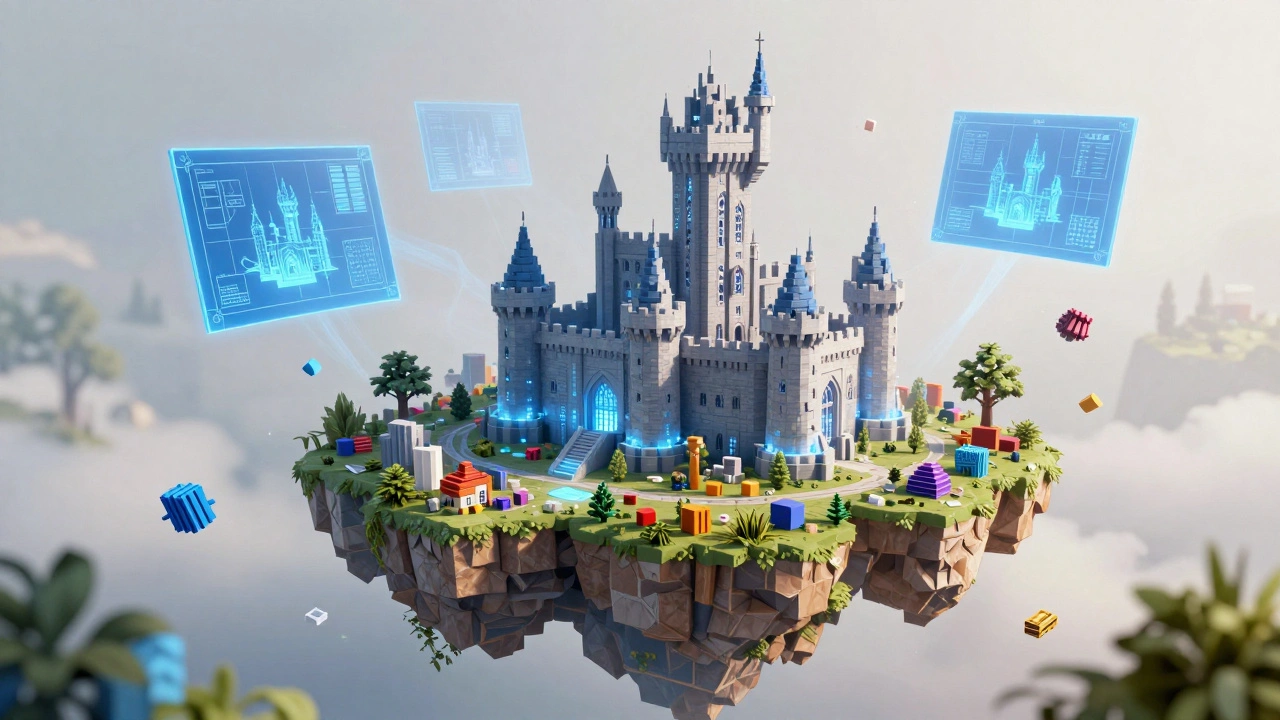
At the heart of this is Creative Mode is a gameplay setting that removes survival constraints, provides unlimited resources, and allows players to manipulate the environment without risk of death or resource scarcity. It transforms a game from a challenge to be overcome into a tool for expression. When you stop worrying about your hunger bar or health points, your brain shifts from 'survival mode' to 'architect mode.' This shift unlocks a flow state where the act of creating becomes the reward itself.
The Psychology of the Digital Toybox
We aren't just playing a game; we're engaging with Sandbox Games, which are a genre of video games that give the player a high degree of creativity and freedom to interact with the world. The draw is the autonomy. In a standard linear game, you're a tourist in someone else's story. In a sandbox, you're the author. This appeal is rooted in what psychologists call 'intrinsic motivation.' You aren't building a castle to get a trophy; you're doing it because you want to see if it's possible to make a flying castle with a working drawbridge.
This desire for mastery often leads to what we call 'time sinks.' These aren't wastefully spent hours, but rather an investment in a personal vision. Whether it's spending three days perfecting the lighting in a room or organizing a warehouse of materials, the meticulous nature of the work provides a sense of order and control that we often lack in the real world.
From Blocks to Logic: The Evolution of Tools
Not all creative modes are created equal. Some provide simple blocks, while others offer complex systems that mimic real-world engineering. Take Minecraft for example. It started as a simple voxel-based world, but the introduction of Redstone-a material that acts like electrical wiring-turned it into a computational playground. People have built fully functional computers inside a game made of cubes. This is the pinnacle of Creative Mode, where the game provides the alphabet and the player writes the novel.
Then you have games like Roblox, which is less of a single game and more of a game engine and platform that allows users to create their own experiences. Here, the creative mode isn't just about building a house; it's about designing the rules of the game for others to play. The transition from 'building' to 'developing' is a powerful leap that turns gamers into creators.
| Game Type | Primary Resource | Goal Driver | Complexity Level |
|---|---|---|---|
| Voxel-Based (e.g., Minecraft) | Blocks/Cubes | Aesthetics & Logic | Medium |
| Simulation (e.g., The Sims) | Objects/Furniture | Storytelling & Life | Low |
| Engine-Based (e.g., Roblox) | Scripts/Assets | Game Design | High |
| Physics-Based (e.g., Garry's Mod) | Props/Physics | Experimentation | Medium |
The Magic of Emergent Gameplay
One of the most exciting parts of these games is Emergent Gameplay, which refers to complex situations that arise from simple game mechanics, which the developers did not explicitly program. When you give a player a set of tools and a wide-open space, they will find ways to use those tools that the creators never imagined. A simple 'gravity' mechanic can become a complex transport system if a player figures out how to chain a series of portals or boosters together.
This unpredictability is why sandbox communities are so vibrant. A single player discovers a new building technique or a 'glitch' that allows for a cool visual effect, and within hours, the entire community is replicating it. It's a collaborative form of discovery. You're not just playing the game; you're collectively mapping out the limits of the engine.
The Infinite Loop of Goal Setting
If there is no end goal, why don't we get bored? The secret is 'self-imposed challenges.' Players create their own milestones to keep the momentum going. You might tell yourself, "I'm going to build a city that looks like Tokyo," or "I'm going to make a fully automated sorting system for every item in the game." These goals provide the structure that the game lacks.
This creates a cycle of learning and expansion. You start with a small project, realize you need a new skill (like learning how a specific logic gate works), master that skill, and then design a bigger project that requires even more advanced knowledge. The 'time sink' isn't the building itself, but the learning curve associated with the tools. The more you know, the more you can imagine, and the more you imagine, the more you want to build.
User Generated Content and the Social Layer
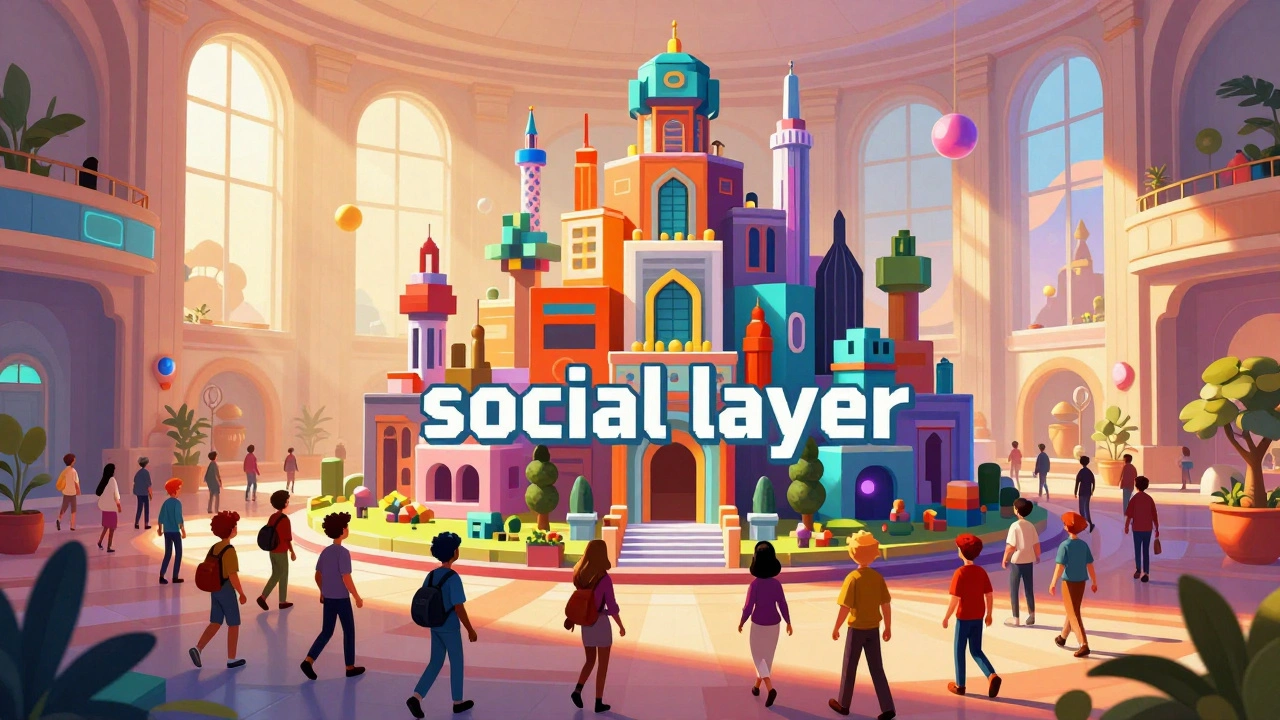
Creative modes aren't just solitary experiences. The rise of User Generated Content (UGC) means that your creations can be shared, rated, and remixed by millions of other people. This adds a layer of social validation to the creative process. Knowing that someone else will walk through the halls of your digital palace provides a different kind of motivation than just building for yourself.
Platforms like the Steam Workshop have turned this into an economy of ideas. When a player creates a complex map or a set of custom assets, they are contributing to the game's longevity. In many ways, the community becomes the developer. The original game is just the foundation; the actual content is a living, breathing entity shaped by the collective imagination of the player base.
Common Pitfalls of the Creative Sandbox
It's not all sunshine and blocks, though. The biggest enemy in a creative sandbox is 'Creative Burnout.' This happens when the scale of your ambition exceeds your patience. You start a massive project-say, a 1:1 replica of the Eiffel Tower-and halfway through, the sheer amount of repetitive clicking becomes overwhelming. The goal ceases to be a challenge and becomes a chore.
Another issue is 'Analysis Paralysis.' When you can do literally anything, it's sometimes hard to do anything at all. Staring at a blank, infinite plain can be intimidating. The most successful creators usually overcome this by starting small and letting the project evolve naturally, rather than trying to plan every single detail before placing the first block.
What is the difference between a sandbox game and creative mode?
A sandbox game is a genre (like Minecraft or Garry's Mod) that emphasizes player freedom and interaction. Creative mode is a specific setting within those games that removes survival elements, like hunger or health, and provides unlimited materials so you can focus entirely on building and experimenting.
Why are creative mode games considered 'time sinks'?
They are called time sinks because the lack of a definitive end goal allows players to spend an unlimited amount of time perfecting a project. The combination of learning complex tools and the desire for aesthetic perfection often leads to hundreds of hours of gameplay.
Do you need to be an artist to enjoy creative mode?
Not at all. Many players focus on the 'engineering' side of creative mode-building complex machines, logic circuits, or automated systems-rather than the visual art side. The joy comes from solving problems and seeing a system work, not necessarily from making something look pretty.
What is emergent gameplay in the context of sandboxes?
Emergent gameplay happens when players use the game's basic rules in ways the developers never intended. For example, using a physics object to create a makeshift elevator or using a combination of items to create a new type of weapon. It's about discovery and experimentation.
How can I avoid burnout when working on a big creative project?
Break your project into smaller, manageable chunks. Instead of 'building a city,' focus on 'building one house.' Use a mix of manual work and automated tools if the game allows it, and don't be afraid to take breaks or change your project's direction as you go.
Next Steps for Aspiring Creators
If you're feeling stuck or overwhelmed by the infinite possibilities, try these three things. First, look for a 'blueprint' or a tutorial online to get the basics down. Second, set a strict time limit-give yourself two hours to build the best thing you can, and then stop. Third, collaborate. Invite a friend into your world; having another person to brainstorm with often sparks ideas that you would never have found on your own.
Whether you're building a sprawling empire, a complex computer, or just a cozy cottage in the woods, remember that the goal isn't the finished product. The goal is the process. The magic of the creative sandbox isn't that you finished the building-it's that you were the one who decided it should exist in the first place.