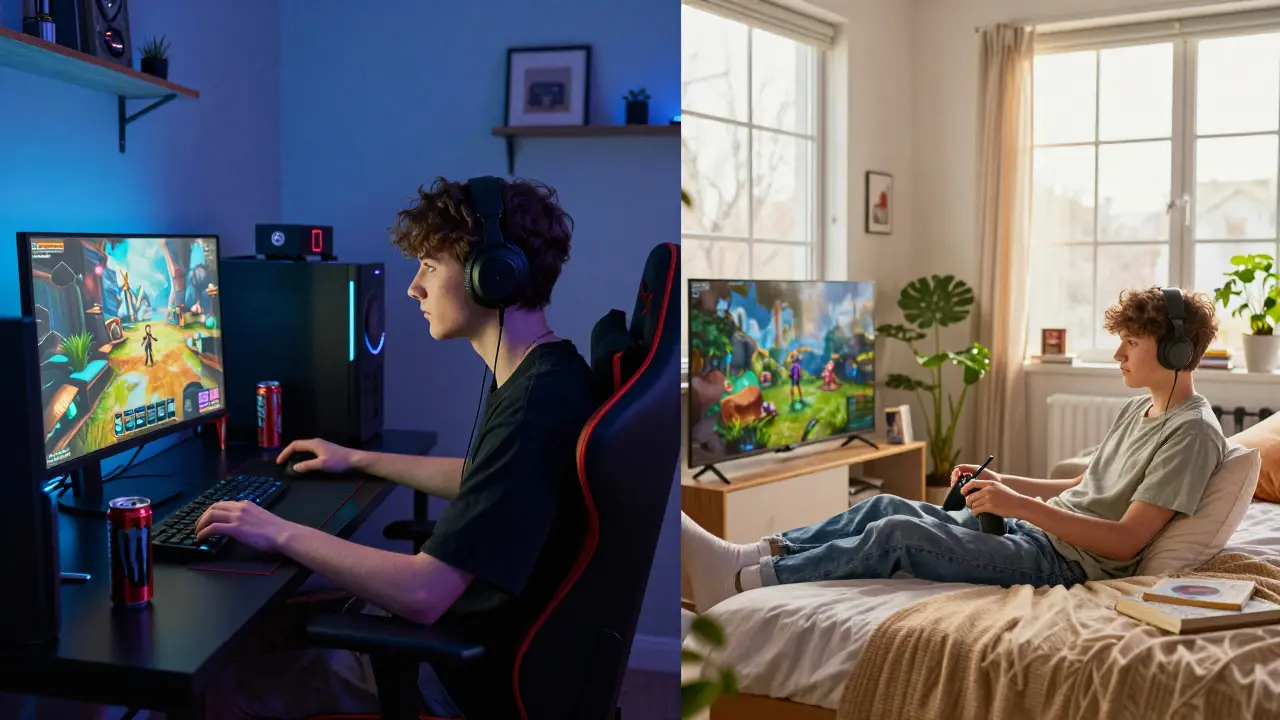
Imagine a teenager in Seoul who plays League of Legends for six hours a day to connect with friends. Now picture a teenager in New York doing the same thing on Minecraft. If you hand both of them the same standardized questionnaire, will they get the same result? Probably not. This is the core problem with Gaming Disorder a condition characterized by impaired control over gaming, increasing priority given to gaming over other activities, and continuation despite negative consequences. While the medical community has moved toward recognizing this as a formal health issue, the tools we use to spot it often carry hidden assumptions about what "normal" behavior looks like.
Most current assessments were developed in Western, educated, industrialized, rich, and democratic (WEIRD) societies. When these instruments travel across borders without proper adaptation, they risk labeling healthy cultural participation as pathology. For instance, in many East Asian countries, gaming is deeply embedded in social life and academic preparation. A screen time limit of four hours might be considered excessive in the US, but reasonable in South Korea. If a screening tool doesn't account for this context, it creates false positives, stigmatizing players rather than helping those who truly need support.
The Origins of the Problem
To understand the bias, we have to look at where the diagnostic criteria came from. The World Health Organization added Gaming Disorder to the International Classification of Diseases, 11th Revision (ICD-11) in 2018. This was a significant step, moving the condition from a proposed category in the American Psychiatric Association's DSM-5 to a globally recognized health code. However, the criteria used to define the disorder lean heavily on Western concepts of individualism and self-regulation.
In collectivist cultures, the line between "playing for fun" and "playing because I must" can blur differently. In Japan, for example, the concept of shinrin-yoku or forest bathing suggests that immersion in an environment can be restorative. Similarly, immersive gaming can serve a similar psychological function for some demographics. Yet, standard screening tools often view any deep immersion as a red flag for addiction. This mismatch means that a player in Tokyo might score high on a risk scale simply because their cultural norm for leisure involves high engagement, not because they are losing control over their life.
How Screening Tools Fail Across Borders
Let's look at specific examples of how language and culture skew results. One common metric in screening tools is "interference with daily responsibilities." In many Middle Eastern and South Asian households, family obligations take precedence over individual hobbies. A player who stops gaming when called to help with household chores might be seen as having good impulse control in one culture, but in another, the very act of needing to stop mid-session might be viewed as a sign of compulsion. The tool asks, "Do you play when you should be working?" But what counts as "work" varies wildly. In rural India, work might involve physical labor ending late in the evening, making evening gaming sessions a natural wind-down rather than a procrastination tactic.
Another major issue is the translation of emotional states. Terms like "irritability" or "anxiety" when not playing don't translate perfectly. In some cultures, expressing anger directly is taboo. A player might suppress irritability, leading to lower scores on certain behavioral questions, even if their internal stress levels are high. Conversely, in cultures where stoicism is valued, admitting to being "upset" about missing a game session might be seen as weak, leading to under-reporting. These linguistic nuances mean that a simple multiple-choice test can miss the nuance of a player's actual relationship with their games.
Regional Disparities in Diagnosis Rates
Data shows a stark contrast in how Gaming Disorder is perceived and diagnosed around the world. In South Korea, which has one of the highest rates of internet penetration and competitive gaming infrastructure, the government has actively monitored online gaming habits since the early 2000s. They implemented the "Dracula Law," which prevented children under 16 from playing online games between midnight and 6 AM. This legislative approach reflects a societal view that gaming requires strict external regulation. In contrast, Scandinavian countries tend to view gaming through a lens of well-being and social connection, often integrating it into public health discussions about digital literacy rather than pure pathology.
This divergence affects research data. Studies conducted in Asia often report higher prevalence rates of problematic gaming compared to European studies. Is this because Asians are more prone to addiction, or because the definition of "problematic" is stricter there? Evidence suggests the latter. When researchers apply the same rigorous criteria to both regions, the gap narrows significantly. This indicates that the variance isn't just biological; it's methodological. The tools themselves are biased toward detecting behaviors that deviate from a specific Western baseline of leisure.
| Region | Cultural Norm for Gaming | Common Bias in Standard Tools | Resulting Diagnostic Risk |
|---|---|---|---|
| North America / Europe | Individual leisure, moderate screen time | Baseline assumption | Accurate for local population |
| East Asia (Korea/Japan) | High engagement, social integration | Views high immersion as pathological | False Positives (Over-diagnosis) |
| Middle East / South Asia | Family-centric, variable work hours | Rigid definitions of "responsibility" | False Negatives (Under-diagnosis due to suppression) |
| Latin America | Collective play, economic barriers | Assumes consistent access/hardware | Misses intermittent high-intensity play |

The Role of Language and Translation
Language is the bridge between a patient's experience and a clinician's diagnosis, but it's often a broken bridge. When the Internet Gaming Disorder Scale (IGDS) is translated into Mandarin or Arabic, subtle shifts in meaning occur. For example, the English word "escape" carries a connotation of running away from problems. In some translations, the equivalent term might imply "relaxation" or "recovery." If a respondent interprets the question as "Do you use games to relax?" rather than "Do you use games to avoid reality?", their answer changes entirely. Relaxation is healthy; avoidance can be maladaptive. This semantic drift compromises the validity of cross-cultural studies.
Furthermore, idioms don't travel well. Questions about feeling "out of control" might be interpreted literally in some cultures versus metaphorically in others. Without back-translation validation-where the text is translated back to the original language to check for accuracy-these tools remain unreliable. Researchers have found that up to 30% of variance in screening scores can be attributed to translation errors alone. That’s a huge margin of error when you're dealing with a clinical diagnosis.
Why It Matters for Treatment
Bias in screening isn't just an academic debate; it affects real lives. If a player is misdiagnosed due to cultural mismatch, they might receive treatment that doesn't fit their needs. For instance, a therapy model designed for individualistic patients might fail for someone from a collectivist background who views their gaming habit as a family or community issue. Conversely, under-diagnosis leaves struggling players without help. If a tool misses the signs because it expects a different behavioral pattern, the player continues to spiral without intervention.
Moreover, stigma plays a role. In communities where gaming is highly stigmatized, players may hide their habits during screening to avoid judgment. This leads to under-reporting. In communities where gaming is normalized, players may not see a problem even when one exists, leading to false negatives. Both scenarios stem from the failure of the screening tool to adapt to the local cultural context. The tool assumes a universal human response to excess, but humans are not universal; we are culturally constructed.

Pathways to Fairer Assessment
So, how do we fix this? First, we need localized norms. Instead of using a single global cutoff score for "problematic gaming," we should establish region-specific thresholds. What constitutes excessive play in Brazil might differ from what it does in Germany. Second, qualitative interviews should complement quantitative scales. Talking to a patient allows clinicians to ask follow-up questions that clarify cultural context. Did you play because you were lonely? Because your friends were online? Because it was the only affordable entertainment? These nuances matter.
Third, developers of screening tools must include diverse panels in the validation process. If the experts validating the tool are all from North America, the tool will reflect their biases. We need input from psychologists, sociologists, and gamers from Africa, Asia, Latin America, and the Middle East. Finally, we must separate "high engagement" from "disorder." Enjoyment and immersion are not inherently bad. The key indicator is impairment. Does the gaming prevent the person from meeting basic needs? Does it cause significant distress? If the answer is no, the label of disorder shouldn't apply, regardless of how many hours they spend online.
Frequently Asked Questions
Is Gaming Disorder officially recognized worldwide?
Yes, the World Health Organization included Gaming Disorder in the ICD-11 in 2019. However, its adoption varies by country. Some nations have integrated it into national health guidelines, while others still rely on older frameworks or treat it primarily as a behavioral concern rather than a medical diagnosis.
Why do Asian countries show higher rates of gaming disorder?
Higher reported rates often stem from stricter cultural definitions of acceptable screen time and the widespread use of standardized tests that may not account for local social norms. When adjusted for cultural context, the difference in prevalence between Asian and Western populations decreases significantly, suggesting measurement bias plays a large role.
Can a screening tool be fully objective?
No screening tool is completely objective. All psychological assessments rely on self-report, which is influenced by memory, honesty, and cultural interpretation. The goal is to minimize bias through careful translation, local validation, and combining quantitative scores with qualitative clinical interviews.
What is the difference between high engagement and gaming disorder?
High engagement refers to spending a lot of time playing and enjoying it, without negative consequences. Gaming disorder is defined by impaired control, prioritization of gaming over other life interests, and continuation of the behavior despite negative consequences like health issues, job loss, or relationship breakdown.
How can clinicians reduce cultural bias in diagnosis?
Clinicians should use locally validated versions of screening tools, ask open-ended questions about the patient's cultural context, and consider family dynamics. They should also be aware of their own biases and seek second opinions from colleagues familiar with the patient's cultural background when possible.