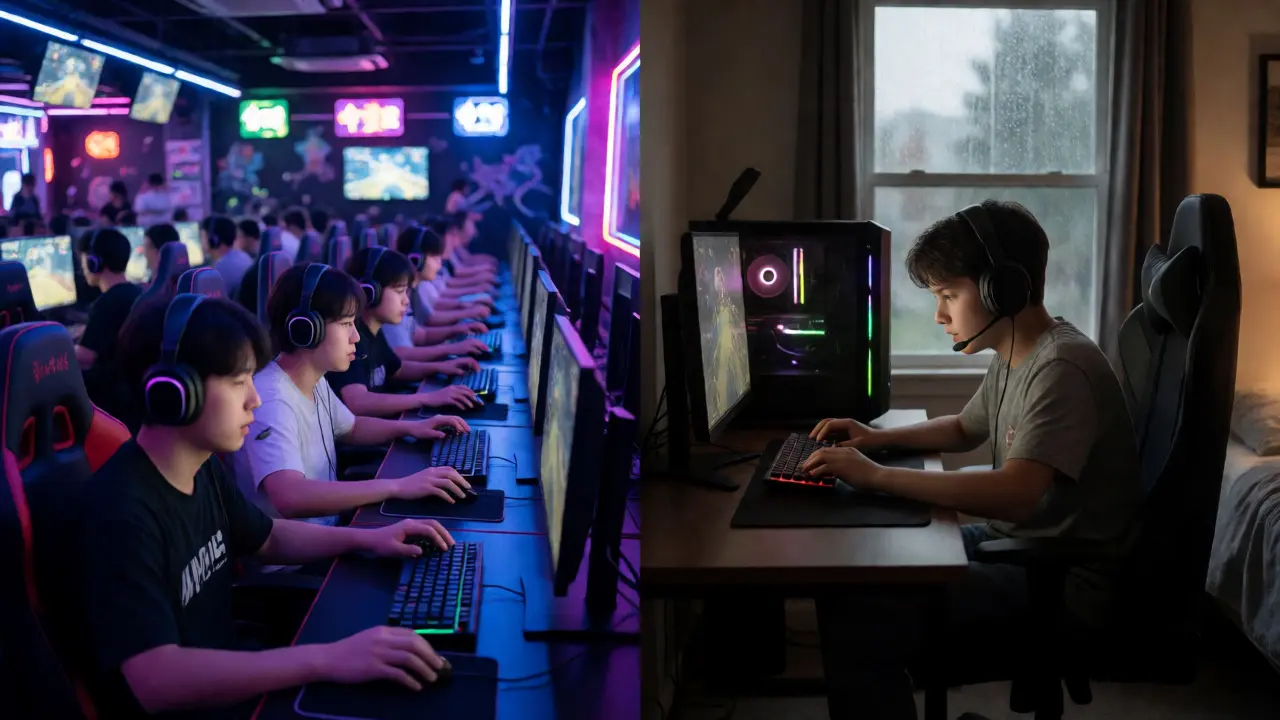
Imagine two teenagers playing the same game, League of Legends. One lives in Seoul, South Korea, where internet cafes are as common as coffee shops. The other lives in Portland, Oregon, where weekend hikes and craft breweries dominate social life. Both play for three hours a day. Are they at the same risk for gaming disorder? Probably not.
We often treat gaming addiction as a universal medical condition, defined by the World Health Organization’s ICD-11 criteria. But here is the catch: culture shapes how we play, why we play, and when playing becomes a problem. What looks like "addiction" in one country might be standard social bonding in another. If you’re trying to understand the real risks of excessive gaming, you can’t just look at screen time. You have to look at the cultural lens through which that screen time is viewed.
The Social Fabric of Play
In many East Asian countries, particularly South Korea and China, online gaming isn't just a hobby; it's a primary social infrastructure. In South Korea, the concept of Pc Bangs (PC rooms) serves as community hubs. For young people, going to a Pc Bang is equivalent to going to a mall or a pub in Western cultures. It is a sanctioned, communal activity.
This creates a paradox. High participation rates don't always correlate with high pathology. When gaming is integrated into daily social rituals, the stigma around "too much" play is lower. Conversely, in individualistic societies like the United States or the United Kingdom, gaming is often viewed as an isolating activity. Parents and educators frequently frame it as a distraction from "real" responsibilities. This external pressure can turn normal recreational use into a source of shame and anxiety, which ironically increases the likelihood of compulsive behavior as a coping mechanism.
Region Social Norm Primary Driver of Use Addiction Risk Factor South Korea Communal/Social Peer belonging Low stigma, high volume USA Individualistic Stress relief/Escape High stigma, isolation China Regulated/Family Achievement/Rank Parental conflict Nordics Balanced/Outdoor Casual leisure Low prevalence
Academic Pressure and Escapism
Why do some students game until 3 AM? In countries with intense academic competition, such as Japan, South Korea, and parts of Southeast Asia, gaming often serves as a necessary release valve. The pressure to perform in school is immense. Gaming provides a space where effort directly correlates with reward-a stark contrast to the ambiguous nature of academic success.
In these contexts, what clinicians might label as "escapism" is actually a functional adaptation. However, the risk spikes when this escape replaces sleep and physical health entirely. Studies indicate that while South Korea has higher rates of problematic internet use, the trajectory differs from Western models. In the West, addiction often stems from underlying depression or ADHD. In high-pressure Asian educational systems, it often stems from burnout. Treating them with the same therapy model fails because the root cause is different.
Family Dynamics and Parenting Styles
How parents react to gaming significantly impacts a child’s risk profile. In collectivist cultures, family approval matters more. If parents view gaming as a waste of potential, the resulting conflict can drive children deeper into virtual worlds for validation. We see this clearly in China, where the government implemented strict curfews for minors in online games. These measures weren't just about health; they were a response to widespread parental concern about academic decline.
In contrast, Scandinavian countries like Sweden and Norway tend to adopt a more permissive but balanced approach. Outdoor activities are culturally mandated for well-being. Because the baseline lifestyle already includes significant physical activity and social interaction outside the home, gaming remains one option among many. There is less "forbidden fruit" effect. Children aren't sneaking away to play; they are choosing between soccer, reading, or gaming. This autonomy reduces the compulsive urge to overplay.

Economic Factors and Accessibility
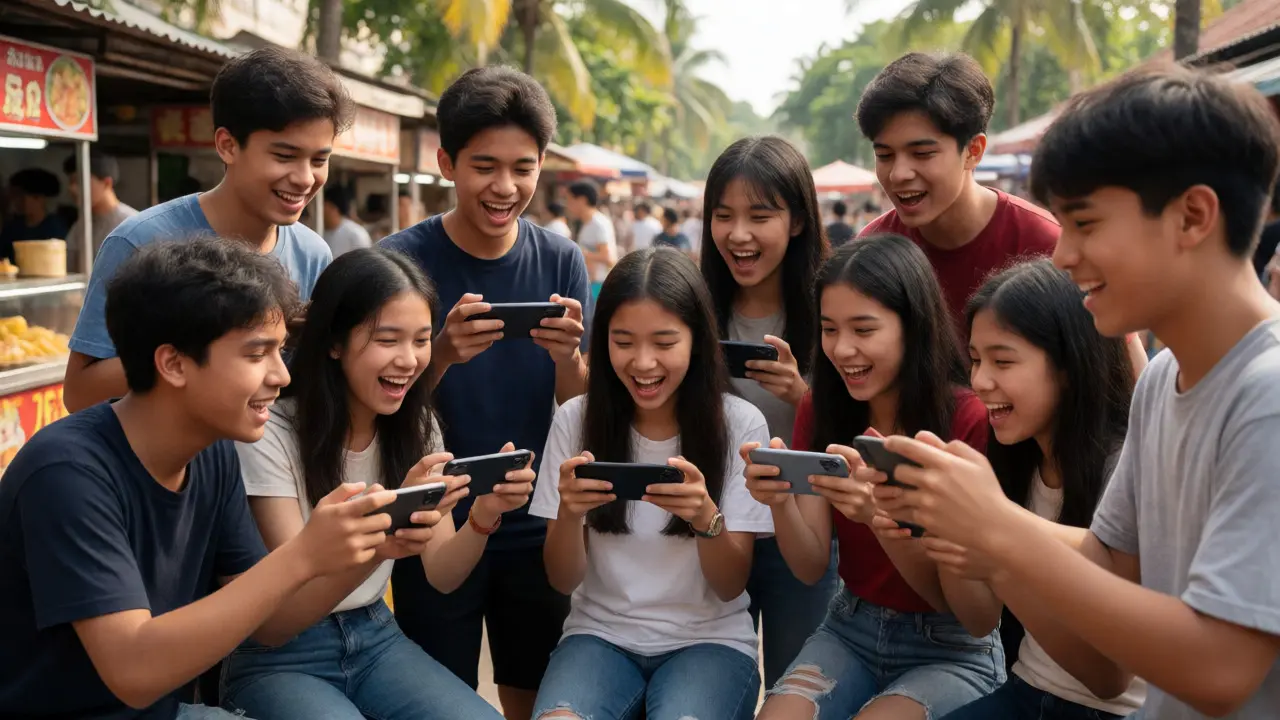
Let’s talk money. In developing nations across Latin America and Southeast Asia, mobile gaming dominates. Games like Mobile Legends: Bang Bang or PUBG Mobile are free-to-play and run on cheap devices. Here, gaming is the most affordable form of entertainment available.
This economic reality changes the addiction dynamic. If your only leisure option costs nothing, you will likely spend more time doing it. However, the social capital gained from being good at these games can be substantial. In Brazil, for example, esports stars are celebrated figures, similar to football players. The aspiration to become a professional gamer drives massive engagement. Is this addiction? Or is it career ambition? The line blurs when economic mobility is tied to gaming skill.
In wealthier nations, the barrier to entry is hardware cost. A high-end PC setup in the US or Germany represents a significant investment. This financial stake can create a sense of obligation to "get your money's worth," leading to longer sessions to justify the purchase. Yet, the abundance of alternative paid hobbies (travel, sports leagues, concerts) provides a natural brake on excessive gaming time.
Gender Roles and Expectations
Cultural views on gender also skew risk profiles. In traditional societies, boys are often encouraged to engage in competitive, strategic games, while girls may face stricter scrutiny regarding screen time. This double standard means that boys in conservative cultures might exhibit higher reported rates of problematic gaming simply because they have permission to play more. Girls who play excessively may hide their habits due to shame, leading to underreporting.
Conversely, in more progressive Western cultures, female gamers are increasingly visible. However, toxic online environments can still drive women to avoid multiplayer spaces, pushing them toward single-player immersive experiences. These solo games can foster deep emotional attachment and long playtimes without the social check-and-balance of team dynamics. Understanding these gendered pathways is crucial for accurate diagnosis.
Defining the Disorder Across Borders
The WHO classifies "Gaming Disorder" as a pattern of gaming behavior characterized by impaired control over gaming, increasing priority given to gaming, and continuation despite negative consequences. But how these symptoms manifest varies wildly.
In individualist cultures, negative consequences are often personal: missed work, poor grades, broken relationships. In collectivist cultures, the shame affects the whole family unit. A son failing out of university because he was gaming brings dishonor to the parents. This collective pressure can accelerate the crisis point, forcing intervention sooner than in individualist societies where the individual bears the burden alone.
Practical Steps for Culturally Aware Management
If you are worried about your own habits or those of someone you care about, context matters. Don't just count hours. Ask these questions:
- Is gaming replacing social connection or facilitating it? If you're chatting with friends in-game, it's social. If you're ignoring real-life friends to game, it's isolating.
- What is the cultural expectation? In your community, is gaming seen as a deviant act or a normal pastime? Internalizing stigma makes addiction worse.
- Are you escaping pain or pursuing joy? Using games to numb stress is a higher risk factor than using them for fun.
For parents, avoid blanket bans. Instead, negotiate boundaries that respect the child's social needs. In South Korea, successful interventions often involve family counseling rather than just cutting off Wi-Fi. In the US, cognitive-behavioral therapy focusing on underlying anxiety tends to yield better results.
Which country has the highest rate of gaming addiction?
South Korea and China typically report the highest rates of problematic internet and gaming use. This is partly due to higher penetration of broadband and mobile gaming, but also because of specific cultural pressures related to academic performance and social connectivity. However, diagnostic criteria vary, so direct comparisons should be made with caution.
Does culture affect how gaming addiction is diagnosed?
Yes. Clinicians must consider cultural norms. Behavior considered pathological in one culture (e.g., spending 4 hours a day gaming) might be normative in another. The DSM-5 and ICD-11 require that the behavior causes significant impairment, but what constitutes "significant" is culturally defined.
Why is gaming more stigmatized in the US than in Asia?
In the US, there is a strong cultural emphasis on productivity and outdoor physical activity. Gaming is often seen as sedentary and unproductive. In many Asian countries, gaming is deeply integrated into social structures and peer bonding, reducing the stigma associated with high levels of engagement.
Can mobile gaming addiction differ from PC/console addiction?
Yes. Mobile gaming is often shorter, more frequent, and accessible everywhere, leading to different patterns of use. In regions like Southeast Asia and Latin America, mobile gaming is the primary form of digital entertainment, making it a dominant vector for problematic use compared to console-centric markets like North America.
How can parents manage gaming risks across different cultures?
Parents should focus on balance rather than prohibition. Understanding the social value of gaming in their specific cultural context helps. Open communication about time limits, ensuring gaming doesn't displace sleep or schoolwork, and encouraging offline social activities are universally effective strategies.