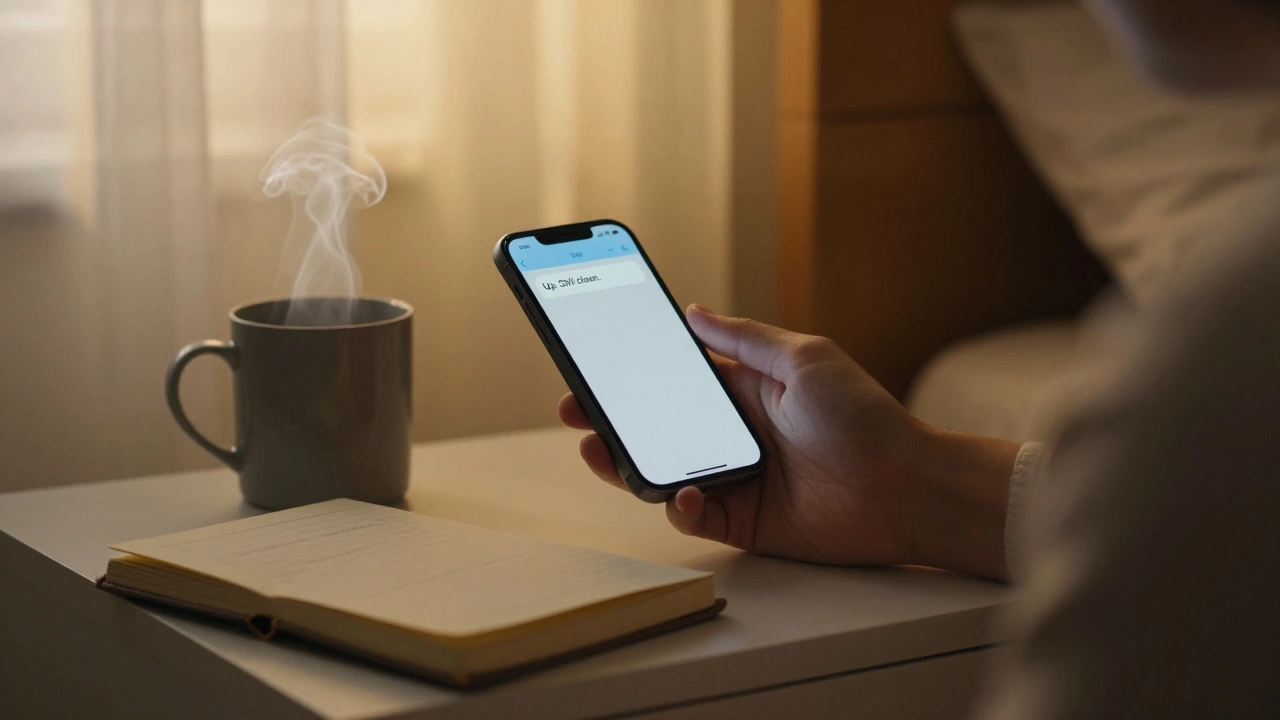
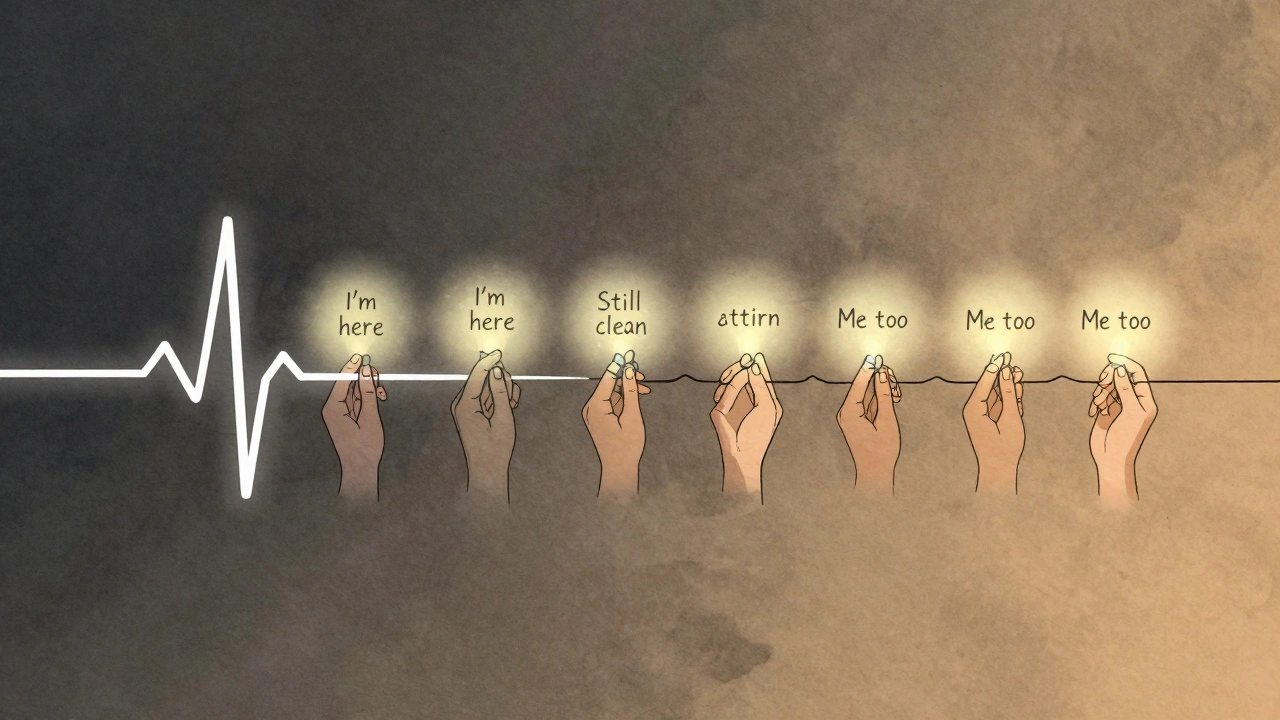
Starting your day with a simple check-in isn’t just a habit-it’s a lifeline. In recovery communities, the difference between staying sober and slipping back often comes down to what happens in the first 15 minutes after waking up. Not the gym, not the meditation app, not even the coffee. It’s the quiet, consistent moment when someone says, "I’m still here." And someone else replies, "Me too."
Why Check-Ins Matter More Than You Think
Recovery isn’t a solo mission. Studies from the National Institute on Drug Abuse show that people in structured peer support groups are 50% more likely to stay sober after one year than those trying alone. But structure doesn’t mean rigid meetings. It means rhythm. Daily check-ins create that rhythm.
Think of it like a heartbeat. You don’t need to run a marathon every day to stay healthy. You just need your heart to keep beating. Same with recovery. A daily check-in doesn’t fix everything. But it keeps you connected. It reminds you that you’re not alone in the quiet hours when cravings whisper the loudest.
One woman in a Portland recovery group told me she started texting her sponsor every morning at 7:15 a.m. Just three words: "Up. Still clean." Six months later, she didn’t need to send it anymore. She didn’t want to. The habit had rewired her brain. The urge to use had lost its grip because her first thought each morning was no longer "What can I do to feel better?" but "Who can I tell I’m still here?"
The Core Elements of a Strong Daily Check-In
Not all check-ins are created equal. A text that says "Hey" doesn’t do much. A 20-minute group call that turns into gossip doesn’t help either. Effective daily check-ins have three things in common:
- Consistency - Same time, same method, every day. Rain or shine.
- Specificity - Not just "I’m good," but "I felt shaky at 3 p.m. yesterday. Called my buddy. Didn’t drink."
- Reciprocity - You show up for others so they’ll show up for you. No one gets a free pass.
Some groups use voice notes. Others use a shared app like GroupMe or Slack. A few still rely on old-school text chains. Doesn’t matter how you do it. What matters is that you do it-daily.
How to Start a Daily Check-In Routine
If your community doesn’t have one yet, you don’t need permission to start it. You just need to be the first one to show up.
- Choose your format. Text? Group call? Private DMs? Pick one that’s easy and low-pressure. Text works for most.
- Set the time. Morning works best-before the day gets loud. 7 a.m. to 8 a.m. is ideal. Consistency beats perfection.
- Start small. Invite three people you trust. Not your whole group. Just three. If it sticks, it grows.
- Define the structure. No need to overcomplicate. Try: "How are you today? One win? One struggle?" That’s it.
- Lead by example. Be the first to reply. Be honest. Even if it’s hard. Say: "I woke up craving. Walked around the block. Didn’t use." That’s powerful.
One man in Eugene started a check-in group with two others after his third relapse. He didn’t have a fancy plan. He just sent this message: "I’m not okay. But I’m trying. Anyone else?" Two people replied. Three months later, they were a group of 17. No therapist. No funding. Just honesty.

What to Say (and What Not to Say)
People get nervous about check-ins because they think they need to sound polished. They don’t. They need to sound real.
Good examples:
- "Woke up anxious. Went to the 12-step meeting at 7:30. Felt better."
- "Had a rough night. Didn’t sleep. Still sober. Proud of that."
- "I’m tired. But I’m here. Thank you for being here too."
Bad examples:
- "Just checking in. 😊" - Too vague. Doesn’t invite connection.
- "I’m fine. Don’t worry about me." - Shut downs kill trust.
- "Ugh, I almost used. But I didn’t. LOL." - Using humor to mask pain makes others feel unsafe.
The goal isn’t to sound brave. It’s to sound human. And when you do, others will too.
What Happens When Check-Ins Stop
It’s not dramatic. No sirens. No crisis. Just silence.
One group in Salem had daily check-ins for 18 months. Then someone moved. Then someone got busy. Then someone stopped replying. Within six weeks, two people relapsed. Not because they wanted to. But because they stopped feeling seen.
Recovery thrives on connection. When that connection fades, the risk creeps in. A missed check-in isn’t just a missed message. It’s a missed opportunity to say: "You matter. You’re not alone."
That’s why some groups have a "no ghosting" rule. If you don’t reply for two days, someone calls you. Not to judge. Just to check. Because if you’re not answering, you might be in danger.
Tools That Help (Without Overcomplicating)
You don’t need apps. But if you like them, here are a few that actually work:
- GroupMe - Simple group texts. No ads. No login. Free.
- Slack - Great if you want separate channels for check-ins, memes, and resources.
- Daylio - A mood tracker that lets you log daily wins and struggles. Exportable.
- Texting - Still the most reliable. No internet? No problem.
One group in Bend uses a Google Form that auto-sends a daily email at 7 a.m. with three questions. People reply by noon. No pressure. No drama. Just data. They track their own progress. And they’ve gone 14 months without a relapse.
When Check-Ins Feel Like a Chore
Sometimes, the routine feels heavy. Like another task on your list. Like you’re doing it for them, not for you.
That’s normal. Recovery isn’t always uplifting. Sometimes it’s grinding.
When that happens, tweak it. Change the time. Change the format. Ask for a different kind of response: "What’s one thing you’re grateful for today?" or "What’s one small thing you did for yourself?"
Or skip it for a day. Just one. Then come back. No guilt. No shame. The point isn’t perfection. It’s presence.
One guy in Tacoma told me he stopped check-ins for two weeks after his mom died. He didn’t reply. No one pushed him. No one judged. On the 15th day, he sent one message: "I miss her. I’m still sober." That’s all it took. The group replied with silence. Then with photos of her. Then with stories. He didn’t need advice. He needed to know he wasn’t forgotten.
Check-Ins Aren’t Therapy. But They’re Medicine.
They don’t replace counseling. They don’t fix trauma. They don’t erase addiction. But they do something deeper: they rebuild trust. In yourself. In others. In the idea that tomorrow can be better than today.
Recovery communities aren’t about fixing people. They’re about holding space. Daily check-ins are the quietest, most powerful way to do that.
If you’re in recovery, start tomorrow. One message. One person. One day. That’s all it takes.
If you’re not in recovery, but you care about someone who is-ask them: "Do you have a daily check-in?" If not, offer to be the first one to send it.
What if no one replies to my daily check-in?
It happens. People are busy, overwhelmed, or struggling themselves. Don’t take it personally. Send one more message the next day. If it keeps happening, talk to someone in your group privately. Maybe they need a different time. Or maybe they’re not ready. Keep showing up. Your consistency matters more than their response.
Can I do daily check-ins if I’m not in a formal recovery group?
Absolutely. Recovery doesn’t require a program. It requires connection. Find one or two people you trust-a friend, a coworker, a neighbor-and start texting them daily. You don’t need permission. You just need honesty. Say: "I’m trying to stay sober. Can we check in every morning?" Most people will say yes. And if they don’t, keep going anyway. Your sobriety doesn’t depend on them.
How do I handle someone who uses check-ins to vent or complain?
It’s okay to set boundaries. You can say: "I’m here for you, but I need us to keep this focused on progress, not just pain." If someone keeps draining the group, gently suggest they talk to a counselor or sponsor. Recovery communities aren’t crisis lines. They’re support systems. You can care deeply without carrying the whole weight.
Is it okay to check in more than once a day?
Yes. Some people need morning and evening check-ins. Others check in after a tough meeting or a trigger. There’s no rule. If it helps you stay grounded, do it. Just make sure it’s not replacing real connection. A quick text after work is fine. A 10-message thread because you’re anxious? That’s a sign you might need to talk to someone face-to-face.
What if I’m tempted to use right after I check in?
That’s when the check-in matters most. Don’t delete the message. Don’t hide it. Reply again: "I just felt the urge. I’m sitting here. Still sober." That’s not failure. That’s courage. Your group will see you. And they’ll remind you: you’re not alone. That’s the whole point.
If you’re reading this and you’re in recovery, your next check-in is waiting. Don’t wait for tomorrow. Send it now. Just three words: "I’m still here." Someone out there needs to hear it. And you? You need to say it.