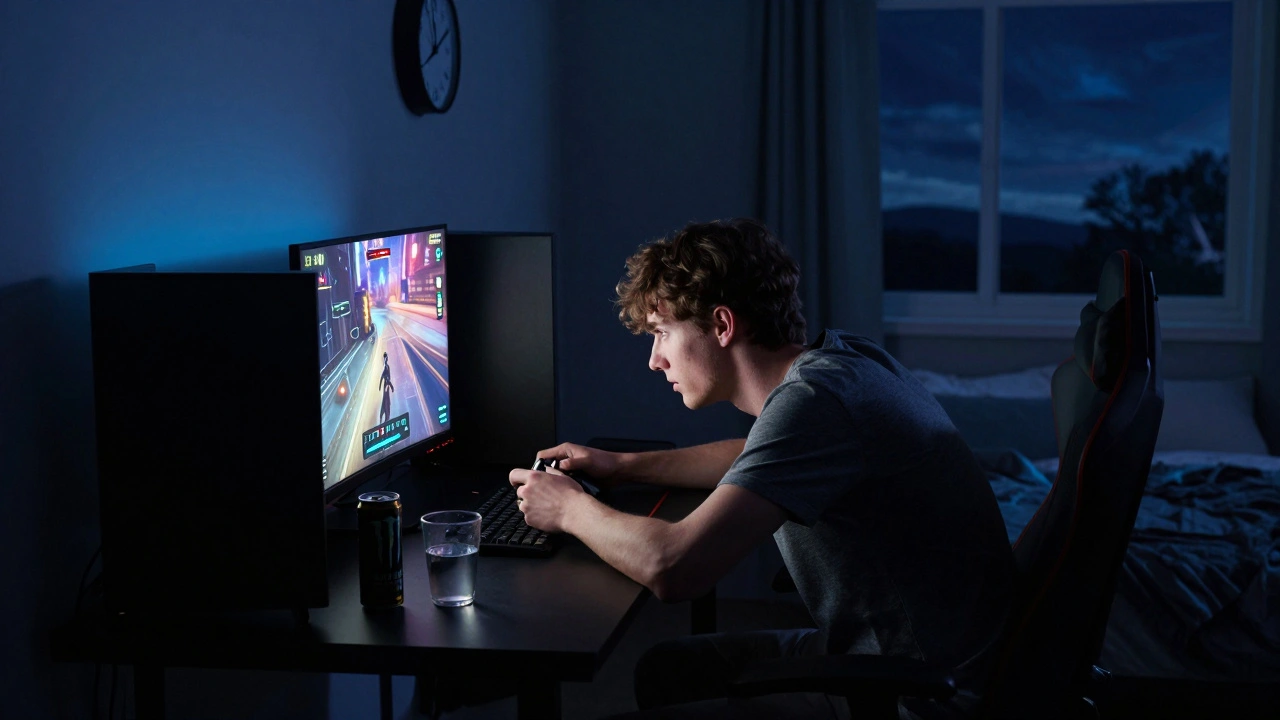
It sounds like something out of a movie: a young man sits down to play his favorite game, and hours later, he’s gone. No warning. No struggle. Just silence. These stories aren’t fiction. They’ve happened. And they’re not rare enough to ignore.
When Gaming Stops Being Fun
Gaming is supposed to be a way to relax, connect, or escape. But for some, it becomes a trap. Not because they’re weak-willed, but because the body doesn’t know how to say "stop." When someone plays for 12, 18, or even 48 hours straight, their body starts to shut down. Not because of the game itself, but because of what happens when you ignore basic human needs.
In 2007, a 26-year-old man in China died after playing World of Warcraft for 21 straight hours. He collapsed at his computer. The official cause? Cardiac arrest from extreme exhaustion. No drugs. No violence. Just fatigue, dehydration, and a body pushed past its limit.
That same year, a 17-year-old in South Korea died after playing StarCraft for 50 hours straight. He was found slumped over his keyboard. Autopsy showed severe dehydration, brain swelling, and heart failure. He hadn’t slept in two days. He hadn’t eaten properly in over a week.
These aren’t outliers. They’re warning signs.
The Body Can’t Keep Up
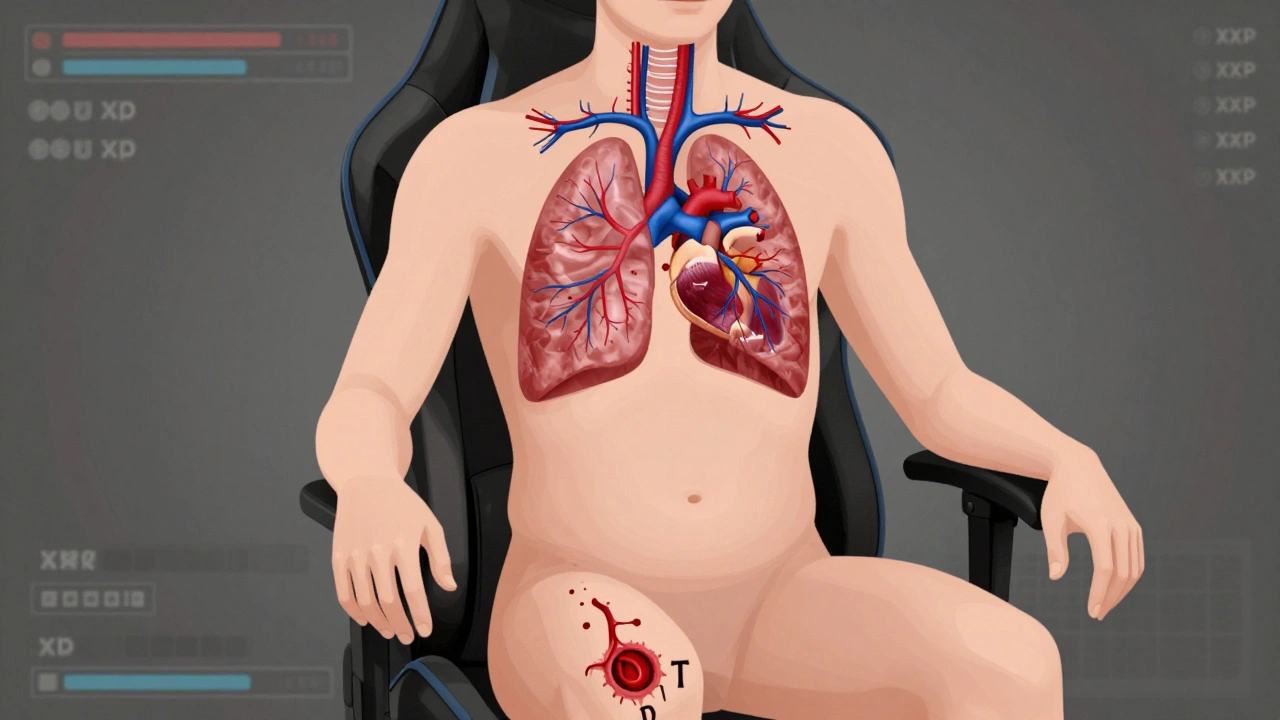
Your body has limits. When you sit for too long, your blood starts to pool. Your muscles stiffen. Your circulation slows. Your heart has to work harder just to pump blood to your brain. Add in dehydration - which happens fast when you’re focused on a screen and forget to drink water - and you’re one step away from a blood clot.
Deep vein thrombosis (DVT) is one of the most common killers in extreme gaming cases. A clot forms in the leg, breaks loose, and travels to the lungs. That’s called a pulmonary embolism. It can kill in minutes. No one sees it coming. The gamer just stops breathing.
And it’s not just the heart and lungs. Your eyes strain. Your spine compresses. Your stomach goes empty. Your brain floods with dopamine, then crashes. Sleep deprivation messes with your immune system, your judgment, even your body’s ability to regulate temperature.
One 2021 study from the University of Oregon tracked 142 gamers who played over 10 hours daily for a month. 68% showed signs of early-stage DVT. 41% had irregular heart rhythms. 89% reported chronic headaches. None of them thought they were at risk.
What Really Kills You
It’s not the game. It’s the silence.
No one says, "I’m tired." No one stands up. No one checks in. The controller becomes an extension of the hand. The screen becomes the whole world. The body’s signals - hunger, thirst, pain, fatigue - get drowned out by the next level, the next kill, the next win.
The real danger isn’t the game. It’s the environment. The lone gamer in a dark room. The lack of supervision. The belief that "just one more match" won’t hurt. That’s how it starts.
Most deaths from gaming happen in young men between 18 and 30. Why? They’re more likely to play for long stretches. They’re less likely to have someone checking on them. They’re more likely to believe they’re invincible.
And here’s the worst part: no one talks about it. Gaming communities celebrate marathon sessions. Streamers brag about 24-hour streams. YouTube videos show people playing for days. No one says, "This could kill you."
Real Signs You’re in Danger
It’s not about how long you play. It’s about how you feel while you play.
- Your legs feel numb or heavy - like they’re asleep and won’t wake up.
- You’re dizzy when you stand up, even after sitting for just an hour.
- Your heart races for no reason. You feel like you’re going to pass out.
- You haven’t drunk water in more than 4 hours.
- You’re skipping meals because "you’ll eat after this."
- You’re sleeping less than 4 hours a night for more than 3 days straight.
If even one of these sounds familiar, you’re not just tired. You’re in danger.
How to Play Safely
You don’t have to quit gaming. You just have to respect your body.
- Set a hard 4-hour limit per session. Use a timer. Not a soft limit. Not "I’ll stop when I finish this." A hard stop.
- Get up every 45 minutes. Walk around. Stretch your legs. Look out a window. Do 10 squats. Anything that gets your blood moving.
- Drink water. Not energy drinks. Not soda. Water. Aim for one glass every hour. Even if you’re not thirsty.
- Eat something real every 4 hours. Protein, not chips. Fruit, not candy. Your brain needs fuel, not sugar spikes.
- Never play past midnight without sleep. Even if you’re "in the zone." Sleep deprivation is a silent killer.
- Let someone know when you’re gaming for long hours. A roommate. A partner. A friend. Ask them to check on you.
These aren’t "tips." They’re survival rules. The same rules that keep truck drivers and surgeons alive after long shifts.
Why This Matters Now
Gaming is bigger than ever. In 2025, over 3.2 billion people worldwide play video games. That’s 40% of the planet. And the average playtime? Over 7 hours per week. For many, it’s 20, 30, even 50 hours.
Companies don’t warn you. Platforms don’t alert you. There’s no pop-up saying, "You’ve been playing for 10 hours. Please rest."
But your body does. And if you ignore it, it doesn’t yell. It just shuts down.
What Comes Next
Some countries are starting to act. South Korea requires gaming companies to send alerts after 6 hours of play. China limits minors to 3 hours per week. Taiwan has public health campaigns about gaming fatigue.
In the U.S.? Nothing. No warnings. No laws. Just silence.
That means you have to be your own guardian. If you’re playing, and you feel off - stop. Get up. Drink water. Breathe. Sleep. Your next game will still be there tomorrow.
But your life? It won’t wait.