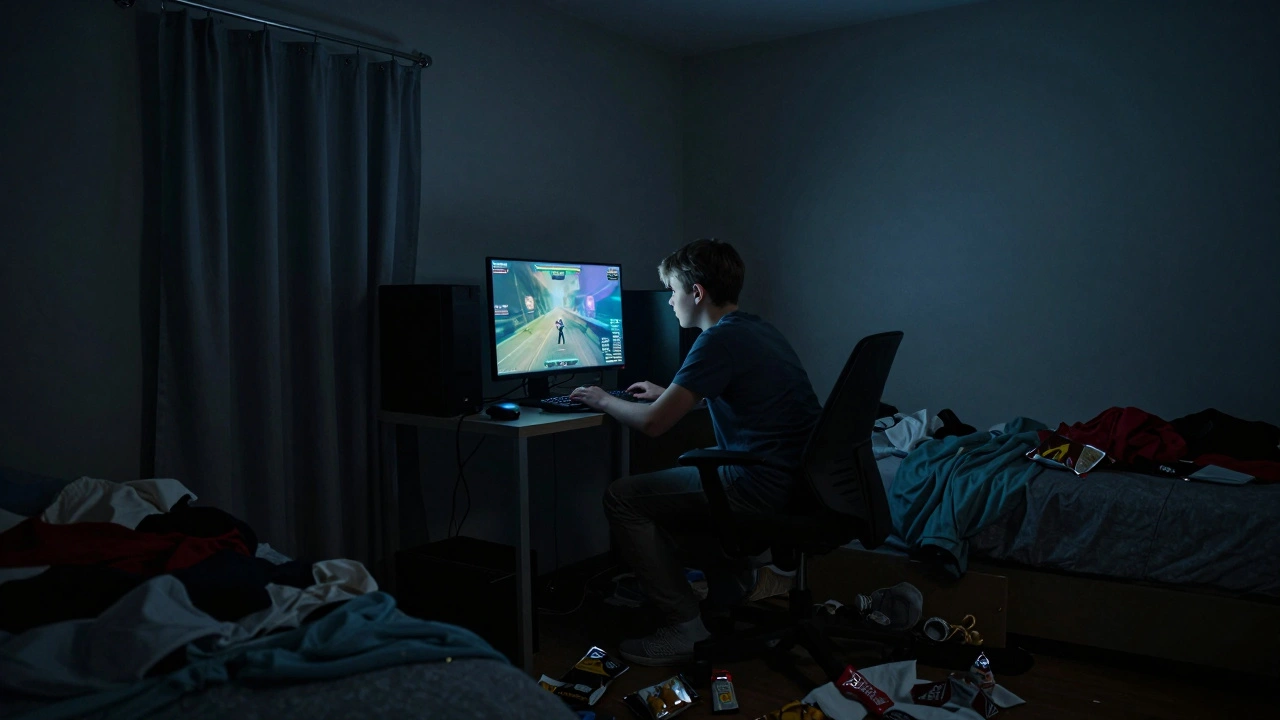
Imagine a teenager who stops eating and showering because they are climbing the ranks in a competitive online arena. To a parent, it looks like a total collapse of discipline. To a doctor, it's a puzzle: is this just a passionate hobby, or has it crossed the line into a clinical pathology? The line between "heavy gaming" and a formal disorder isn't a physical wall; it's a set of shifting thresholds that clinicians use to decide when a patient needs medical intervention.
Key Takeaways for Understanding Gaming Disorder
- Diagnosis relies on the persistence of symptoms over a 12-month period.
- The core requirement is the loss of control over gaming habits.
- Functional impairment in personal, family, and social areas is the primary trigger for diagnosis.
- Distinction is made between the game's design (predatory mechanics) and the player's vulnerability.
Defining the Boundary of Internet Gaming Disorder
When we talk about Internet Gaming Disorder is a behavioral addiction characterized by impaired control over gaming and prioritization of the activity over other life interests. It isn't about how many hours someone spends with a controller in their hand. You can spend 60 hours a week coding a game or practicing a musical instrument without being "addicted." The real threshold is found in the disruption of life's basic functions.
Clinicians look for a specific pattern of behavior that doesn't just happen during a "crunch" period of a new game release but persists throughout the year. If a person spends three weeks in an obsessive loop during a summer vacation but returns to a healthy routine in September, they likely haven't hit the diagnostic threshold. The persistence factor is what separates a phase from a disorder.
The DSM-5 Approach to Thresholds
The American Psychiatric Association provides a framework in the DSM-5 (Diagnostic and Statistical Manual of Mental Disorders), although it lists the condition under "Conditions for Further Study." To meet the threshold, a patient typically needs to exhibit five or more specific symptoms over a year. These include preoccupation with gaming, withdrawal symptoms when the game is taken away, and the tendency to lie to family members about the amount of time spent playing.
But here is where it gets tricky: not all five symptoms are weighted equally. A clinician might see a patient who is obsessed with a game but still maintains a 4.0 GPA and a thriving social life. In that case, the "impairment" threshold isn't met. The DSM-5 approach is essentially a checklist, but the clinical judgment comes in deciding if those checks actually lead to a broken life.
How the ICD-11 Changes the Game
The World Health Organization took a bolder step with the ICD-11 (International Classification of Diseases). They officially recognized Gaming Disorder as a diagnosable condition. Unlike the DSM, which uses a symptom-count method, the ICD-11 focuses on three core pillars: impaired control, increasing priority given to gaming, and continuation of gaming despite negative consequences.
| Criteria | DSM-5 (Proposed) | ICD-11 (Official) |
|---|---|---|
| Method | Symptom Checklist (5+ items) | Core Behavioral Pillars |
| Timeframe | 12 Months | Typically 12 Months |
| Primary Focus | Behavioral symptoms/Preoccupation | Functional impairment/Loss of control |
| Status | Condition for further study | Recognized Medical Diagnosis |
For a clinician, the ICD-11 is often more practical because it doesn't require a strict count. If a patient has completely stopped attending school and has developed severe insomnia because of a Massively Multiplayer Online Role-Playing Game (MMORPG), the functional impairment is so severe that the diagnosis is clear, regardless of whether they check off exactly five symptoms.

Distinguishing Addiction from Comorbidity
One of the biggest hurdles in setting diagnostic thresholds is the overlap with other mental health issues. Often, gaming isn't the primary problem; it's a coping mechanism. This is what clinicians call Comorbidity. For example, a patient with Attention Deficit Hyperactivity Disorder (ADHD) may find the constant dopamine loops of a game far more rewarding than a classroom setting.
If a clinician treats the gaming as the primary disorder without addressing the underlying ADHD or depression, the treatment usually fails. The threshold for "disorder" is only met if the gaming behavior is not better explained by another condition. If the patient stops gaming but still can't focus or feels profound sadness, the gaming was a symptom, not the cause.
The Role of Game Design in Clinical Assessment
Modern clinicians are increasingly looking at "dark patterns" in game design. When a game uses Loot Boxes or "fear of missing out" (FOMO) mechanics, it artificially lowers the threshold for addiction. The game is essentially engineered to keep the player in a state of perpetual engagement.
A clinician must determine if the patient is naturally prone to addiction or if they are reacting to a predatory environment. For instance, a game that rewards players for logging in every single day at a specific time creates a behavioral anchor. When a patient misses this anchor and suffers a panic attack, the clinician sees an external trigger that mimics a physiological withdrawal, complicating the diagnostic process.

Practical Application: The Clinical Decision Tree
When a patient enters the clinic, the practitioner doesn't just start a checklist. They follow a mental decision tree to see if the diagnostic threshold has been breached:
- Frequency and Duration: Is the gaming excessive? (This is the baseline, not the diagnosis).
- Control: Can the patient stop when they want to? If they try to cut back but consistently fail, the threshold for "Impaired Control" is met.
- Priority: Has gaming replaced basic biological needs (sleep, hygiene) or critical social obligations?
- Persistence: Has this pattern lasted for at least a year, or is it a temporary escape from a current crisis (like a divorce or job loss)?
- Alternative Explanation: Is this behavior a result of an untreated mood disorder or neurodivergence?
If the answers to the second, third, and fourth points are "Yes," and the fifth is "No," the patient has crossed the diagnostic threshold for a behavioral addiction.
Next Steps for Families and Providers
If you suspect a loved one or patient has crossed these thresholds, the goal isn't necessarily "zero gaming." Total abstinence is rarely realistic in a digital world. Instead, clinicians focus on "Harm Reduction." This involves setting strict boundaries, reintegrating the person into physical social circles, and treating any co-occurring mental health issues.
For those in a clinical setting, the shift is moving toward a biopsychosocial model. This means looking at the biological predisposition, the psychological state, and the social environment. When these three intersect with the predatory design of modern software, the risk of hitting the diagnostic threshold spikes.
Does playing a game for 10 hours a day automatically mean a diagnosis?
No. Time spent is not the primary metric. A professional esports player or a dedicated hobbyist might play for 10+ hours but still maintain a healthy relationship with their life, responsibilities, and mental health. The threshold is based on the loss of control and negative impact on life, not the clock.
What is the difference between gaming addiction and a gaming habit?
A habit is a regular activity that provides enjoyment and can be paused or scheduled. An addiction involves a compulsion where the activity is prioritized over health, work, and relationships, and attempting to stop results in psychological distress or withdrawal.
Why is the 12-month timeframe important?
The one-year mark helps clinicians rule out temporary "hyper-fixations" or situational escapes. Many people use gaming to cope with a specific short-term stressor. A permanent disorder requires a persistent pattern that resists change over a full annual cycle.
Can loot boxes cause a gaming disorder?
Loot boxes utilize variable ratio reinforcement, the same mechanism found in slot machines. While they may not cause a disorder in everyone, they can act as a catalyst for people already predisposed to addictive behaviors, making it much easier to cross the diagnostic threshold.
How do clinicians treat Gaming Disorder if it's not like a drug addiction?
Cognitive Behavioral Therapy (CBT) is the gold standard. It helps patients identify the triggers that lead to excessive gaming and develop healthier coping mechanisms. Treatment also involves "social prescribing," which encourages the patient to find dopamine-rewarding activities in the real world.