
Is it a lack of focus, an uncontrollable urge to repeat actions, or just a really good game? This question keeps parents, teachers, and clinicians up at night. When someone spends hours staring at a screen, the immediate assumption is often Gaming Disorder, which is a pattern of behavior characterized by impaired control over gaming, increasing priority given to gaming over other activities, and continuation despite negative consequences. But that label might be wrong. It could be Attention-Deficit/Hyperactivity Disorder, commonly known as ADHD, a neurodevelopmental condition affecting attention and impulse control, or even Obsessive-Compulsive Disorder, often referred to as OCD, an anxiety-related disorder involving intrusive thoughts and repetitive behaviors. Confusing these conditions leads to wasted time, frustration, and treatments that don’t work. Getting the diagnosis right is the only way to get the help that actually sticks.
The Overlap That Tricks Everyone
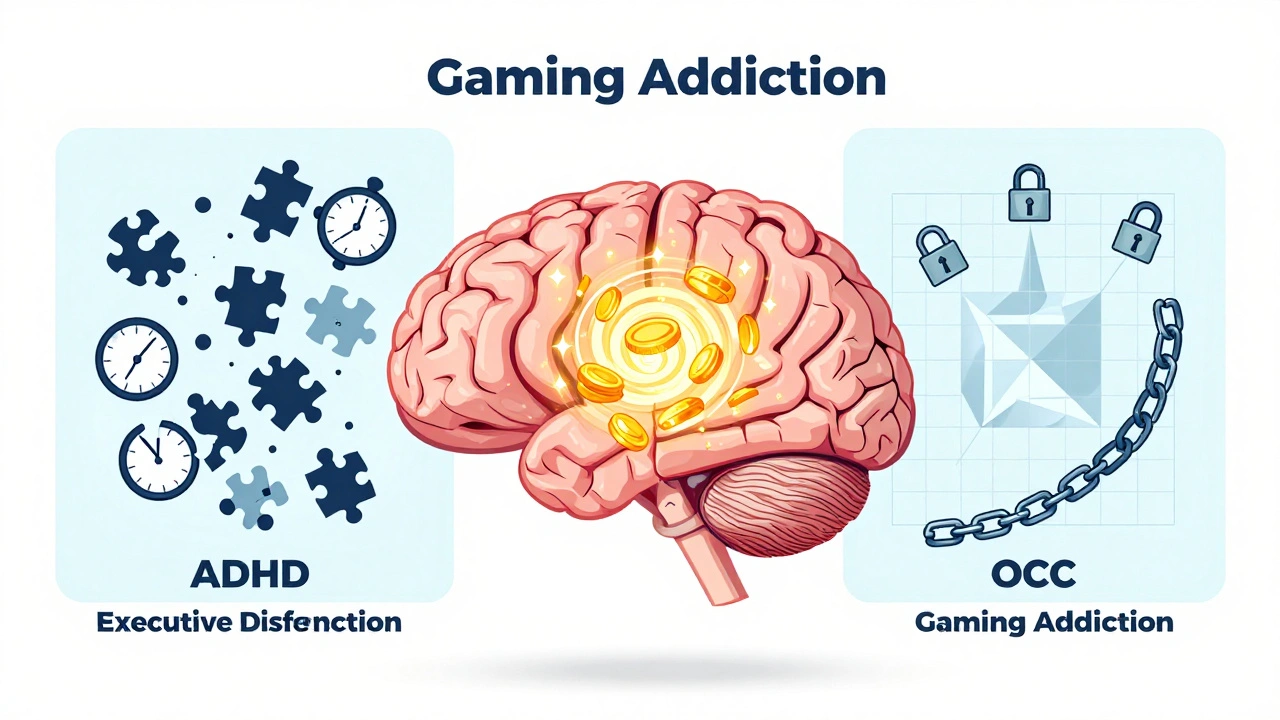
The reason this mix-up happens so often is because the symptoms look identical from the outside. A teenager who cannot stop playing Minecraft looks like someone with a problem. But why are they playing? Are they escaping because their brain won’t let them focus on homework (ADHD)? Are they playing because they feel anxious unless they complete every single in-game task perfectly (OCD)? Or are they playing because the game itself has hijacked their reward system (Gaming Addiction)?
Clinicians call this "symptom overlap." The World Health Organization (WHO) added Gaming Disorder to the International Classification of Diseases (ICD-11) in 2019, but it warned explicitly about distinguishing it from other mental health issues. If you treat the symptom without understanding the root cause, you’re throwing money and energy into a black hole. For example, strict internet limits might calm down a child with gaming addiction temporarily, but for a child with ADHD, those same limits can trigger severe emotional dysregulation and meltdowns because they’ve lost their primary coping mechanism.
ADHD: The Brain Seeking Dopamine
When we talk about ADHD, we aren’t just talking about being distracted. We are talking about a brain that is chronically under-stimulated. People with ADHD have lower baseline levels of dopamine, the neurotransmitter responsible for motivation and pleasure. Video games are essentially dopamine machines. They provide instant feedback, clear goals, and constant rewards. For a neurotypical brain, a game is fun. For an ADHD brain, a game is medicine-it finally makes the world feel manageable and engaging.
If the core issue is ADHD, the gaming isn’t the disease; it’s the symptom. You will notice that the person struggles to engage in almost any low-stimulation activity, not just avoiding games. They lose keys, forget appointments, and struggle to finish books or TV shows that don’t hook them immediately. The gaming is intense, yes, but it’s usually part of a broader pattern of impulsivity and executive dysfunction. They might start a new game with fiery enthusiasm but abandon it when the novelty wears off, moving to the next high-dopamine hit. This is different from the rigid adherence seen in addiction or OCD.
OCD: The Need for Control and Completion
OCD works differently. It is driven by anxiety, not boredom or under-stimulation. In the context of gaming, OCD manifests as compulsive checking, repeating, or organizing. A player with OCD might not care about winning the match; they care about making sure their inventory is sorted by color, or that they haven’t missed a single hidden item in a level. If they feel they made a mistake, they might restart the entire mission because the thought of imperfection causes physical distress.
The key difference here is the internal experience. With gaming addiction, the player feels excitement, flow, and desire. With OCD, the player feels tension, fear, and relief. They play to neutralize an obsessive thought. "If I don’t collect all these coins, something bad will happen," or "I must beat this boss three times to make the anxiety go away." This ritualistic behavior is exhausting. Unlike the ADHD gamer who bounces between interests, the OCD gamer gets stuck in loops. They may spend hours on a single, trivial task because stopping feels impossible due to the intrusive thoughts driving the compulsion.
Gaming Disorder: The Hijacked Reward System
Gaming Disorder, as defined by the WHO, is distinct because the behavior is centered entirely on the gaming activity itself. The individual loses control over when they start, how long they play, and when they stop. Crucially, they continue despite significant negative impacts on their personal relationships, education, or job performance. Unlike ADHD, where the gaming is one of many areas of difficulty, or OCD, where the gaming is a vehicle for anxiety reduction, Gaming Disorder involves a genuine craving for the activity.
You’ll see signs of withdrawal. If you take the console away, the person doesn’t just get bored or anxious; they become irritable, depressed, or aggressive. They lie about how much they play. They neglect hygiene, sleep, and eating. The priority shift is total: gaming becomes more important than family, friends, and basic self-care. The brain’s reward pathways have been reshaped to prioritize virtual achievements over real-world survival needs. This is not a preference; it is a pathological dependence similar to substance use disorders, but triggered by digital stimuli rather than chemicals.
| Feature | Gaming Disorder | ADHD | OCD |
|---|---|---|---|
| Primary Driver | Craving for reward/escape | Need for stimulation/dopamine | Anxiety reduction/control |
| Behavior Pattern | Loss of control, excessive duration | Impulsivity, switching tasks | Ritualistic, repetitive loops |
| Reaction to Limits | Withdrawal, anger, cravings | Frustration, emotional outbursts | Panic, increased anxiety |
| Other Life Areas | Neglected specifically for gaming | Struggles across all low-stim tasks | Obsessions/compulsions elsewhere too |
| Internal Feeling | Excitement, flow, numbness | Boredom, restlessness | Tension, fear, relief |

Why Misdiagnosis Is Dangerous
Getting this wrong has real consequences. If you diagnose a child with ADHD as having gaming addiction, you might impose harsh restrictions. This strips them of their only effective tool for managing their brain chemistry, leading to school failure and family conflict. Conversely, if you diagnose a true Gaming Disorder case as ADHD, you might prescribe stimulants. While stimulants help focus, they can sometimes exacerbate addictive behaviors by increasing arousal and drive, potentially making the gaming habit worse.
For OCD, misdiagnosing it as addiction means missing the need for Exposure and Response Prevention (ERP), the gold-standard therapy for OCD. Instead, you might try cognitive-behavioral strategies aimed at addiction, which fail to address the underlying intrusive thoughts. The patient remains stuck in their rituals, feeling broken because the treatment doesn’t touch the source of their pain. Accurate differential diagnosis protects patients from ineffective interventions and reduces the stigma associated with misunderstood behaviors.
Steps to Clarify the Picture
How do you tell them apart? Start by looking at the history. Did the difficulties with attention or anxiety exist before the gaming started? If yes, it’s likely ADHD or OCD. If the person was functioning well until they discovered a specific game or genre, Gaming Disorder is more probable. Next, observe the nature of the engagement. Ask them what they are thinking while playing. Are they trying to win? Are they trying to feel better? Or are they trying to stop a bad feeling?
Consult a professional who specializes in both behavioral addictions and neurodevelopmental disorders. Many therapists are experts in one area but not the other. A comprehensive evaluation should include standardized rating scales for ADHD (like the ASRS), OCD (like the Y-BOCS), and Internet Gaming Disorder (like the IGDS9-SF). Don’t rely on a quick chat. These conditions often co-exist-a person can have ADHD and develop Gaming Disorder later. Untangling the knot requires patience and expert eyes.
Can someone have both ADHD and Gaming Disorder?
Yes, comorbidity is common. Individuals with untreated ADHD are at higher risk for developing Gaming Disorder because games provide the stimulation their brains crave. Treatment must address both conditions simultaneously, typically starting with ADHD management to reduce the underlying drive for stimulation.
How does OCD manifest in video games specifically?
OCD in gaming often looks like compulsive collecting, perfecting stats, or repeating sequences to alleviate anxiety. The player may not enjoy the game but feels unable to stop due to intrusive thoughts about incompleteness or potential negative outcomes if they break their routine.
What is the first step in getting a correct diagnosis?
The first step is seeking a comprehensive psychological evaluation from a clinician experienced in differential diagnosis of behavioral addictions and neurodevelopmental disorders. Be prepared to discuss the timeline of symptoms, including whether attention or anxiety issues predated gaming habits.
Does treating ADHD cure gaming addiction?
Not necessarily. Treating ADHD can significantly reduce the urge to game for stimulation, but if Gaming Disorder has established its own neural pathways, additional behavioral therapy may be needed to address the addictive patterns directly.
Are there self-assessment tools available?
While online quizzes can offer insights, they are not diagnostic. Validated tools like the Adult ADHD Self-Report Scale (ASRS) or the Yale-Brown Obsessive Compulsive Scale (Y-BOCS) should be interpreted by a qualified healthcare professional to ensure accurate results.