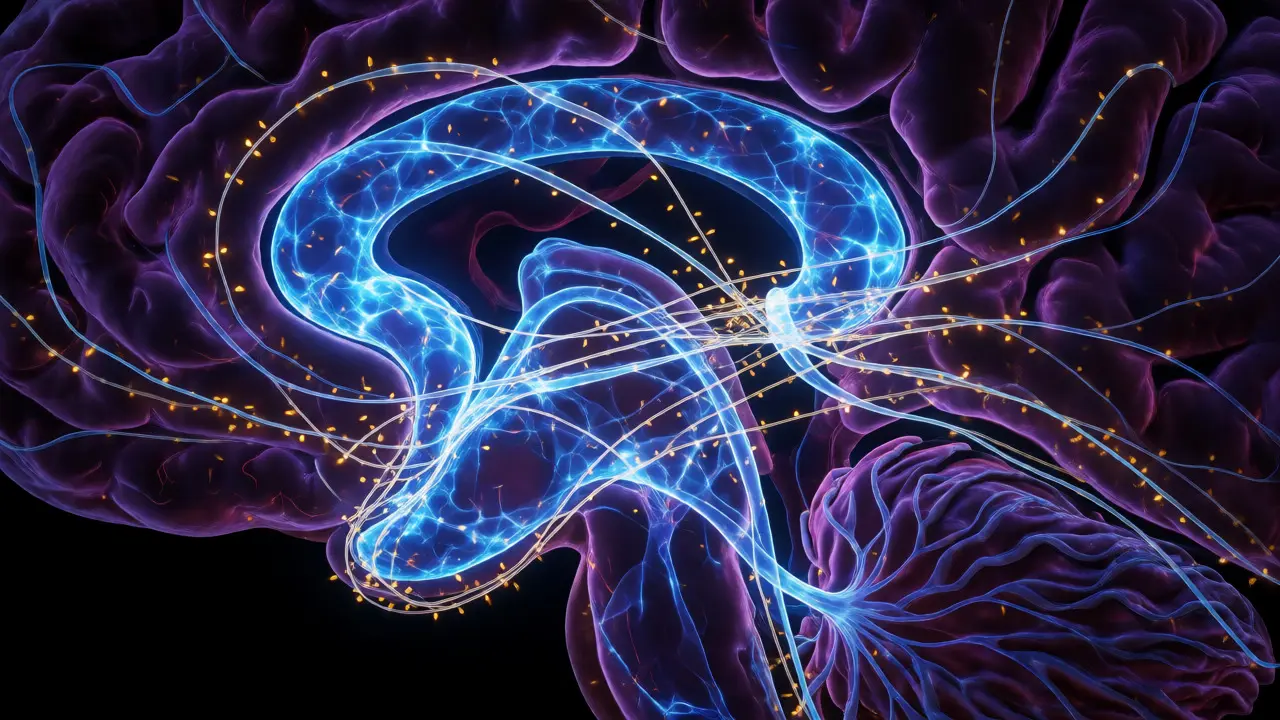
You know that feeling when you just have to play "one more round"? It’s not just stubbornness or poor time management. It’s biology. Specifically, it’s your brain’s wiring reacting to digital stimuli in ways it wasn’t designed for. When we talk about Internet Gaming Disorder (IGD), we aren't just talking about a bad habit. We are looking at a specific hijacking of the brain's reward system. The key player here is dopamine, and the main stage is the mesolimbic pathway. Understanding this isn't just academic trivia; it explains why putting down the controller feels physically painful and why quitting cold turkey often fails without understanding the underlying neural mechanics.
The Core Mechanism: What Is the Mesolimbic Pathway?
To grasp why gaming can become disordered, you first need to understand the hardware involved. The Mesolimbic Pathway is a bundle of nerve fibers that connects two critical areas of the brain: the ventral tegmental area (VTA) and the nucleus accumbens. Think of it as the brain's primary highway for pleasure and motivation. In evolutionary terms, this system was crucial for survival. When our ancestors found high-calorie food or reproduced, this pathway fired, releasing Dopamine, a neurotransmitter that signals "this is good, do it again."
In a healthy state, this release is proportional to the effort required and the natural reward received. You hunt, you eat, you feel satisfied. But video games short-circuit this cost-benefit analysis. They provide immediate, frequent, and intense rewards with minimal physical effort. Every level-up, every loot drop, and every victory screen triggers a small burst of dopamine. Over time, the brain begins to associate the game itself-not just the outcome-with the reward. This is where the distinction between casual gaming and IGD starts to blur. The pathway doesn't distinguish between eating a berry and getting a rare skin in Fortnite; it only registers the signal intensity.
From Pleasure to Compulsion: The Role of Dopamine
Dopamine is often misunderstood as the "pleasure chemical," but that’s an oversimplification. Neurobiologists refer to it more accurately as the molecule of "wanting" rather than "liking." This distinction is vital for understanding Internet Gaming Disorder. When you play a game, dopamine spikes in anticipation of a reward. If the reward is uncertain-like opening a loot box-the spike is even higher. This is known as variable ratio reinforcement, a concept borrowed from behavioral psychology that proves incredibly effective in slot machines and modern MMOs.
Here is the trap: chronic overstimulation leads to downregulation. Your brain, trying to maintain balance (homeostasis), reduces the number of dopamine receptors or makes them less sensitive. This is called tolerance. Suddenly, the same amount of gaming time doesn't produce the same rush. You need longer sessions or more intense gameplay to feel normal. Meanwhile, everyday activities like reading, walking, or socializing lose their color because they don't trigger that massive, artificial dopamine flood. This creates a cycle where the gamer plays not to feel good, but to stop feeling bad. That shift from positive reinforcement to negative relief is the hallmark of addiction.
Structural Changes in the Brain
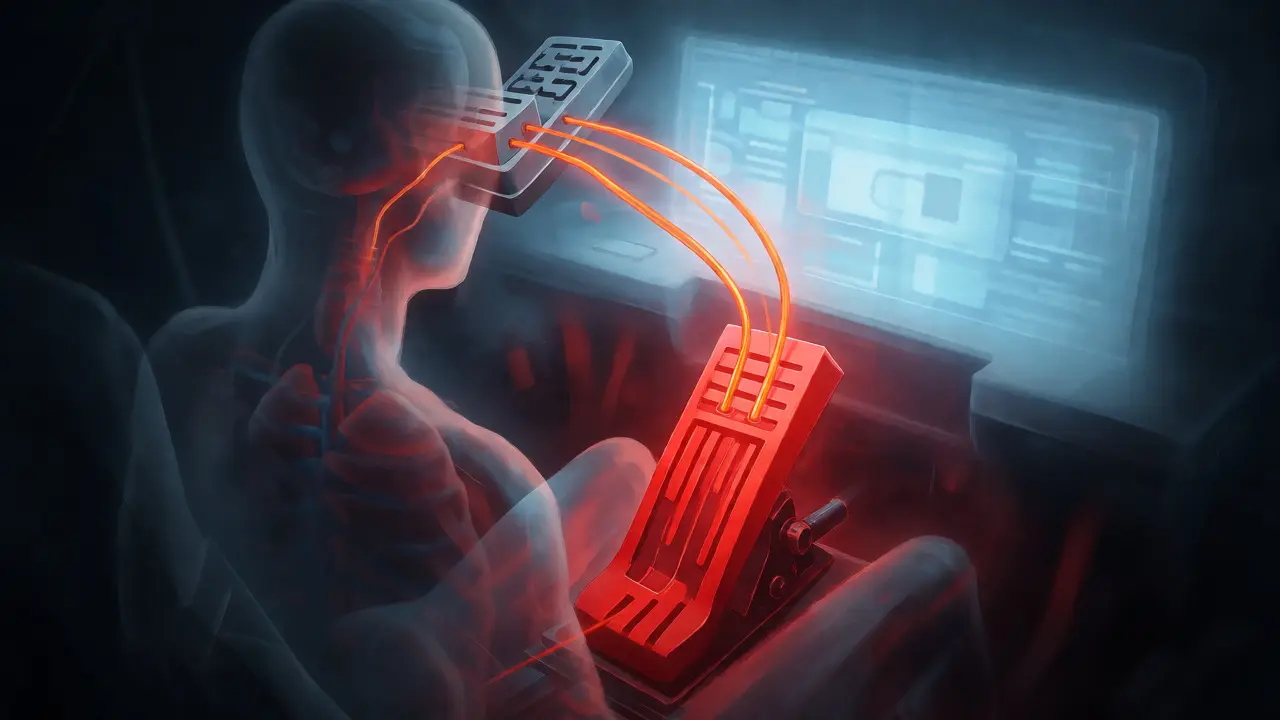
It’s not just about chemistry; it’s about structure. Recent neuroimaging studies have shown that individuals diagnosed with IGD exhibit measurable changes in brain morphology. The most significant finding involves the prefrontal cortex, the area responsible for impulse control, decision-making, and emotional regulation. In gamers with severe IGD, gray matter volume in this region tends to decrease. Simultaneously, connectivity between the prefrontal cortex and the striatum (part of the basal ganglia) weakens.
Why does this matter? Imagine your brain as a car. The mesolimbic pathway is the gas pedal, screaming "Go! Go! Go!" The prefrontal cortex is the brake pedal. In a healthy brain, the brakes work well enough to manage the accelerator. In an IGD brain, the gas pedal is stuck down due to hypersensitivity, while the brakes are worn thin. This structural deficit explains why someone might intellectually know they should stop playing but find themselves unable to execute the command. The hardware literally lacks the capacity to inhibit the urge effectively.
| Feature | Healthy Gaming | Internet Gaming Disorder |
|---|---|---|
| Dopamine Release | Proportional to achievement; returns to baseline quickly. | Hypersensitive spikes; delayed return to baseline; craving during abstinence. |
| Prefrontal Cortex Activity | Strong activation during decision-making tasks. | Reduced activity and lower gray matter volume. |
| Cue Reactivity | Mild interest in game icons or ads. | Intense amygdala response to game-related cues (sounds, logos). |
| Impulse Control | Able to stop after planned session. | Loss of control despite negative consequences. |
The Impact of Game Design on Neurobiology
Game developers aren't evil scientists, but they are expert practitioners of behavioral psychology. Modern game design leverages insights into the Reward Circuitry to maximize engagement. Features like daily login bonuses, battle passes, and randomized loot boxes are engineered to exploit the dopamine loop. Each element serves a specific neurobiological function:
- Immediate Feedback: Visual and auditory cues (dings, flashes) provide instant confirmation, reinforcing the action-reward link within milliseconds.
- Progress Bars: These create a sense of impending completion, triggering anticipatory dopamine release before the reward is actually earned.
- Social Validation: Likes, comments, and team victories activate similar neural regions as face-to-face social bonding, but without the friction of real-world interaction.
This design philosophy means that the environment itself is acting as a drug delivery system. For someone predisposed to addiction-perhaps due to genetics or early life stressors-these systems are particularly potent. The brain learns to seek out the game environment specifically to regulate its mood states, bypassing healthier coping mechanisms.

Treatment Approaches Targeting the Pathway
If the problem is neurobiological, can treatment be purely psychological? Often, no. Effective interventions for IGD usually involve a combination of cognitive-behavioral therapy (CBT) and lifestyle changes that help reset the dopamine baseline. CBT helps patients identify triggers and develop alternative behaviors, essentially strengthening those weakened prefrontal "brakes."
However, biological support is increasingly recognized. Aerobic exercise has been shown to increase dopamine receptor density naturally, helping to restore sensitivity. Mindfulness meditation also shows promise by improving attentional control and reducing reactivity to cravings. Some clinicians explore pharmacological options, such as naltrexone, which blocks opioid receptors and may indirectly dampen the rewarding effects of gaming, though this is still being studied specifically for IGD compared to substance addictions.
Crucially, recovery isn't about eliminating dopamine. It's about recalibrating the system so that natural rewards-food, friendship, achievement in non-digital domains-become pleasurable again. This process takes time. Just as muscles atrophy from disuse, neural pathways weaken when starved of stimulation. Rebuilding the capacity for joy outside the screen requires patience and consistent practice.
Key Takeaways for Gamers and Parents
You don't need a PhD in neuroscience to apply these insights. Here are practical steps based on how the mesolimbic pathway works:
- Break the Anticipation Loop: If you feel compelled to check notifications or open loot boxes, pause for 10 minutes. Let the initial dopamine spike subside before acting.
- Physical Movement: Engage in vigorous exercise for 20 minutes before gaming. This provides a natural dopamine boost, potentially reducing the need for excessive in-game stimulation.
- Environmental Cues: Keep consoles and controllers out of sight. Visual cues trigger cue-reactivity in the brain. Out of sight truly helps out of mind.
- Alternative Rewards: Schedule small, tangible rewards for completing tasks outside of gaming. Train your brain to value non-digital achievements.
Is Internet Gaming Disorder officially recognized as a medical condition?
Yes, the World Health Organization (WHO) included Gaming Disorder in the International Classification of Diseases (ICD-11). The American Psychiatric Association recognizes it as a condition requiring further study in the DSM-5, acknowledging its clinical significance.
Does all dopamine release cause addiction?
No. Dopamine is essential for learning and motivation. Addiction arises from the pattern of release-specifically, rapid, high-magnitude spikes followed by crashes, combined with the loss of control and continued use despite negative consequences.
Can the brain recover from the effects of excessive gaming?
Yes, thanks to neuroplasticity. With sustained abstinence or moderation, dopamine receptor density can normalize, and prefrontal cortex function can improve. Recovery timelines vary, but many people see significant improvements in mood and impulse control within several months.
How is IGD different from simply loving video games?
The key difference is impairment. A passionate gamer maintains functionality in work, school, and relationships. Someone with IGD experiences significant distress or impairment in these areas, loses interest in other hobbies, and uses gaming primarily to escape negative emotions rather than for enjoyment.
Are mobile games more addictive than console games?
Mobile games often employ aggressive microtransaction and notification strategies that exploit dopamine loops heavily. Their accessibility allows for constant, low-effort access, which can reinforce compulsive checking behaviors more intensely than traditional console gaming sessions.