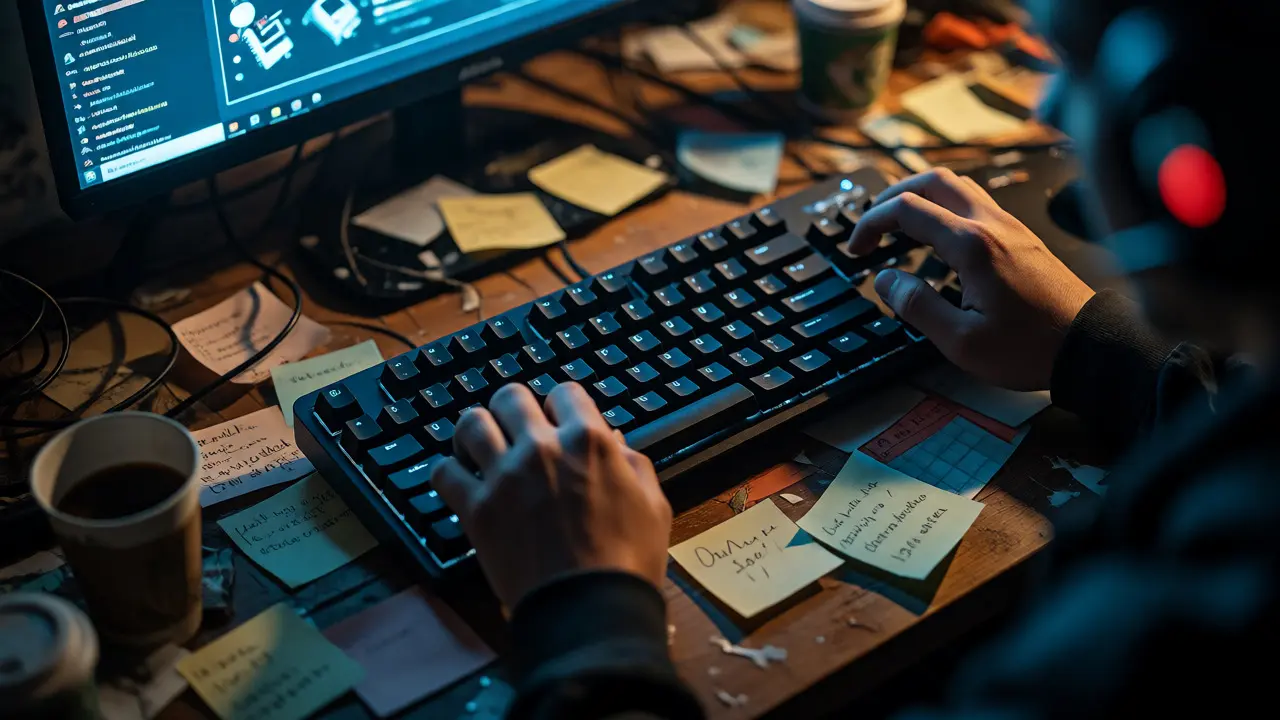
You know that feeling when you spend three hours in a game, only to realize you never actually saved your progress because you forgot to set up a backup routine? Or maybe you rage-quit because you couldn't figure out the inventory system fast enough during a boss fight. That isn't just bad luck or poor reflexes. That is a breakdown in executive function. It is the mental management system that helps you plan, organize, and execute tasks. While we often think of gaming as purely reactive-dodge left, shoot right-the truth is that successful gameplay relies heavily on high-level cognitive control.
Here is the weird part: video games are one of the best tools we have for training these exact skills. They provide immediate feedback loops that real life rarely offers. If you miss a jump, you die instantly. If you mismanage your resources, you lose the battle. This article breaks down how planning and organization within gaming directly translate to stronger executive function skills in daily life. We will look at specific mechanics, cognitive demands, and practical ways to leverage your hobby to sharpen your brain.
What Executive Function Actually Does for You
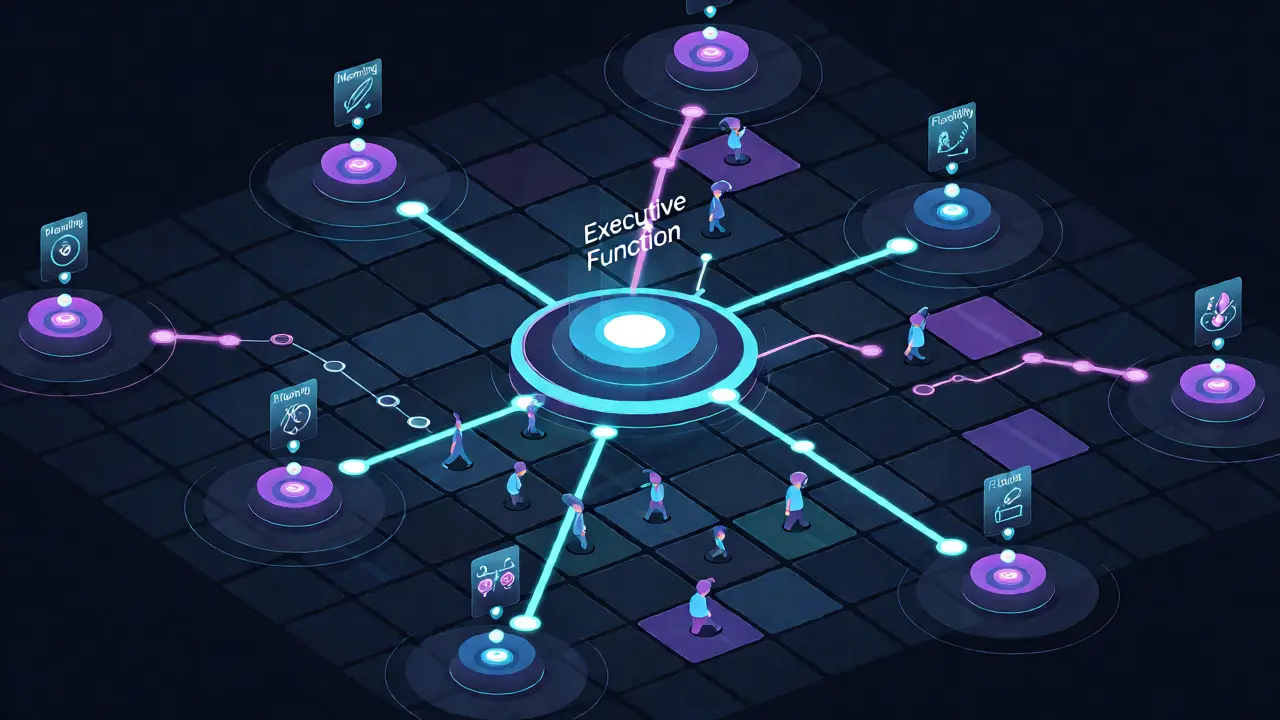
Before we talk about games, let's get clear on what we mean by executive function. Think of it as the CEO of your brain. It doesn't do the manual labor; it decides what needs to be done, when, and how. Neuroscientists generally break this down into three core components:
- Inhibitory Control: The ability to stop yourself from doing something impulsive. In gaming, this is resisting the urge to spam attack buttons during a cooldown period.
- Working Memory: Holding information in mind while using it. Remembering enemy patterns or complex combo inputs without looking at a guide.
- Cognitive Flexibility: Switching between tasks or rules quickly. Adapting your strategy when the boss changes phases mid-fight.
When these systems work well, you feel in control. When they lag, you feel scattered, forgetful, or overwhelmed. Most people assume these skills are fixed traits-you either have them or you don't. But research suggests they are malleable. Like muscles, they grow with use. And if you play strategy games, RPGs, or even complex shooters, you are already exercising them. You just might not realize it.
The Hidden Cognitive Load of Gaming
Modern games are dense with data. A single screen in a title like Civilization VI presents dozens of variables: city production rates, diplomatic relations, military strength, and technological trees. Your brain has to filter this noise. This process is called selective attention, a key aspect of executive function.
Consider an open-world RPG like The Witcher 3. You aren't just fighting monsters. You are managing quest logs, tracking potion inventories, monitoring health bars, and navigating a map simultaneously. Each of these requires a different slice of cognitive processing. If your working memory is weak, you forget which quest marker is which. If your inhibitory control is low, you might engage a high-level enemy too early, wasting resources.
This constant juggling act forces your brain to prioritize. You learn to ignore irrelevant details (like background music or minor lore texts) and focus on critical signals (health warnings or objective markers). Over time, this trains your brain to filter distractions more efficiently in non-gaming contexts, such as studying for exams or managing project deadlines.
Planning Skills: From Quest Logs to Real Life
Planning is arguably the most transferable skill from gaming to reality. In many games, you cannot succeed by reacting alone. You need a strategy. Let's look at two distinct types of planning found in popular genres.
Strategic Planning: This is long-term thinking. Games like Stardew Valley require you to plan crops based on seasons, market prices, and energy levels. You decide today what to plant so you can sell it in ten days. This mirrors financial planning or career development. You sacrifice immediate gratification (spending gold now) for future gain (buying a better tool later).
Tactical Planning: This is short-term execution. In a shooter like Overwatch, you plan your next five seconds. Where do I position myself? Do I save my ultimate ability for the team fight or use it now? This parallels public speaking or job interviews. You anticipate obstacles and prepare responses in advance.
| Gaming Mechanic | Cognitive Demand | Real-Life Parallel |
|---|---|---|
| Resource Management (Gold/Mana) | Allocation & Prioritization | Budgeting monthly expenses |
| Quest Tracking | Goal Decomposition | Breaking large projects into steps |
| Cooldown Timers | Patient Waiting | Delaying impulse purchases |
| Skill Trees | Long-term Investment | Choosing a college major |
The key insight here is that games make abstract planning concrete. In real life, the consequences of poor planning might take months to appear. In games, they happen in minutes. This tight feedback loop teaches you cause and effect faster than almost any other medium.
Organization: Mastering Your Digital Inventory
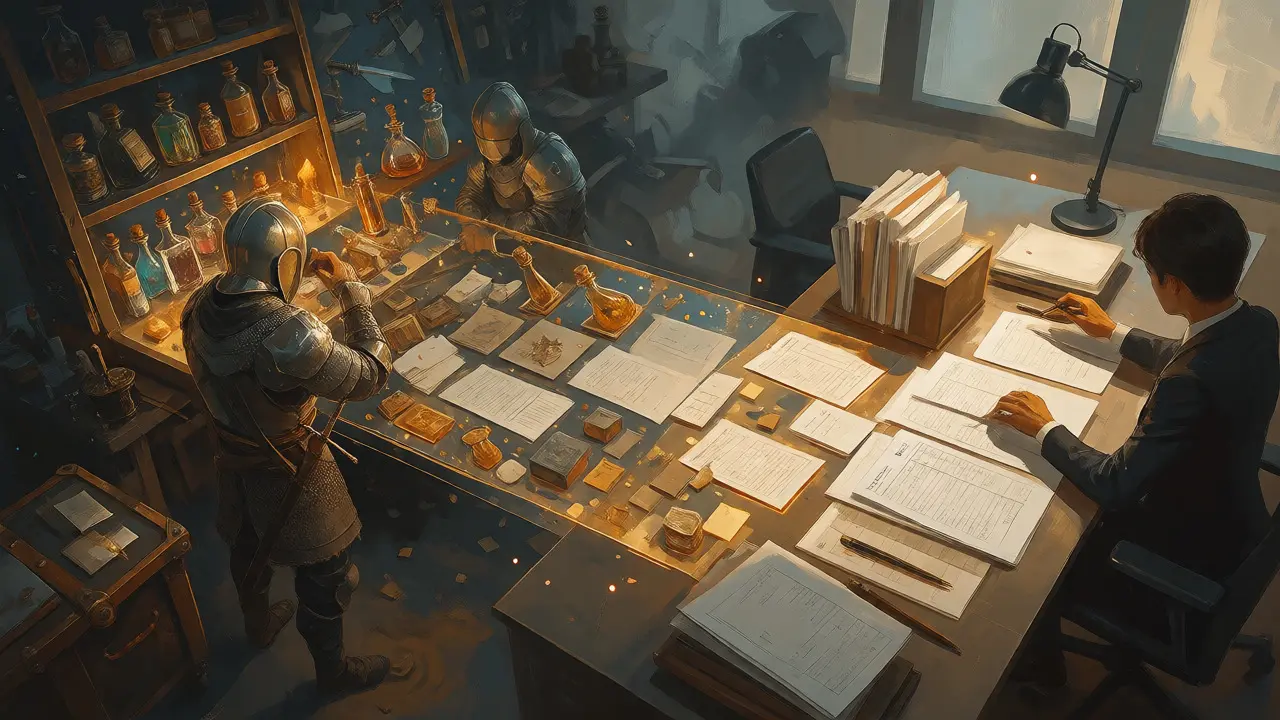
If planning is about the future, organization is about the present. How you manage your inventory, menu screens, and loadouts says a lot about your organizational habits. Many gamers struggle with "inventory bloat." You pick up every item because you're afraid you might need it later. Sound familiar?
This behavior stems from decision fatigue. Every time you look at a cluttered inventory, your brain spends energy deciding what to keep and what to drop. Eventually, you shut down and leave everything there. This is exactly what happens when your desk or email inbox gets messy. The cognitive cost of disorganization is higher than the cost of organizing.
Successful players develop systems. They categorize items by rarity, type, or usage frequency. They create custom loadouts for specific scenarios. This is essentially creating a personal taxonomy. When you apply this to real life, you start labeling folders, sorting emails by priority, or using color-coded calendars. You stop treating organization as a chore and start seeing it as a performance enhancer.
Try this experiment: Next time you play a game with a complex inventory, spend five minutes reorganizing it before you start playing. Notice how much faster you navigate menus afterward. Now, apply that same logic to your computer desktop or physical workspace. The satisfaction of clarity is identical.
Building Habits Through Game Mechanics
You don't need to quit gaming to improve your executive function. Instead, change how you play. Here are four actionable strategies to turn passive entertainment into active cognitive training.
- Play Strategy Games Regularly: Titles like XCOM 2 or Factorio force you to think several moves ahead. They punish impulsivity severely. Start with shorter sessions to avoid burnout.
- Set Specific Goals Before Playing: Don't just log in. Decide beforehand: "I will complete two quests" or "I will practice my aim for 15 minutes." This practices goal-setting and time estimation.
- Analyze Your Failures: When you lose, pause. Ask yourself: Did I lack information? Did I rush? Did I misallocate resources? This metacognition (thinking about thinking) strengthens self-regulation.
- Use External Tools: Keep a physical notebook or digital note app for game notes. Write down boss weaknesses or build guides. This offloads working memory, freeing up brainpower for execution.
These small shifts transform gaming from a time sink into a gym for your brain. You aren't just escaping reality; you are practicing the skills needed to navigate it.
Common Pitfalls and How to Avoid Them
Not all gaming improves executive function. Some designs exploit our dopamine systems rather than challenging our cognition. Beware of these traps:
- Autopilot Mode: If you are grinding levels without thinking, you aren't training planning. You are just repeating actions. Add complexity to stay engaged.
- Instant Gratification Loops: Games that reward you every few seconds can shorten your attention span. Balance fast-paced action with slower, thoughtful games.
- Ignoring Breaks: Fatigue degrades executive function rapidly. After 60-90 minutes of intense play, your prefrontal cortex gets tired. Take a walk. Hydrate. Reset.
Remember, the goal is balance. Gaming should complement your life, not replace the hard work of organizing it. Use the skills you learn in-game to structure your offline world.
Can video games really improve executive function in adults?
Yes, studies show that playing strategy and puzzle-based video games can enhance cognitive flexibility and problem-solving skills in adults. The key is active engagement rather than passive consumption. Games that require planning, resource management, and quick decision-making provide the necessary cognitive load to stimulate neuroplasticity.
Which games are best for improving planning skills?
Games like Civilization, StarCraft, Factorio, and Portal are excellent for planning. These titles require long-term strategic thinking, resource allocation, and sequential problem-solving. Role-playing games with complex quest lines also help by forcing players to track multiple objectives simultaneously.
How does gaming affect working memory?
Gaming challenges working memory by requiring players to hold multiple pieces of information in mind, such as enemy locations, health status, and available abilities. Regularly engaging with complex game mechanics can strengthen the capacity to retain and manipulate information over short periods, which translates to better multitasking abilities in daily life.
Is excessive gaming bad for executive function?
Excessive gaming, particularly when used as an avoidance mechanism, can hinder executive function development. If gaming replaces sleep, exercise, or social interaction, overall cognitive health declines. However, moderate gaming with intentional play styles supports cognitive growth. Balance is essential.
How can I transfer gaming skills to work or school?
Identify the specific cognitive demands of your favorite games. If you enjoy resource management, apply those prioritization techniques to your budget. If you excel at tactical positioning, use that foresight in meeting preparations. Explicitly naming the skill helps bridge the gap between virtual and real-world applications.