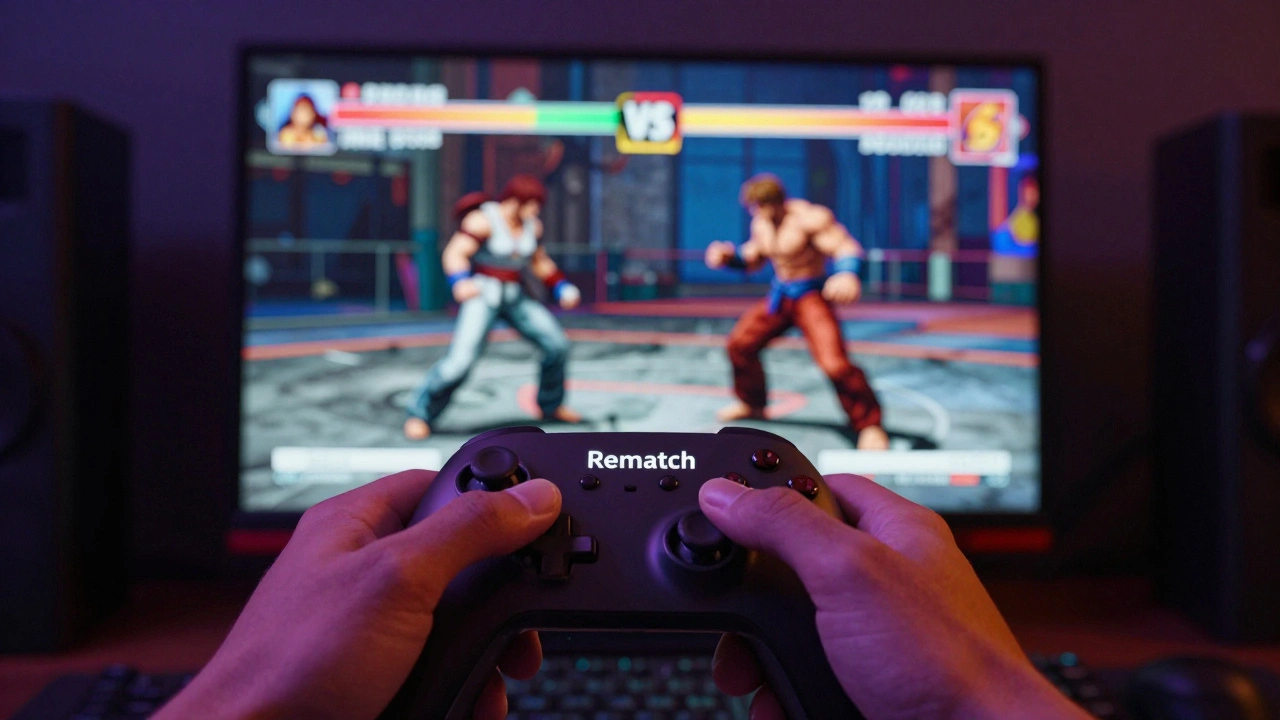
Ever lost a match in a fighting game and immediately hit "Rematch" before your fingers even stopped shaking? You’re not broken. You’re wired. Fighting games are built on a loop that hooks you harder than any other genre: win, lose, or draw - you want to try again. And the engine driving that urge? Ranked ladders.
Why Ranked Ladders Don’t Just Track Skill - They Rewire Your Brain
Ranked ladders in fighting games aren’t just leaderboards. They’re psychological traps wrapped in pixel art. Games like Street Fighter 6 a modern fighting game with a robust online ranked system, updated character balance patches, and a dedicated matchmaking engine, Tekken 8 a 3D fighting game known for its deep combo systems, realistic physics, and competitive ladder structure, and Guilty Gear -Strive- a fast-paced 2D fighter with a high-skill ceiling, aggressive matchmaking, and a global ranking system all use ranked systems that don’t just show your rank - they make you obsessed with climbing it.Here’s how it works: every match changes your rating. Win, you climb. Lose, you drop. But here’s the twist - the system doesn’t just match you with players of similar skill. It matches you with players who are just barely better than you. That’s not an accident. That’s design. You’re not playing against a random person. You’re playing against the version of yourself you could become if you practiced one more combo, learned one more anti-air, or stopped whiffing that special move.
Studies on behavioral psychology show that people are more motivated by near-misses than outright failures. A 2023 study from the University of Tokyo’s Game Behavior Lab tracked 12,000 fighting game players over six months. The players who lost by 1 HP in a best-of-three match were 47% more likely to rematch than those who lost cleanly. Why? Because the loss felt like a glitch - not a skill gap. Your brain says, "I had it. I just messed up." And that’s the hook.
The Rematch Button Is a Compulsion Engine
Look at any fighting game lobby after a ranked match. You’ll see the same pattern. Player A loses. They stare at the screen. Their finger hovers. They click "Rematch." Five minutes later, they lose again. Same thing. Again. And again. Sometimes they play five rematches in a row. Sometimes it’s ten.This isn’t addiction. It’s feedback loop engineering. Each match gives you:
- A clear win condition (reduce opponent’s health to zero)
- Instant feedback (your rating changes within seconds)
- A sense of progress (even if you lose, you might have landed a new move)
- A target (the player above you)
That’s the same loop that keeps people scrolling on social media - but with higher stakes. In fighting games, your skill is visible. Your mistakes are exposed. Your improvement is measurable. And that makes the urge to try again almost physical.
Players in the top 10% of Street Fighter 6 a modern fighting game with a robust online ranked system, updated character balance patches, and a dedicated matchmaking engine’s global ladder report playing an average of 3.2 hours per day - but over 60% of that time is spent in ranked rematches. Not new matches. Not casual. Rematches. With the same person. Sometimes three, four, five times in a row.
Why You Can’t Just Walk Away
Most games let you walk away after a loss. You lose a match in Call of Duty a first-person shooter with competitive multiplayer and ranked playlists, you get a "Try Again" button, but you can easily close the game. No one remembers your rank. No one saw you choke.In fighting games, your reputation is public. Your rank is a badge. Your losses are logged. And that’s what makes walking away impossible.
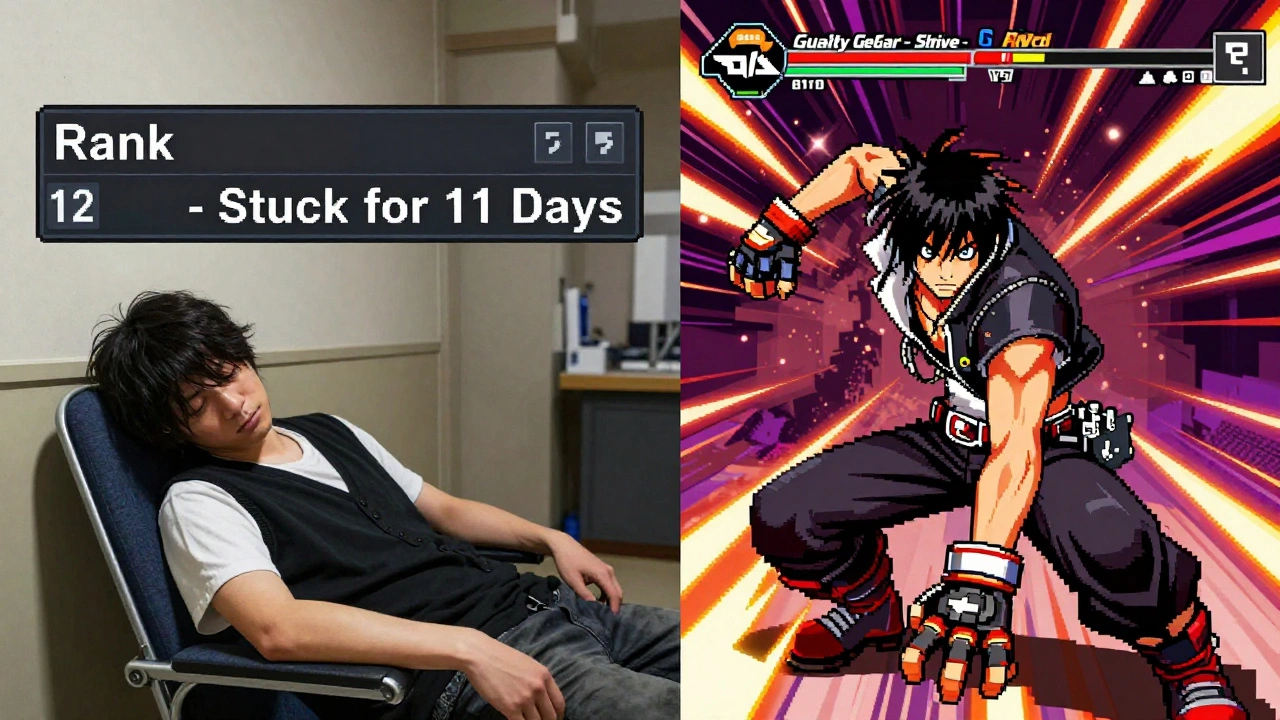
Imagine this: you’re Rank 12 in Guilty Gear -Strive- a fast-paced 2D fighter with a high-skill ceiling, aggressive matchmaking, and a global ranking system. You’ve been stuck there for 11 days. You’ve beaten 17 people. Lost to 23. The person right above you? They’ve only played 3 matches since you last faced them. You know you can beat them. You’ve done it before. You just need one more shot.
That’s not a game. That’s a mental puzzle you’re desperate to solve.
And the system knows it. The matchmaking algorithm doesn’t care if you’ve played 10 matches in a row. It doesn’t care if you’re exhausted. It doesn’t care if your hand is cramping. It only cares that you’re still in the ladder. So it keeps throwing you against the same few opponents - the ones who make you feel like you’re one adjustment away from breaking through.
The Hidden Cost of the Ladder
There’s a dark side to this. Players who chase the ladder hard often burn out. They stop playing for fun. They stop experimenting. They stop trying new characters. They become slaves to one build, one strategy, one matchup. They play like a robot because they’re terrified of dropping rank.One player in the Tekken 8 a 3D fighting game known for its deep combo systems, realistic physics, and competitive ladder structure community posted a thread titled "I haven’t played Jin since I hit Rank 5." He’d spent six months grinding with one character. He knew every frame of every move. He could counter every setup. But he hadn’t tried a single new character in that time. "I’m scared I’ll lose and drop," he wrote. "I don’t even like Jin anymore. But I can’t quit."
That’s not healthy. And it’s not rare.
Community moderators in fighting game Discord servers now run "ladder detox" programs. They encourage players to take a week off, play casual, try new characters, or just play offline. The goal isn’t to get better - it’s to remember why you loved the game in the first place.
How to Break the Cycle - Without Quitting
You don’t have to quit. But you do have to change how you play.- Set a rematch limit. After three rematches with the same person, walk away. No exceptions.
- Play one character you hate. Pick someone you’re bad at. Play them for an hour. You’ll learn more in that hour than you have in the last month.
- Track your wins, not your rank. Instead of checking your ladder position daily, count how many matches you won this week. That number doesn’t lie.
- Play offline with friends. The ladder is a mirror. Offline play is a playground. Use it to rediscover joy.
- Take a week off. Seriously. Go play something else. Go for a walk. Come back when the urge to rematch doesn’t feel like a scream.
Ranked ladders aren’t evil. They’re brilliant. They turn fighting games into something deeper than entertainment - they turn them into a personal challenge. But like any tool, they can be used well or abused.
What Happens When You Step Back
I’ve seen it happen. A player drops from Rank 8 to Rank 15. They panic. They play 12 matches in one night. They lose every one. They quit for two weeks. They come back. They play casually. They try a new character. They win a few. They lose a few. They don’t check their rank. Then, one day - they’re back at Rank 8. Without trying. Without stress. Without the compulsion.That’s the secret. The ladder doesn’t care if you climb it fast. It only cares if you’re still there. And sometimes, the best way to climb is to step away.
Why do I keep rematching the same person after losing?
You’re stuck in a psychological loop. Fighting game ranked systems are designed to match you with players who are just slightly better than you. Losing to them feels like a near-miss - not a defeat. Your brain interprets it as "I almost had it," which triggers the urge to try again. This is reinforced by the fact that your rank changes instantly after each match, giving you immediate feedback. The system doesn’t care if you’re tired - it just wants you to keep playing.
Is ranked mode the best way to get better at fighting games?
Ranked mode is great for testing your skill under pressure, but it’s not the best way to learn. You’ll often face the same opponents over and over, which limits your exposure to different playstyles. To truly improve, you need to practice new characters, experiment with setups, and play offline with people who challenge you in ways the ladder won’t. Ranked is a mirror. Practice mode is a workshop.
Do fighting game ladders really affect my skill progression?
Yes, but indirectly. The ladder doesn’t teach you combos or timing. But it creates pressure that forces you to refine your fundamentals. If you’re constantly losing to players who punish whiffs or block strings, you’ll eventually learn to stop doing those things. The ladder doesn’t give you skills - it forces you to eliminate bad habits.
Why do I feel worse after winning a ranked match?
That’s called "winning guilt." It happens when you win against someone who’s clearly worse than you - and you know it. Your brain expects a challenge. When you win too easily, it feels empty. That’s why many top players say they’d rather lose a close match than win a one-sided one. The real reward isn’t the win - it’s the fight.
How do I stop obsessing over my rank?
Start tracking wins instead of rank. Set a weekly goal: "I want to win 10 matches this week," not "I want to reach Rank 5." Play one match a day with a character you hate. Take a full day off every week. When you stop checking your rank, your brain starts to reset. The ladder will still be there when you come back - and you’ll be better for it.