
You know that feeling when you look at your screen time stats and realize you spent three hours on a game you don't even enjoy anymore? You didn't choose those hours. They were stolen from you by a system designed with surgical precision to keep you there. This is the central conflict in modern game design. It’s not just about making fun experiences; it’s about engineering compulsion.
I’ve talked to designers who built these systems, and many admit they feel like drug dealers for their own players. They created the hooks, watched the metrics spike, and then felt a pang of guilt when they saw how much life people poured into virtual worlds instead of real ones. If you’re wondering why you can’t stop playing, or if you’re a creator worried about your moral compass, this breakdown explores the mechanics behind the regret and how we might fix them.
The Architecture of Compulsion
To understand the regret, you have to understand the tool. Modern mobile and free-to-play games aren't built on traditional fun metrics alone. They are built on behavioral psychology, specifically operant conditioning. Think of B.F. Skinner’s pigeons pressing levers for random rewards. That’s exactly what happens when you open a loot box or complete a daily quest.
Dopamine is often misunderstood as the pleasure chemical. It’s actually the anticipation chemical. Your brain releases dopamine when it expects a reward, not necessarily when it gets one. Game designers exploit this by using variable ratio reinforcement schedules. Sometimes you get the rare item. Most times you don’t. That unpredictability keeps the loop spinning.
Consider the "daily login" bonus. It’s trivial-maybe five gold coins. But missing it feels like a loss. This leverages loss aversion, a cognitive bias where losses hurt twice as much as gains feel good. Designers know this. They structure progression so that stopping play feels painful. The regret comes from realizing you’re playing to avoid pain, not to experience joy.
Metrics vs. Morals
In the corporate world, success is measured in retention rates and average revenue per user (ARPU). A designer might create a beautiful, relaxing puzzle game. But if the data shows players churn after level 10, management pushes for harder difficulty spikes or artificial bottlenecks. These bottlenecks force players to wait or pay.
This creates a tension between artistic integrity and business survival. I spoke with a lead designer at a mid-sized studio who described their role as "managing frustration." They intentionally make the game slightly annoying so that the moment of relief feels euphoric. It works. Retention goes up. But does the player leave happy? Or do they leave relieved?
The industry standard metric for health isn't satisfaction surveys. It’s Day 7 and Day 30 retention. If players come back, the mechanic worked. Period. There’s no column in the spreadsheet for "Did this player waste an evening they wanted to spend with their kids?" This blind spot is where the regret festers.
| Mechanic Type | Goal | Player Feeling | Designer Intent |
|---|---|---|---|
| Traditional Progression | Skill Mastery | Competence & Pride | Long-term engagement through challenge |
| Stamina Systems | Pacing Control | Frustration & Anticipation | Monetization via time-skips |
| Loot Boxes | Reward Variance | Excitement & Disappointment | Dopamine spikes via gambling-like loops |
| Daily Quests | Habit Formation | Obligation & Relief | Retention via fear of missing out |
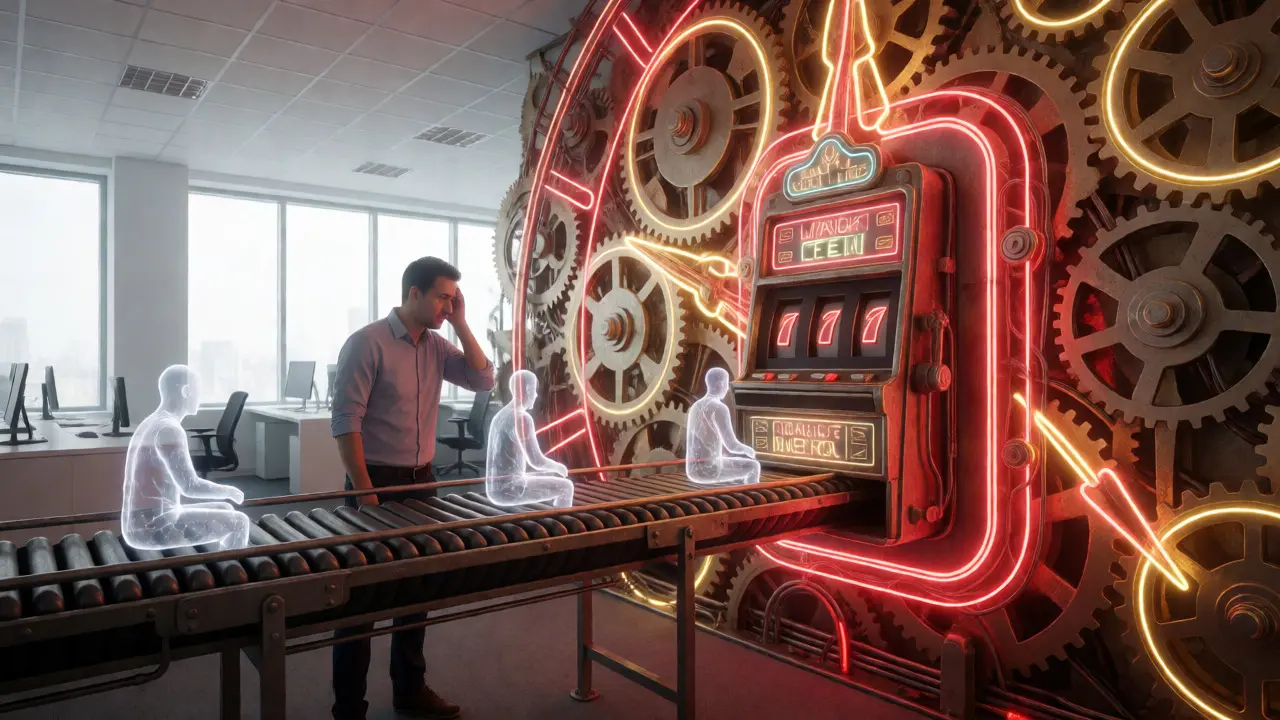
The Personal Toll on Creators
Designers are gamers first. Many entered the field because they loved games. When they start applying psychological tricks to their own creations, they often report a sense of dissonance. They see their friends or family getting sucked into the same traps they engineered.
One indie developer shared a story about creating a farming sim. Initially, it was peaceful. Then, publishers demanded social features to boost virality. Suddenly, players had to visit neighbors' farms to maximize yield. The chill vibe vanished. Players complained, but the numbers went up. The developer said, "I made my grandma log in every day at 6 AM because she was afraid her crops would rot. That wasn't fun. That was anxiety." This anecdote highlights a critical failure in user-centered design. We optimize for the algorithm, not the human. When creators realize their work contributes to digital burnout, they face a professional crisis. Is it right to monetize attention spans that are already fractured?

Ethical Alternatives and Future Trends
Not all hope is lost. There is a growing movement toward "mindful game design." This approach prioritizes player well-being over raw engagement metrics. Studios are experimenting with session limits, transparent odds for loot boxes, and removing pay-to-win elements.
For example, some RPGs now offer "energy" systems that reset slowly but allow unlimited play if you buy a pass, rather than forcing microtransactions for every action. Others remove daily quests entirely, trusting players to return when they genuinely want to.
Regulation is also shifting. Countries like Belgium and the Netherlands have banned loot boxes, classifying them as gambling. This forces designers to innovate without relying on predatory mechanics. The result? Games that rely more on skill and less on chance.
If you’re a designer, ask yourself: Would I be proud if my child played this game for five years? If the answer is no, tweak the loop. Remove the artificial scarcity. Make the reward intrinsic, not extrinsic.
How Players Can Reclaim Control
You don’t need to quit gaming to escape the trap. Awareness is the first step. Recognize the difference between "wanting to play" and "feeling compelled to play." Here are practical tactics to break the cycle:
- Audit Your Triggers: Identify which notifications cause you to open the app. Turn off push notifications for non-essential games.
- Set Hard Limits: Use built-in screen time tools to cap daily usage. Treat it like a budget.
- Choose Intrinsic Over Extrinsic: Prefer games where progress feels earned through skill (like Celeste or Hollow Knight) rather than paid convenience.
- The "Why" Test: Before opening a game, ask "Am I bored, or am I seeking connection/challenge?" If you’re just bored, try reading or walking instead.
By understanding the machinery behind the magic, you shift from being a passive consumer to an active participant. You decide when the game ends, not the algorithm.
Why do game designers use loot boxes if players hate them?
Despite vocal complaints, loot boxes generate significant revenue. Data consistently shows that a small percentage of players (whales) spend heavily, while others engage due to the thrill of potential rewards. Designers use them because they are highly effective at boosting short-term retention and monetization, even if long-term sentiment suffers.
Is 'gacha' different from other addictive mechanics?
Gacha is a specific type of loot box common in Japanese mobile games, originating from capsule toy machines. While the term differs, the psychological mechanism-variable ratio reinforcement-is identical. The key difference is often transparency; gacha games usually display drop rates clearly, whereas Western loot boxes historically hid these probabilities until regulations forced disclosure.
Can ethical game design still be profitable?
Yes. Games like Stardew Valley or Hades prove that respecting player time and intelligence leads to strong word-of-mouth marketing and long-tail sales. While they may not have the immediate cash flow of aggressive free-to-play titles, they build loyal communities and sustain revenue through DLC and sequels without burning out the audience.
What is 'dark pattern' in game UI?
Dark patterns are interface designs that trick users into doing things they didn't intend to do, such as accidentally buying currency or subscribing to a service. Examples include hiding the 'cancel' button in menus, using misleading colors for 'buy' vs 'no thanks,' or making the 'play again' button larger than the 'exit' button.
How does FOMO affect game longevity?
Fear Of Missing Out (FOMO) drives high initial engagement but can shorten game lifespan. Players burn out trying to keep up with limited-time events. Once the event ends, motivation drops sharply. Sustainable games balance FOMO with evergreen content that remains valuable regardless of timing.