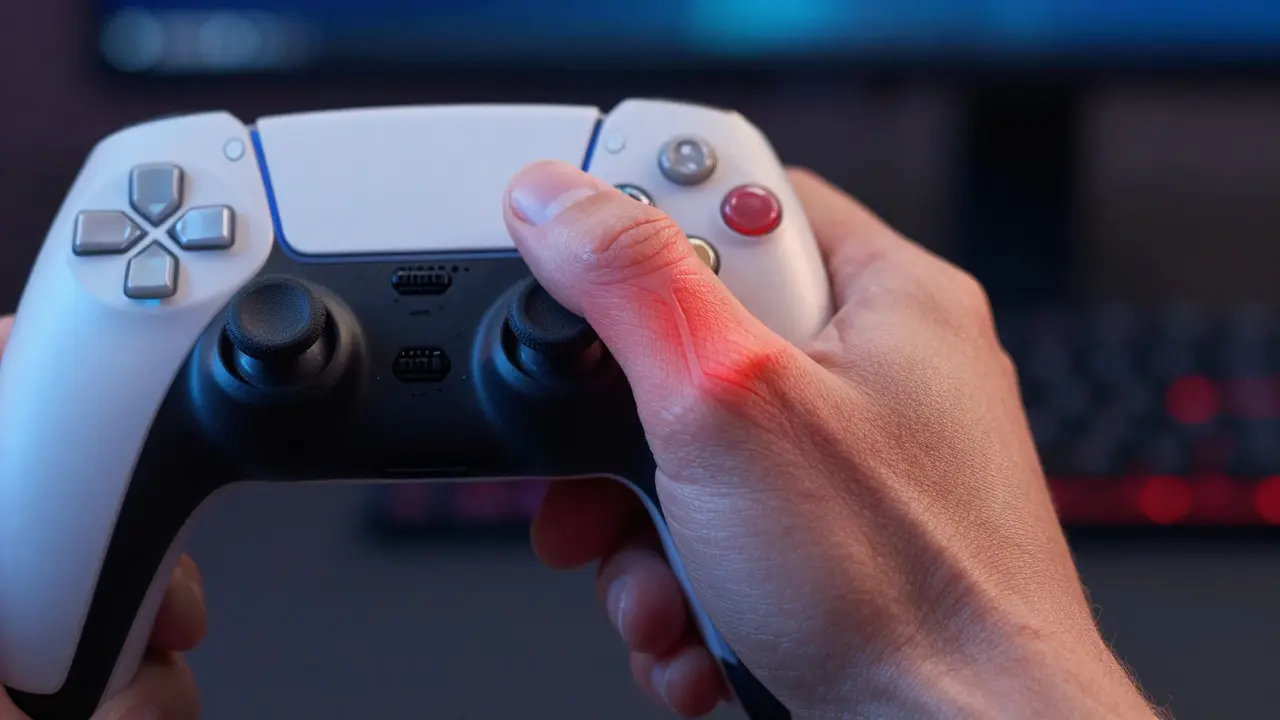
You’re deep in a raid, your fingers flying across the keyboard, and suddenly that sharp, electric sting hits your palm. Is it just fatigue? Or is something more serious going on? For millions of gamers and office workers alike, distinguishing between gamer thumb and carpal tunnel syndrome is one of the most common-and frustrating-health questions. Both conditions cause hand and wrist discomfort, but they stem from different muscles, nerves, and movement patterns. Getting the diagnosis right matters because the treatments are completely different. Treating nerve compression like a muscle strain (or vice versa) can lead to months of ineffective therapy or even worsened symptoms.
What Actually Causes Each Condition?
To tell them apart, you first need to understand what’s breaking down inside your hand. Gamer Thumb is a repetitive strain injury affecting the tendons and ligaments at the base of the thumb, specifically the thenar eminence muscles. It is medically known as De Quervain's tenosynovitis when inflammation occurs in the tendon sheaths. This happens when you repeatedly pinch, swipe, or grip with force. Think about how you hold a controller for six hours straight or how you tap a smartphone screen thousands of times daily. The friction causes the tendons to swell within their tight tunnels, leading to pain at the base of the thumb and along the outer wrist.
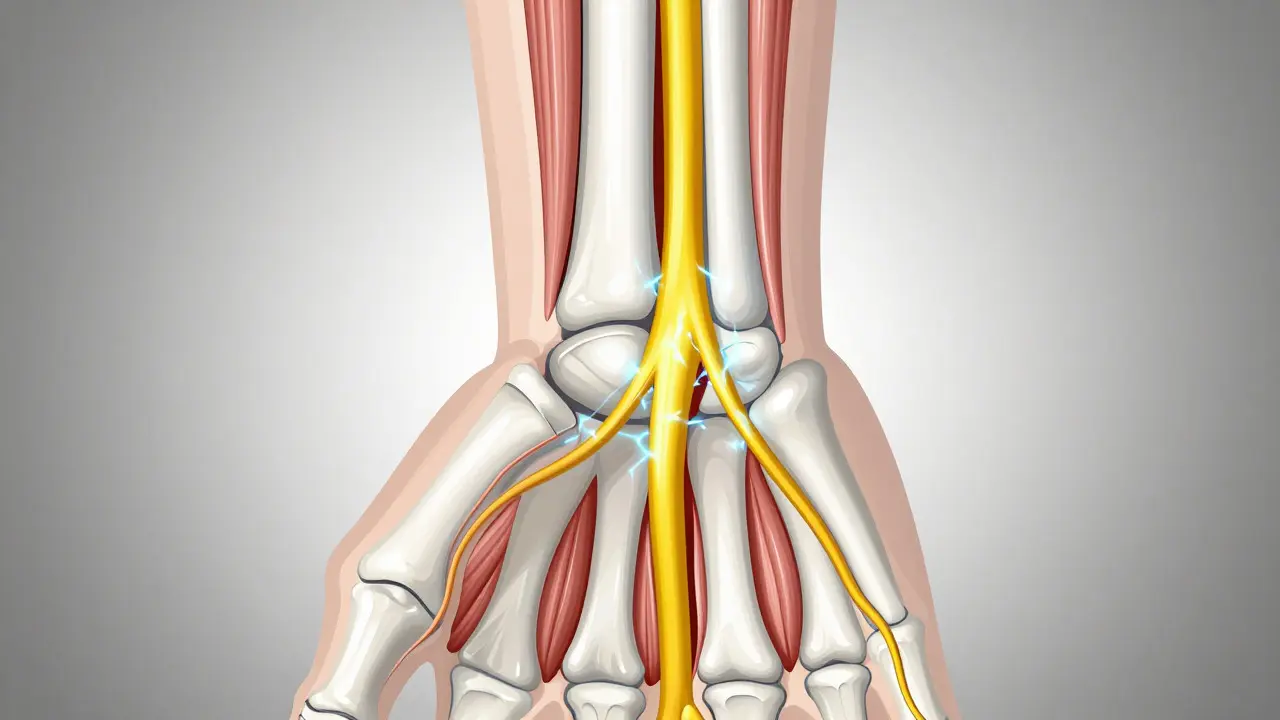
In contrast, Carpal Tunnel Syndrome is a compressive neuropathy caused by pressure on the median nerve as it passes through the carpal tunnel in the wrist. The carpal tunnel is a narrow passageway formed by bones and a strong band of tissue called the transverse carpal ligament. When surrounding tissues swell due to fluid retention, arthritis, or repetitive motion, they squeeze this nerve. Unlike gamer thumb, which is primarily a mechanical/tendon issue, carpal tunnel is an electrical/nerve issue. The median nerve controls sensation in the thumb, index, middle, and half of the ring finger. When compressed, it doesn't just hurt; it misfires signals, causing numbness, tingling, and weakness.
The Symptom Showdown: Where Does It Hurt?
Pain location is your first diagnostic clue. If the pain is concentrated at the base of your thumb and radiates up the forearm or down into the web space between your thumb and index finger, bet on gamer thumb. You might also feel a grating sensation when you move your thumb. A classic test for this is Finkelstein’s test: make a fist with your thumb tucked inside your fingers, then bend your wrist toward your pinky. If that triggers sharp pain on the thumb side of your wrist, it’s highly indicative of tendon inflammation.
If the pain feels like a deep ache in the center of your palm or wrist, but is accompanied by numbness in specific fingers, look at carpal tunnel. The hallmark sign is paresthesia-that “pins and needles” feeling-in the thumb, index, middle, and radial half of the ring finger. Noticeably, the little finger usually remains unaffected because it’s served by a different nerve (the ulnar nerve). If your little finger goes numb, the problem likely isn’t carpal tunnel. Nighttime symptoms are another major differentiator. Many people with carpal tunnel wake up at 3 AM shaking their hands to relieve the tingling. Gamer thumb pain is typically worse after activity and improves with rest, whereas carpal tunnel symptoms often persist or worsen during sleep due to natural wrist flexion.
| Feature | Gamer Thumb (De Quervain's) | Carpal Tunnel Syndrome |
|---|---|---|
| Primary Cause | Tendon inflammation/friction | Nerve compression |
| Pain Location | Base of thumb, outer wrist | Palm, center of wrist |
| Numbness/Tingling | Rare or mild | Common in thumb, index, middle fingers |
| Little Finger Involvement | No | No (served by ulnar nerve) |
| Worsening Time | After use/activity | Nighttime/morning stiffness |
| Weakness Type | Painful gripping/pinching | Dropping objects, loss of fine motor control |
Why Gamers Are at Risk for Both
It’s not a coincidence that these two conditions often overlap in the gaming community. Modern gaming setups encourage static postures where the wrist is held in extension or ulnar deviation for long periods. Whether you’re using a mouse for FPS games or holding a controller for RPGs, the cumulative load on the hand is significant. However, the mechanics differ slightly. Intense clicking and rapid tapping stress the thumb tendons, fueling gamer thumb. Meanwhile, resting your wrist on a hard desk edge while playing puts direct pressure on the carpal tunnel, compressing the median nerve. Many gamers suffer from both simultaneously-a condition sometimes referred to as "double crush" if there’s also involvement at the elbow, though locally it’s just concurrent pathology. Recognizing that you might have both is crucial because treating only the tendon won’t fix the nerve damage, and vice versa.
Self-Diagnosis Tests You Can Do at Home
Before booking a doctor’s appointment, try these simple checks to narrow down the culprit. Remember, these are screening tools, not definitive diagnoses.
- The Phalen’s Test: Press the backs of your hands together so your wrists are bent downward at 90 degrees. Hold this position for 60 seconds. If you feel tingling or numbness in your fingers before 60 seconds, it suggests carpal tunnel syndrome.
- The Tinel’s Sign: Gently tap over the front of your wrist, right where the median nerve runs. If this elicits a shock-like sensation or tingling in your fingers, it indicates nerve irritation consistent with carpal tunnel.
- Finkelstein’s Test: As mentioned earlier, tuck your thumb in your fist and bend your wrist toward your pinky. Sharp pain on the thumb side points to De Quervain's tenosynovitis (gamer thumb).
If you fail multiple tests for one condition but not the other, that’s a strong indicator. If you fail all of them, you might be dealing with complex regional issues or general overuse, making professional evaluation essential.
Treatment Paths: Why They Don’t Mix
This is where many people go wrong. They buy a generic wrist brace and wonder why it doesn’t work. For Gamer Thumb, treatment focuses on reducing tendon inflammation. This usually involves immobilizing the thumb and wrist with a specific splint that keeps the thumb out of the way, applying ice, and avoiding the repetitive motions that triggered the flare-up. Non-steroidal anti-inflammatory drugs (NSAIDs) can help manage pain. Physical therapy exercises focus on strengthening the extensor pollicis brevis and abductor pollicis longus tendons.
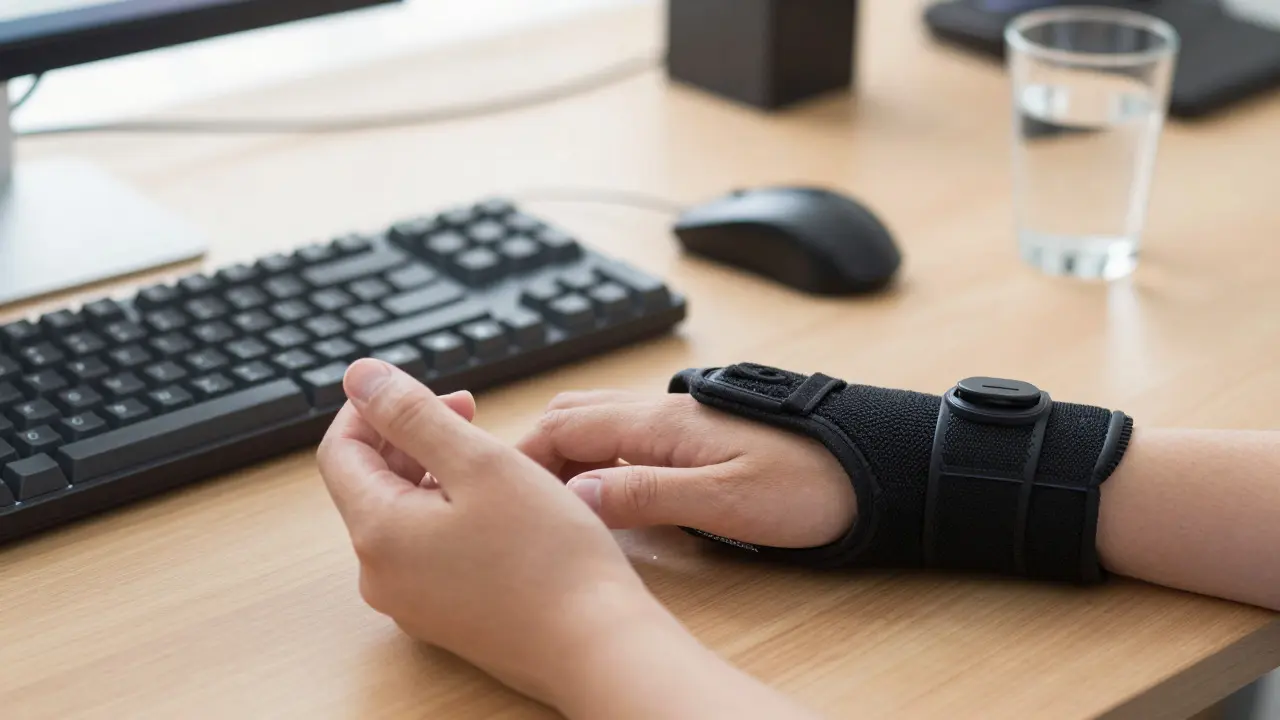
For Carpal Tunnel Syndrome, the goal is decompression. Wrist braces used here are neutral-position splints designed to keep the wrist straight at night, preventing the flexion that squeezes the nerve. Ergonomic adjustments are critical: raising your chair, adjusting monitor height, and using vertical mice can reduce pressure. If conservative measures fail, corticosteroid injections or surgery (carpal tunnel release) may be necessary to physically cut the ligament pressing on the nerve. Using a thumb-specific splint for carpal tunnel does almost nothing for the nerve, and using a neutral wrist brace for severe tendon inflammation might not restrict the thumb enough to allow healing.
Prevention Strategies for Long-Term Health
Whether you suspect one condition or the other, prevention looks surprisingly similar: change your biomechanics. First, audit your setup. Your elbows should be at 90 degrees, and your wrists should float neutrally above the keyboard, not resting on the desk surface. Second, implement micro-breaks. Every 45 minutes, take 5 minutes to stretch. Focus on wrist flexor stretches (pulling fingers back gently) and thumb abduction (moving thumb away from body). Third, vary your input devices. If you play PC games, consider a trackball or a vertical mouse to reduce pronation torque. If you game on mobile, use a case with a kickstand to avoid cramping your hand around the phone. Finally, listen to your body. Pain is a signal, not a badge of honor. Ignoring early signs of tendonitis or nerve compression leads to chronic conditions that are much harder to reverse.
When to See a Doctor
Don’t wait until you can’t grip a coffee cup. Seek medical attention if:
- Symptoms persist for more than two weeks despite rest and OTC treatment.
- You experience visible swelling or redness at the base of the thumb.
- Numbness becomes constant rather than intermittent.
- You start dropping objects frequently (sign of thenar muscle atrophy in advanced carpal tunnel).
- Pain disrupts your sleep regularly.
A hand specialist or orthopedist can perform electromyography (EMG) and nerve conduction studies to definitively measure nerve speed and rule out other issues like cervical radiculopathy (pinched neck nerves) which can mimic carpal tunnel symptoms.
Can you have both gamer thumb and carpal tunnel syndrome?
Yes, it is quite common for heavy users of keyboards, mice, and controllers to develop both conditions simultaneously. Because they affect different structures (tendons vs. nerves), they require simultaneous but distinct management strategies, such as wearing a neutral wrist splint at night and a thumb spica splint during the day if recommended by a physician.
Does carpal tunnel always cause numbness?
Not always. In early stages, some patients report only a vague ache or burning sensation in the palm without distinct numbness. However, paresthesia (tingling/numbness) in the median nerve distribution is the most reliable clinical marker. If you have pain but no numbness, it could still be carpal tunnel, but it might also be pure tendonitis or arthritis.
Is gaming bad for your wrists?
Gaming itself is not inherently bad, but poor ergonomics and excessive duration are. Studies show that high-intensity gaming sessions exceeding 4 hours daily increase the risk of upper extremity disorders. Maintaining a neutral posture, taking breaks, and using ergonomic peripherals significantly mitigates this risk.
How long does it take to recover from gamer thumb?
With proper rest, splinting, and anti-inflammatory care, mild cases of De Quervain's tenosynovitis often improve within 4 to 6 weeks. Severe cases or those involving chronic inflammation may take several months. Surgery is rarely needed unless conservative treatment fails after 3 to 6 months.
What is the best wrist brace for carpal tunnel?
The best brace for carpal tunnel is a rigid or semi-rigid neutral-position wrist splint worn primarily at night. It should hold the wrist at 0 to 15 degrees of extension. Avoid splints that allow full flexion or extension, as these do not adequately decompress the median nerve during sleep.