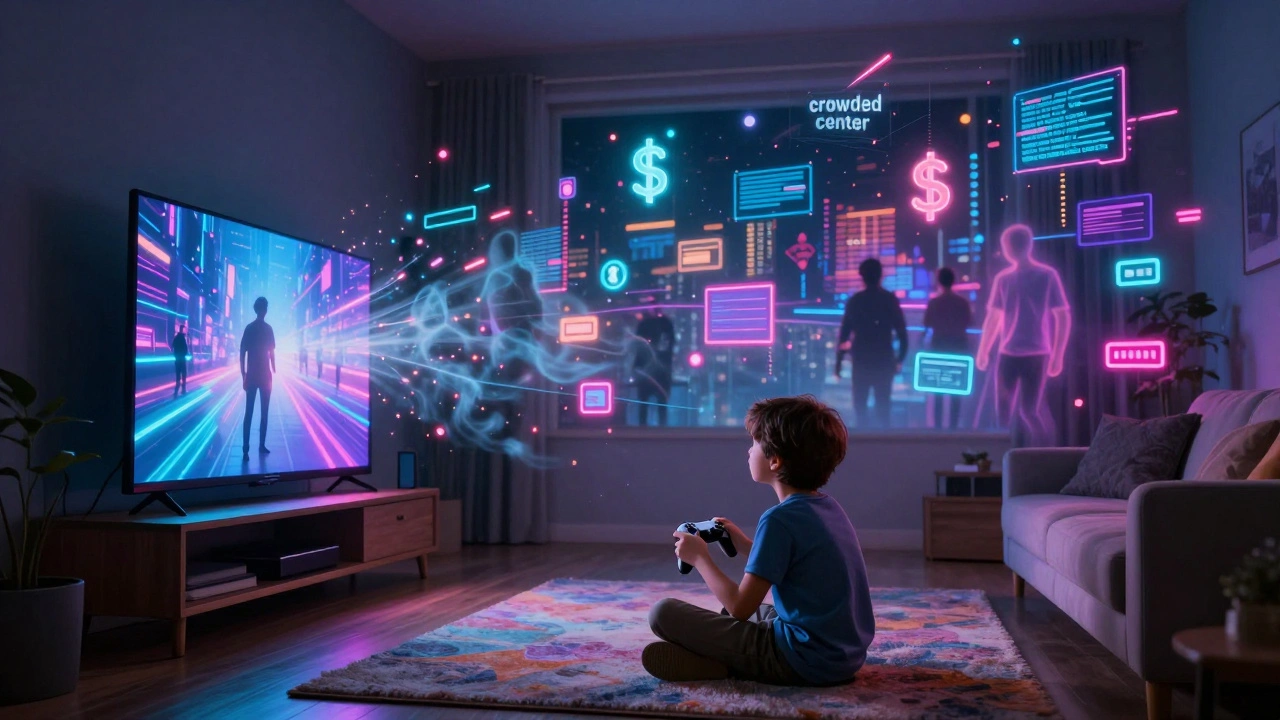
Parent education on digital risks isn't about banning games; it's about building a bridge of communication. You can't just slap a timer on the console and call it a day. You need to understand what your kids are actually seeing and who they are talking to. This guide breaks down the actual dangers-from financial traps to social manipulation-and gives you a concrete plan to keep your kids safe without becoming the 'enemy' in their eyes.
The Hidden Costs of Modern Gaming
Gone are the days when you bought a game cartridge for $40 and it was a complete experience. Today, we live in the era of the "Live Service" model. Many popular games are free to download, but they are designed using psychological tricks to get players to spend money.
Loot Boxes is a virtual consumable item which contains a randomized selection of rewards. These are essentially digital slot machines. When a child spends $2.99 on a chest hoping for a "legendary" skin, they are engaging in a variable ratio reinforcement schedule-the same mechanism that makes gambling addictive. If a child has access to a saved credit card on a console, it's incredibly easy for them to spend hundreds of dollars before you even see the bank statement.
Beyond the money, there is the risk of "Dark Patterns." These are user interface designs intended to trick users into doing things, like clicking a "Yes" button that is highlighted while the "No" button is hidden or tiny. This leads to accidental purchases and a feeling of frustration or manipulation.
| Risk Type | Mechanism | Impact on Child |
|---|---|---|
| Microtransactions | Small, frequent purchases of virtual goods | Financial loss; normalization of spending small sums |
| Gacha Mechanics | Randomized reward systems | Gambling-like behavior; frustration from "near misses" |
| Battle Passes | Time-limited rewards requiring daily play | FOMO (Fear Of Missing Out); forced daily engagement |
The Social Minefield: Grooming and Toxicity
The biggest risk isn't the game itself, but the people playing it. Online multiplayer environments are often lawless. While many players are just kids, these spaces are also hunting grounds for predators. Online Grooming is the process where an adult builds an emotional connection with a minor to lower their inhibitions for the purpose of abuse.
It rarely starts with something scary. It starts with a "gift." A predator might give your child a rare item in a game or offer to help them level up. They build trust through kindness and shared interests. Once the child trusts them, the conversation moves from the game's public chat to a private app like Discord, which is a VoIP and instant messaging social platform popular with gamers. Once the interaction is private, the predator begins to isolate the child from their parents.
Then there is the "toxicity" factor. Cyberbullying in gaming is often dismissed as "trash talk," but there is a line. When a child is subjected to constant hate speech or targeted harassment, it affects their self-esteem and mental health. Because these interactions happen behind a screen, the empathy gap is huge, and kids often don't know how to handle the emotional fallout.
Recognizing the Signs of Gaming Disorder
We all love a good hobby, but gaming becomes a problem when it stops being a leisure activity and starts being a coping mechanism. The World Health Organization officially recognizes Gaming Disorder as a condition characterized by impaired control over gaming, increasing priority given to gaming over other activities, and continuation despite negative consequences.
How do you tell the difference between a passionate gamer and someone struggling? Look for the "displacement effect." Is the game replacing sleep? Is it replacing hygiene? Is it replacing face-to-face friendships? If your child becomes irrationally angry-screaming, throwing controllers, or becoming aggressive-when told to stop, they may be experiencing a dopamine crash. Their brain is so wired for the high-intensity reward of the game that the real world feels boring or painful by comparison.
Pay attention to their mood when they aren't playing. If they seem depressed, anxious, or completely detached from family life, the game may no longer be a tool for fun, but a shield against reality. This is often a sign of underlying issues, such as ADHD or social anxiety, which the gaming is merely masking.
Practical Steps for Guardians
You don't need to be a tech genius to secure your home. Start with the "Hardware Layer." Most consoles, like the PlayStation 5 or Xbox Series X, have robust parental controls. You can set spending limits to $0, restrict who can send messages, and set automatic shut-off timers.
Next, tackle the "Policy Layer." Create a Gaming Contract. Instead of arbitrary rules, negotiate them. For example: "You can play for two hours after your homework is done and your room is clean." When the rules are clear and agreed upon, the conflict decreases. Make sure part of the contract includes a "No Secrets" rule regarding online friends. If a stranger asks for a photo or a home address, the child must tell you immediately without fear of losing their gaming privileges.
Finally, implement the "Physical Layer." Keep consoles and PCs in common areas of the house. A bedroom door that is closed for six hours straight is a danger zone. By keeping the gaming in the living room, you can hear the tone of the conversations and see the reactions on their face. You aren't spying; you're supervising.

Developing a Healthy Digital Relationship
The most effective safety tool is a strong relationship with your child. If the only time you talk about gaming is to tell them to stop, they will stop telling you what happens in the game. Instead, get curious. Ask them to show you their favorite character or explain the goal of the match. When you show interest, they are more likely to come to you when something weird or scary happens online.
Encourage "Analog Alternatives." The brain needs a break from the constant stimulation of screen-based rewards. Whether it's sports, reading, or building something with their hands, these activities help reset the dopamine system and teach patience-something that gaming often erodes. The goal isn't to replace gaming, but to ensure it's just one part of a balanced life.
Is it okay for my child to play games with strangers?
While gaming is social, you should strictly limit interactions to people your child knows in real life. If they must play with strangers, ensure the chat is set to "Friends Only" or that you are monitoring the voice chat. Never allow them to move a conversation from the game to a private messaging app like WhatsApp or Discord without your supervision.
How do I stop my child from spending money in games?
The most effective way is to remove all saved payment methods from the console and app store. Enable "Require Password for Purchases" and set a spending limit of zero. If you want to give them an allowance, use gift cards with a fixed amount so they cannot exceed a specific budget.
What should I do if my child is addicted to gaming?
Start by gradually reducing play time rather than cutting it off abruptly, which can cause extreme emotional outbursts. Establish a predictable schedule. If the behavior is severe-such as skipping school or refusing to eat-consult a licensed therapist specializing in digital addictions or behavioral health to address the root cause.
Are "E-rated" games always safe for kids?
Not necessarily. An "E for Everyone" rating usually refers to the game's content (violence, language, themes), but it doesn't account for the community. A kid playing a rated-E game can still encounter toxic players or predators in the online multiplayer lobbies. Always prioritize the social environment over the game's rating.
How can I tell if a game is using predatory design?
Look for flashing "Limited Time Offer" banners, countdown timers that create urgency, or systems where progress slows down significantly unless you pay to speed it up. If the game makes the player feel like they are losing out by not spending money, it is likely using predatory design patterns.
Next Steps for Guardians
If you've realized your current setup is too loose, don't panic and delete everything. That just creates resentment. Instead, spend this weekend auditing your devices. Check the settings on every console, tablet, and phone. Sit down with your kids and have an honest conversation about why these rules exist-not to restrict their fun, but to protect their mental and financial well-being.
For those whose children are already showing signs of distress, look for local support groups or counselors who understand the intersection of technology and psychology. Remember, the goal is digital literacy. You want your child to be able to navigate the digital world safely on their own eventually; your job right now is to provide the training wheels.