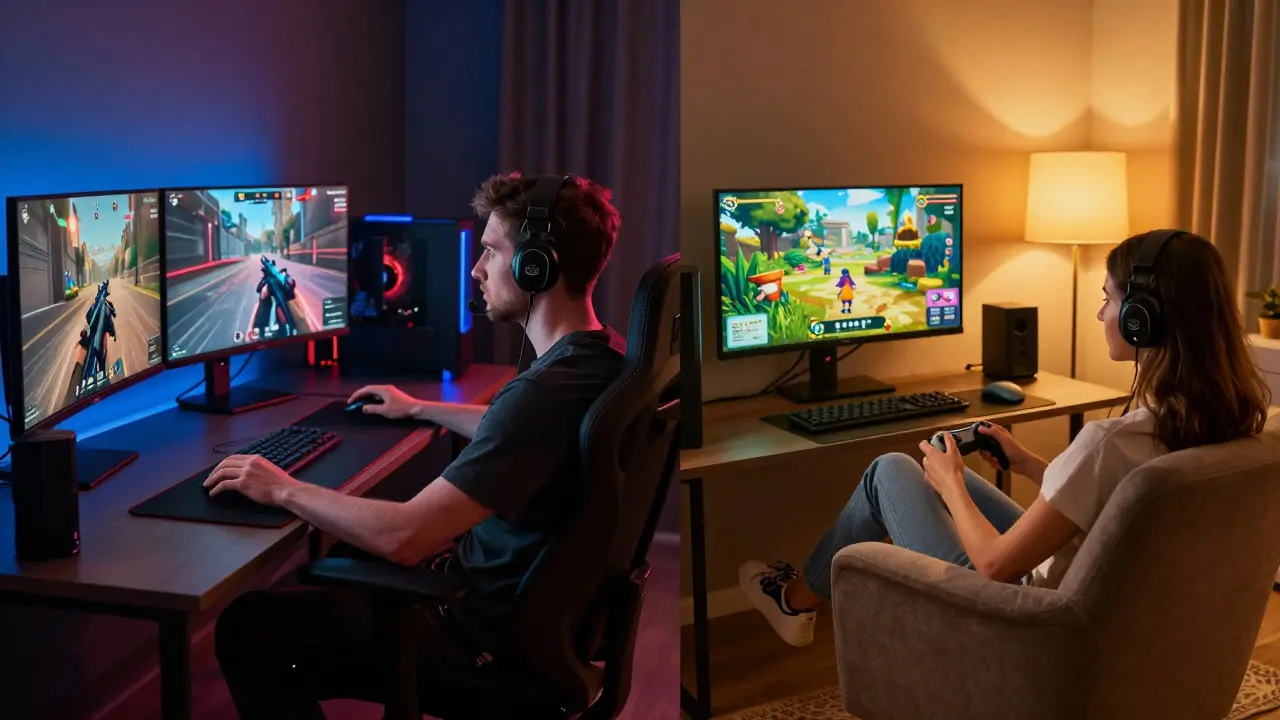
For decades, the gaming industry operated on a simple assumption: men play shooters, women play puzzles. It was a stereotype so baked into marketing that it shaped which games got developed and who they were sold to. But if you look at the actual data from 2025 and early 2026, that binary is crumbling. The gap isn't disappearing, but it's shifting in ways that surprise even veteran analysts. Today, we're looking past the noise to see what players actually prefer, why those preferences exist, and how the market is reacting to a more diverse audience.
The core of this discussion revolves around Game Genre Preferences, which are the specific categories of video games-such as RPGs, FPS, or Simulation-that different demographic groups consistently choose to play over others. Understanding these preferences requires looking at Player Demographics, particularly gender, age, and platform usage. When we analyze Video Game Consumption patterns, we find that while overlaps are increasing, distinct clusters still remain. These clusters aren't just about fun; they reflect deeper psychological drivers like competition, social connection, and narrative immersion.
What the Numbers Actually Say
Let’s start with the hard data. Recent surveys from major gaming retailers and developer reports indicate that the gender gap in genre preference has narrowed by roughly 15% since 2020. However, "narrowed" doesn't mean "gone." In first-person shooters (FPS), male players still dominate the active user base, accounting for approximately 65-70% of the population in competitive titles like Call of Duty or Valorant. Conversely, in simulation and strategy games, female participation has surged. Titles focused on life management, such as The Sims, continue to skew heavily female, with estimates suggesting over 60% of dedicated players identify as women.
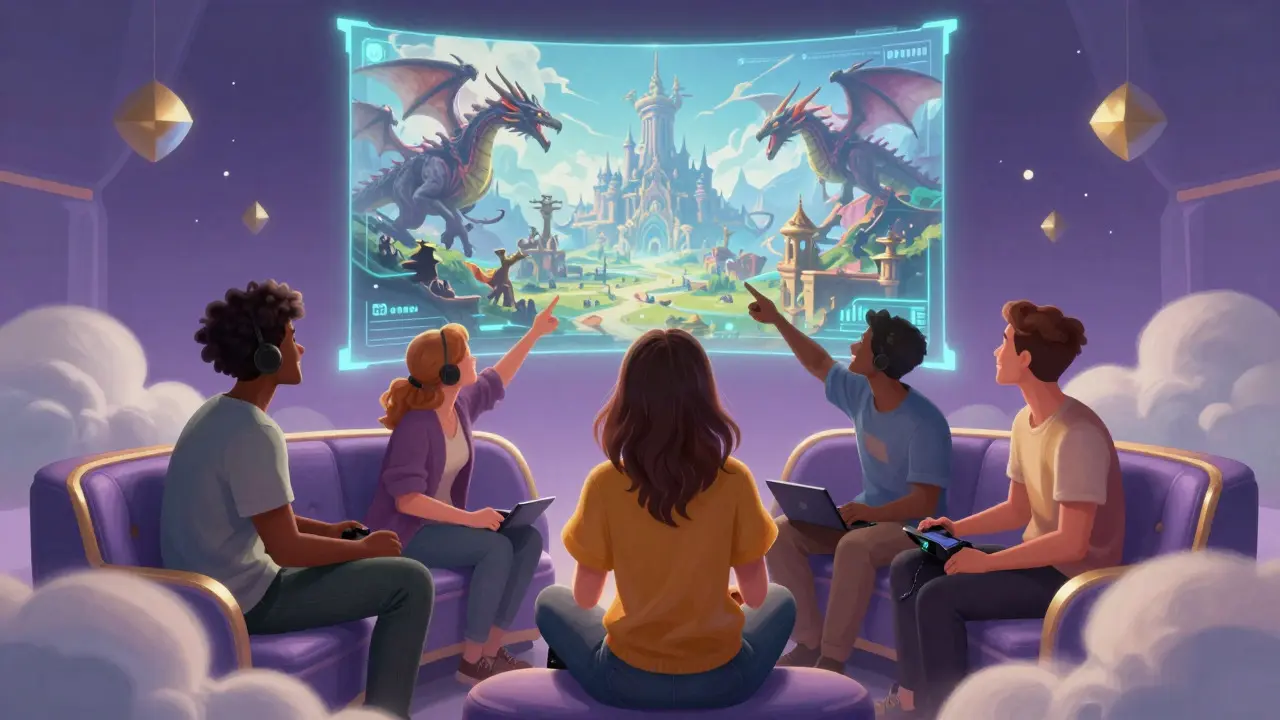
Where the real shift happens is in the middle ground. Role-playing games (RPGs) and battle royales have become the great equalizers. In open-world RPGs, the gender split is often nearly 50/50, sometimes tipping slightly toward males depending on the fantasy vs. sci-fi theme. This suggests that when a game offers deep customization and narrative agency, gender becomes a less significant predictor of preference than personal interest in storytelling or character development.
Why Do Preferences Differ?
It’s tempting to blame biology, but the reality is more nuanced. Societal conditioning plays a massive role. Boys are often introduced to action-oriented toys and games earlier in childhood, reinforcing comfort with fast-paced mechanics. Girls are frequently steered toward cooperative or aesthetic-focused play. By the time adults pick up a controller, these habits are ingrained.
However, psychology also plays a part. Research into Motivational Drivers in Gaming shows that while both genders enjoy achievement and mastery, there are subtle differences in emphasis. Male players tend to report higher satisfaction from competitive dominance and mechanical skill execution. Female players often cite social interaction and narrative depth as primary motivators. This doesn't mean men don't care about story or women don't love winning-it means the *primary* hook differs. A game that balances competitive integrity with strong social features tends to attract a mixed audience, regardless of genre label.
Genre-Specific Breakdowns
To make this practical, let’s break down the major genres and where the lines blur or hold firm.
- Action-Adventure: Historically male-dominated, but recent hits with strong protagonists have balanced the books. Players here value exploration and combat variety equally across genders.
- Strategy & Simulation: Traditionally seen as "male brain" territory due to complexity. Yet, city-builders and farm sims show high female retention rates. The key factor is whether the strategy feels like a puzzle to solve or a system to manage.
- Mobile Casual Games: This is the most gender-balanced sector. Puzzle games and hyper-casual titles appeal broadly because the entry barrier is low. Here, gender is almost irrelevant; convenience and short session times drive engagement.
- Esports & Competitive: Still the area with the widest gap. High-stress, team-based competitive environments can feel exclusionary if not actively managed. Inclusivity efforts are slowly improving female participation in titles like League of Legends.
How Marketing Shapes Perception
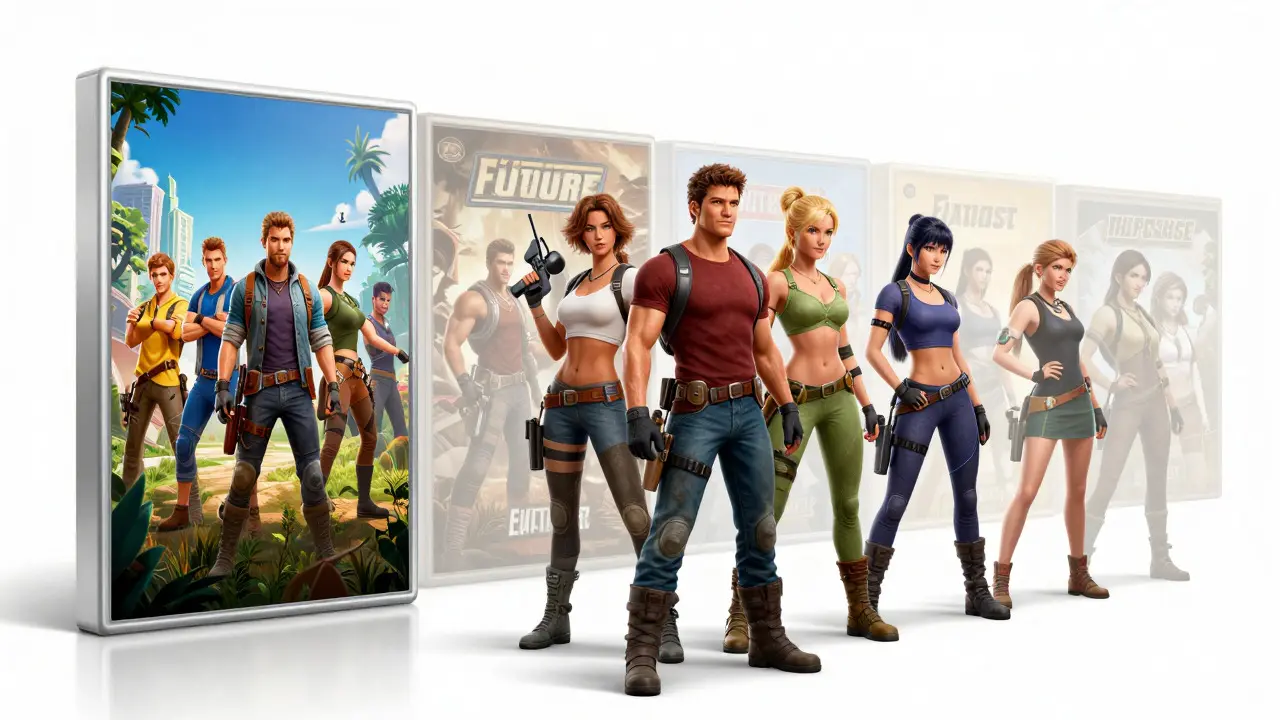
You can’t talk about preferences without talking about visibility. For years, box art and trailers targeted specific demographics. Action games featured muscular male leads; romance games featured female leads. This created a self-fulfilling prophecy. If a woman sees a shooter marketed exclusively to men, she may assume it’s not for her, even if she enjoys the mechanic.
In 2026, smart publishers are changing tactics. They use inclusive casting in promotional materials and highlight community aspects rather than just violence or speed. This approach has been proven to widen the potential player base by 20-30% in beta tests. The goal isn't to erase differences but to remove artificial barriers that prevent people from trying genres outside their comfort zone.
| Genre | Dominant Group | Estimated Split | Key Driver |
|---|---|---|---|
| FPS / Shooter | Male | 70% M / 30% F | Competitive Skill |
| RPG / Open World | Balanced | 55% M / 45% F | Narrative & Choice |
| Simulation / Life | Female | 40% M / 60% F | Management & Creativity |
| Puzzle / Casual | Balanced | 50% M / 50% F | Accessibility & Short Sessions |
| Strategy | Male | 65% M / 35% F | Tactical Complexity |
The Future of Diverse Gaming Audiences
As cloud gaming and cross-platform play become standard, the friction between platforms disappears. A woman on a mobile device can join a squad with a man on a PC console seamlessly. This integration forces studios to design for broader audiences from day one. You can no longer niche-market a multiplayer title effectively if your player base is going to be mixed anyway.
We’re also seeing a rise in indie developers who ignore traditional gender coding entirely. Their games focus on unique mechanics or artistic expression, attracting players based on curiosity rather than demographic fit. This trend suggests that in the next five years, "gender preference" might become a less useful metric than "psychological profile" or "play style preference." The labels are fading; the experiences are converging.
Frequently Asked Questions
Do men and women really prefer different game genres?
Yes, statistically there are still differences. Men lean more toward competitive shooters and strategy, while women often favor simulation, puzzle, and narrative-driven RPGs. However, the overlap is significant, especially in action-adventure and mobile casual genres where preferences are nearly identical.
Is the gender gap in gaming closing?
It is narrowing, but slowly. Since 2020, the gap in genre preference has reduced by about 15%. This is driven by better representation in marketing, the rise of mobile gaming, and a cultural shift away from rigid gender stereotypes in hobbies.
Which genres are the most gender-neutral?
Puzzle games, hyper-casual mobile titles, and open-world action-adventures are the most neutral. These genres rely less on competitive intensity or specific thematic tropes, making them accessible to all demographics equally.
Does marketing affect what genres people play?
Absolutely. Studies show that inclusive marketing can increase trial rates among underrepresented groups by 20-30%. If a game is advertised only to one gender, the other group is less likely to try it, even if they would enjoy the gameplay mechanics.
Why do women avoid competitive FPS games?
It’s rarely about skill. Many female players report feeling unwelcome due to toxic community behavior or lack of visible female characters. When communities are moderated well and characters are diverse, female participation in FPS titles rises significantly.