
When you or someone you love is struggling with substance use disorder, the fear of financial ruin often stops people from seeking help. You might assume that quality care requires expensive private insurance or out-of-pocket payments that drain your savings. But there is a robust network of government mental health services designed specifically to provide accessible, affordable, and sometimes free treatment for addiction. These public resources are not just a last resort; they are often the backbone of recovery infrastructure in many communities, offering evidence-based therapies that rival those found in high-end private facilities.
The landscape of public addiction care can feel confusing at first glance. It involves federal agencies, state departments, county clinics, and non-profit partners all working together. Understanding how these pieces fit together is the first step toward getting help. This guide breaks down exactly where to look, what programs exist, and how to navigate the system without getting lost in bureaucracy.
Federal Agencies That Fund Local Care
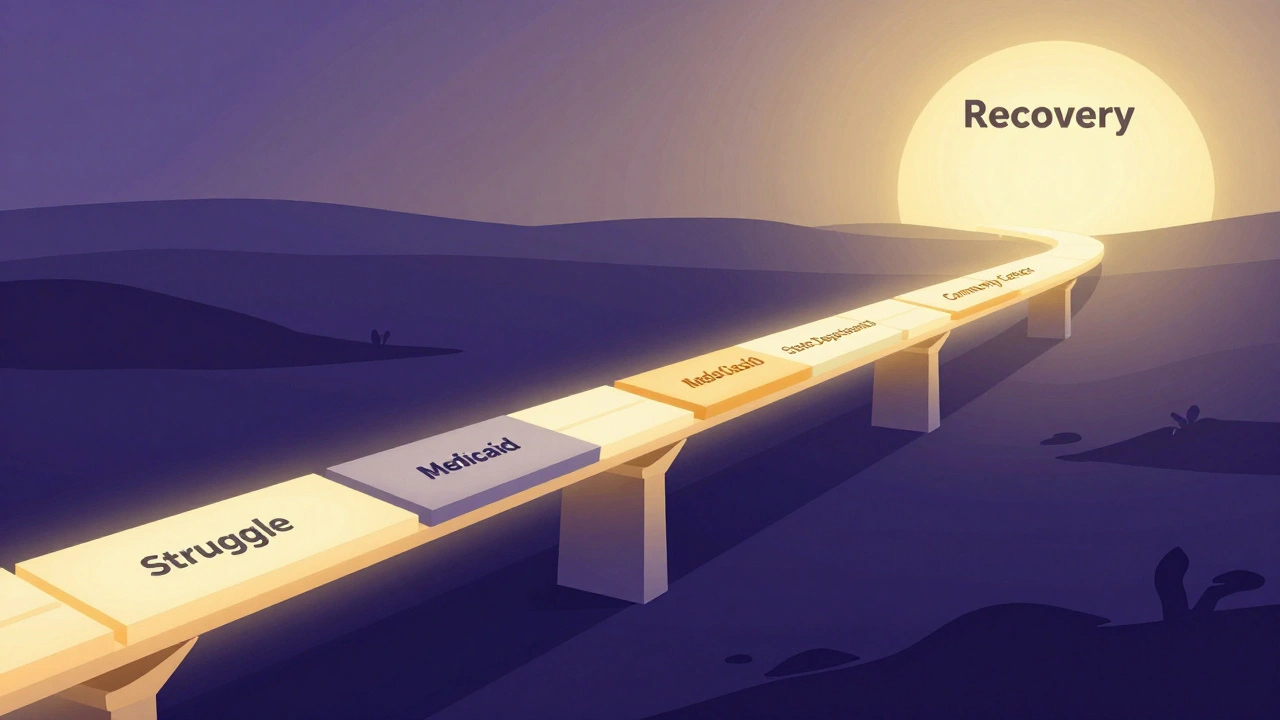
At the top of the hierarchy is the Substance Abuse and Mental Health Administration (SAMHSA), which is the lead federal agency within the U.S. Department of Health and Human Services responsible for improving the nation's mental health and addressing substance abuse. While SAMHSA does not typically run clinics itself, it provides billions in grants to state and local providers. This funding ensures that thousands of community-based organizations offer sliding-scale fees or free services based on income.
If you are looking for immediate help, the most powerful tool available is the SAMHSA National Helpline, also known as Treatment Referral Routing Service. By dialing 1-800-662-HELP (4357), you connect with trained specialists who can refer you to local treatment facilities, support groups, and community-based organizations. This service is confidential, free, and available 24/7 in English and Spanish. It acts as a central directory, filtering through thousands of providers to find ones that accept your specific insurance type or offer payment assistance.
Another critical federal resource is the Medicaid program, which is a joint federal and state program that helps with medical costs for some people with limited incomes. Since the Affordable Care Act, Medicaid expansion has made addiction treatment a mandatory essential health benefit in most states. If you qualify for Medicaid, you generally have access to detoxification, inpatient rehabilitation, outpatient therapy, and medication-assisted treatment (MAT) with little to no copay. Checking your eligibility is often the fastest way to unlock comprehensive care.
State and County-Level Programs
While federal agencies set broad guidelines, the actual delivery of care happens at the state and county level. Each state has a Department of Health or Department of Behavioral Health that manages state-funded initiatives for mental health and substance abuse prevention and treatment. These departments often operate their own crisis lines, mobile response teams, and residential treatment centers.
In many urban areas, county health departments run community health centers that offer primary care alongside behavioral health services, including addiction counseling and prescription monitoring. These centers are particularly valuable because they treat the whole person. Addiction rarely exists in a vacuum; it often co-occurs with physical health issues like hepatitis C, HIV, or chronic pain. A community health center can address these medical needs simultaneously with addiction treatment, reducing the risk of relapse caused by untreated physical conditions.
Some states also offer Sober Courts, which are specialized court programs that offer treatment alternatives to incarceration for individuals with substance use disorders. If you are dealing with legal issues related to drug or alcohol use, asking for a referral to a Drug Court or DUI Intervention Program can be life-changing. These programs combine judicial oversight with intensive treatment, often resulting in dismissed charges upon successful completion.
Types of Public Treatment Available
Public resources are not limited to basic counseling. The range of services available through government-funded channels is extensive and clinically rigorous. Here is what you can typically expect:
- Detoxification: Medically supervised withdrawal management to safely clear substances from the body. Many state hospitals offer this inpatient service for uninsured patients.
- Medication-Assisted Treatment (MAT): The use of FDA-approved medications like methadone, buprenorphine, and naltrexone combined with counseling. Federal regulations ensure that certified opioid treatment programs (OTPs) are accessible in every state.
- Outpatient Programs: Flexible therapy sessions that allow you to maintain work or school commitments while receiving care. Intensive Outpatient Programs (IOP) usually require 9-20 hours of weekly participation.
- Crisis Stabilization Units: Short-term, non-punitive settings for individuals experiencing acute mental health or substance use crises, serving as an alternative to emergency rooms or jail.
| Feature | Public/Government Services | Private Luxury Facilities |
|---|---|---|
| Cost | Free, sliding scale, or low-cost via Medicaid | $10,000 - $30,000+ per month |
| Wait Times | Can vary; may be longer for specialized beds | Immediate admission upon payment |
| Clinical Quality | Evidence-based, standardized protocols | Varies; often includes holistic amenities |
| Amenities | Basic, functional environment | Private rooms, spa services, gourmet meals |
| Accessibility | High; located in most communities | Low; often requires travel |
Navigating Insurance and Eligibility
One of the biggest hurdles people face is understanding whether they qualify for free care. In the United States, healthcare eligibility is complex. However, several pathways exist for those without traditional employer-sponsored insurance.
First, check if you qualify for Medicaid. Eligibility varies by state but generally includes individuals with incomes below 138% of the federal poverty level. If you were previously denied Medicaid due to immigration status or other factors, recent policy shifts in some states have expanded coverage for substance use treatment regardless of citizenship status. Contact your local social services office to verify current rules.
If you do not qualify for Medicaid, ask about sliding fee scales. Most federally qualified health centers (FQHCs) and state-funded clinics adjust their prices based on your household income and family size. A family earning slightly above the Medicaid threshold might still receive treatment for just $20-$50 per session instead of the standard $150+ rate.
Additionally, the Mental Health Parity and Addiction Equity Act requires insurance plans that cover mental health and substance use disorders to provide benefits comparable to medical/surgical benefits. If you have any form of private insurance, even a high-deductible plan, you are legally entitled to coverage for addiction treatment. Call the number on your insurance card and ask specifically for "behavioral health benefits" to understand your deductible and copay structure.
How to Access These Resources Today
Finding the right provider doesn't have to be a guessing game. Follow these steps to locate government-supported care near you:
- Use the SAMHSA Locator: Visit findtreatment.gov or call 1-800-662-HELP. Enter your zip code and filter by "Accepts Medicaid" or "Sliding Scale Fees."
- Contact Your State Agency: Search for "[Your State] Department of Health substance abuse services." Look for directories of approved providers.
- Visit a Community Health Center: Use the HRSA Find a Health Center tool (findahealthcenter.hrsa.gov) to locate nearby clinics that offer integrated care.
- Ask for a Crisis Evaluation: If you are in immediate danger, go to the nearest hospital emergency room. They are required by law to stabilize you and can connect you with local public resources for follow-up care.
Remember, persistence is key. If one clinic has a waitlist, call another. Public systems are underfunded relative to demand, but they are vast. There are likely multiple options within a 20-mile radius of your home.
Support Beyond Clinical Treatment
Treatment is only one part of recovery. Government agencies also fund peer support and housing initiatives that are crucial for long-term success.
Peer Support Specialists are individuals with lived experience of recovery who provide guidance, mentorship, and advocacy to others. Many state programs employ these specialists to help you navigate the healthcare system, find jobs, and rebuild relationships. They understand the struggle because they have been through it themselves.
Housing instability is a major barrier to recovery. Look into Housing First initiatives, which are programs that provide permanent housing without preconditions like sobriety, coupled with supportive services. These programs recognize that stable shelter is a prerequisite for effective treatment. Local homeless coalitions and HUD-funded projects often partner with addiction treatment centers to create seamless transitions from street to stability.
Finally, don't overlook 12-step meetings like Alcoholics Anonymous (AA) and Narcotics Anonymous (NA). While not government-run, these groups are deeply integrated into the public health ecosystem. Many state-funded clinics host meetings on-site, making them easily accessible to patients already receiving care.
Is government-funded addiction treatment really effective?
Yes. Research shows that the effectiveness of treatment depends more on the quality of care and adherence to clinical guidelines than on the setting's cost. Public facilities use the same evidence-based practices-such as Cognitive Behavioral Therapy (CBT) and Medication-Assisted Treatment (MAT)-as private centers. The primary difference is often the lack of luxury amenities, not the clinical outcome.
What if I don't have insurance and don't qualify for Medicaid?
You still have options. Most community health centers and state-funded clinics offer sliding fee scales based on your income. Additionally, some states have dedicated funds for uninsured residents. You can also explore non-profit organizations that receive federal grants to provide free services. Never let lack of insurance stop you from calling a helpline; they can identify specific programs for uninsured individuals.
Can my employer find out if I use government mental health services?
No. Healthcare information is protected by strict privacy laws, including HIPAA. Government agencies and treatment providers cannot share your records with your employer without your explicit written consent. Your treatment history remains confidential between you and your healthcare team.
How long do waitlists for public treatment programs usually last?
Wait times vary significantly by location and program type. Outpatient services often have shorter waitlists, sometimes just a few days to a week. Inpatient residential beds may have longer waits, ranging from two weeks to a month. To minimize delays, call multiple facilities simultaneously and ask to be placed on cancellation lists. Crisis stabilization units typically offer immediate entry.
Do public services cover dual diagnosis (mental health and addiction)?
Many do. Integrated care is increasingly common in public health systems. State departments of behavioral health often operate programs specifically designed for co-occurring disorders. When searching for providers, look for terms like "integrated care," "dual diagnosis," or "co-occurring disorders" to ensure you get treatment for both conditions simultaneously.