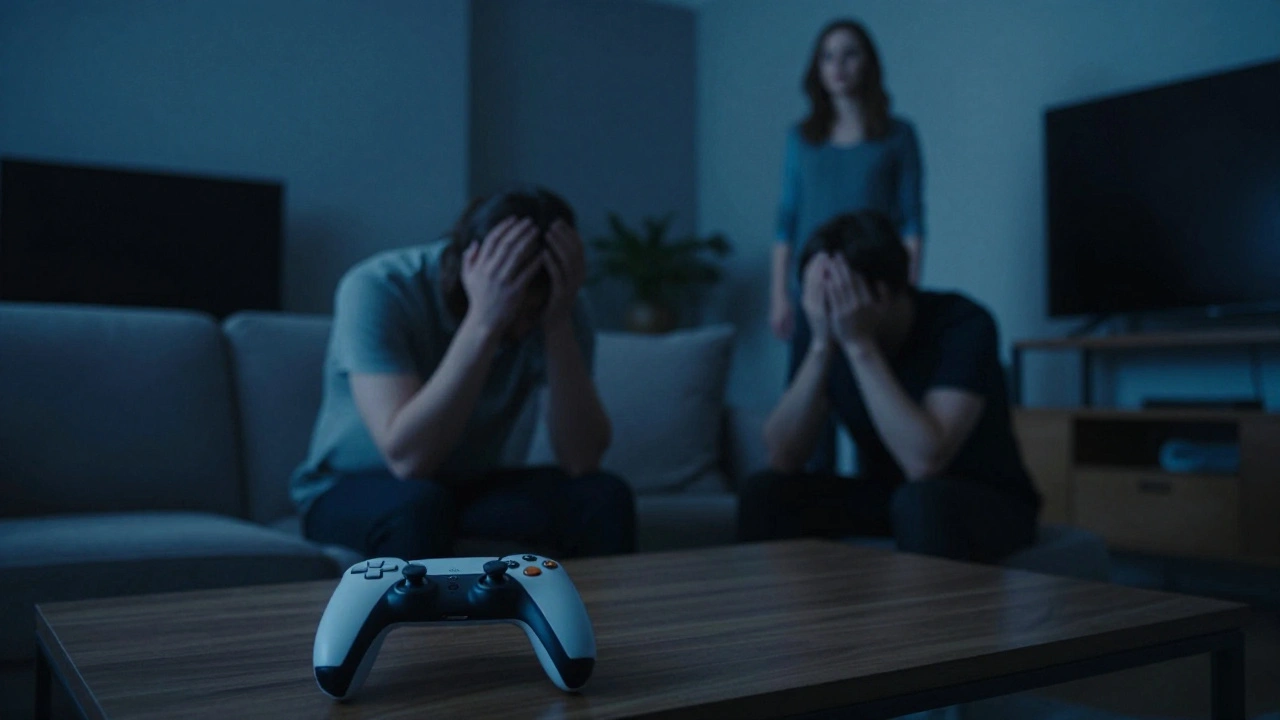
The moment the screen goes dark
You finally put down the controller, and the silence in the room is deafening. Maybe you snapped at your partner during a high-stakes match, or perhaps you ignored a dinner date for three hours because you couldn't leave your raid. Whatever happened, the damage isn't about the game-it's about the feeling of being second-best to a piece of software. When gaming leads to emotional harm, a simple "sorry" while you're still glancing at your phone usually makes things worse. You need a strategy to fix the rift and prove that your partner is the priority.
Key Takeaways for Repair
- Acknowledge the impact, not just the action.
- Remove all digital distractions during the apology.
- Create concrete boundaries to prevent repeat offenses.
- Focus on "emotional restitution" over quick fixes.
Defining the harm: Why gaming conflicts hit different
Before you start planning your approach, you have to understand what actually happened. In the world of gaming relationship repair is the process of restoring trust and emotional connection after a partner feels neglected or mistreated due to excessive or aggressive gaming habits. It isn't just about "playing too much." It's often about emotional neglect, where the partner feels a void in intimacy or attention.
Consider the difference between a "mistake" and a "pattern." If you missed one anniversary because of a limited-time event, that's a mistake. If you consistently prioritize a Discord server over your partner's emotional needs, that's a pattern. A pattern requires a deeper level of repair than a one-time slip-up. You aren't just apologizing for an hour of lost time; you're apologizing for a perceived lack of value in the relationship.
The Anatomy of a Gaming-Related Apology
Most people fail at apologizing because they use "but." ("I'm sorry I yelled, but you kept interrupting my game!") This isn't an apology; it's a justification. To actually repair the harm, you need to follow a specific sequence that removes the game from the center of the conversation.
First, create a "dead zone." This means no phones, no consoles, and no monitors. If you are apologizing while your PC is still humming in the background, your partner can see the temptation. Physical distance from the tech signals that they are the only thing that matters in this moment. Use a direct, active voice. Instead of saying "I'm sorry you felt neglected," say "I neglected you, and I know that hurt." The first version shifts the blame to their feelings; the second takes ownership of your actions.
Next, identify the specific harm. Did you cause emotional distress? Did you break a trust? Were you dismissive of their needs? Be concrete. For example, instead of saying "Sorry for being distracted," try "I realize that when I ignored you to finish that level, I made you feel like you don't matter. That was selfish and wrong." This shows you actually understand the pain you caused, which is the only way the other person feels heard.
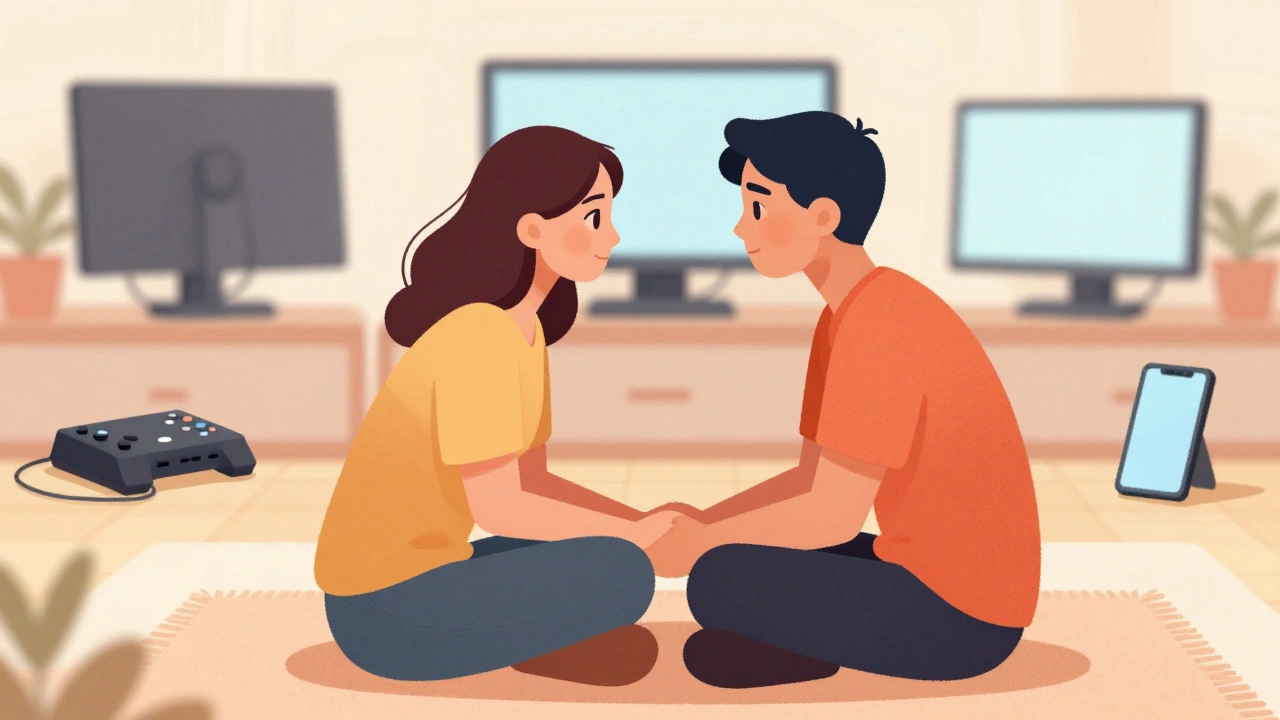
Establishing New Boundaries (The Action Plan)
Words are cheap, especially when you've said them before. To move from an apology to actual repair, you need a roadmap. This is where you introduce Gaming Boundaries, which are agreed-upon rules and schedules that balance leisure gaming with relationship responsibilities. Without a plan, your partner will spend every future gaming session wondering when the next conflict will happen.
| The Problem | The Vague Promise | The Concrete Boundary |
|---|---|---|
| Ignoring partner during dinner | "I'll try to be more present." | "Phones and controllers stay in the other room during all meals." |
| Gaming until 3 AM every night | "I won't stay up so late." | "No gaming after 11 PM on weeknights to ensure shared sleep schedules." |
| Snapping during competitive play | "I'll stop being grumpy." | "If I feel overwhelmed by a game, I will take a 10-minute break before interacting with you." |
These boundaries shouldn't be a punishment, but a safety net. They protect the relationship from the addictive loops often found in MMORPGs or competitive Battle Royales, where the "just one more match" mentality can lead to hours of unintentional neglect.
Dealing with Gaming Disorder and Compulsion
Sometimes, the harm isn't just a lack of time management; it's a deeper issue. If you find that you physically cannot stop gaming even when you see your partner crying or upset, you might be dealing with Gaming Disorder. This is recognized by the World Health Organization as a pattern of gaming behavior characterized by impaired control over gaming.
If this is the case, an apology isn't enough-you need professional help. Admitting this to your partner is a powerful part of the repair process. Telling them, "I love you, but I realize I have a compulsive relationship with this game that I can't control on my own," shifts the narrative from "you don't care about me" to "we are fighting this addiction together." This transforms the partner from a victim of your neglect into a teammate in your recovery.

Emotional Restitution: Filling the Void
Once the apology is delivered and the boundaries are set, you have to engage in emotional restitution. This is the act of actively giving back the time and energy you stole from the relationship. If you spent 40 hours a week in a virtual world, you can't expect the relationship to heal by just stopping for one weekend.
Ask your partner what they've missed. Maybe they missed the deep conversations you used to have, or maybe they just missed the feeling of being looked at while they talk. Schedule "non-negotiable" dates. These are time blocks where gaming is not an option, regardless of whether there is a special event or a new patch release. By proactively scheduling these, you prove that the relationship is now the primary "quest" in your life.
Pay attention to the small signals. If your partner mentions something they want to do, don't just say "sure." Make the plan, set the time, and follow through. The goal is to rebuild the Trust that was eroded. Trust is built in drops and lost in buckets; you have to be patient as you refill that bucket one small, thoughtful action at a time.
Common Pitfalls to Avoid During Repair
The road to recovery is rarely a straight line. Many people fall back into old habits the moment they feel the tension has eased. Avoid the "Truce Trap," where you assume that because your partner stopped complaining, everything is fixed. In reality, they might have just given up hope.
Another mistake is comparing your gaming to their hobbies. Saying "Well, you spend four hours reading a book!" is a defensive move that invalidates their pain. Reading a book in the same room is different from being mentally absent in a digital world. Avoid any comparison that minimizes the emotional impact of your behavior. The only metric that matters is how your partner feels and whether they feel secure in your love.
How do I know if my gaming has caused actual harm?
Look for signs of emotional withdrawal in your partner. If they stop asking you to spend time together, stop sharing their day with you, or express frequent feelings of loneliness despite you being in the same room, harm has likely occurred. Frequent arguments about "just five more minutes" are also a major red flag that your hobby is encroaching on your relationship's health.
What if my partner wants me to quit gaming entirely?
This usually happens when trust is completely broken. While quitting may be necessary if you have a true addiction, in most cases, the goal should be "healthy integration." Discuss the specific behaviors that hurt them rather than the act of gaming itself. Propose a trial period with the concrete boundaries mentioned above to show that you can enjoy the hobby without sacrificing the partner.
How long does it take to repair the trust?
There is no set timeline, but consistency is the key. If the neglect lasted for months or years, it will not be fixed in a week. Trust returns when the partner sees a consistent pattern of behavior that contradicts the old harm. When your actions match your words for a prolonged period, the anxiety associated with your gaming will begin to fade.
Can we play games together to fix the relationship?
Only if your partner actually enjoys gaming. Forcing a partner into your hobby as a "compromise" can sometimes feel like more of the same neglect-you're just asking them to join you in the world where you ignore them. Ensure they genuinely want to play. If they don't, find a different shared activity that requires full mutual presence.
What if I apologize but then slip up again?
Relapses happen. The key is how you handle the slip. Don't wait for them to catch you; bring it up immediately. "I realized I spent too much time on the game tonight and broke our boundary. I'm sorry, and I'm going to do X to make it up to you." Taking ownership before the conflict starts prevents the "dishonesty" layer from being added to the "neglect" layer.
Next Steps for a Healthier Balance
If you've completed the apology and set boundaries, your next step is to monitor your triggers. Do you game more when you're stressed at work? Do you use it to avoid difficult conversations with your partner? Identifying why you retreat into the screen helps you address the root cause, not just the symptom.
For those in the early stages of repair, try a "digital detox" weekend. Completely unplugging for 48 hours can reset the dopamine levels in your brain and provide an intense burst of reconnection with your partner. It serves as a powerful symbolic gesture that says, "I can exist without this device, and I choose you."