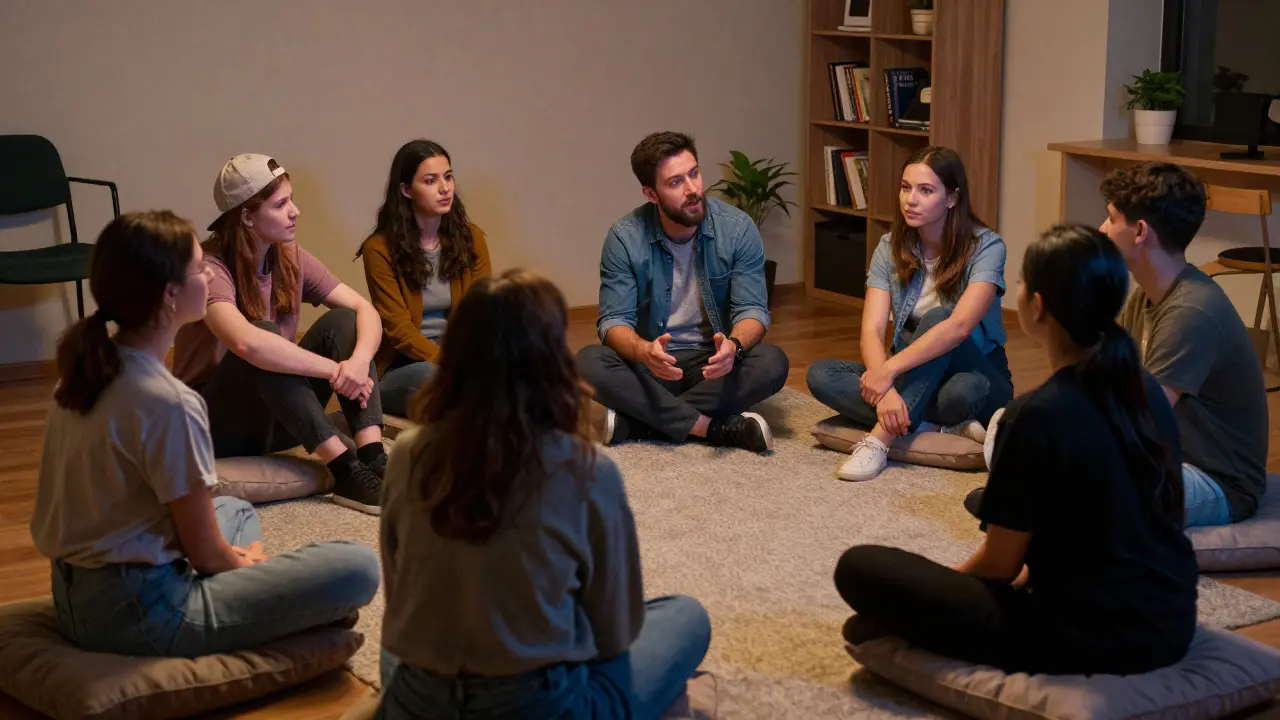
Running a gaming recovery meeting isn't just about keeping time. It’s about holding space for people who feel isolated by their screen habits. If you’re considering stepping into this role, you need more than good intentions; you need specific skills to navigate the unique dynamics of gaming recovery. This guide breaks down what facilitator training actually looks like, why it matters, and how to prepare yourself for the real-world challenges of leading peers through behavioral change.
Why Specialized Training Matters in Behavioral Addiction
Gaming disorder is often misunderstood as simple laziness or lack of discipline. In reality, it functions similarly to other addictions, involving dopamine loops, social isolation, and emotional regulation issues. Standard alcoholics anonymous (AA) style facilitation doesn't always fit here because the stigma around gaming is different. Gamers often defend their hobby fiercely before admitting they have lost control. A trained facilitator knows how to approach these defenses without triggering shame.
You don’t need a medical degree to lead these meetings, but you do need to understand the psychology behind the behavior. Training helps you recognize when a participant is in crisis versus when they are just venting. It also teaches you how to maintain group cohesion when members disagree on whether certain games are "too addictive." Without this foundation, meetings can quickly devolve into arguments about game mechanics rather than focusing on recovery.
Core Skills Every Facilitator Needs
Effective facilitation relies on a few non-negotiable soft skills. You must be an active listener, meaning you listen to understand, not just to reply. You also need strong boundary-setting abilities. In early-stage recovery, participants may try to dominate conversations or bring up unrelated personal trauma that derails the session. Your job is to gently steer the focus back to the topic at hand while validating their feelings.
- Active Listening: Reflecting back what you hear to ensure clarity.
- Conflict Resolution: De-escalating disagreements between members about triggers or strategies.
- Time Management: Keeping sessions structured so everyone gets a chance to speak.
- Empathy Without Rescue: Supporting members without solving their problems for them.
These skills are rarely taught in formal education, which is why dedicated training programs exist. They provide safe environments to practice these techniques with feedback from experienced mentors.

The Structure of Effective Facilitator Training Programs
Most reputable training programs for gaming recovery follow a similar arc. They start with self-reflection, then move to theoretical knowledge, and finally to practical application. You will spend significant time examining your own relationship with technology and gaming. Why? Because if you haven’t processed your own biases, they will leak into your facilitation style.
Next, you’ll learn the specific frameworks used in gaming recovery circles. Many groups adapt the twelve-step model, while others use cognitive-behavioral therapy (CBT) principles. Understanding these frameworks allows you to explain *why* we do certain exercises, such as tracking screen time or identifying trigger emotions. The final phase usually involves shadowing an experienced facilitator and then co-leading a session under supervision.
| Approach | Focus Area | Best For | Challenge |
|---|---|---|---|
| Twelve-Step Adapted | Spiritual growth and surrender | Members seeking community and accountability | Can feel rigid for tech-savvy audiences |
| Cognitive-Behavioral (CBT) | Thought patterns and behavioral changes | Members who prefer logical, evidence-based methods | Requires more facilitator expertise in psychology |
| Pure Peer Support | Shared experience and listening | Newcomers who feel judged by clinical terms | Risk of staying stuck in complaints without action |
Navigating the Unique Dynamics of Gamer Groups
Gamer groups have a distinct culture. Members might use slang, reference pop culture, or display high energy levels. As a facilitator, you need to bridge the gap between this casual vibe and the seriousness of recovery. One common pitfall is allowing the meeting to become a tech support forum. If one member spends twenty minutes talking about their new GPU setup, the therapeutic value drops significantly. You need to set clear ground rules at the start of each meeting: no sales pitches, no technical troubleshooting, and respect for speaking turns.
Another dynamic is the presence of "sober gamers" who want to keep playing but manage their time better. These members are valuable allies but can sometimes minimize the struggles of those who need to quit entirely. A skilled facilitator balances these perspectives, ensuring both groups feel heard without letting one dominate the narrative.

Practical Steps to Get Certified
If you want to start facilitating soon, here is a realistic roadmap. First, attend several local or online meetings as a member. You cannot lead a group you haven’t experienced. Second, look for organizations that offer specific training for behavioral addictions. While general peer leader training is helpful, specialized courses address the nuances of digital dependency. Third, find a mentor. Ask an established facilitator if you can observe their sessions. Take notes on how they handle silence, interruptions, and emotional outbursts.
- Attend at least six meetings as a participant to understand the culture.
- Complete a basic peer support certification program.
- Enroll in a workshop specifically focused on gaming or digital addiction.
- Shadow an experienced facilitator for two to three sessions.
- Co-lead a meeting with your mentor present for backup.
- Take over full responsibility after receiving positive feedback.
This process typically takes three to six months. Rushing it can lead to burnout or ineffective leadership, so patience is key.
Common Pitfalls and How to Avoid Them
Even well-trained facilitators make mistakes. One frequent error is becoming the "expert." Remember, you are a peer, not a therapist. If a member asks for medical advice, refer them to a professional. Another trap is over-scheduling. Too many meetings can exhaust both you and the participants. Start with one weekly session and gauge the demand before adding more. Finally, watch out for burnout. Facilitating requires emotional energy. Set boundaries for yourself, such as not checking work emails during meeting hours, and take regular breaks.
Do I need to be in recovery myself to facilitate?
Not necessarily, but it helps. Many successful facilitators are sober professionals or family members of gamers. However, having personal experience with behavioral addiction builds trust and empathy. If you aren't in recovery, focus heavily on active listening and avoiding judgment.
What is the difference between a moderator and a facilitator?
A moderator enforces rules and keeps order. A facilitator guides the conversation to achieve therapeutic goals. In gaming recovery, you need both roles, but the facilitator aspect is crucial for building a supportive community rather than just a discussion board.
How long does typical facilitator training take?
Most programs range from four weeks to six months. Intensive workshops might cover theory in a weekend, but practical application through shadowing and co-leading usually takes several months to complete comfortably.
Where can I find training specifically for gaming addiction?
Look for organizations specializing in behavioral health or digital wellness. Some universities offer continuing education credits in this area. Additionally, large online communities often host annual conferences where facilitation workshops are a key component.
Is online facilitation as effective as in-person?
It can be, but it requires different skills. Online meetings rely more on chat features and visual cues. You need to be comfortable managing mute/unmute buttons and reading body language through a screen. Many hybrid models work best, combining virtual convenience with occasional in-person bonding.