
The problem is that when your nervous system is in "fight or flight" mode, the logical part of your brain basically goes offline. You can't suddenly remember a breathing exercise or think of a supportive friend to call when you're in the middle of a mental storm. That's where a personal emergency list comes in. It's not a medical document; it's a customized "cheat sheet" for your brain, written when you're calm, to guide you back to safety when you're not.
What Exactly is a Gaming Trigger?
Before we build the list, we need to be clear about what we're fighting. In the context of gaming, a Trigger is a stimulus-like a visual, sound, or social interaction-that causes an intense, often involuntary, emotional or physical reaction. For some, it's a specific theme in a horror game that mirrors a real-life trauma. For others, it's the toxic behavior in a multiplayer lobby that triggers a deep-seated feeling of inadequacy or rage.
These reactions are often tied to the Amygdala, the part of the brain that handles emotional processing. When this area is overstimulated, you might experience a Panic Attack, which is characterized by a sudden surge of fear, heart palpitations, and shortness of breath. Understanding that this is a biological response, not a failure of will, is the first step toward managing it.
The Anatomy of Your Emergency List
A good emergency list doesn't use complex language. It uses direct, actionable commands. You want to avoid things like "try to be mindful" and instead use "put your hands in cold water." Your list should be broken down into three distinct phases: Immediate Shutdown, Physical Reset, and Emotional Anchoring.
Start by identifying your "Red Zone" signals. How do you know you're being triggered before the full meltdown happens? Maybe your palms get sweaty, your jaw clenches, or you start typing aggressively. Once you recognize these signs, the first item on your list is always the same: Stop the input. This means pausing the game, muting the audio, or stepping away from the screen entirely. You cannot heal in the environment that is hurting you.
| Phase | Goal | Example Action | Intensity |
|---|---|---|---|
| Immediate Shutdown | Stop Stimuli | Mute game/Close app | High/Critical |
| Physical Reset | Regulate Body | Cold water on face | Moderate |
| Emotional Anchor | Reconnect to Reality | Call a specific friend | Low/Stabilizing |
Phase 1: The Immediate Shutdown
The moment you hit the "Red Zone," you need a protocol that requires zero thinking. This part of your list should be a set of physical steps. If you play on a PC, it might be as simple as knowing exactly where the "Alt+F4" or "Windows+D" keys are to clear your screen. If you're on a console, it's the power button.
- Hard Exit: Shut down the monitor or close the laptop lid. The visual noise of a game can keep your brain in a loop of stress.
- Audio Cut: Remove your headset. Sensory Overload often happens through the ears. Silence, or a familiar "safe" song, can break the trigger's hold.
- Physical Distance: Physically move five feet away from your gaming chair. This creates a psychological boundary between "Gaming You" and "Real World You."

Phase 2: The Physical Reset
Once the game is off, your body is still flooded with adrenaline and cortisol. You can't simply "think" your way out of a chemical spike; you have to move the chemicals out of your system. This is where grounding techniques come in. One of the most effective methods is the 5-4-3-2-1 Grounding Technique, which forces your brain to switch from emotional processing back to sensory observation.
On your list, write it out like this:
- Name 5 things you can see right now (e.g., a lamp, a coffee mug, a smudge on the desk).
- Name 4 things you can touch (e.g., the fabric of your pants, the cold desk surface).
- Name 3 things you can hear (e.g., the hum of the fridge, distant traffic).
- Name 2 things you can smell (or favorite smells).
- Name 1 thing you can taste (or the current taste in your mouth).
Another powerful tool for your list is the "Dive Reflex." Splashing ice-cold water on your face or holding an ice cube in your hand sends a signal to your Vagus Nerve, which tells your heart rate to slow down and your nervous system to chill. It's like a hardware reset for your emotions.
Phase 3: Emotional Anchoring and Support
Now that your heart rate has slowed, you need to anchor yourself in reality. This is the part of the list where you identify your "Safe People." Don't just write "call a friend." Write the specific name of someone who knows how to handle your triggers and doesn't judge you for them. This prevents the "decision fatigue" that happens after a crisis.
Include a few "True Statements" on your list. These are facts that remind you that the game is not reality. For example: "I am in my room in Portland," "The game is a piece of software, not my life," or "This feeling is temporary and will pass in 20 minutes." These act as cognitive anchors, pulling you out of the narrative of the game and back into your physical existence.
If the trigger is related to a deeper issue, this is where you list professional resources. Having the number for a Crisis Text Line or a therapist's office number already on the page means you don't have to search for them while you're shaking. The goal is to remove every possible barrier between you and the help you need.
Common Pitfalls to Avoid
A common mistake is creating a list that is too long or too vague. If your list looks like a textbook, you won't use it. Keep it to one page. Use bullet points. Use bold text for the actions. If you find yourself ignoring the list, it's probably because the steps feel too difficult. If "take a 10-minute walk" feels like too much during a panic attack, change it to "stand up and stretch for 30 seconds."
Another trap is trying to "solve" the trigger while you're still triggered. You might feel the urge to go back into the game to "prove' you're okay" or to finish the level that upset you. This is a recipe for a secondary crash. Your list should explicitly forbid returning to the game for at least one hour after a major trigger event. Give your brain time to clear the cortisol.
What if I don't know what my triggers are until it's too late?
That's normal. Start a "Trigger Journal." After a bad session, write down what happened right before the feeling started. Was it a specific sound? A certain phrase from another player? A feeling of helplessness in the gameplay? Over time, patterns will emerge, and you can add those specific warnings to your emergency list.
Should I share my emergency list with my gaming teammates?
Only if you trust them. If you have a close-knit group, telling them, "Hey, if I suddenly go offline or say I need a break, I'm just handling a trigger, don't worry about me," can take the pressure off and reduce the guilt of leaving a match.
Can a personal emergency list replace professional therapy?
No. An emergency list is a harm-reduction tool for immediate crisis management. It manages the symptoms of the trigger, but it doesn't heal the underlying trauma or anxiety. For long-term recovery, working with a licensed therapist is essential.
Where should I keep the list so I actually use it?
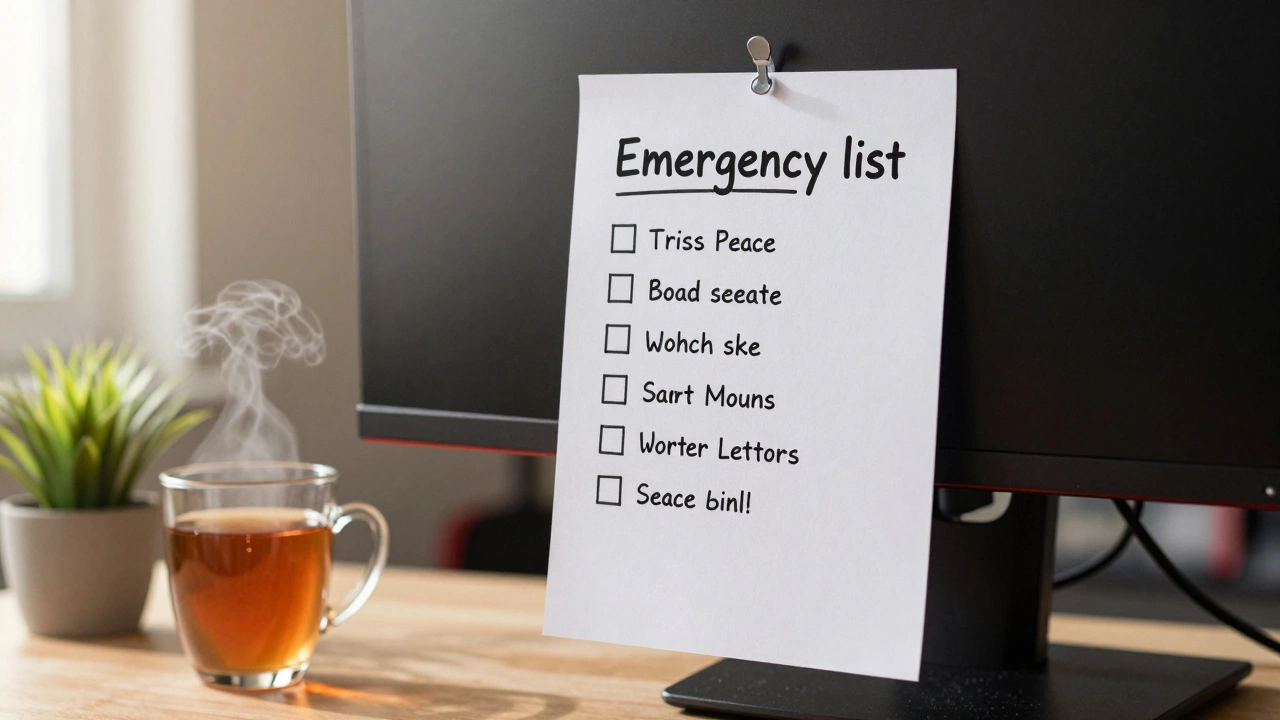
Physical is better than digital. If your trigger is caused by the screen, looking at another screen (your phone) to find a note can be counterproductive. Tape the list to your monitor, put it on your desk, or keep it in a physical folder right next to your keyboard.
How often should I update my list?
Every few months, or whenever you start a new game with different mechanics. Your triggers might change as you grow or as the games you play change in tone and intensity. Treat it like a living document.
Next Steps for Different Gamers
If you're a competitive player, your focus should be on the "Immediate Shutdown." The adrenaline of a rank-climb is high, and the crash is harder. Your list should emphasize physical distance from the desk to break the competitive loop.
For single-player/story gamers, focus more on the "Emotional Anchors." Since the triggers are often narrative or thematic, you need strong reminders that the story is fictional and you are safe in your own home.
If you're a streamer, your list needs a "Public Protocol." Include a pre-written message for your chat or a specific "Be Right Back" screen that you can trigger instantly. This prevents the added stress of worrying about your audience while you're trying to regulate your breathing.