
You are sitting at your desk. The screen is glowing blue in a dark room. You have been playing for fourteen hours straight, not because you want to, but because stopping feels like dying. Your hands shake when you try to reach for the phone. You know something is wrong, but explaining it to a stranger on the other end of the line feels impossible. How do you say that your favorite game is now the only thing keeping you alive? And how do you admit that without it, you don't think you will survive tomorrow?
Calling 988 is the Suicide & Crisis Lifeline in the United States, reachable by call or text 24/7. It is free, confidential, and staffed by trained counselors who understand that modern struggles often look different from traditional depression. They are not there to judge your habits. They are there to help you navigate the fog. But knowing what to say can be just as paralyzing as the silence itself.
Why Gaming Feels Like a Trap
Gaming addiction is not just about liking video games. It is a behavioral loop where the game becomes a coping mechanism for pain, anxiety, or emptiness. When you play, your brain releases dopamine, a chemical associated with reward and pleasure. Over time, real life starts to feel dull and painful by comparison. This creates a cycle: you play to feel good, but the more you play, the harder it becomes to function without the game. Eventually, the fear of stopping becomes greater than the fear of living. That is where suicidal thoughts creep in. They are not necessarily a desire to die, but a desperate wish for the pain to stop. The game offers a pause button. Life does not.
Counselors on 988 are trained to recognize this dynamic. They do not need you to be a perfect case study. They need you to be honest. If you tell them, "I am addicted to gaming and I want to kill myself if I have to stop," they will hear two things: severe distress and a lack of perceived options. Their job is to expand those options with you.
Preparing for the Call: What to Have Ready
Before you dial, take three deep breaths. You do not need a script. In fact, having a rigid script can make you freeze if the conversation goes off-track. Instead, prepare three simple facts. These act as anchors if your mind starts racing.
- The Trigger: What happened today that made you feel hopeless? Did you lose a match? Did someone criticize your progress? Or did you just wake up after a night of no sleep?
- The Symptom: How many hours have you played in the last 24 hours? Are you eating? Are you sleeping? Be specific. "I haven't slept in 36 hours" is more helpful than "I'm tired."
- The Fear: What are you afraid will happen if you stop playing? Do you fear boredom? Rejection? Confronting your family? Name the fear.
You do not need to memorize these. Just keep them in the back of your mind. If you get stuck, the counselor will guide you. They ask questions all day long. Let them lead.
How to Describe Your Situation Clearly
When you pick up the phone, you might feel awkward. Start with the basics. You can say, "Hi, I'm calling because I'm feeling really hopeless and I'm struggling with gaming addiction." That is enough. You do not need to explain why gaming is an addiction. The counselor knows.
If you struggle with words, use concrete examples. Abstract concepts like "addiction" can be vague. Concrete details are clear. Try phrases like these:
- "I have played [Game Name] for [Number] hours straight today."
- "Every time I close the laptop, my heart races and I feel panic."
- "I told myself I would stop at midnight, but it's now 4 AM and I'm still here."
- "I feel like if I stop playing, I won't be able to handle my emotions."
Notice how these sentences focus on behavior and physical sensation. They are hard to argue with and easy for the counselor to work with. They also show that you are aware of your patterns, which is a sign of strength, not weakness.
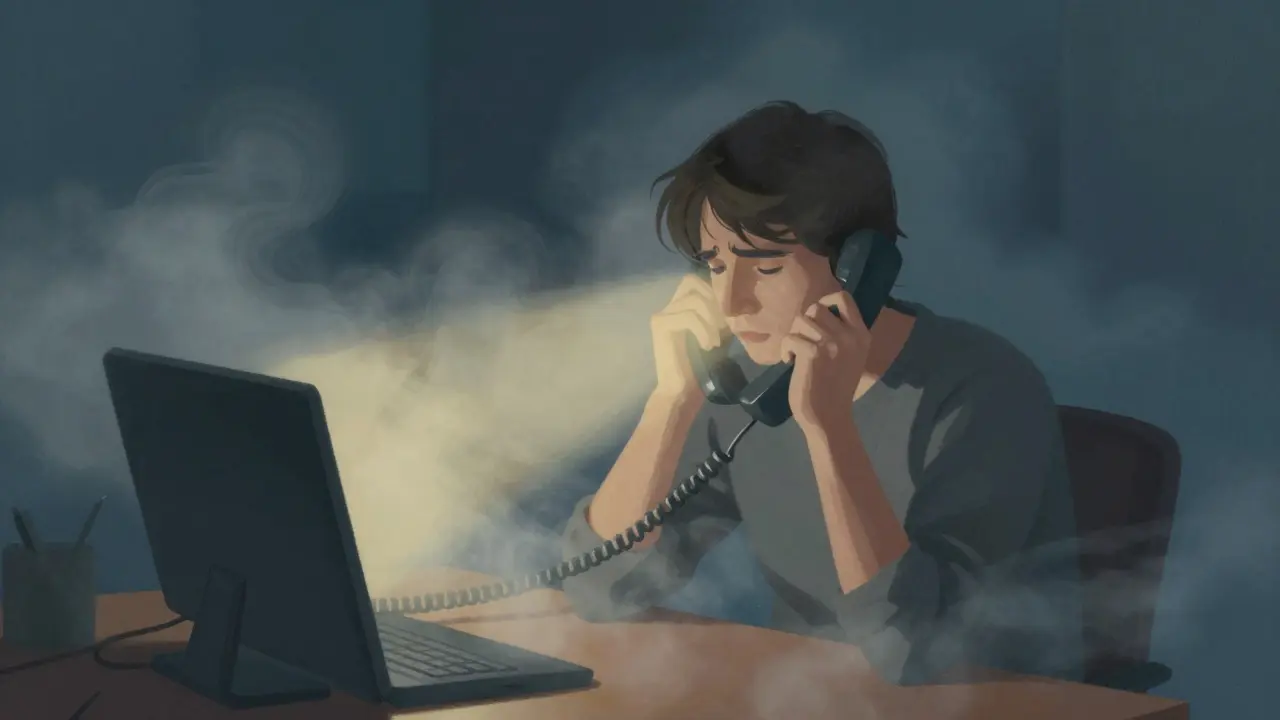
Talking About Suicidal Thoughts Without Fear
This is the part most people dread. You worry that saying "suicide" will make the counselor panic or think you are crazy. It won't. For a 988 counselor, suicidal ideation is a common reason for calls. They expect it. They are ready for it.
When you bring it up, be direct. You can say, "Sometimes I think about ending it all because life feels too heavy." Or, "If I have to quit gaming, I don't see the point of staying." Directness helps the counselor assess your immediate safety. They will likely ask you about plan, intent, and means. Do not overthink their questions. Answer honestly. If you have a plan, tell them. If you are just thinking about it, tell them. Both are valid.
Remember, the goal of the call is not to fix your life in ten minutes. The goal is to bridge the gap between right now and the next hour. The counselor wants to know: Are you safe tonight? Is there anyone else in your home? Do you have access to anything dangerous? Once they know you are physically safe, they can help you build a small step forward.
Common Misconceptions About Calling 988
Many gamers hesitate to call because they think they aren't "sick enough." They believe that since they have a roof over their head and food in their fridge, their pain doesn't count. This is false. Mental health crises come in many shapes. A person who cannot leave their house for three days due to gaming withdrawal is experiencing a crisis, even if they are technically employed.
Another misconception is that the counselor will tell you to just "put down the controller." Most counselors know that quitting cold turkey is rarely effective for behavioral addictions. They will likely discuss harm reduction strategies, such as setting limits or finding alternative activities, rather than demanding immediate abstinence. They are partners, not police officers.

What Happens After You Hang Up
After the call, you might feel a mix of relief and anxiety. The silence of the room can feel loud again. This is normal. The adrenaline from the call fades, and reality settles back in. To prevent the spiral from returning immediately, write down one thing the counselor said that resonated with you. It could be a phrase, a breathing technique, or a suggestion to drink water. Write it on a sticky note and put it on your monitor.
Also, consider making a small environmental change. Move your computer to a different room. Turn off notifications. Put your phone in another drawer. These tiny friction points can break the automatic loop of reaching for the game when you feel bad. You don't have to solve everything today. You just have to get through the next hour. Then the next.
| Scenario | Vague/Ineffective Phrase | Clear/Effective Phrase |
|---|---|---|
| Describing usage | "I play a lot." | "I've been online for 12 hours straight." |
| Expressing emotion | "I feel bad." | "My chest feels tight and I can't stop shaking." |
| Discussing suicide | "Maybe I should just go." | "I'm thinking about ending my life because I'm exhausted." |
| Setting boundaries | "It's hard to stop." | "Every time I close the app, I panic for 20 minutes." |
Frequently Asked Questions
Will the 988 counselor judge me for being a gamer?
No. Counselors are trained to be non-judgmental. They understand that gaming is a common coping mechanism. As long as you are open and honest, they will meet you where you are. Their focus is on your well-being, not your hobbies.
Do I need to have a specific suicide plan to call?
No. You can call if you are just thinking about death, if you feel hopeless, or if you are overwhelmed by gaming withdrawal. Passive suicidal thoughts (wishing you weren't alive) are valid reasons to seek support. The earlier you call, the easier it is to manage the situation.
What if I run out of things to say during the call?
That is okay. Silence is part of the process. The counselor will fill the space with gentle questions. You can also simply say, "I don't know what to say," and they will guide you. There is no rush. Take your time.
Is 988 available for people who live alone?
Yes. Living alone can make gaming addiction feel more isolated, but 988 works for everyone. The counselor will help you identify any support systems you might have overlooked, such as online communities, distant relatives, or local resources.
Can I call multiple times if I feel worse later?
Absolutely. There is no limit to how many times you can call. If you hang up and feel the urge to play for 20 hours again, call back. Consistency matters more than perfection. Each call reinforces that you are worth helping.