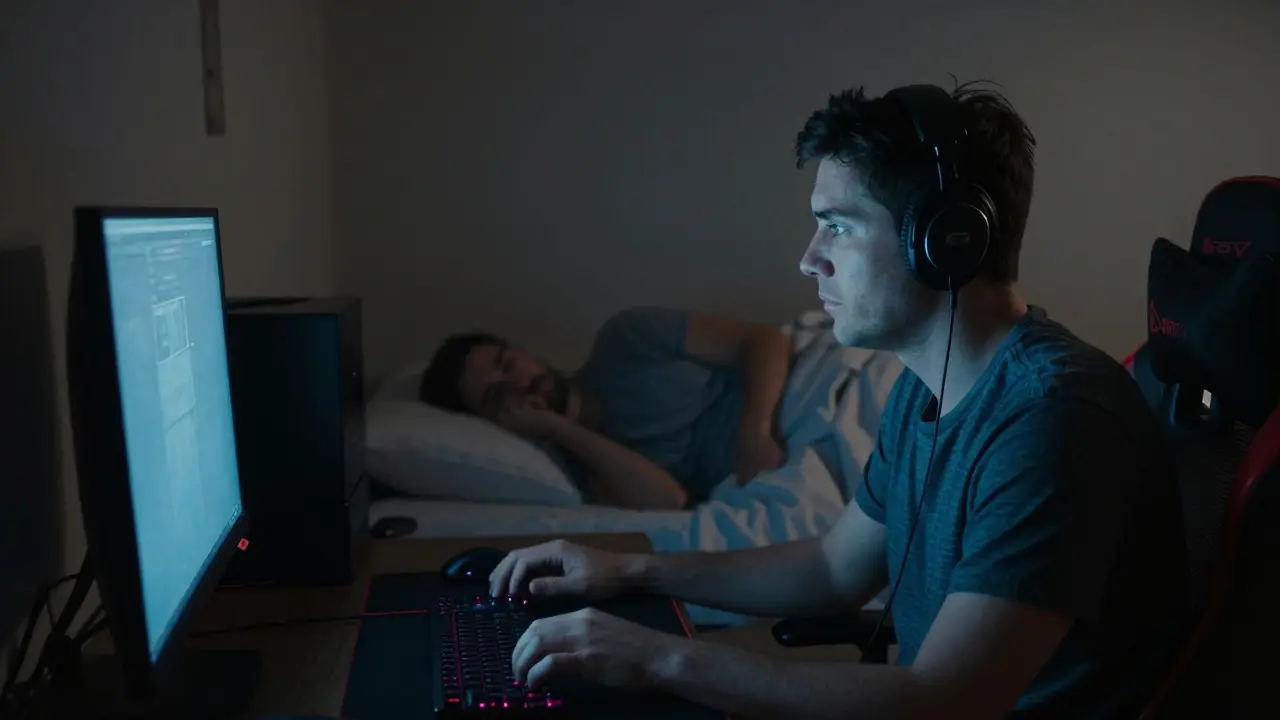
It’s 1:45 AM. The blue light from the monitor is the only thing illuminating the room. One partner is deep in a raid, the other is staring at the ceiling, wondering if they actually matter anymore. This isn’t just about being tired; it’s about a specific type of emotional distance that grows when one person prioritizes a virtual world over the physical one. Intimacy problems linked to late-night gaming are becoming a common complaint in couples therapy, not because video games are inherently bad, but because the timing and intensity of the habit disrupt the biological and social rhythms that keep relationships alive.
The Biological Cost of Midnight Sessions
To understand why this hurts relationships, you have to look at what happens in the body during these hours. Sleep is not just rest; it is a regulatory system for hormones. When you stay up until 3 AM playing World of Warcraft or League of Legends, you suppress melatonin production. Melatonin is crucial for regulating circadian rhythms, but its disruption also affects cortisol levels. High cortisol in the early morning makes you irritable, reactive, and less empathetic. If your partner wakes up to a grumpy version of you who has been awake for four extra hours, the baseline for interaction starts negative before breakfast even begins.
This hormonal imbalance doesn't just affect mood; it impacts libido. Testosterone levels, which peak in the morning, can be destabilized by chronic sleep debt. For many men, late-night gaming leads to a "tired brain" state where the energy required for romantic pursuit feels like too much work. It’s not that you don’t care; it’s that your body is running on fumes. Your partner interprets this fatigue as disinterest, creating a feedback loop where they pull back, and you retreat further into the game to avoid the discomfort of rejection.
The Psychology of the Safe Escape
Why do we do it? Usually, it’s not because we hate our partners. It’s because the game offers something real life often lacks: clear rules, immediate feedback, and a sense of competence. In a workplace with vague expectations or a relationship with unresolved conflicts, the game is a place where effort equals reward. You kill a boss, you get loot. You win a match, you rank up. There is no ambiguity.
Psychologists call this "displacement." The game becomes a container for stress that wasn't processed elsewhere. However, when this displacement happens at night, it bypasses the natural decompression phase that couples use to reconnect. Instead of talking about your day, you’re farming gold. The silence in the bedroom becomes charged. One person is mentally present in Azeroth; the other is physically present but emotionally alone. Over weeks, this erodes the feeling of being a team.
How Digital Distraction Kills Micro-Interactions
Relationships aren't held together by grand gestures; they’re sustained by micro-interactions. A glance across the kitchen. A quick text saying "thinking of you." A shared laugh over a trivial comment. Late-night gaming destroys these moments. When one partner is wearing noise-canceling headphones, they are effectively invisible. The other partner learns to stop initiating. Why ask how their day was if the answer will be muffled through a headset while someone yells "push mid!" in the background?
This phenomenon is known as "phubbing" (phone snubbing), but it applies equally to console and PC gaming. Research indicates that perceived phubbing correlates strongly with lower relationship satisfaction. It signals low priority. If your partner is more responsive to a teammate’s ping than to your question, the message is clear: the game has higher social value right now. Over time, the non-gamer stops sharing news, jokes, or worries, leading to a gradual emotional decoupling.
Setting Boundaries Without Starting a War
You don’t need to ban gaming to fix intimacy. You need to change the context. Here is a practical framework for resetting the dynamic:
- Define the "Digital Sunset": Agree on a hard cutoff time for screens, usually 90 minutes before bed. This ensures both partners are in the same mental space for the final part of the evening.
- Create a Shared Ritual: Replace the solo gaming hour with a joint activity. It could be cooking dinner together, watching a show, or simply talking without devices. The goal is to rebuild the micro-interactions mentioned earlier.
- Use Technology for Connection, Not Isolation: If you must play, play together. Co-op modes exist for a reason. Sharing the screen turns the activity from a barrier into a bridge. If the game requires intense focus, schedule it for weekends, not every single night.
- Check In Daily: Spend five minutes each evening discussing one positive thing that happened and one challenge. No phones allowed. This keeps the emotional channel open.
When to Seek Professional Help
Sometimes, the habit is a symptom, not the cause. If one partner uses late-night gaming to avoid conflict, process grief, or manage anxiety, cutting off the game might trigger withdrawal or increased tension. In these cases, couples therapy can help identify the root issue. A therapist can help distinguish between a healthy hobby and an avoidance mechanism. If communication breaks down completely, or if one partner feels consistently neglected despite attempts to set boundaries, professional guidance provides a neutral ground to navigate the conversation.
Rebuilding Trust Through Consistency
Fixing this isn’t a one-time event. It’s a daily practice. The first week will feel awkward. You’ll miss the dopamine hit of the late-night session. Your partner might seem suspicious of your sudden availability. But consistency builds trust. When you show up-present, attentive, and rested-you signal that the relationship is a priority. Intimacy returns not through dramatic apologies, but through the quiet reliability of showing up when it counts.