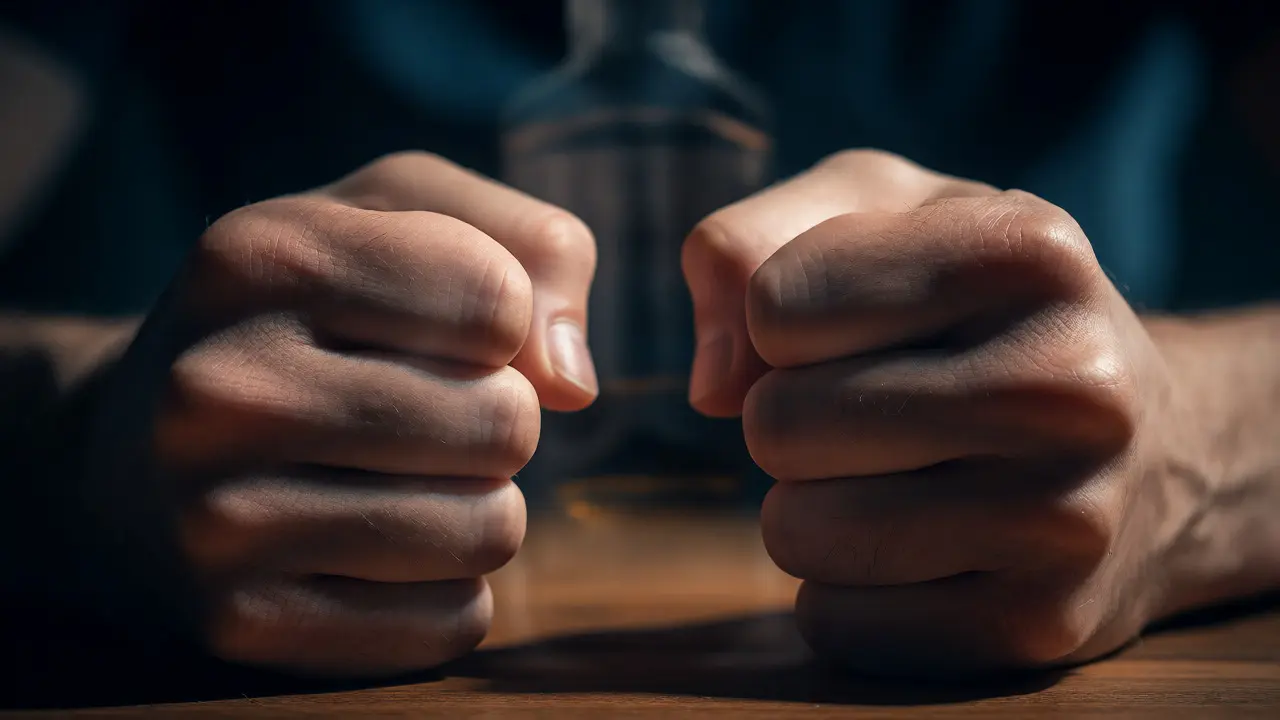
You know that feeling. The knot in your stomach tightens when a coworker gets the promotion you wanted. Your jaw clenches when someone cuts you off in traffic. You feel a sudden, hot rush of shame when you lose a board game to your kid. For most people, these are minor annoyances. But if you're in recovery from substance use disorder, they can feel like existential threats.
Addiction often thrives on a distorted relationship with winning and losing. Many people used substances to numb the pain of failure or to artificially boost their sense of superiority. So, when you stop using, you’re left raw. You have to sit with the discomfort of being average, of making mistakes, of actually losing. It’s not just about sports; it’s about ego. And for many in early sobriety, the ego is the loudest voice in the room.
Why Losing Hurts More When You’re Sober
To understand why competition triggers relapse, you have to look at what addiction did for you. Alcohol or drugs often acted as a social lubricant or an armor. They blurred the edges of rejection. If you lost an argument while drunk, you could blame the drink. "I wasn't really mad," you'd say. "I was just buzzed." Sobriety removes that excuse. Now, if you lose, you have to own it. You have to feel the sting without a chemical buffer.
This is where the concept of emotional regulation becomes critical. In active addiction, external substances regulated internal states. In recovery, you must build that capacity internally. When a competitive trigger hits-say, a friend brags about their new car-it spikes cortisol. Your brain interprets this social comparison as a threat to your status. For an addicting brain, which is already sensitized to stress, this threat feels urgent. The old wiring screams, "Fix this! Make the pain go away!" And the easiest, fastest way to fix it has always been a drink or a high.
It’s not that you’re weak. It’s that your neural pathways are still healing. The prefrontal cortex, responsible for impulse control and perspective-taking, takes time to recover from years of substance abuse. Until those connections strengthen, every loss feels like a catastrophe rather than a data point.
Identifying Your Specific Competitive Triggers
Not everyone reacts to the same things. One person might crumble under workplace competition but thrive in recreational sports. Another might hate losing at video games but be indifferent to academic grades. To overcome these triggers, you first need to map them. This isn’t about judging yourself; it’s about gathering intelligence.
Start by keeping a simple log for two weeks. Note down moments when you felt a spike of anger, shame, or defensiveness. Look for patterns. Are you triggered by public criticism? By seeing others succeed? By your own perceived inadequacy?
| Trigger Type | Situation Example | Internal Narrative | Physical Sensation |
|---|---|---|---|
| Status Comparison | Coworker buys a house | "I'm falling behind. I'm a failure." | Chest tightness, shallow breathing |
| Direct Defeat | Losing a tennis match | "I should have won. I'm incompetent." | Heat in face, clenched fists |
| Perceived Disrespect | Being interrupted in a meeting | "They don't respect me. I'm invisible." | Knot in stomach, urge to yell |
| Comparison to Past Self | Seeing old photos of successful days | "I used to be someone. Now I'm nothing." | Heaviness in limbs, fatigue |
Once you identify the pattern, you can anticipate the reaction. If you know that holiday gatherings often turn into comparative showcases of wealth or family success, you can prepare mentally before you walk through the door. Awareness creates a gap between the stimulus and your response. That gap is where your freedom lives.

Redefining Winning and Losing
In active addiction, life is binary. You’re either on top (high) or at the bottom (low). There is no middle ground. Recovery invites you to explore the gray areas. You have to redefine what "winning" means. Is it beating your opponent? Or is it maintaining your integrity while doing so?
Consider the difference between ego-driven competition and healthy striving. Ego-driven competition requires dominance to feel worthy. Healthy striving focuses on personal growth and effort. When you shift your focus from the outcome (the win/loss record) to the process (did I play fair? Did I stay present?), the stakes lower. You detach your self-worth from the scoreboard.
A practical exercise here is to practice "gracious losing." Next time you lose a card game or get passed over for a task, try saying out loud, "Good game," or "Thanks for the opportunity." Even if you don't feel it yet, acting the part helps rewire the brain. Behavior influences belief more than we admit. By physically relaxing your shoulders and unclenching your jaw during a loss, you send signals to your nervous system that you are safe, even when you aren't winning.
The Role of Community in Softening the Blow
Addiction isolates. It convinces you that you’re alone in your struggle and that everyone else is judging your failures. Recovery, conversely, relies on connection. Sharing your competitive struggles with a sponsor, therapist, or support group breaks the spell of isolation.
When you tell a peer, "I got really angry when my brother mentioned his bonus," you invite empathy instead of judgment. Often, you’ll find they’ve had the exact same thought. This normalizes the experience. It reminds you that struggling with ego doesn’t mean you’re failing at recovery; it means you’re human. 12-step programs and other peer-support models emphasize humility not as self-deprecation, but as honesty. Admitting you care about winning-and that it hurts to lose-is an act of honesty.
Furthermore, community provides a reality check. When you spiral into "I’m a loser because I didn't get that job," a sober friend can gently remind you of your strengths. They provide the objective mirror that your addicted brain lacks. Use them. Ask for feedback. Let them help you see that one loss does not define your entire identity.

Practical Strategies for Managing the Heat
Knowing *why* you react is half the battle. Knowing *what to do* in the moment is the other half. Here are three concrete tools to use when the competitive fire starts to burn.
- The Pause Button: Before responding to a triggering comment or situation, take three deep breaths. Count them. Inhale for four counts, hold for four, exhale for six. This activates the parasympathetic nervous system, countering the fight-or-flight response. It gives your prefrontal cortex time to come online.
- Reframing Questions: Instead of asking, "Why did I lose?", ask, "What can I learn from this?" or "Is this worth my peace?" These questions shift your brain from a defensive posture to a curious one. Curiosity is the antidote to defensiveness.
- Grounding Techniques: If the emotion feels overwhelming, use the 5-4-3-2-1 method. Identify five things you see, four you can touch, three you hear, two you smell, and one you taste. This pulls you out of the mental narrative of failure and back into the physical present.
Also, consider limiting exposure to unnecessary competition. Do you really need to engage in that political debate at Thanksgiving? Do you need to keep up with your ex’s social media highlights? Protecting your energy isn't avoidance; it's strategic management. You’re building a life where you don’t need to prove anything to anyone.
Long-Term Growth: From Fragile to Resilient
Over time, learning to lose builds resilience. You start to realize that setbacks are temporary and survivable. You develop a tolerance for discomfort. This is a superpower in sobriety. Because if you can handle the pain of losing a trivial argument, you can handle the cravings that hit at 2 AM.
Think of recovery not as a destination where you never feel bad, but as a journey where you become skilled at navigating the bad feelings. Each time you lose gracefully, you strengthen your sobriety muscles. You prove to yourself that you are enough, regardless of external validation. That realization is the ultimate win.
Is it normal to feel angry when I lose something small?
Yes, especially in early recovery. Addiction often disrupts emotional regulation, making reactions disproportionate to events. As your brain heals and you practice coping skills, these intense reactions typically diminish in frequency and severity.
How can I stop comparing myself to others?
Focus on your own timeline. Remind yourself that everyone’s recovery journey looks different. Limit social media consumption, which fuels comparison, and practice gratitude for what you currently have rather than focusing on what others possess.
Does avoiding competition help recovery?
Temporarily, yes. Avoiding high-stakes environments can protect your sobriety while you build skills. However, long-term avoidance isn't the goal. The aim is to participate in life fully, including competition, without letting it dictate your emotional state.
What if I slip up because of a competitive trigger?
A slip is not a failure; it’s information. Analyze what happened. Was it the loss itself, or the story you told about the loss? Reconnect with your support network immediately. Most people who slip return to sobriety stronger and more aware of their triggers.
Can therapy help with competitive issues?
Absolutely. Cognitive Behavioral Therapy (CBT) can help identify and challenge distorted thoughts related to self-worth and performance. Dialectical Behavior Therapy (DBT) offers specific skills for distress tolerance and emotional regulation, which are crucial for managing competitive stress.