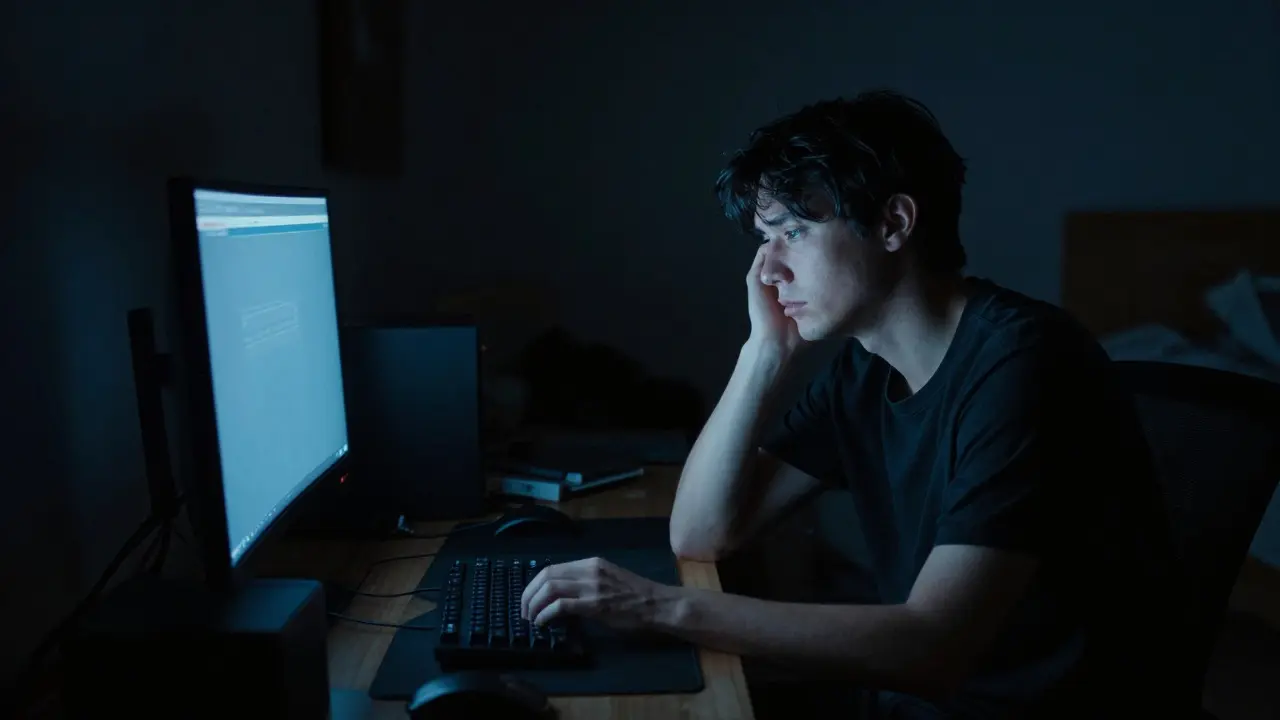
It’s 2:00 AM. The blue light of the monitor is the only thing illuminating your face. You’ve been playing for six hours, not because you’re winning, but because the alternative-going back to that empty apartment-is harder to face than any boss fight. If this sounds familiar, you aren’t just a "bad gamer." You might be caught in a specific psychological loop where loneliness and gaming dependency feed into each other like a broken record.
We often treat these two issues as separate problems. One is an emotional state; the other is a behavioral habit. But for millions of players, they are two sides of the same coin. Understanding how they interact is the first step to breaking the cycle without feeling judged or misunderstood.
The Two-Way Street: How Loneliness Drives Play
Think of video games as a modern-day shelter. When real-world social interactions feel risky, exhausting, or unrewarding, the game world offers something predictable. In a game, the rules are clear. If you do X, Y happens. There is no awkward silence, no fear of saying the wrong thing, and no risk of rejection based on appearance or status.
Social Anxiety is a persistent fear of social situations where one may be judged. For people dealing with this, the virtual environment acts as a buffer. You can communicate through voice chat or text, controlling exactly how much of yourself you reveal. This low-stakes interaction provides a hit of dopamine-the brain's reward chemical-that mimics the satisfaction of human connection without the vulnerability.
However, the catch is that this connection is conditional. It exists only while you are online. The moment you log off, the silence returns, often louder than before. This contrast makes the pain of isolation more acute, driving you back to the screen sooner than you intended.
How Gaming Can Deepen Isolation
Here is where it gets tricky. Many gamers assume their hobby is inherently social. They have friends, guilds, and clans. But there is a difference between *having* connections and *relying* exclusively on them for emotional regulation.
When gaming shifts from a leisure activity to a primary coping mechanism, it starts displacing other life domains. You stop answering texts from old friends because they require effort. You skip family dinners because your squad is starting a raid. Over time, the real-world social muscles atrophy. It becomes easier to stay in the safe, controlled space of the game than to navigate the messy, unpredictable nature of face-to-face relationships.
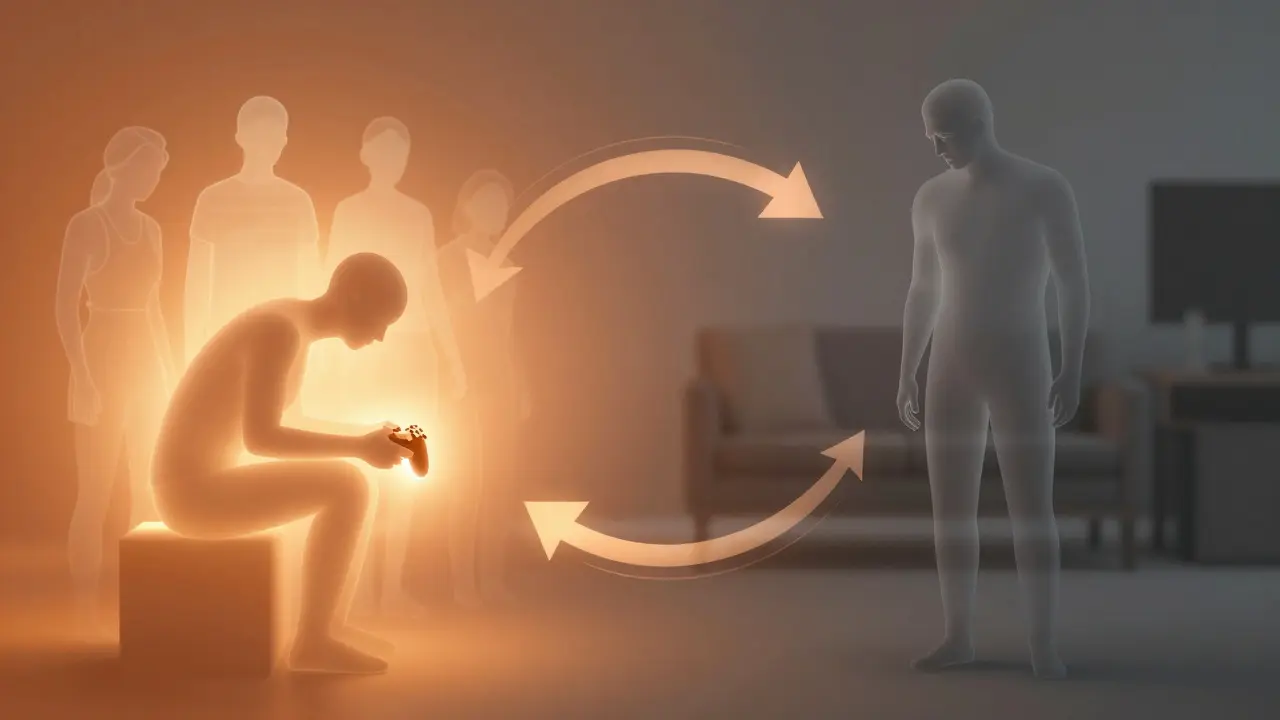
This creates a feedback loop:
- Loneliness triggers excessive gaming.
- Excessive gaming reduces real-world social practice. 3.Reduced practice increases social anxiety.
- Increased anxiety deepens loneliness.
You end up in a situation where you are surrounded by digital companions but starved for genuine human touch and presence.
Signs You Might Be in the Loop
Gaming addiction, often referred to clinically as Gaming Disorder, is a pattern of behavior related to game playing characterized by impaired control over gaming, increasing priority given to gaming over other activities, and continuation despite negative consequences. But when loneliness is the driver, the signs look a bit different.
Look out for these red flags:
- Emotional Numbing: You play not because you are excited, but because you need to feel *something*. The game is a distraction from sadness or emptiness.
- Time Distortion: Hours disappear. You check the clock and realize four hours have passed since you started.
- Irritability on Disconnect: Feeling angry or anxious when forced to stop playing, similar to withdrawal symptoms.
- Social Withdrawal: Declining invitations to meet up, even with people you like, because "preparing" to go out feels too heavy.
If you recognize yourself in three or more of these, it’s worth taking a closer look at your routine.
Breaking the Cycle: Practical Steps
You don’t need to quit gaming cold turkey. That usually leads to rebound boredom and deeper isolation. Instead, try to reintegrate gaming into a balanced life. Here is how to start shifting the dynamic.
1. Schedule "Offline" Wins
Your brain needs rewards outside the screen. Pick one small, low-effort social or physical activity per day. It could be a 10-minute walk, calling a sibling, or cooking a meal instead of ordering takeout. The goal isn't to become a social butterfly overnight; it’s to prove to your brain that real-world actions also yield positive feelings.
2. Set Hard Boundaries, Not Soft Ones
"I’ll play until I finish this quest" is a soft boundary. It will stretch. Use a timer. Set it for 90 minutes. When it goes off, save your game and close the window. It will feel uncomfortable at first. That discomfort is normal. It’s the gap between your habit and your new intention.
3. Curate Your Online Community
Not all online interactions are equal. Toxic lobbies drain energy. Find communities that focus on collaboration rather than competition. Voice chats where people talk about life, not just strategy, can provide genuine social nourishment. Treat your online friends like real friends: say hello, ask how they are, and occasionally say goodbye properly.
4. Address the Root Cause
If loneliness is stemming from past trauma, depression, or chronic anxiety, gaming is just the symptom. Consider speaking with a therapist who understands digital lifestyles. Cognitive Behavioral Therapy (CBT) has shown strong results in helping people reframe their relationship with both social situations and screen time.
Comparison: Healthy vs. Unhealthy Gaming Patterns
Understanding the distinction helps you self-assess without panic. Use this table to check where you stand.
| Aspect | Healthy Pattern | Unhealthy Pattern (Addictive) |
|---|---|---|
| Motivation | Enjoyment, skill improvement, fun | Escapism, numbing emotions, avoiding reality |
| Control | Can stop when needed; takes breaks easily | Struggles to stop; plays longer than intended |
| Impact on Life | Work/school/social life remains stable | Neglects responsibilities, hygiene, or sleep |
| Social Connection | Games supplement real-life relationships | Games replace most real-life interactions |
| Emotional State Post-Game | Relaxed, satisfied, ready to engage | Empty, irritable, or worse than before |

Why Willpower Alone Isn't Enough
Many people try to fix this issue through sheer force of will. They delete their Steam library or hide their controller. It works for a week. Then, one bad Tuesday night hits, and the controller comes back out. Why? Because you didn't address the underlying need for connection.
Willpower manages behavior; it doesn't heal wounds. To break the cycle, you need to replace the function the game was serving. If the game provided safety, find another source of safety. If it provided achievement, find another way to measure progress. If it provided community, invest in building one offline.
This isn't about hating games. Games are brilliant tools for engagement. The problem arises when they become the *only* tool we have for managing our inner lives.
Building Resilience Against Isolation
Resilience in this context means having multiple sources of support. Imagine a net. If one strand breaks, the others hold you up. If your net consists entirely of online friends, and your internet cuts out, or a server shuts down, the net collapses.
Diversify your support system. Keep some threads tied to family, neighbors, local hobby groups, or coworkers. These connections don't need to be intense. A nod to the mail carrier, a quick chat with a coworker, or a weekly coffee with a friend are enough to keep the strands strong.
Remember, the goal isn't to eliminate loneliness completely-it’s a universal human experience. The goal is to ensure it doesn't dictate your daily behavior.
Frequently Asked Questions
Is gaming addiction officially recognized by the WHO?
Yes. In 2018, the World Health Organization added "Gaming Disorder" to the International Classification of Diseases (ICD-11). It is defined by impaired control over gaming, increasing priority given to gaming over other activities, and continuation despite negative consequences.
Does playing multiplayer games actually reduce loneliness?
It can, but it depends on the quality of interaction. Structured cooperation in games can build trust and camaraderie. However, if these interactions remain superficial or are used solely to avoid offline contact, the long-term effect on loneliness may be neutral or even negative.
How many hours of gaming per day is considered too much?
There is no single magic number. Three hours of focused, enjoyable gaming with good sleep and social balance is healthy. Ten hours of escapist gaming with neglected hygiene and no real-world contact is problematic. Context matters more than duration.
What is the best therapy for gaming-related loneliness?
Cognitive Behavioral Therapy (CBT) is highly effective. It helps identify distorted thoughts about social situations and develops skills to manage anxiety. Some therapists also use Acceptance and Commitment Therapy (ACT) to help patients accept difficult emotions without using avoidance strategies like gaming.
Can solo games cause addiction and loneliness?
Yes. While multiplayer games offer social traps, solo games offer immersion traps. Deep narrative experiences can pull players into a bubble where the real world feels dull by comparison. The mechanism of escapism is the same, regardless of whether other humans are present in the game.