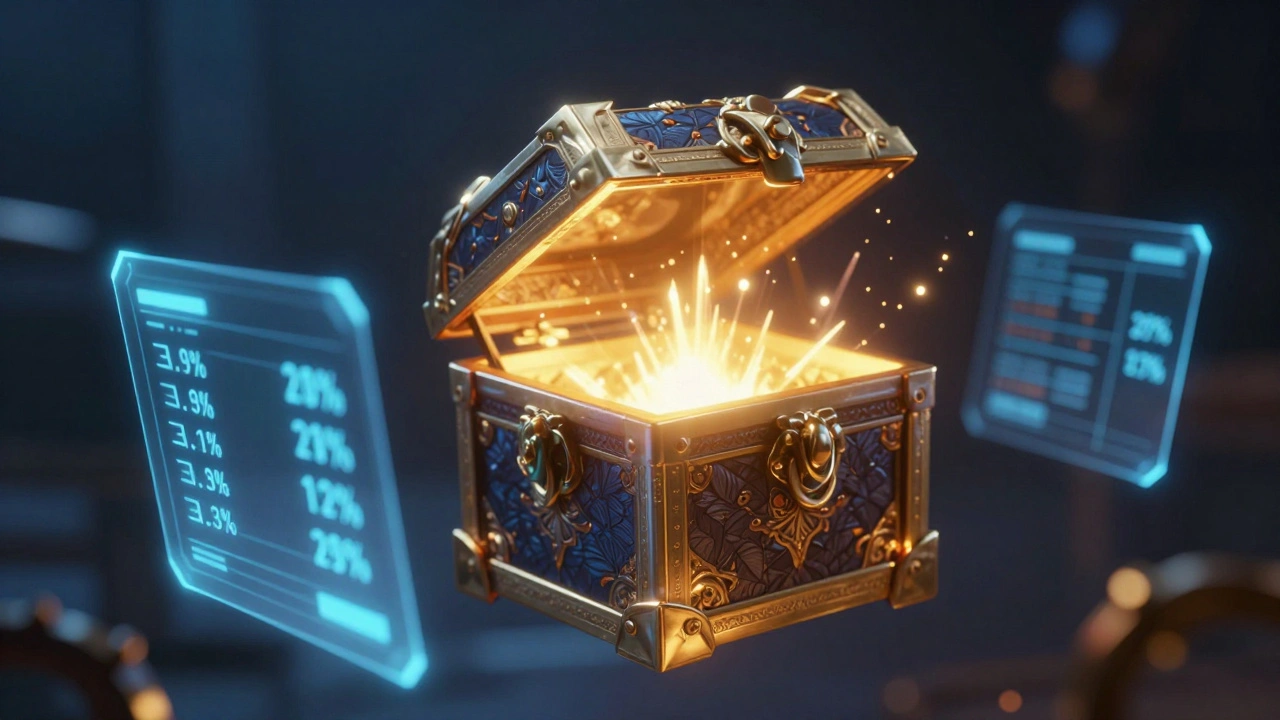
Quick Summary: What You Need to Know
- Probability disclosure means showing players the exact odds of winning specific items before they pay.
- Many regions, including China and the EU, now legally mandate these disclosures.
- Transparency helps prevent predatory monetization and protects players from 'hidden' odds.
- Clear disclosure usually involves a detailed table or a link to a probability page.
What Exactly is Probability Disclosure?
At its core, Probability Disclosure is the practice of making the mathematical odds of receiving a specific item from a randomized reward system public. In the gaming world, this almost always refers to Loot Boxes-those virtual crates you buy with real or earned currency that contain a random assortment of gear, skins, or characters.
Think of it like a nutrition label for gambling. You wouldn't buy a snack without knowing if it's 90% sugar, so why should you spend money on a digital box without knowing if it's 99% common trash? When a developer implements probability disclosure, they aren't just saying "you might win"; they are saying "you have a 2.5% chance of winning the Gold Skin." This shift moves the experience from a blind guess to an informed decision.
The Legal Push for Transparency
For a long time, the industry operated on a "trust us" basis. That didn't work. As monetization shifted toward Gacha Mechanics-a system inspired by Japanese capsule toy vending machines-the psychological pull became too strong to ignore. Regulators started noticing that these systems mirrored slot machines more than traditional gaming.
China was one of the first to draw a hard line. The Ministry of Culture required developers to publish the exact probability of winning items in loot boxes. If a game didn't comply, it simply couldn't operate there. This forced giants like Electronic Arts and Activision Blizzard to start adding "i" icons next to their crates. If you click that icon, you get a breakdown of the percentages. This created a ripple effect globally, as players in the US and Europe asked, "Why do Chinese players get the odds while we don't?"
In Europe, the approach has been more fragmented but equally aggressive. Countries like Belgium and the Netherlands have gone further, classifying some loot boxes as illegal gambling if the contents can be traded for real money. This has led to a "compliance-first" design philosophy where developers either remove the randomness or make the odds painfully obvious to avoid massive fines.
How to Implement Proper Disclosures
If you're building a game, you can't just bury the odds in a 40-page Terms of Service document. That's not transparency; that's hiding in plain sight. True disclosure needs to be accessible at the point of purchase. Here is how it's usually done right:
- The Point-of-Sale Link: Place a visible button or icon (like a question mark or an "i") directly on the screen where the player clicks "Buy."
- The Probability Table: Instead of a paragraph of text, use a table. It's easier to scan and harder to misinterpret.
- Tiered Categories: Group items by rarity (e.g., Common, Rare, Epic, Legendary). Show the chance to hit the tier first, then the chance to get a specific item within that tier.
- Updating in Real-Time: If you run a "Double Drop Rate" weekend, the disclosure must be updated immediately. Using old data is a fast track to a consumer protection lawsuit.
| Item Rarity | Drop Probability | Typical Contents |
|---|---|---|
| Common | 70% | Basic Consumables, Common Skins |
| Rare | 20% | Mid-tier Gear, Rare Emotes |
| Epic | 8% | High-stat Equipment, Epic Outfits |
| Legendary | 2% | Ultimate Weapons, Unique Avatars |
The Psychology of the "Near Miss"
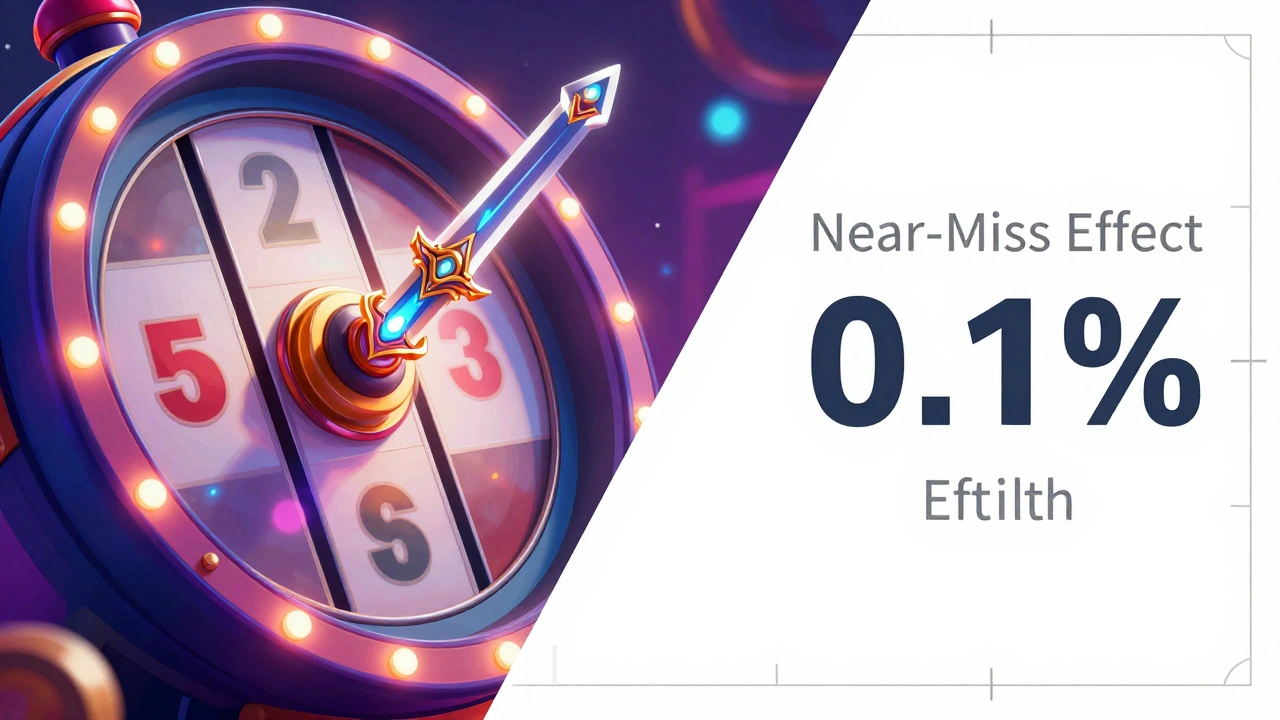
Why do developers hate disclosing odds? Because transparency can actually kill the "rush." There is a psychological phenomenon called the Near-Miss Effect. When you see a legendary item spin past and almost land on your pointer, your brain registers it as a "near win" rather than a loss. This triggers a dopamine spike that encourages you to try again.
When a player sees that the actual chance is 0.1%, the magic vanishes. The "near miss" starts to look like a mathematical certainty of failure. By forcing probability disclosure, regulators are essentially breaking the spell that keeps people spending money they don't have. It turns a gambling-like impulse into a calculated purchase.
Beyond Odds: Pity Timers and Guaranteed Wins
Transparency isn't just about the raw percentages. Modern games often use Pity Timers (also known as "Pity Systems"). This is a mechanism where the game tracks how many times you've failed to get a rare item and eventually guarantees a win. For example, if you haven't pulled a 5-star character in 89 tries, the 90th pull is guaranteed to be 5-star.
Disclosure laws are starting to cover these as well. If a game has a pity system, the player needs to know exactly when it kicks in. Hiding a pity timer is considered deceptive because it manipulates the player's perceived value of the loot box. A truly transparent game will have a counter that says, "You are 10 pulls away from a guaranteed Legendary item." This transforms the experience from a gamble into a progress bar.
Common Pitfalls in Disclosure
Not all disclosures are created equal. Some companies try to use "dark patterns" to confuse the player. Have you ever seen odds listed as "1 in 1,000" for some items and "0.1%" for others in the same list? This inconsistency makes it harder for the human brain to compare values quickly.
Another common trick is the "Aggregate Probability." A developer might say, "The chance for an Epic item is 10%," but they don't tell you there are 100 different Epic items, meaning your chance of getting the *one* you actually want is 0.1%. To be ethically transparent, developers should disclose both the category chance and the individual item chance.
The Future of Game Monetization
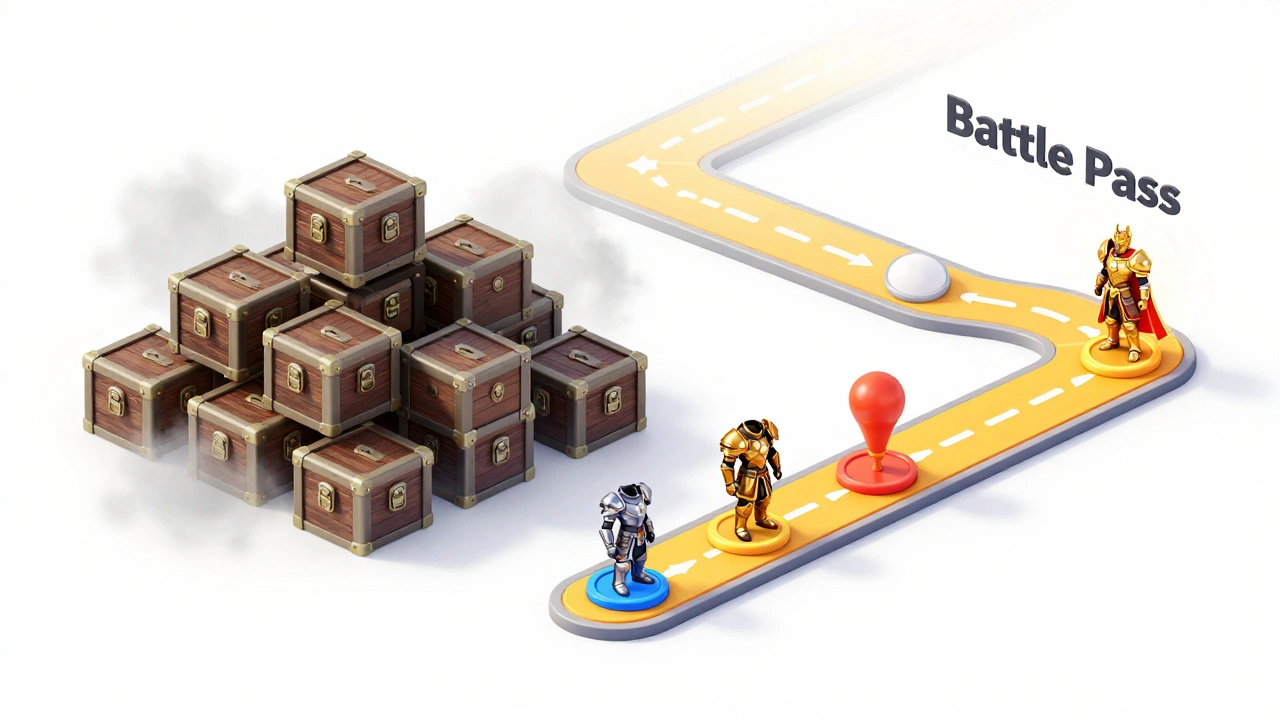
As the pressure for transparency grows, we are seeing a shift toward Battle Passes and direct purchase stores. These models are fundamentally different because they remove the randomness. You pay for the pass, you play the game, and you get the reward. There's no gambling involved, and therefore, no need for complex probability tables.
This transition is a direct result of the friction caused by loot box regulations. It's easier for a studio to sell a $10 skin directly than to manage the legal headache of probability disclosures across twenty different international jurisdictions. The move toward transparency isn't just protecting the player; it's streamlining the business of gaming.
Are loot boxes considered gambling?
It depends on where you live. In many regions, if a loot box is bought with real money and the contents can be sold or traded for real-world value, it is legally classified as gambling. However, in the US, the legal landscape is more varied, often focusing on whether the item has "real-world value" or is strictly a digital cosmetic.
What is the difference between Gacha and Loot Boxes?
Gacha is a specific type of loot box system originating from Japan, typically focused on collecting characters or units for a team. While all gacha systems are loot boxes, not all loot boxes are gacha. Loot boxes are a broader term that includes everything from "case openings" in CS:GO to "mystery crates" in Overwatch.
How can I tell if a game's odds are fake?
While it's hard for a single player to prove odds are fake, communities often perform "crowdsourced tracking." Thousands of players record their pulls in a shared database, and the community calculates the actual drop rate. If the actual rate is significantly lower than the disclosed rate over a sample of 100,000 pulls, it's a red flag.
Why do some games hide the odds?
Hiding odds maintains a sense of mystery and hope. When players don't know the exact probability, they are more likely to believe that the next pull "must" be the winner, regardless of how low the actual odds are. This psychological loop drives higher spending.
What should I do if a game doesn't disclose its odds?
Check the community forums or wikis, as players often reverse-engineer the odds. If you are in a region where disclosure is legally required (like the EU or China), you can report the game to your local consumer protection agency or the platform holder (like Sony, Microsoft, or Valve).
Next Steps for Players and Developers
For players, the best move is to treat any undisclosed loot box as a 0% chance of success. If the developer isn't willing to show the math, assume the odds are stacked against you. Stick to direct purchases or battle passes where the value is guaranteed.
For developers, the path forward is clear: be honest. Players are more forgiving of low odds when they are presented transparently than they are of "hidden" odds that feel like a trick. Implementing a clear, table-based disclosure system and a fair pity timer not only keeps you legal but builds long-term trust with your community, which is far more valuable than a few extra bucks from a confused player.