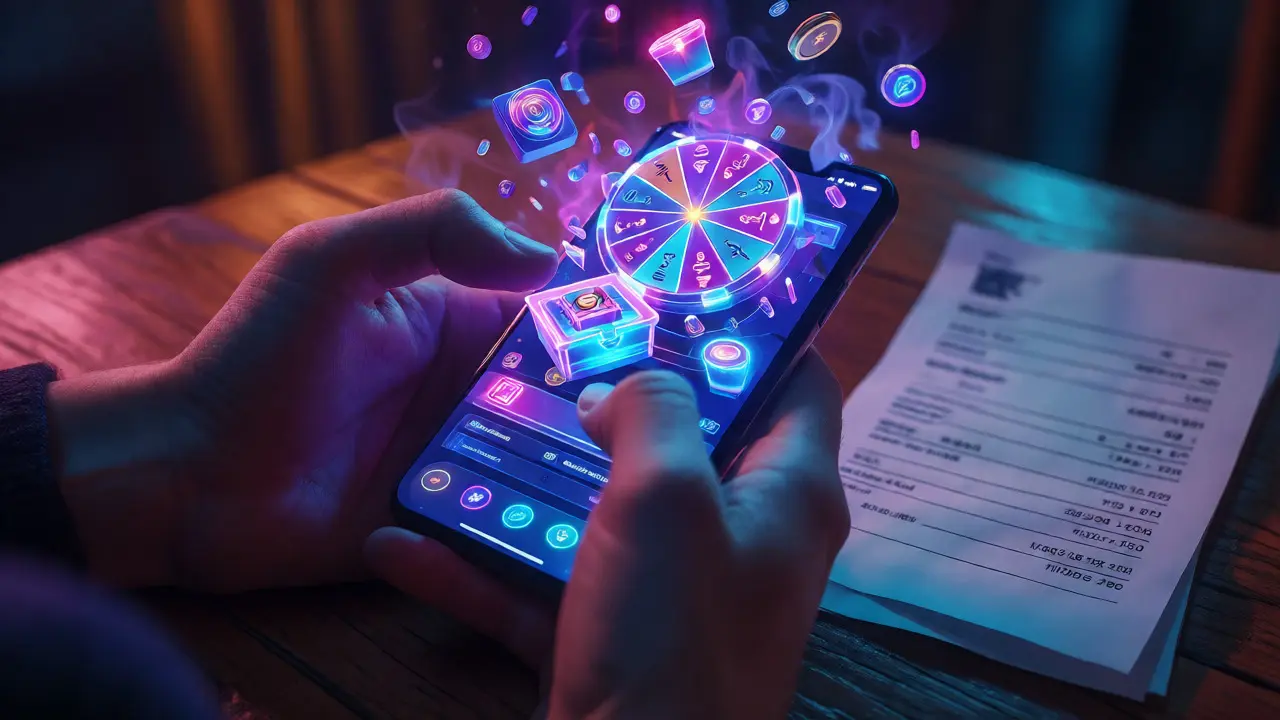
You sit down to play a free game. It costs nothing to download, nothing to start, and the first hour is pure joy. Then, three weeks later, you check your bank statement and realize you’ve spent $150 on digital items that don’t exist outside the screen. This isn't an anomaly; it’s by design. Microtransactions are small in-game purchases for virtual goods or currency, but their cumulative effect on personal finance and psychological well-being is anything but small.
The line between entertainment and gambling has blurred. When games use mechanics that trigger dopamine hits similar to slot machines, they aren't just selling fun-they're engineering habit loops that can drain wallets and mental energy. If you've ever felt guilty after buying a "skin" or opened a loot box hoping for a rare drop, you’re not alone. Let’s break down how these systems work, why they hurt your wallet more than you think, and what you can actually do about it.
The Psychology Behind the Paywall
Game developers didn't stumble into microtransactions by accident. They studied behavioral psychology. At the core of this model is Variable Ratio Reinforcement. This is the same principle that makes gambling addictive. You pull the lever (or click "open box"), and sometimes you get a jackpot, sometimes you get junk. Because the reward is unpredictable, your brain releases more dopamine when you *might* win than when you *will* win.
This uncertainty keeps you clicking. A fixed price for a specific item feels like a purchase. But paying $2 for a chance at a $20 item? That feels like a gamble. When you lose, the sunk cost fallacy kicks in. You already spent $10, so you spend another $10 to try again, thinking you're "due" for a win. You're not. The odds are static. But your brain tells you otherwise.
Consider Loot Boxes. These are randomized virtual items that players buy with real money or earned currency. In many cases, the probability of getting the top-tier item is less than 1%. Yet, the visual and audio cues-the flashing lights, the suspenseful music-mimic casino environments. Research published in journals like Addiction Research & Theory has drawn direct parallels between loot box spending and problem gambling severity scores.
How Microtransactions Drain Your Wallet
The danger lies in the friction-or lack thereof. Traditional retail games require a decision point: go to the store, pick up a box, pay $60. Microtransactions remove that friction. With one-click purchasing linked to your credit card or mobile account, spending becomes invisible. You don't feel the pain of payment because there's no cash exchange, no counting bills, and often no immediate receipt notification.
| Feature | Traditional Purchase | Microtransaction Model |
|---|---|---|
| Initial Cost | $60 - $70 upfront | $0 - $20 upfront |
| Payment Friction | High (physical transaction) | Low (one-click digital) |
| Psychological Cue | Ownership of complete product | Anticipation of random reward |
| Average Annual Spend | $100 - $200 (limited titles) | $300 - $1,000+ (heavy users) |
For heavy gamers, this adds up fast. A single season pass might cost $10. Add two cosmetic bundles per month at $5 each, plus occasional attempts at unlocking premium characters via loot boxes ($20/month average), and you're looking at $40 a month. That’s $480 a year. For context, that’s nearly eight full-price video games annually, yet you own none of them outright. You’re renting access to content that disappears if the servers shut down.

The Slippery Slope to Gaming Addiction
Financial harm doesn't happen in a vacuum. It’s tied to usage patterns. Gaming Disorder, recognized by the World Health Organization in the ICD-11, involves impaired control over gaming, increasing priority given to gaming over other activities, and continuation despite negative consequences. Microtransactions exacerbate this by tying progress to payment.
In "pay-to-win" models, non-paying players hit a wall. To compete, they must either grind for hundreds of hours or pay to skip the wait. This creates a stress loop. You feel anxious about missing out on limited-time events. You feel inadequate compared to players who bought better gear. So you spend to alleviate the anxiety. But the relief is temporary. New content drops next week, resetting the hierarchy. You’re running on a treadmill that speeds up every time you pay.
Parents often see this first. A child asks for $5 to get a character skin. It seems harmless. But when the game introduces a "battle pass" that expires in 30 days, the pressure mounts. Missing out means losing exclusive rewards forever. This fear of missing out (FOMO) is a powerful driver of compulsive spending, especially among younger demographics whose prefrontal cortexes-responsible for impulse control-are still developing.
Regulatory Responses and Industry Shifts
Governments are starting to take notice. Belgium and the Netherlands have banned loot boxes under existing gambling laws, classifying them as games of chance where prizes have monetary value. China requires companies to disclose drop rates for all randomized items. In the US, while no federal law exists yet, states like California have introduced bills requiring age ratings for loot boxes.
These regulations force transparency. When EA was forced to reveal the exact odds of pulling a high-rated player from FIFA Ultimate Team packs, public outrage followed. Players realized they were paying $100 to get a 1% chance at a star player. Transparency helps, but it doesn't cure the addiction. Knowing the odds are bad doesn't stop the dopamine rush of opening the pack.
Some developers are pivoting. Games like Hades or Balatro prove that compelling gameplay and fair monetization (buy once, own forever) can generate massive revenue without predatory tactics. However, the live-service model dominates major franchises like Fortnite, Call of Duty, and Genshin Impact. These games rely on ongoing engagement, which requires ongoing spending incentives.

Protecting Your Finances and Mental Health
You don't have to quit gaming to avoid financial harm. You need boundaries. Here’s a practical approach to managing microtransaction risks:
- Set a Hard Cap: Decide on a monthly budget for gaming before you open the app. Use a separate prepaid card with only that amount loaded. When it’s gone, it’s gone. No overdrafts.
- Disable One-Click Purchases: Make yourself enter a password or biometric ID for every transaction. Adding friction gives your rational brain time to catch up with your emotional impulses.
- Avoid "First Time Discount" Traps: Games often offer steep discounts on starter packs. Buy them if you plan to play long-term, but ignore subsequent offers designed to keep you hooked.
- Track Your Spending: Most platforms (Steam, PlayStation Network, Xbox Live) provide annual spending reports. Review them quarterly. Seeing "$600 spent on cosmetics" is often a shock that prompts behavior change.
- Identify Emotional Triggers: Are you buying because you want the item, or because you’re bored, stressed, or lonely? If it’s the latter, pause. Wait 24 hours before purchasing.
Remember, virtual items have zero resale value. Unlike a physical console or disc game, you cannot sell your skins back to recoup costs. Treat microtransaction spending as pure consumption, like dining out. It’s fine to enjoy, but it shouldn't replace savings or essential expenses.
Frequently Asked Questions
Are microtransactions considered gambling?
Legally, it depends on your jurisdiction. In some countries like Belgium, loot boxes are classified as gambling. In others, they are regulated as consumer products. Psychologically, however, they share key mechanisms with gambling, such as variable ratio reinforcement and near-miss effects.
Why do microtransactions feel cheaper than they are?
They utilize low-friction payment methods and small price points ($1-$5) that bypass normal spending checks. Additionally, converting real money into in-game currency (like gems or V-Bucks) abstracts the value, making it harder to calculate the true cost of an item.
Can microtransactions lead to debt?
Yes. Heavy users, particularly those prone to impulsive behavior, may charge purchases to credit cards they cannot pay off immediately. The cumulative nature of frequent small charges can lead to significant interest payments and revolving debt.
What is "Pay-to-Win"?
Pay-to-Win refers to games where spending real money grants significant gameplay advantages, such as stronger weapons or faster progression, rather than just cosmetic changes. This model pressures competitive players to spend to remain viable against paying opponents.
How can parents limit microtransaction spending for kids?
Use parental controls to disable in-app purchases entirely or require a password for every transaction. Set up spending limits on the platform account. Discuss the difference between owning a game and renting access to features, helping children understand the long-term cost.