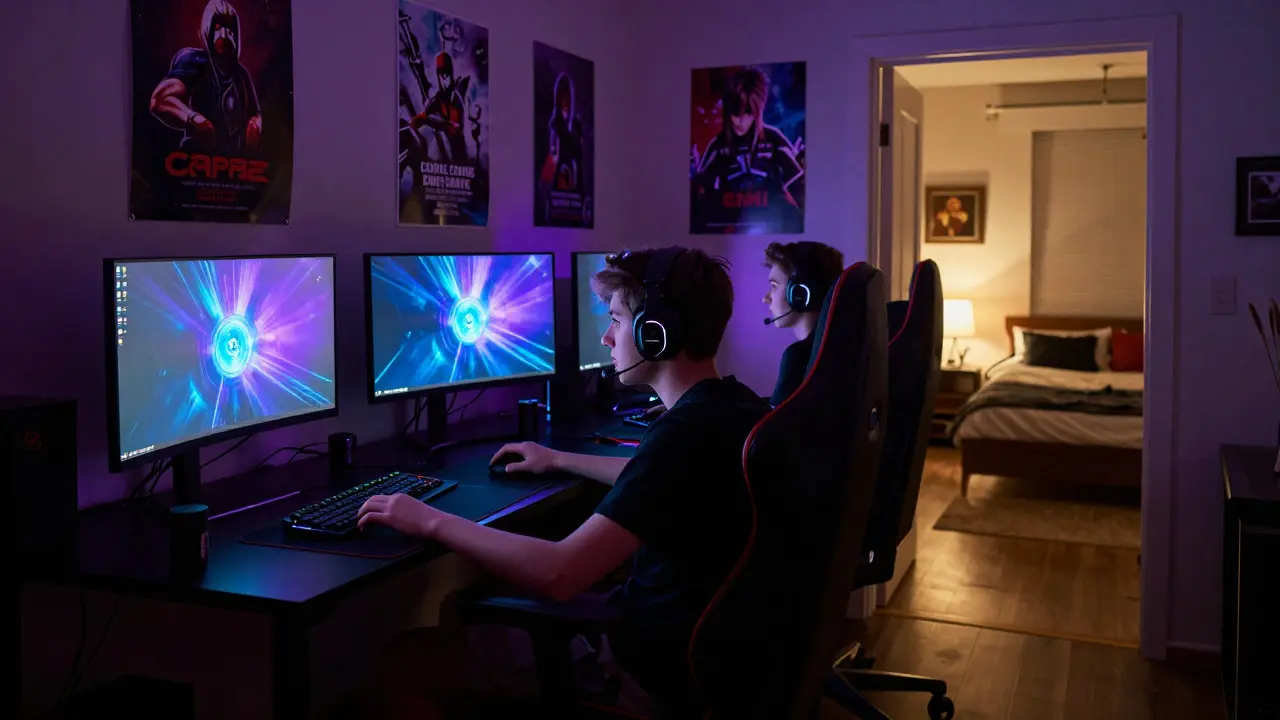
Walking into a teenager's room and seeing three monitors glowing with high-framerate action can trigger a specific kind of anxiety for parents. Is this just fun, or is it slipping into addiction? The line between healthy esports participation is a competitive video game activity that blends skill, strategy, and social interaction and problematic screen time is blurry. You want to keep an eye on things without turning your home into a surveillance state. The goal isn't to police every click; it's to build trust while ensuring gaming doesn't eat up sleep, schoolwork, or real-world connections.
Most parents default to strict limits because they feel out of the loop. But when you impose rigid rules without context, kids often hide their activity rather than manage it better. This article breaks down how to monitor esports habits effectively by focusing on observable behaviors, using technology as a helper rather than a jailer, and maintaining open communication. We’ll look at the specific signs that indicate a problem, the tools that help you stay informed without invading privacy, and the conversational strategies that actually work in 2026.
Understanding the Modern Esports Landscape
To monitor effectively, you first need to understand what your child is actually doing. Competitive Gaming is a structured form of play where players compete against others for rankings, prizes, or team placement. It’s not just mindless button-mashing. For many teens, joining a team in games like League of Legends or Valorant feels similar to joining a sports club. There are practices, there are losses, there are wins, and there is a strong sense of community. When you treat it as a hobby rather than a distraction, your approach to monitoring shifts from punitive to supportive.
The difference between casual play and competitive pursuit is significant. Casual players might log on for thirty minutes after dinner. Competitive players often have scheduled scrims (practice matches) that last two hours, followed by review sessions where they watch replays of their own gameplay. If you see your child watching videos of themselves playing at 10 PM, that’s not necessarily bad behavior-it’s study. Recognizing this distinction prevents you from misinterpreting dedication as obsession.
Signs That Indicate a Need for Intervention
Not all long gaming sessions are problems. However, certain patterns suggest that Digital Wellness is the practice of maintaining a healthy relationship with digital devices and media is slipping. Instead of counting minutes, look for these behavioral shifts:
- Sleep Displacement: The most common red flag. If gaming consistently pushes bedtime past 11 PM on school nights, it affects cognitive performance. Look for tiredness during the day, not just at night.
- Social Withdrawal: Does your child skip family dinners or friend hangouts to finish one more match? If real-life interactions are being cancelled repeatedly for virtual ones, it’s worth a conversation.
- Emotional Volatility: High frustration levels when losing, or extreme mood swings based on win/loss records, can indicate that gaming is becoming a primary emotional regulator rather than a leisure activity.
- Academic Decline: Grades don’t always drop immediately. Often, homework quality decreases before grades do. Watch for rushed assignments or missed deadlines that correlate with increased playtime.
If you see one of these signs, it’s a nudge. If you see three or four, it’s a signal to step in. The key is to address the behavior (sleep, homework) rather than the medium (gaming).
Tools for Passive Monitoring vs. Active Surveillance
This is where most parents go wrong. They install heavy-handed spyware that tracks keystrokes and reads messages. This usually backfires, destroying trust. Instead, use passive monitoring tools that give you a high-level view without peering over the shoulder.
| Approach | Examples | Pros | Cons |
|---|---|---|---|
| Passive Time Tracking | Console built-in stats, Steam Playtime | Low friction, objective data, respects privacy | Only shows total time, not context |
| Screen Time Apps | iOS Screen Time, Android Digital Wellbeing | Allows setting gentle reminders, integrates with OS | Can be bypassed easily by tech-savvy teens |
| Active Surveillance | Keyloggers, GPS trackers | Total visibility | High risk of trust breakdown, invasive |
Start with the native features of the device. Most modern consoles and PCs have built-in playtime counters. These are transparent. Your child knows they exist. Using these creates a shared reality: "Hey, the console says you played for six hours this week. How does that feel compared to your other activities?" This invites self-reflection rather than accusation.
If you move to third-party apps, choose ones that focus on well-being rather than spying. Tools that send a gentle notification when a session exceeds two hours are far more effective than those that lock the screen abruptly. Abrupt interruptions cause anger; gentle nudges encourage planning.
Building a Family Gaming Contract
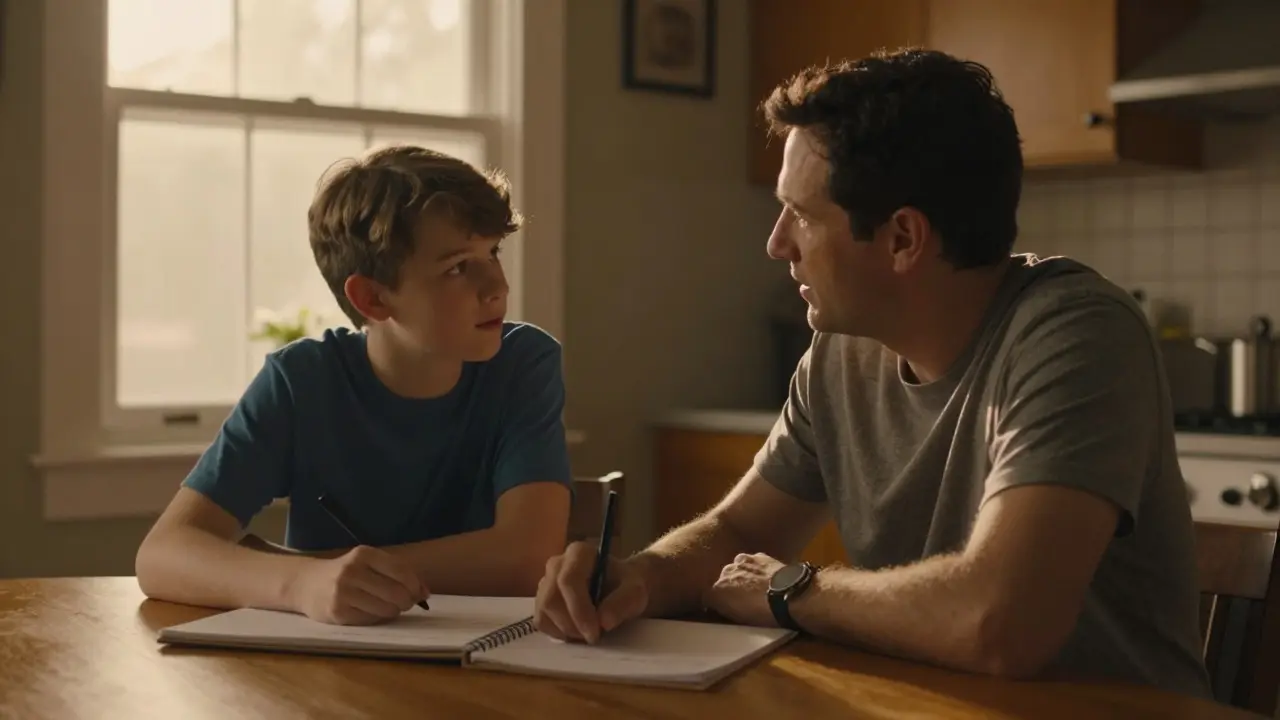
Rules imposed from above rarely stick. Rules agreed upon together last. Sit down with your child and draft a simple Gaming Agreement is a mutual understanding between parents and children regarding screen time expectations and responsibilities. Keep it short-no more than five points.
- Priority Order: Schoolwork comes first, then sleep, then gaming. This hierarchy should be explicit.
- Time Windows: Define when gaming is allowed. For example, weekdays until 8 PM, weekends until 9 PM. Avoid banning gaming entirely on weekdays; it’s too restrictive and leads to hiding.
- No-Phone Zones: Agree that phones and controllers stay out of the bedroom after a certain hour. This protects sleep hygiene directly.
- Review Date: Set a monthly check-in. "How did this month go? Did the schedule work? Do we need to adjust?" This makes the parent a partner, not a warden.
When your child helps create the rules, they are more likely to follow them. It transforms the dynamic from "Mom/Dad is watching me" to "I am managing my own time."
Navigating Team Commitments and Social Pressures
One unique aspect of Esports Teams is groups of players who commit to regular practice schedules and competitive ladders is the social obligation. If your child is on a semi-pro or serious amateur team, they may have fixed practice times that conflict with family dinners or homework. This isn’t defiance; it’s commitment.
Talk to the coach or team manager if conflicts arise. Many esports coaches are understanding of school priorities. A brief email saying, "Our son has a math exam next week, so he might miss Tuesday practice," is often met with approval. Coaches know that burnout kills talent faster than missing one practice session.
Also, be aware of the social pressure within teams. Sometimes kids play longer than they want to because they fear letting teammates down. If you notice your child staying online late because "the team was still playing," ask about their comfort level. Are they genuinely enjoying it, or feeling coerced? Supporting their right to say "no" to extra practice is a crucial life skill.

When to Seek Professional Help
Most gaming issues resolve with better structure and communication. However, some cases require outside perspective. Consider speaking with a counselor or pediatrician if:
- Your child becomes aggressive or depressed when asked to stop playing.
- They lie extensively about how long they’ve been playing.
- Physical health issues arise, such as severe eye strain, posture problems, or weight changes due to sedentary behavior.
- School performance drops significantly despite clear agreements.
In these cases, the issue isn’t just about time management; it’s about underlying emotional regulation or anxiety. Gaming may be a coping mechanism for stress, bullying, or academic pressure. Addressing the root cause is more effective than just limiting screen time.
Frequently Asked Questions
Is it okay to take away the gaming console as a punishment?
Generally, no. Taking away the very thing they love as a punishment for unrelated behavior (like messy room or bad grades) creates resentment. It teaches them that gaming is a privilege to be revoked, not a balanced part of life. Use natural consequences instead. If they didn’t do homework, they lose free time the next day. If they stayed up too late, they wake up early. Keep the punishment proportional and related to the behavior.
How much screen time is considered normal for a teen involved in esports?
There is no single number. On practice days, a competitive player might spend 4-6 hours actively playing or reviewing. On off days, it might be 1-2 hours. The metric that matters is whether this time displaces sleep, exercise, or face-to-face social interaction. If a teen sleeps 8 hours, exercises 30 minutes a day, and maintains friendships, 5 hours of gaming is likely fine. If they sleep 5 hours and have no friends, even 2 hours might be too much.
Should I monitor their chat logs to see who they talk to?
Usually, no. Unless there is a specific safety concern (like meeting strangers offline), reading private chats feels like a major invasion of privacy. Trust is the foundation of any parent-child relationship in the digital age. If you suspect a safety issue, observe their body language and general mood. Ask open-ended questions like, "Who were you talking to today?" rather than digging through logs. If they seem evasive, then a deeper look might be warranted, but explain why you’re doing it.
What if my child plays on a phone in bed at night?
This is a common slip-up. Blue light suppresses melatonin, making it harder to fall asleep. Instead of confiscating the phone, which causes conflict, try a "charging station" rule. All devices charge in the kitchen or hallway overnight. Provide a physical alarm clock so they don’t need the phone to wake up. This removes the temptation without a power struggle.
How do I distinguish between passion and addiction?
Passion involves choice and joy. Addiction involves compulsion and distress. If your child can put the controller down and enjoy a movie or a walk without feeling anxious, it’s likely passion. If they feel irritable, restless, or angry when not gaming, or if they play to escape negative feelings rather than to enjoy the game, it leans toward addictive behavior. The ability to stop voluntarily is the biggest indicator of healthy engagement.