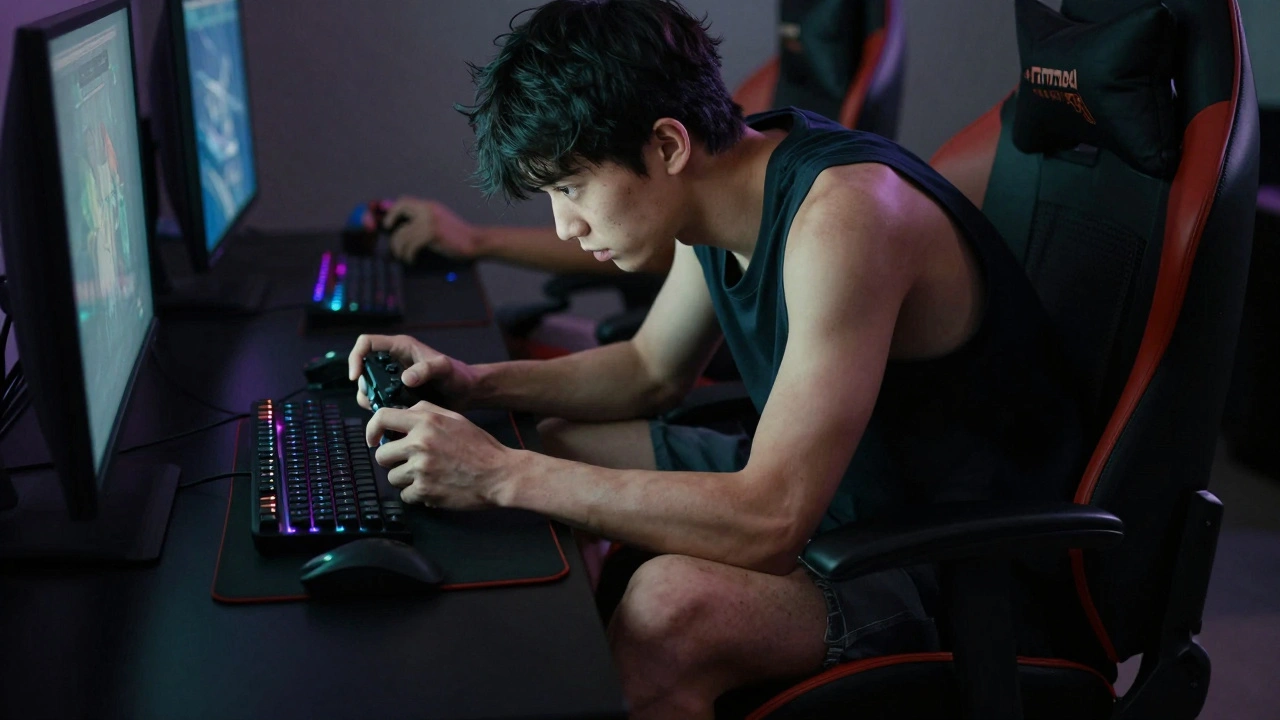
When you’re deep into a 12-hour gaming session, your body doesn’t care how good your aim is. It’s just sitting there-hips locked, shoulders hunched, legs numb. And over time, that kind of routine doesn’t just tire you out. It starts eating away at your muscles, your strength, even your ability to move normally. This isn’t about being lazy. It’s about biology. Your body adapts to what you do most. If you sit for hours every day, your body forgets how to stand, walk, or lift anything heavier than a controller.
What Happens When You Sit Too Long
Your muscles don’t vanish overnight. But they don’t need to. Muscle loss starts quietly. A 2023 study from the University of Oregon tracked 85 regular gamers who played 5+ hours daily for over six months. By the end, they lost an average of 12% of their leg muscle mass, even without any medical condition. Their grip strength dropped by 18%. Their core stability? Gone. These weren’t people who stopped exercising. They just spent 90% of their waking hours in a chair.
Here’s the science behind it: when you sit for long periods, your body turns off the enzymes that burn fat and regulate glucose. Your glutes stop firing. Your hip flexors tighten so much they pull your pelvis forward. Your lower back flattens. Your neck strains. Your posture becomes a question mark. This isn’t just discomfort. It’s deconditioning-the gradual loss of physical function because your body isn’t being used the way it evolved to be used.
The Real Culprits: Not Just Sitting
It’s not just the sitting. It’s what you’re not doing. Gamers often skip meals or eat junk food while playing. Hydration drops. Sleep gets ruined. Movement becomes an afterthought. You might stretch your fingers, but your hips? Your hamstrings? Your shoulders? Forgotten.
And then there’s the mental side. When you’re immersed in a game, your brain stops sending signals to your body to move. Your heart rate stays low. Your breathing gets shallow. Your nervous system stays stuck in fight-or-flight mode, but without the physical release. Over time, this rewires how your body responds to stress. You feel tired all the time, even though you didn’t do anything "hard."
Who’s Most at Risk?
It’s not just teens or college students. Professional esports athletes, streamers, and weekend warriors are all affected. One 24-year-old streamer from Portland lost 11 pounds of muscle in 8 months-just from sitting 10 hours a day, 7 days a week. He didn’t realize it until he tried to climb stairs and couldn’t. He thought he was fit because he still played sports occasionally. But fitness isn’t about what you do once a week. It’s about what you do every hour.
People over 30 are especially vulnerable. Muscle loss accelerates after 30. Without resistance training, you lose 3-5% of muscle per decade. Add in hours of sitting, and that loss becomes exponential. Women are more at risk too, because hormonal changes after 30 make muscle retention harder without activity.
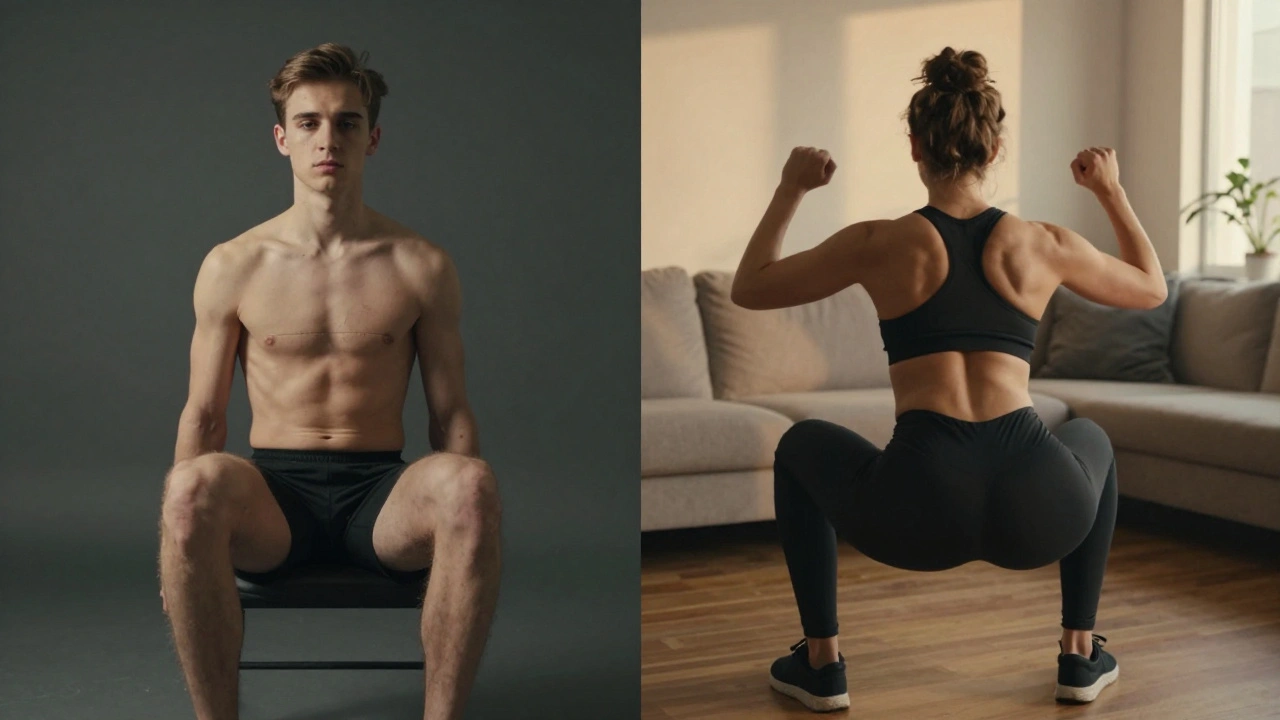
Signs You’re Losing More Than Just Time
You don’t need a doctor to spot this. Look for these red flags:
- Standing up from the chair takes effort-like you’re lifting a weight
- Your knees creak or lock when you stand
- You can’t do a single push-up or squat without stopping
- Your back hurts even when you’re not sitting
- You feel dizzy or lightheaded when you stand up quickly
- Your clothes feel looser around your legs but tighter around your waist
If any of these sound familiar, your body is sending you a warning. You’re not "just lazy." You’re deconditioned.
How to Fight Back-Without Quitting Gaming
You don’t have to stop playing. But you do have to change how you play.
Start with movement breaks. Every 45 minutes, get up. Not to check your phone. Not to grab another energy drink. Stand up. Walk around. Do 10 bodyweight squats. Hold a wall sit for 30 seconds. Stretch your hips. Roll your shoulders back. That’s it. Just 3 minutes. Do it every hour. You’ll be amazed how much better you feel.
Try this: set a timer. When it goes off, you move. No exceptions. Your controller doesn’t get to decide when you move. You do.
Strength training doesn’t have to be hard. Two 20-minute sessions a week are enough. Use dumbbells, resistance bands, or even your own body. Do push-ups. Do lunges. Do planks. Focus on your glutes, back, and core. These are the muscles that sit and die when you game too long.
And hydrate. Drink water. Not soda. Not energy drinks. Water. Your muscles need it to recover. Your brain needs it to focus. You’ll play better, longer, and with less fatigue.
What Recovery Looks Like
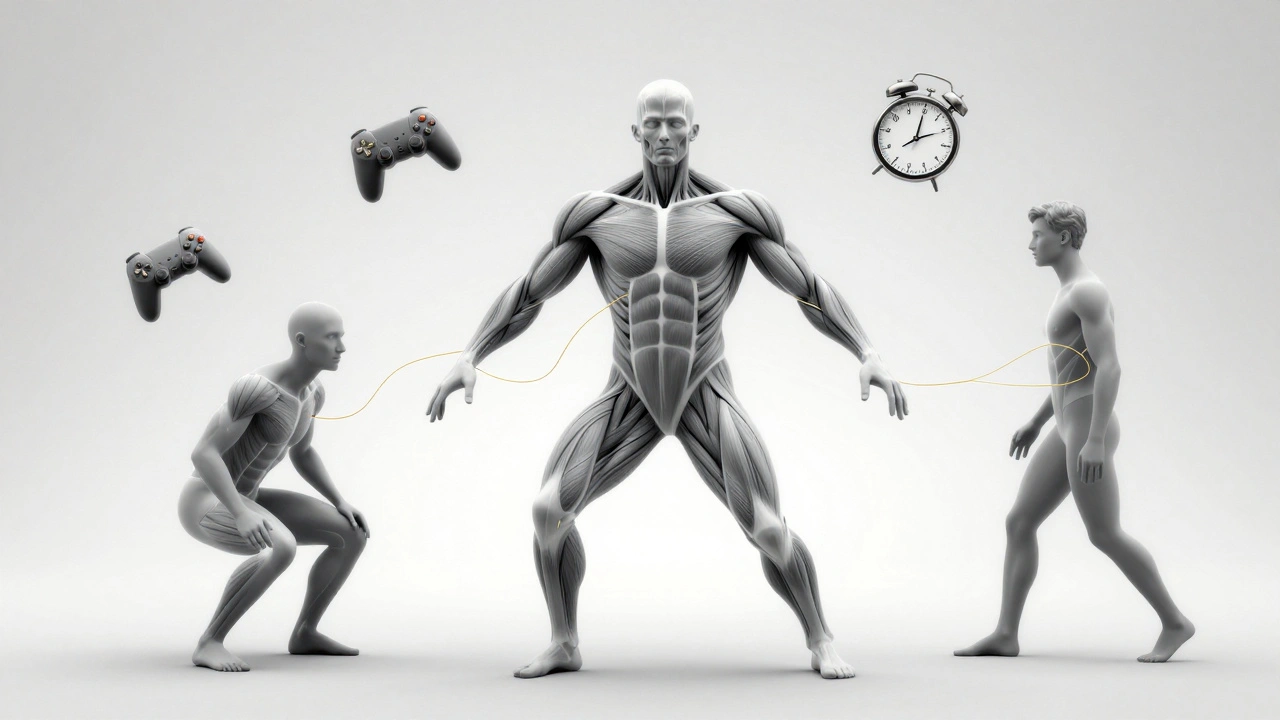
One 31-year-old gamer from Portland started doing 10 minutes of movement every hour. He added two 20-minute strength sessions a week. Within 6 weeks, he could do 15 push-ups without stopping. His back pain disappeared. His energy levels doubled. He didn’t quit gaming. He just stopped letting it own him.
Recovery isn’t about becoming an athlete. It’s about becoming functional again. It’s about being able to carry groceries, play with kids, climb stairs, or walk across a parking lot without feeling like you’re going to collapse.
Why This Isn’t Just a "Gamer Problem"
It’s not. Millions of people sit for hours every day-office workers, truck drivers, remote employees. But gamers are uniquely vulnerable because gaming is immersive. It’s designed to keep you in the chair. The dopamine hits, the progression systems, the competitive pressure-they all make you ignore your body.
And the industry doesn’t help. Game controllers are designed for fine motor control, not posture. Chairs are built for comfort, not support. The whole experience encourages stillness. That’s not an accident. It’s a design choice.
But your body doesn’t care about design. It only cares about movement.
Final Thought: You’re Not Too Busy to Move
You think you don’t have time. But you have 3 minutes every hour. That’s 36 minutes a day if you game 12 hours. That’s more than most people spend on gym workouts. You don’t need a gym. You don’t need equipment. You just need to remember that your body isn’t a device you plug in and forget. It’s alive. It needs to move. It needs to be used. Or it will forget how.
Can gaming cause permanent muscle loss?
No, muscle loss from gaming isn’t permanent-if you act. Muscle responds quickly to movement. Studies show that with just 2-3 weeks of regular strength training and daily movement breaks, people can regain 70-80% of lost muscle mass. The key is consistency, not intensity. Your body remembers how to move. You just have to remind it.
Do I need to go to the gym to fix this?
No. You don’t need a gym. Bodyweight exercises like squats, push-ups, planks, and lunges are just as effective for rebuilding strength. Resistance bands are cheap and easy to use at home. The goal isn’t to build muscle like a bodybuilder. It’s to restore basic function: standing, walking, lifting, moving without pain. That takes minutes a day, not hours.
Is sitting worse than smoking for muscle health?
In terms of muscle deconditioning, prolonged sitting is just as damaging as smoking is to lung function. A 2024 meta-analysis in the Journal of Sports Medicine found that sitting over 8 hours a day reduced muscle protein synthesis by 40%-comparable to the effects of smoking on oxygen uptake. It’s not about being "lazy." It’s about biology. Your body needs movement to stay alive. Sitting too long tells it to shut down.
Why do I feel weak even if I’m not overweight?
You can be thin and still be weak. Muscle mass and body fat are two different things. Someone can have low body fat but very little muscle-especially if they sit all day. This is called "skinny fat." Your body doesn’t measure health by weight. It measures it by movement. If you haven’t moved your legs in months, they forget how to work. That’s not about size. It’s about use.
How long does it take to recover from gaming-related deconditioning?
Most people see noticeable improvement in 4-6 weeks. Strength returns faster than endurance. You’ll notice better posture in 2 weeks. Better balance and stair climbing in 3. Full recovery of muscle mass can take 8-12 weeks, depending on how long you’ve been sitting. The sooner you start moving, the faster you’ll bounce back.