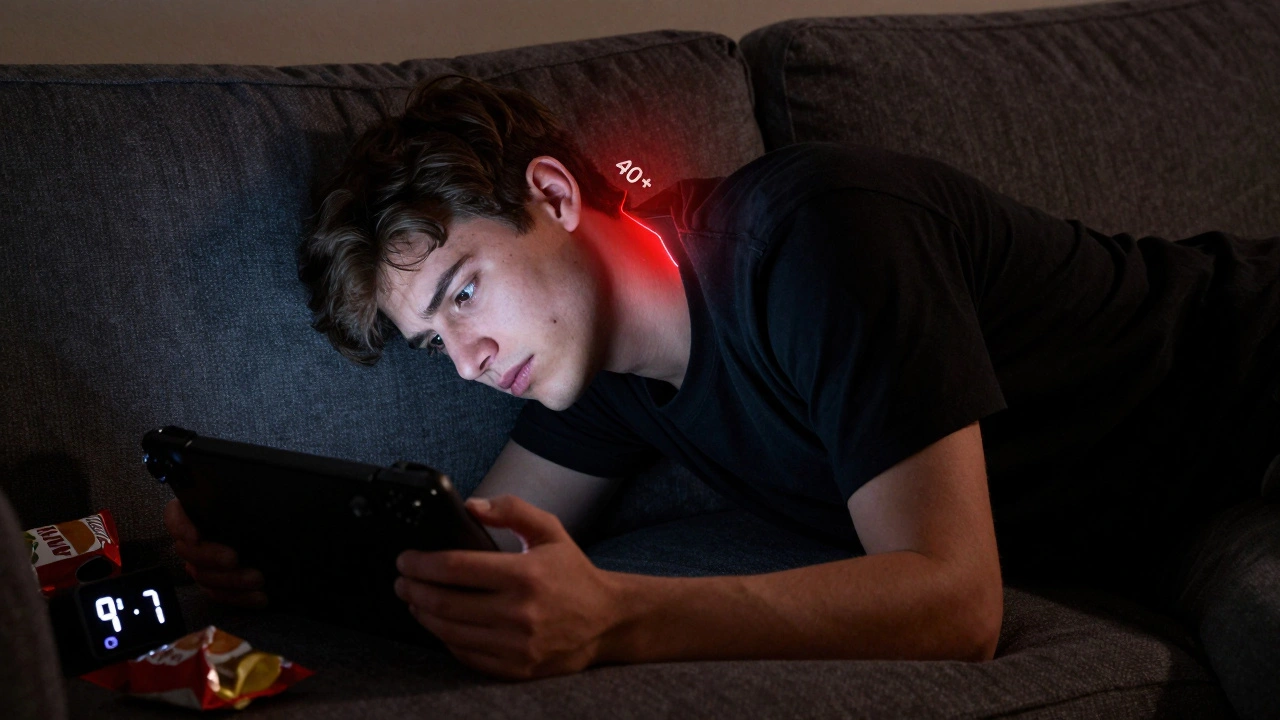
When you're deep into a game on your handheld console, it's easy to forget your body. You lean forward, chin tucked, eyes locked on the screen for hours. By the time you put the device down, your neck feels stiff, sore, or even numb. This isn't just fatigue-it's text neck, and handheld gaming is making it worse.
Why Handheld Gaming Harms Your Neck
Text neck isn't just about phones. It's about holding your head at a bad angle for long periods. When your head is tilted forward, gravity turns your neck into a lever. Your head weighs about 10 to 12 pounds in a neutral position. But when you tilt it forward 45 degrees, the force on your neck jumps to over 40 pounds. That's like carrying a medium-sized dog on your spine every time you play.
Handheld gaming devices-like the Nintendo Switch Lite, Steam Deck, or even smartphones used as controllers-force you into this position. You're not just looking down for a few minutes. You're doing it for 30, 60, even 90 minutes at a stretch. No wonder so many teens and young adults report chronic neck pain. A 2024 study from the University of Oregon tracked 1,200 regular handheld gamers. Those who played over 2 hours daily had a 68% higher chance of developing persistent neck pain compared to those who played less than 30 minutes.
How Text Neck Actually Changes Your Body
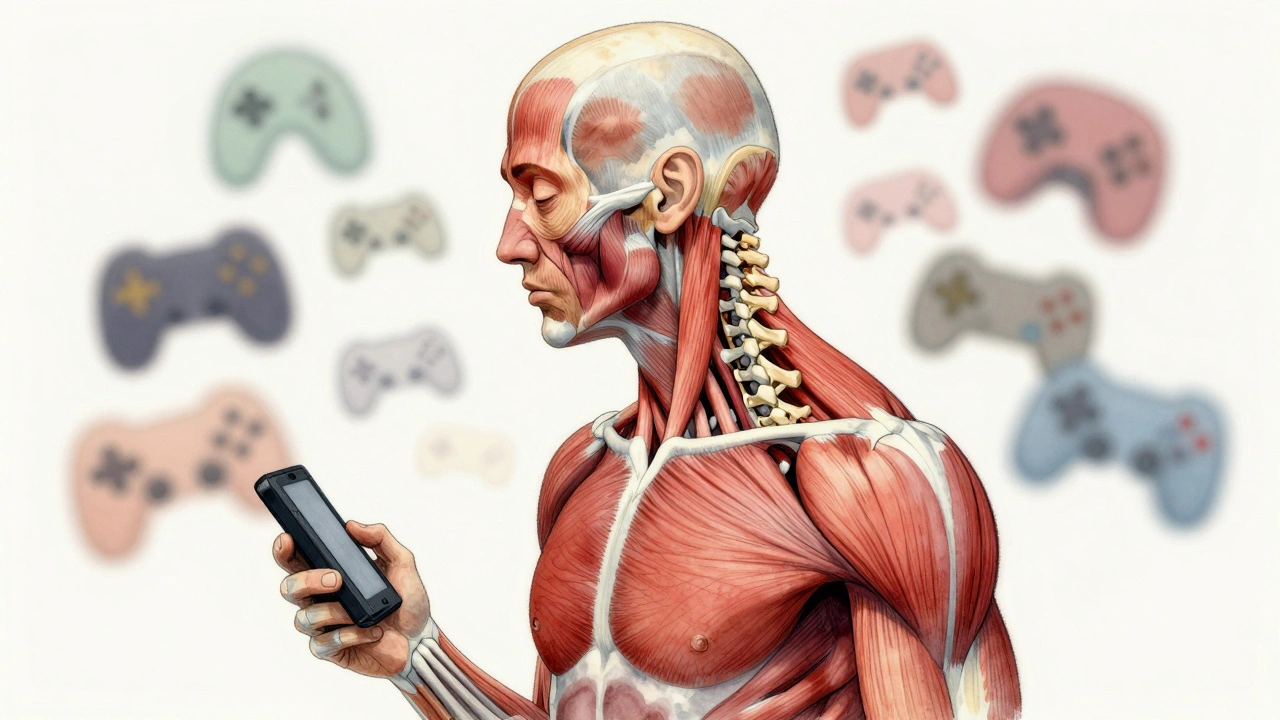
It's not just soreness. Repeated forward head posture changes your muscles, ligaments, and even your spine. Over time, the muscles in the front of your neck weaken. The ones in the back tighten up like rubber bands. Your upper back rounds, shoulders slump forward, and your cervical spine starts to lose its natural curve. This is called forward head posture, and it's irreversible if left unchecked.
Think of your spine like a S-shaped spring. When you slouch, you flatten the curve in your neck. That puts pressure on the discs and joints between your vertebrae. One 2023 MRI study of gamers under 25 found that 32% showed early signs of disc degeneration in the neck-something doctors used to see mostly in people over 40.
And it doesn't stop at pain. Poor posture can compress nerves that run from your neck to your arms. That’s why some gamers report tingling fingers, weak grip, or headaches that start at the base of the skull. These aren’t random symptoms-they’re direct results of how you hold your device.
Who’s Most at Risk?
It’s not just about how long you play. It’s about how you play.
- Teens and young adults who game daily are most affected. Their bones are still growing, and posture habits form fast.
- People who play while lying down or on the couch without back support. Your neck is hanging in midair, with zero support.
- Those who use small screens (like phones) instead of larger handhelds. Smaller screens mean you have to lean closer, increasing the angle.
- Anyone who plays without breaks. The body doesn’t warn you until damage is done.
One gamer in Portland, 19, started having daily headaches after playing for 4 hours a day on his Steam Deck. He thought it was stress. It took three months and a physical therapist to show him his neck had lost 60% of its natural curve. He’s now using a stand and limiting playtime. His pain is gone.
How to Fix It-Without Quitting Gaming
You don’t have to give up your favorite games. But you do need to change how you play.
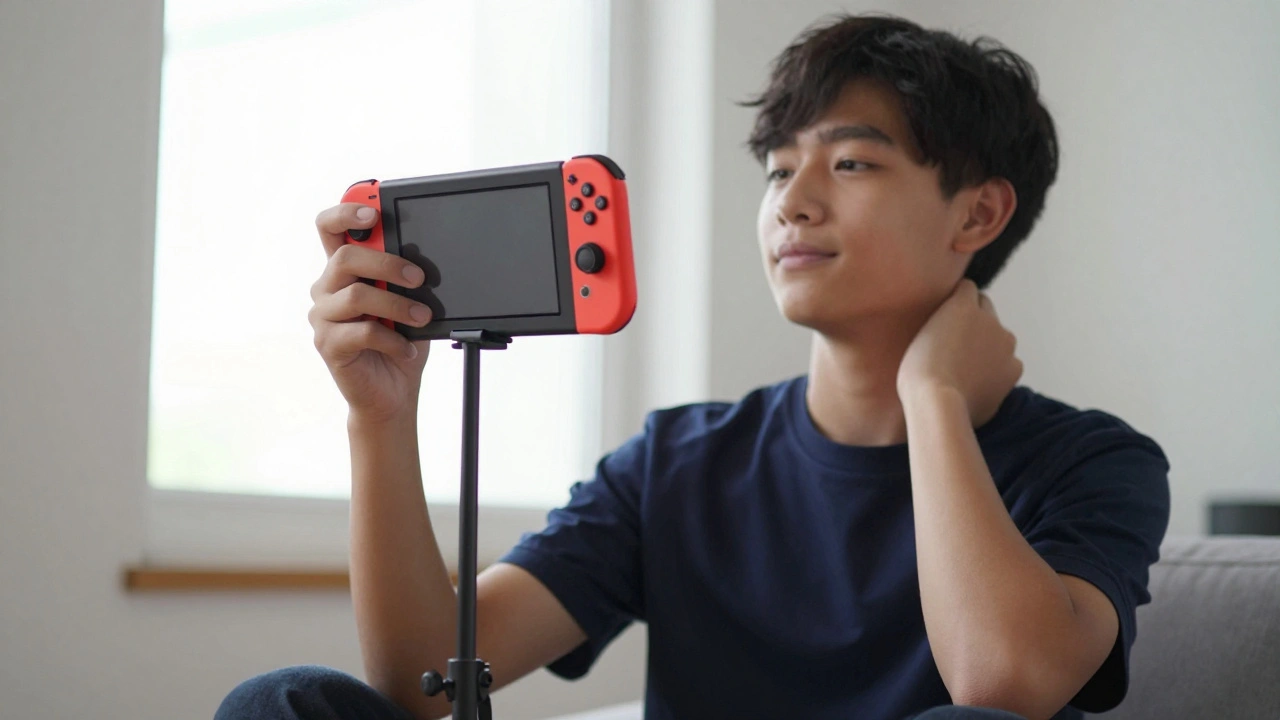
- Hold the device at eye level. Use a small stand, pillow, or even a stack of books to raise your handheld so the screen is level with your eyes. This cuts neck strain by over 70%.
- Take breaks every 20 minutes. Set a timer. Stand up, stretch your neck side to side, roll your shoulders, and look across the room for 20 seconds. This resets your muscles and eyes.
- Strengthen your upper back. Do 10 wall angels daily-stand with your back against a wall, arms in a goalpost shape, and slowly raise and lower them without letting your arms lose contact with the wall. It takes 30 seconds. It helps more than you think.
- Use a headset or external controller. If your device supports it, connect a Bluetooth controller and sit upright. Your hands can play, but your neck stays neutral.
- Check your lighting. Glare on the screen makes you lean closer. Use ambient light, not a single bright lamp behind you.
One gamer in Seattle switched to a $15 adjustable stand and cut his pain in half within two weeks. He didn’t change his playtime-he just changed his posture.
When to See a Professional
Not all neck pain is the same. If you have any of these, don’t wait:
- Pain that radiates into your shoulder or arm
- Numbness or tingling in your hands
- Headaches that start at the base of your skull
- Pain that lasts more than two weeks despite posture changes
Physical therapists can do a quick posture assessment and give you exercises tailored to your body. Chiropractors can help if your spine has shifted. But the earlier you act, the less damage you’ll have to undo.
What the Future Looks Like
Handheld gaming isn’t going away. It’s growing. In 2025, over 120 million people worldwide used handheld devices as their main gaming platform. That’s more than the population of Japan.
Manufacturers are starting to notice. Nintendo now includes posture tips in its Switch manual. Valve added a pop-up reminder on the Steam Deck after 45 minutes of play: “Take a break. Stretch your neck.”
But the real fix? It’s up to you. Your body wasn’t made to stare down at a screen for hours. Your neck wasn’t built to carry that weight. The games will still be there tomorrow. Your neck won’t if you keep ignoring it.