
When you're recovering from surgery, an injury, or even a tough illness, your body isn't just resting-it's working overtime to repair itself. That’s where nutrition and hydration come in. Not just as nice-to-haves, but as essential tools that can speed up healing, reduce swelling, and keep you from feeling drained. Skip them, and recovery drags. Get them right, and you’re setting yourself up to move better, feel stronger, and get back to life faster.
Why Your Body Needs More Than Rest
Your body doesn’t heal on air. It needs fuel. Protein to rebuild muscle and tissue. Zinc and vitamin C to close wounds. Magnesium to calm nerves and reduce cramps. And water-lots of it-to keep blood flowing, flush out toxins, and carry nutrients to damaged areas. After surgery or trauma, your metabolism shifts. You burn more calories just lying still than you did before. Studies show people recovering from major surgery can need up to 30% more calories than normal just to support healing.
Think of recovery like fixing a broken engine. You can’t just turn the key and hope for the best. You need the right parts, the right fluids, and the right timing. Skip the fuel, and the engine seizes. Skip the nutrients, and your body stalls.
Hydration: The Forgotten Foundation
Most people focus on protein and vitamins. Few think about water. But dehydration slows healing. It thickens your blood. It reduces oxygen delivery to tissues. It makes swelling worse and pain feel sharper.
How much should you drink? A common rule of thumb is half your body weight in ounces. So if you weigh 160 pounds, aim for 80 ounces-about 2.4 liters-per day. That’s not a suggestion. That’s a minimum. If you’re active, sweating, or on pain meds that dry you out (like opioids), you need more.
Water isn’t the only player. Electrolytes matter too. Sodium, potassium, and magnesium help your cells hold onto water and keep nerves firing right. After surgery, you often lose these through drainage, urine, or even just lying still. A pinch of sea salt in water, a cup of bone broth, or a low-sugar electrolyte drink (not sports drinks full of sugar) can make a real difference.
Watch for signs you’re not drinking enough: dark yellow urine, dry mouth, dizziness when standing, or headaches that don’t go away. These aren’t just inconveniences-they’re red flags your body isn’t healing properly.
Protein: The Building Block of Healing
Protein is the MVP of recovery. It’s not just for bodybuilders. It’s for everyone healing from cuts, fractures, or surgical incisions. Your body uses amino acids to build new skin, connective tissue, and immune cells. Without enough, wounds stay open longer. Infections creep in. Fatigue sticks around.
How much? Aim for 1.2 to 2.0 grams of protein per kilogram of body weight. For a 70 kg (154 lb) person, that’s 84 to 140 grams daily. That’s more than double what most people eat on a standard diet.
Good sources? Lean chicken, eggs, Greek yogurt, tofu, lentils, cottage cheese, and fish like salmon. If you’re struggling to hit your target, a whey or pea protein shake with breakfast or after physical therapy can help. Don’t wait until you’re hungry-spread it out. Eat protein at every meal and snack.
One mistake people make: thinking plant-based protein isn’t enough. It is-if you combine sources. Lentils with rice, tofu with quinoa, hummus with whole grain bread. Your body gets all the amino acids it needs. Just don’t rely on one source alone.
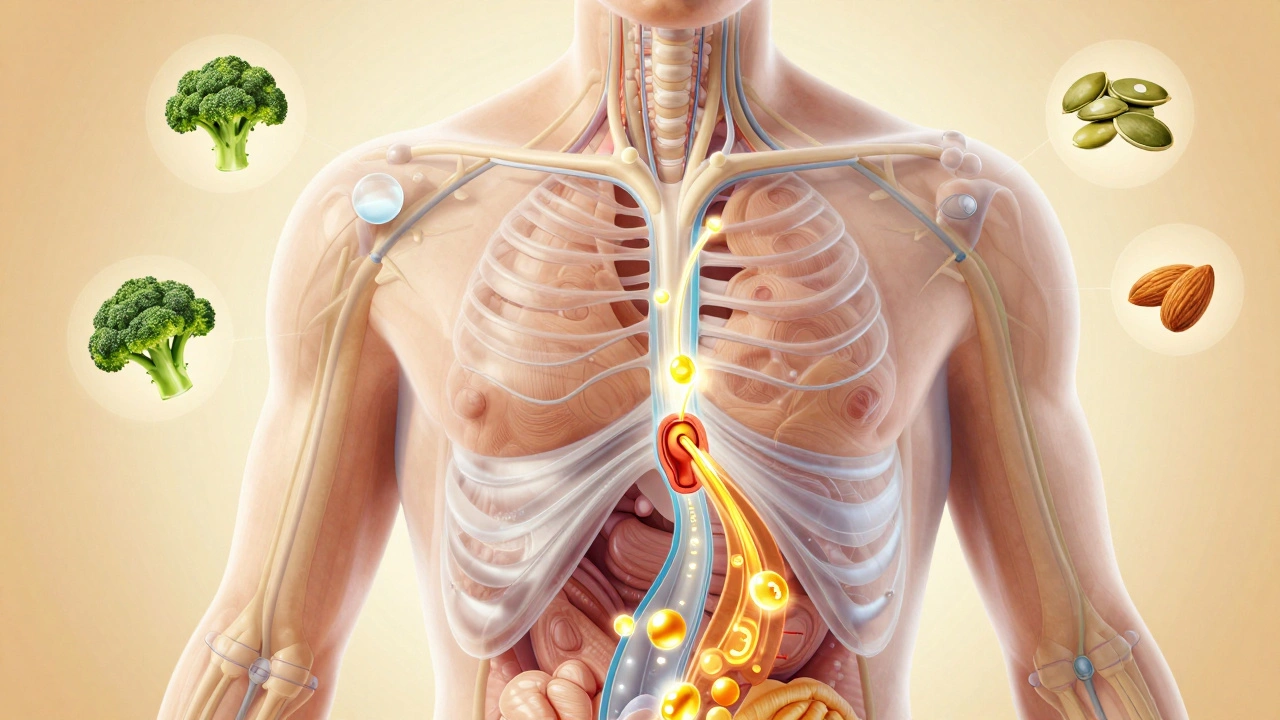
Key Nutrients You Can’t Afford to Skip
Here’s what else your body needs during early recovery:
- Vitamin C: Needed to make collagen-the glue that holds tissue together. Found in oranges, bell peppers, strawberries, broccoli. Aim for 500 mg daily. A supplement is fine if food isn’t enough.
- Zinc: Speeds up wound closure and fights infection. Found in oysters, pumpkin seeds, beef, chickpeas. 15-30 mg per day helps, but don’t go over 40 mg long-term.
- Vitamin D: Low levels are linked to slower healing and more pain. If you’re indoors a lot, take 1,000-2,000 IU daily. Get your levels checked if recovery feels stuck.
- Magnesium: Reduces muscle spasms, improves sleep, and helps with inflammation. Found in spinach, almonds, dark chocolate, bananas. 300-400 mg daily can make nights easier and days less stiff.
- Omega-3s: Fight inflammation without the side effects of NSAIDs. Eat fatty fish twice a week or take a fish oil supplement (1,000-2,000 mg EPA/DHA daily).
Don’t overload on supplements. Food first. Use pills to fill gaps, not replace meals.
What to Avoid During Early Recovery
Some foods don’t just do nothing-they hurt.
- Sugar and refined carbs: They spike insulin, trigger inflammation, and weaken your immune response. Cookies, soda, white bread, even fruit juice? Limit them. Your body doesn’t need the sugar rush-it needs clean fuel.
- Alcohol: It interferes with healing at the cellular level. Slows tissue repair, messes with sleep cycles, and can interact badly with pain meds. Skip it entirely for at least the first two weeks.
- Processed meats: Bacon, hot dogs, deli meats are loaded with nitrates and sodium. They increase inflammation and can raise blood pressure, which isn’t helpful if you’re trying to heal.
- Excess caffeine: Too much coffee or energy drinks can dehydrate you and disrupt sleep. Stick to one cup a day, and drink water after it.
It’s not about perfection. It’s about reducing the noise so your body can focus on repair.
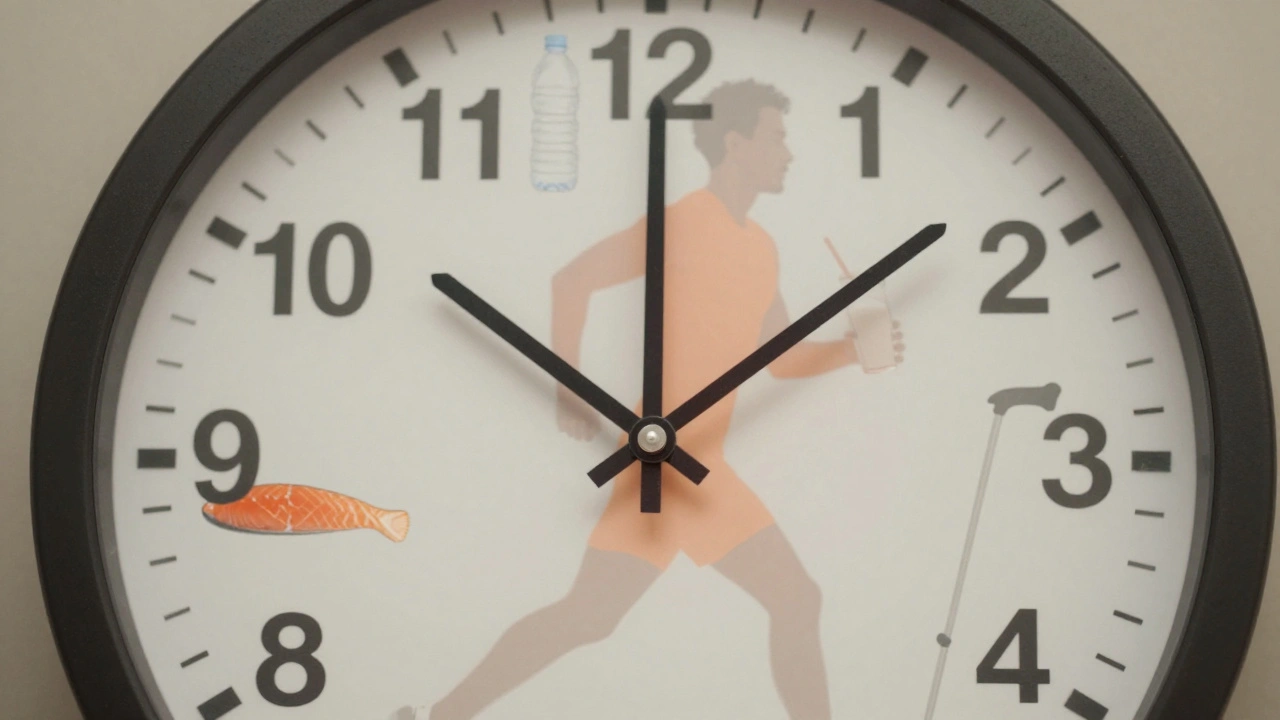
A Sample Daily Plan for Early Recovery
Here’s what a real day looks like for someone healing from knee surgery:
- Morning: 2 eggs with spinach and avocado. 1 cup of Greek yogurt with berries. 16 oz of water with a pinch of sea salt.
- Mid-morning snack: Handful of almonds + a small apple.
- Lunch: Grilled chicken breast (4 oz), quinoa, steamed broccoli, and olive oil drizzle. 16 oz water + 8 oz bone broth.
- Afternoon: Protein shake (20g protein) with a banana and flaxseed.
- Dinner: Baked salmon (5 oz), sweet potato, sautéed kale. 16 oz water.
- Before bed: Warm cup of chamomile tea + 1 oz dark chocolate (70%+ cocoa).
Total water: ~3.5 liters. Protein: ~120g. Fiber: high. Sugar: under 20g.
This isn’t fancy. It’s simple. And it works.
When to Adjust Your Plan
Recovery isn’t one-size-fits-all. Here’s when to tweak things:
- Swelling doesn’t go down: Cut salt, increase omega-3s, and drink more water. Consider adding turmeric (1 tsp in food or tea).
- Constipation: Common after surgery or pain meds. Add prunes, chia seeds, psyllium husk, and drink more water. Movement-even walking-helps too.
- Loss of appetite: Eat smaller, more frequent meals. Focus on calorie-dense, nutrient-rich foods like nut butter, full-fat yogurt, and smoothies. Don’t force big meals.
- Feeling weak or dizzy: You might be low on sodium or potassium. Try a broth, banana, or electrolyte drink. If it continues, talk to your doctor.
Listen to your body. If something feels off, adjust. Don’t wait for a doctor to tell you to change.
Final Thought: Recovery Is a Daily Practice
You wouldn’t expect a car to run without gas. Don’t expect your body to heal without fuel. Nutrition and hydration aren’t side notes in recovery-they’re the main program. The more consistent you are, the faster you’ll move from resting to recovering to rebuilding.
Start small. Drink one extra glass of water today. Add one extra source of protein to your lunch. Skip one sugary snack. These aren’t big changes. But over time, they add up to real progress.
How long should I follow a recovery nutrition plan?
You should follow a focused nutrition and hydration plan for at least the first 4 to 6 weeks after injury or surgery. That’s when most tissue repair happens. After that, you can ease into a maintenance diet, but keep protein and hydration high. If you’re still healing after 8 weeks, continue the plan until you’re back to normal function. Don’t stop just because you feel better-tissue strength takes longer to rebuild than pain fades.
Can I drink alcohol during recovery?
Avoid alcohol entirely for the first 2 to 4 weeks. It interferes with collagen formation, delays wound healing, and can interact dangerously with pain medications. Even small amounts can disrupt sleep, which is critical for recovery. If you’re past the initial healing phase and cleared by your doctor, one drink occasionally may be okay-but never daily.
Do I need supplements, or can I get everything from food?
Food should be your main source of nutrients. But during early recovery, it’s hard to eat enough to meet increased needs. That’s where supplements help. Protein powder, vitamin C, zinc, and omega-3s are often necessary to fill gaps. Don’t take 10 different pills-focus on 3-4 that match your biggest needs. Always talk to your doctor before starting new supplements, especially if you’re on medication.
What if I’m not hungry during recovery?
Loss of appetite is common after trauma or surgery. Don’t force large meals. Instead, eat smaller meals every 2-3 hours. Focus on calorie-dense, nutrient-rich options: smoothies with nut butter and banana, full-fat yogurt with honey, avocado toast, or a protein shake. Liquid calories count. Your body still needs fuel-even if you don’t feel like eating.
Can hydration affect pain levels?
Yes. Dehydration increases inflammation and can make pain feel more intense. When you’re dehydrated, your blood thickens, circulation slows, and muscles cramp more easily-all of which can worsen discomfort. Drinking enough water helps flush out inflammatory chemicals and keeps tissues lubricated. Many people report reduced pain after simply increasing their water intake, even without changing anything else.