
Ever notice how a player who usually logs off at 9 PM suddenly stays up until 3 AM, chasing one specific achievement? It’s not just passion; it’s often a signal of obsessive-compulsive patterns emerging within what was once a healthy hobby. For many gamers, the line between intense engagement and clinical gaming disorder blurs when routine behaviors start feeling mandatory rather than optional.
Gaming disorder, recognized by the World Health Organization as a condition where gaming behavior dominates life, frequently overlaps with traits seen in Obsessive-Compulsive Disorder (OCD). While they are distinct diagnoses, the mechanical loops of modern games-daily rewards, streaks, and progress bars-can trigger compulsive responses in susceptible individuals. Understanding these patterns is the first step toward regaining control without necessarily quitting the game entirely.
Understanding the Core Mechanism
To grasp why this happens, we have to look at how the brain processes reward. When you complete a task in a game, your brain releases dopamine, a neurotransmitter associated with pleasure and motivation. In standard play, this feels good but fades quickly. However, for someone with obsessive tendencies, the anticipation of that reward becomes more important than the reward itself.
This creates a cycle known as the compulsion loop. The individual feels a sense of incompleteness or anxiety if a daily quest isn’t finished. This anxiety drives them to log in, perform the action, and feel temporary relief. Over time, the relief lasts shorter periods, requiring more time in-game to achieve the same calm state. This mirrors the structure of OCD, where a person performs a ritual to neutralize intrusive thoughts or anxiety.
Identifying the Warning Signs
Not every dedicated gamer has a problem. The key differentiator is rigidity. A casual player might skip a day if they’re busy; a player exhibiting compulsive patterns will feel physically restless or irritable without playing.
Here are specific indicators that suggest the issue has moved beyond enthusiasm:
- Preoccupation: Thinking about the next login while working or sleeping. If you find yourself mentally rehearsing strategies during meetings, it’s a sign of intrusion.
- Tolerance: Needing to play longer hours to get the same satisfaction. What used to be a two-hour session now requires four to feel "done."
- Withdrawal: Feeling angry, sad, or anxious when prevented from playing. This emotional volatility is a hallmark of behavioral addictions.
- Loss of Control: Trying to cut back but failing repeatedly. You tell yourself you’ll stop after one more match, but three hours pass.
- Interference: Neglecting hygiene, work deadlines, or social relationships because the game demands immediate attention.
It’s crucial to distinguish this from simple enjoyment. Enjoyment is additive; it enhances life. Compulsion is subtractive; it takes energy from other parts of life to fuel the screen.
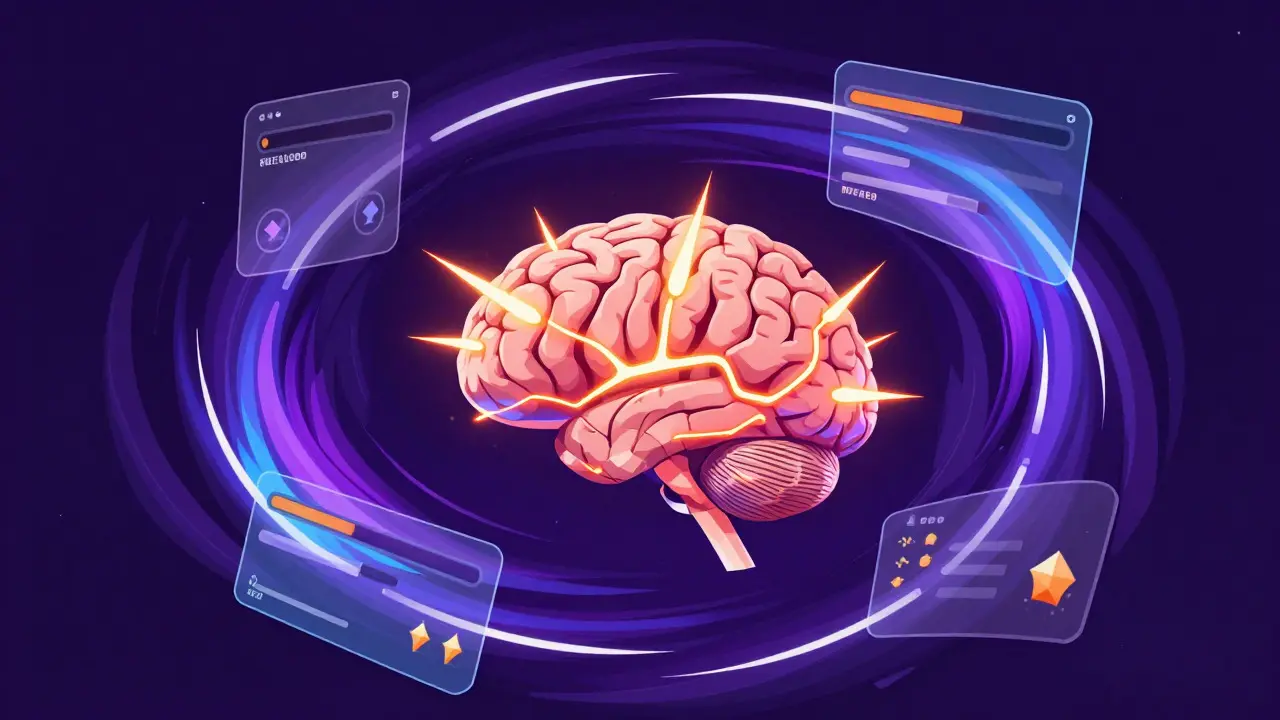
The Role of Game Design in Triggering Compulsions
You aren’t alone in falling into these traps. Modern game design heavily utilizes psychological triggers that exploit human biases. These features are engineered to maximize retention, which can be problematic for those prone to obsessive thinking.
| Mechanic | Psychological Effect | Example |
|---|---|---|
| Daily Streaks | Fear of Loss (FOMO) | Losing a 30-day bonus if you miss one day |
| Variable Rewards | Dopamine Spike | Loot boxes or random card drops |
| Sunk Cost | Commitment Bias | Investing 100 hours in a character build |
| Achievement Gating | Completionism | Locked content requiring 100% completion |
For example, consider the concept of Variable Ratio Reinforcement, which is a schedule of reinforcement where rewards are delivered after an unpredictable number of responses. This is the same mechanism that makes slot machines addictive. In gaming, it appears as loot boxes or random event spawns. Because you don’t know when the next big reward will drop, you keep playing just to see if *this* time is the one. For a mind already wired for obsession, this unpredictability is a powerful hook.
Strategies for Regaining Control
Breaking the cycle doesn’t mean you have to delete your accounts. It means restructuring your relationship with the game. Here are practical steps to reduce compulsive elements.
- Externalize the Timer: Don’t rely on internal willpower. Use a physical alarm or a smartwatch notification to end sessions. When the alarm goes, you must save and exit immediately. No "one more round."
- Batch Your Playtime: Instead of logging in multiple times a day, designate specific windows. For instance, play only on weekends or only after 7 PM on weekdays. This reduces the decision fatigue of constantly asking, "Should I play now?"
- Remove Frictionless Access: Make it harder to start. Uninstall mobile versions, hide desktop shortcuts, or require a password reset each time. The extra seconds of friction give your prefrontal cortex time to engage and make a rational choice.
- Track Non-Gaming Wins: Keep a journal of things you accomplished outside of gaming. When the urge to play hits, read your list. Remind your brain that progress exists elsewhere.
- Find Alternative Rituals: If the issue is the ritual of winding down, replace gaming with a different low-stakes activity like reading, stretching, or cooking. The goal is to satisfy the need for a transition period without the high-dopamine hit.
If these self-regulation tactics fail, consider seeking professional help. Cognitive Behavioral Therapy (CBT) has shown strong efficacy in treating both OCD and behavioral addictions. A therapist can help identify the underlying anxiety driving the compulsion and develop coping mechanisms tailored to your specific triggers.

When to Seek Professional Help
Self-management works for mild cases, but some situations require expert intervention. You should consult a mental health professional if:
- Your sleep schedule has shifted significantly (e.g., sleeping less than 6 hours regularly).
- You are experiencing physical symptoms like eye strain, back pain, or headaches that persist despite breaks.
- Your mood deteriorates sharply when not playing, leading to irritability or depression.
- You are lying to friends or family about how much time you spend playing.
- You have tried cutting back multiple times but failed completely.
Therapists specializing in behavioral addictions understand the nuance between passion and pathology. They won’t judge your love for games; they will help you ensure the game serves you, not the other way around.
Building a Sustainable Gaming Routine
The ultimate goal is balance. Gaming can be a fantastic source of stress relief, community, and creativity. The key is intentionality. Before you press "Play," ask yourself: "Am I playing because I want to, or because I feel I have to?"
If the answer is "have to," pause. Take a breath. Check your hunger, thirst, and posture. Often, the urge to play is actually a signal for rest, hydration, or movement. By addressing the root need, you break the automatic link between discomfort and the screen.
Remember, flexibility is strength. Some weeks you’ll play more; others, less. That’s normal. The red flag isn’t variation; it’s rigidity. As long as you retain the ability to choose when to stop, you remain in control.
Is gaming disorder the same as OCD?
No, they are distinct conditions, but they share similarities. OCD involves intrusive thoughts and rituals performed to reduce anxiety. Gaming disorder involves compulsive behavior driven by reward-seeking and loss aversion. However, people with OCD may be more susceptible to developing gaming disorder due to their tendency toward rigid routines and perfectionism.
How long does it take to break a gaming habit?
There is no fixed timeline. For mild cases, establishing new boundaries can take 2-4 weeks. For severe cases involving significant life disruption, therapy and structured support may take several months. Consistency is more important than speed.
Do I need to quit gaming completely to recover?
Usually, no. Complete abstinence is sometimes recommended initially to reset dopamine baselines, but most experts advocate for moderation and structured play. The goal is to change the relationship with the game, not necessarily eliminate it.
What role do parents play in preventing gaming disorder in teens?
Parents should focus on open communication rather than strict bans. Setting clear, agreed-upon limits, modeling healthy screen habits themselves, and encouraging offline hobbies helps prevent escalation. Monitoring for signs of withdrawal or secrecy is also crucial.
Can medication help with obsessive gaming patterns?
Medication is rarely prescribed specifically for gaming disorder. However, if the underlying cause is anxiety, depression, or co-occurring OCD, medications like SSRIs may be used to manage those primary conditions, which can indirectly reduce compulsive gaming urges.