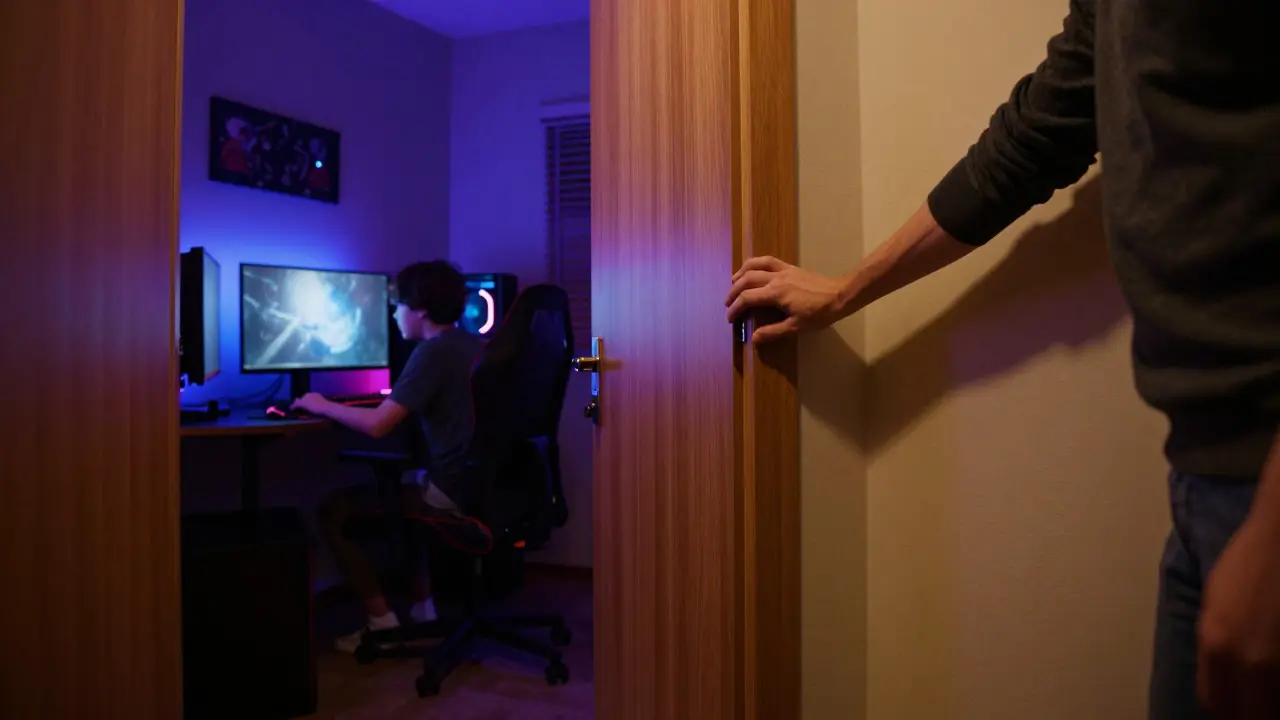
It’s 9:30 PM on a Tuesday. You call your teenager's room. No answer. The door is slightly ajar, and you hear the distinct hum of a high-end graphics card and the frantic clicking of a mechanical keyboard. Your gut tells you something is off, but is it just passion for a new release, or is this becoming a problem? Distinguishing between healthy hobby and harmful habit is one of the toughest challenges modern parents face. You don't need a clinical degree to start spotting red flags; you just need the right parent-report tools.
Unlike adult addiction, which can be self-reported, childhood gaming issues are often hidden behind screens and locked doors. This is where parent-report instruments come in. These are standardized questionnaires designed specifically for caregivers to assess their child's behavior, emotional state, and daily routines related to digital play. They act as a mirror, reflecting patterns that might be invisible to the child but obvious to an observer.
Why Parent-Report Screening Matters
Children rarely volunteer information about their screen time unless they feel judged. If you ask, "How much do you play?" you’ll likely get a polite lie. However, if you ask, "Did you finish your homework before starting that game?" you’re observing behavior, not relying on memory. Parent-report tools shift the focus from subjective feelings to objective actions.
These tools help identify three key areas of concern:
- Interference with Daily Life: Is school performance dropping? Are chores being skipped?
- Emotional Regulation: Does the child become irritable, angry, or withdrawn when the game is paused?
- Social Isolation: Has the child stopped meeting friends in person in favor of online guilds?
By using these tools, you move from guessing to knowing. It provides a baseline. If the score is low, you can relax. If it’s high, you have data to discuss with a pediatrician or psychologist, rather than just saying, "I think he plays too much."
The Gold Standard: The YBOC-GS
If you only use one tool, make it the Youth Behavioral Obsessions Questionnaire - Gaming Scale (YBOC-GS). Developed by researchers at the University of Pittsburgh, this is one of the most validated instruments for assessing gaming disorder in adolescents.
The YBOC-GS consists of seven items rated on a scale from 0 (not at all) to 4 (extremely). It doesn’t ask how many hours the child plays. Instead, it asks about the *impact* of the playing. For example, one item asks: "How much does your child spend thinking about gaming when they are not actually playing?" Another asks: "How often does your child lose sleep because they want to play?"
This distinction is crucial. A child can play for four hours a day and be perfectly fine if they are socializing within the game and managing their schedule. Conversely, a child might play for two hours but be unable to stop, missing meals and bedtimes. The YBOC-GS captures this behavioral rigidity.
| Tool Name | Primary Focus | Number of Items | Best Used For |
|---|---|---|---|
| YBOC-GS | Behavioral obsession and impact | 7 | Clinical assessment, identifying severity |
| PGI-S | General gaming involvement | 15 | Broad screening across multiple domains |
| IGDS9-SF | ICD-11 criteria alignment | 9 | Diagnosing formal Gaming Disorder |
Understanding the ICD-11 Criteria Through Lenses
The World Health Organization officially recognized "Gaming Disorder" in the ICD-11 classification of diseases. To diagnose it, specific criteria must be met: impaired control over gaming, increasing priority given to gaming, and continuation despite negative consequences.
Parent-report tools like the Internet Gaming Disorder Scale-Short Form (IGDS9-SF) are built directly around these three pillars. When you fill out this form, you are essentially checking boxes against the official medical definition. This makes it highly valuable if you plan to seek professional help later. It translates your observations into clinical language.
For instance, the scale asks if the child has lied about how long they played. This maps directly to the "impaired control" criterion. It also asks if the child has neglected basic needs like eating or sleeping. This maps to "continuation despite negative consequences." By aligning your home observations with these global standards, you create a stronger case for intervention if needed.

Practical Steps to Implement Screening at Home
You don’t need a lab coat to conduct a screening. Here is a practical workflow you can adopt this week:
- Choose One Tool: Start with the YBOC-GS or IGDS9-SF. Keep it simple. Don’t overwhelm yourself with five different questionnaires.
- Pick a Neutral Time: Do not administer the questionnaire during a conflict. Wait until dinner is done and the mood is calm. Frame it as a check-up, not an interrogation. Say, "I’m trying to understand how our family balance is working. Can you help me fill this out?"
- Observe Before You Ask: Spend a few days simply watching. Note the times the console turns on. Note the reactions when it turns off. Use these observations to calibrate your answers on the paper form. If the form says "rarely" but you see it happen every night, trust your eyes.
- Score It Honestly: Many parents underestimate the severity because they hope it will go away. Be honest. A high score isn’t a verdict; it’s a signal.
Remember, these tools are snapshots, not movies. A high score today doesn’t mean the problem is permanent. It means the current pattern is unsustainable. A low score doesn’t mean everything is perfect forever. It means the current pattern is working.
Common Pitfalls and How to Avoid Them
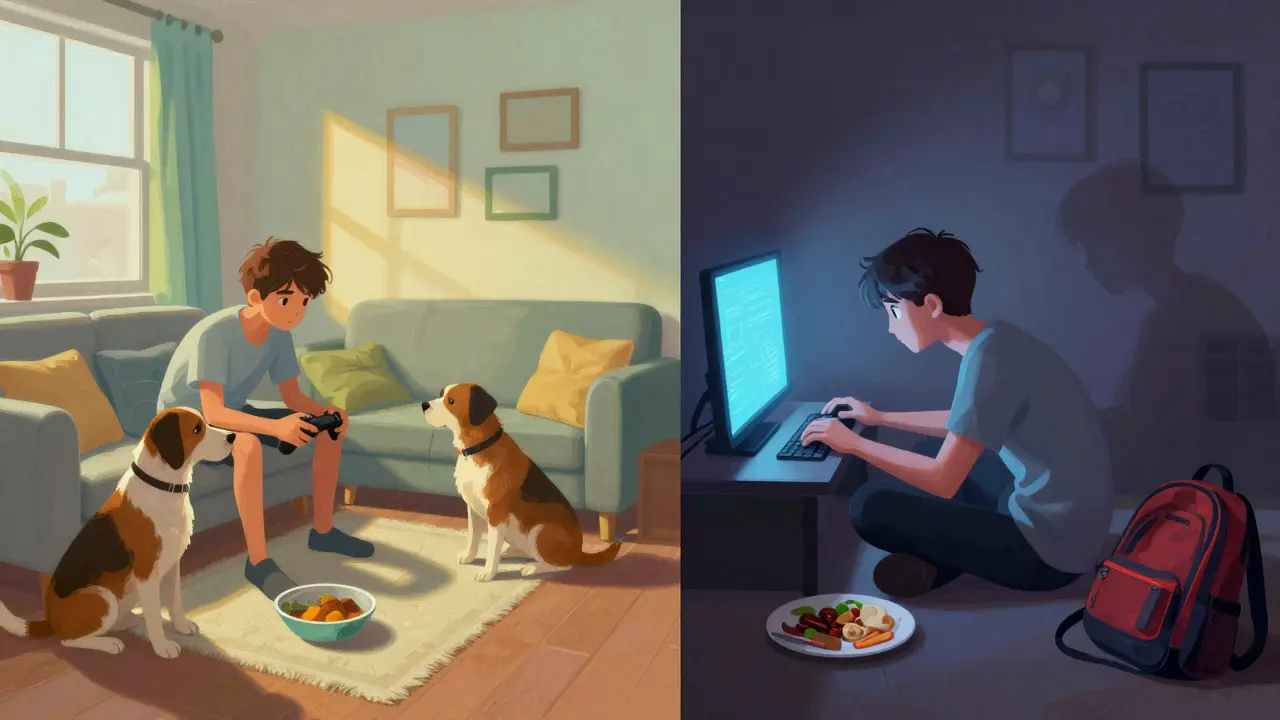
Even with good tools, parents can misinterpret results. The most common mistake is confusing intensity with pathology. Competitive gamers are intense. They practice for hours. They get frustrated when they lose. This is normal engagement, not necessarily disorder.
The key differentiator is *function*. Does the intensity prevent them from doing other things? If a child practices for six hours but still attends school, eats well, and sleeps eight hours, they are likely just passionate. If they practice for six hours and skip breakfast, miss homework, and stay up until 3 AM, the function is compromised.
Another pitfall is projection. If you dislike video games, you might rate neutral behaviors as negative. Try to separate your personal preferences from the child’s well-being. The goal is health, not abstinence. A balanced gamer is a healthy gamer.
When to Seek Professional Help
Screening tools are for triage, not diagnosis. If your scores are consistently high, or if you notice significant changes in mood or academic performance, it’s time to involve a professional. Pediatricians are increasingly trained in digital health and can offer initial guidance. Child psychologists specializing in behavioral addictions can provide deeper analysis.
Bring your completed questionnaires to the appointment. Having written data helps the provider see the pattern over time. It also shows that you’ve taken the issue seriously and prepared logically. This builds trust and speeds up the process.
Interventions usually start with behavioral strategies rather than medication. This might include setting strict tech-free zones, replacing gaming with physical activities, or cognitive-behavioral therapy to address underlying emotional triggers. The parent-report tool becomes part of the treatment plan, used periodically to track progress.
Frequently Asked Questions
Are parent-report tools accurate enough for diagnosis?
They are excellent for screening but not sufficient for a final clinical diagnosis on their own. They provide a strong indicator of risk and severity, which should then be confirmed by a mental health professional through interviews and observation. Think of them as a smoke detector, not a fire report.
What age range do these tools cover?
Most major tools like the YBOC-GS and IGDS9-SF are validated for children aged 8 to 18. For younger children under 8, parents may rely more on direct observation of habits and duration, as abstract concepts like "craving" are harder for young kids to articulate or for parents to measure via standard scales.
Should I show the results to my child?
Yes, but frame it collaboratively. Showing the numbers can remove blame. Instead of saying "You play too much," you can say "This chart shows we're struggling with sleep. Let's look at what's causing that." It turns the conversation from accusation to problem-solving.
Do these tools work for mobile gaming?
Yes. While some older tools were designed with console gaming in mind, recent updates and interpretations apply equally to mobile and PC gaming. The core issues-loss of control, neglect of duties, and emotional reliance-are platform-independent. Just ensure you are accounting for all devices when assessing total time and impact.
How often should I re-screen my child?
If the initial screen is low-risk, you can check in annually or after major life changes (like starting high school or a new job). If the screen is high-risk, re-evaluate every 4 to 6 weeks while implementing changes. This allows you to see if interventions are working quickly.