
You just spent three hours grinding for a rare sword. You feel good. Then you log in the next day and see someone with zero skill but a $50 credit card charge walking around with a sword that does double your damage. They didn't earn it; they bought it. That sinking feeling? That's pay-to-win mechanics at work.
It’s not just about being salty. It’s about how game design has shifted from rewarding time and skill to rewarding disposable income. If you’ve ever wondered why some free-to-play games feel like slot machines while others feel like fair fights, you’re looking at the wrong end of the economic telescope. Let’s break down exactly how financial pressure works in gaming, where it started, and how to spot it before you open your wallet.
The Core Definition: What Actually Counts as Pay-to-Win?
People throw this term around loosely, but let’s get precise. A game is pay-to-win (P2W) when real-world money grants a player a significant competitive advantage over those who don’t spend. This isn’t about buying a cool skin or a new hat for your character. That’s cosmetic. P2W is about power.
Think of it on a spectrum. On one end, you have "pay-for-convenience," where you buy XP boosts to skip boring grind. On the other, you have "pay-for-power," where you buy weapons, stats, or exclusive units that fundamentally alter combat outcomes. The middle ground is messy, but if spending money makes you harder to kill or easier to kill others, you’re in P2W territory.
This definition matters because developers often hide behind terms like "free-to-play" or "microtransactions." But if the core loop of the game breaks without spending, it’s P2W. Period.
The Evolution: From Arcade Quarters to Whale Hunting
Gaming has always had a financial component. In the arcade era, you paid per life. Run out of quarters? Game over. That was transparent. Today’s model is sneakier. It emerged in the mid-2000s with Asian MMORPGs like Lineage II and MapleStory, which introduced cash shops. Initially, these sold cosmetics. But soon, developers realized that selling convenience-and eventually power-generated more revenue than subscription fees.
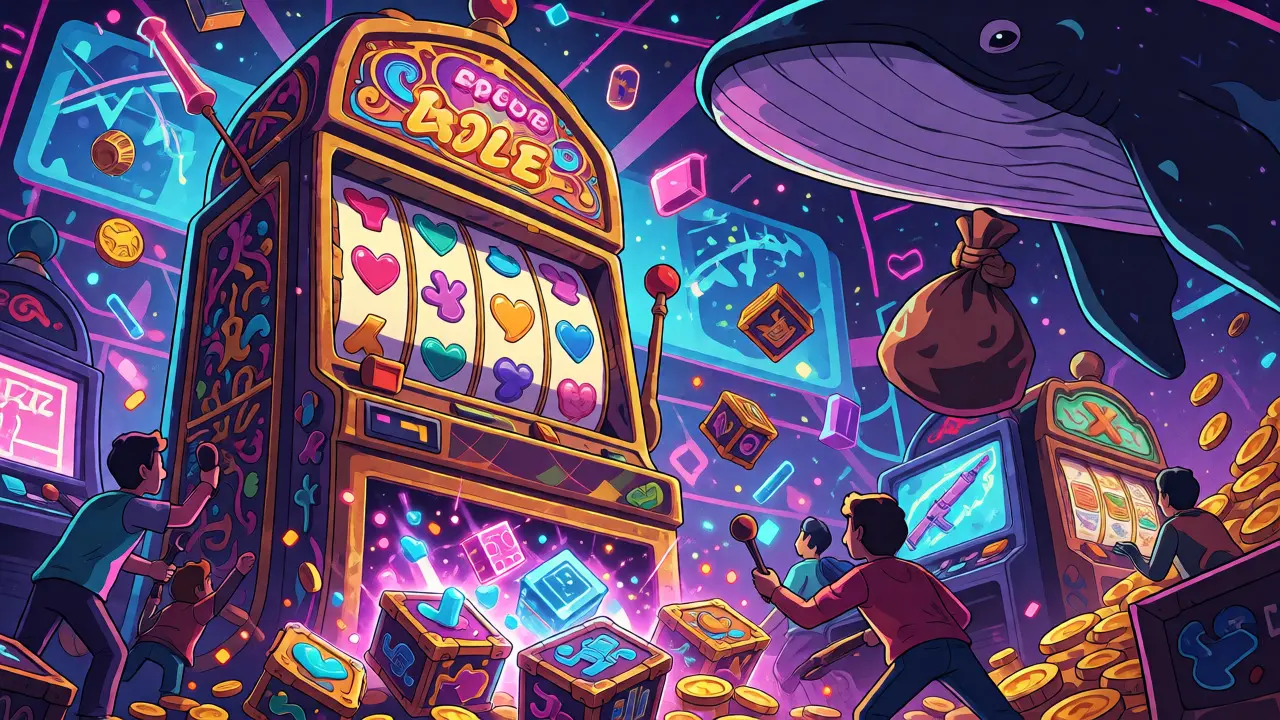
The shift accelerated with mobile gaming. Games like Clash of Clans proved that a small percentage of players, known as "whales," would spend thousands of dollars to dominate leaderboards. Developers stopped designing for the average player and started designing for the whale. The result? Games became less about fun and more about friction removal through payment.
Anatomy of the Trap: Key Mechanics That Drain Your Wallet
How do they actually squeeze money out of you? It’s rarely obvious. Here are the main tools in the modern developer’s toolkit:
- Loot Boxes: Randomized rewards purchased with real money. Think of them as digital slot machines. You might get a common item, or you might get the legendary weapon everyone wants. The uncertainty triggers dopamine hits similar to gambling.
- Energy Systems: You can play for ten minutes, then you hit a wall. Wait six hours for energy to refill, or pay $2 to continue immediately. This artificially caps your progress unless you pay.
- Stat Boosters: Direct purchases of +10% attack speed or +50 defense. These stack, meaning whales become exponentially stronger, not just linearly stronger.
- Time-Savers: Construction queues in strategy games. Waiting two days for a building upgrade vs. paying $5 to finish it now. For casual players, this feels harmless. For competitive players, it means falling behind permanently.
Notice a pattern? These mechanics exploit impatience and fear of missing out (FOMO). They turn time into money.
The Psychology: Why We Keep Spending
If you know it’s P2W, why do you still buy? Because game designers hire behavioral psychologists. They use specific techniques to lower your resistance.
First, there’s the sunk cost fallacy. You’ve already invested 40 hours into a character. Walking away feels like wasting that time. So you spend $10 to fix a minor inconvenience, thinking, "Well, I’m already here." Next thing you know, you’ve spent $100.
Second, social pressure. Many P2W games feature guild wars or PvP arenas. If your friends are struggling against a team that clearly spent money on gear, you feel compelled to contribute. It becomes a collective arms race. Nobody wants to be the weak link, so everyone spends a little, which raises the bar, forcing everyone to spend more.
Third, variable ratio reinforcement. Loot boxes work because you never know when you’ll win big. This unpredictability keeps you pulling the lever long after the logical point of diminishing returns.
Fair Monetization: Alternatives to the P2W Model
Not all free-to-play games are predatory. Some find ways to monetize without breaking the competitive balance. Understanding the difference helps you choose better games.
| Model | Description | Impact on Gameplay | Example |
|---|---|---|---|
| Cosmetic Only | Sells skins, emotes, and visual upgrades. | None. Skill determines outcome. | League of Legends, Fortnite |
| Buy-to-Play | One-time upfront cost. | All players start equal. | Counter-Strike 2 (base), Stardew Valley |
| Battle Pass | Progression-based rewards for playing. | Rewards effort, not wealth. | Apex Legends, Overwatch 2 |
| Pay-to-Win | Sells stats, power, or major time skips. | Wealth overrides skill. | Diamond Digger Saga, many mobile MMOs |
The Battle Pass model, popularized by Fortnite, is particularly clever. It encourages engagement rather than pure spending. You get rewards for playing, and paying just unlocks extra tiers. It respects the player’s time.
Regulatory Backlash and the Future of Microtransactions
Players aren’t taking this lying down. Governments are stepping in. Belgium and the Netherlands have banned loot boxes, classifying them as gambling. China requires odds disclosure for randomized items. The UK is currently investigating whether loot boxes should be regulated under gambling laws.
Why does this matter? Because regulation forces transparency. When you know the exact chance of getting that legendary item is 0.5%, you’re less likely to blow $20 chasing it. Expect more countries to follow suit by 2027. Developers will need to adapt, likely moving toward clearer, non-randomized purchases or cosmetic-only models to avoid legal headaches.
How to Spot a Predatory Game Before You Download
You don’t want to waste your evening discovering a game is a wallet drain. Use this checklist before installing:
- Check the Store Page: Does it mention "In-App Purchases" prominently? Look at the price range. If top items cost $99, run.
- Read Recent Reviews: Filter by "Most Helpful" and look for keywords like "grind," "spend," or "cash shop." Ignore the hype from launch week; wait for month-two reviews.
- Watch Gameplay Videos: Look for UI elements like red exclamation points on the store icon or timers everywhere. High-frequency prompts to spend are a bad sign.
- Search Reddit: Go to r/gaming or the game’s specific subreddit. Search "is it p2w?" The community usually answers honestly within hours of release.
If the first hour of gameplay involves constant pop-ups offering a "Starter Pack" for $1.99, you’re already in the funnel.
Practical Tips for Managing Gaming Expenses
If you love a P2W game despite its flaws, you can still enjoy it without going broke. Set a hard monthly budget. Treat it like entertainment spending, same as movies or dining out. Once you hit $20, stop. No exceptions.
Avoid buying bundles impulsively. Developers often offer "limited-time" deals to create urgency. Take 24 hours to decide. Often, the deal reappears later, or you realize you don’t actually need the item.
Finally, remember that skill still matters in most P2W games. Whales might have better gear, but a skilled player can often outmaneuver a clumsy spender. Don’t let the financial pressure make you feel powerless. You control your wallet, even if the game tries to control your pace.
Is every free-to-play game pay-to-win?
No. Many free-to-play games, such as League of Legends or Dota 2, use a cosmetic-only monetization model. In these games, money buys appearance changes but offers no statistical advantage in matches. Skill remains the sole determinant of victory.
What is a 'whale' in gaming?
A 'whale' is a slang term for a player who spends a disproportionately large amount of money on in-game purchases. Typically, the top 1-2% of players account for 50-80% of a game's total revenue. Developers specifically design features to appeal to and retain these high-spending users.
Are loot boxes considered gambling?
Legally, it depends on your jurisdiction. Countries like Belgium and the Netherlands classify loot boxes as gambling due to the element of chance and real-money stakes. Other regions, including the US, currently regulate them under consumer protection laws rather than strict gambling statutes, though this is evolving.
Can pay-to-win games be fun?
Yes, if you approach them correctly. If you treat the game as a single-player experience or play casually without competing against whales, you can enjoy the content. However, in competitive multiplayer settings, P2W mechanics often lead to frustration and reduced enjoyment for non-paying players.
How do developers justify pay-to-win mechanics?
Developers argue that microtransactions allow them to keep games free for the majority of players while funding ongoing development and server costs. They claim that paying players subsidize the free experience for others, although critics argue this creates a two-tier system that degrades the overall quality of competition.