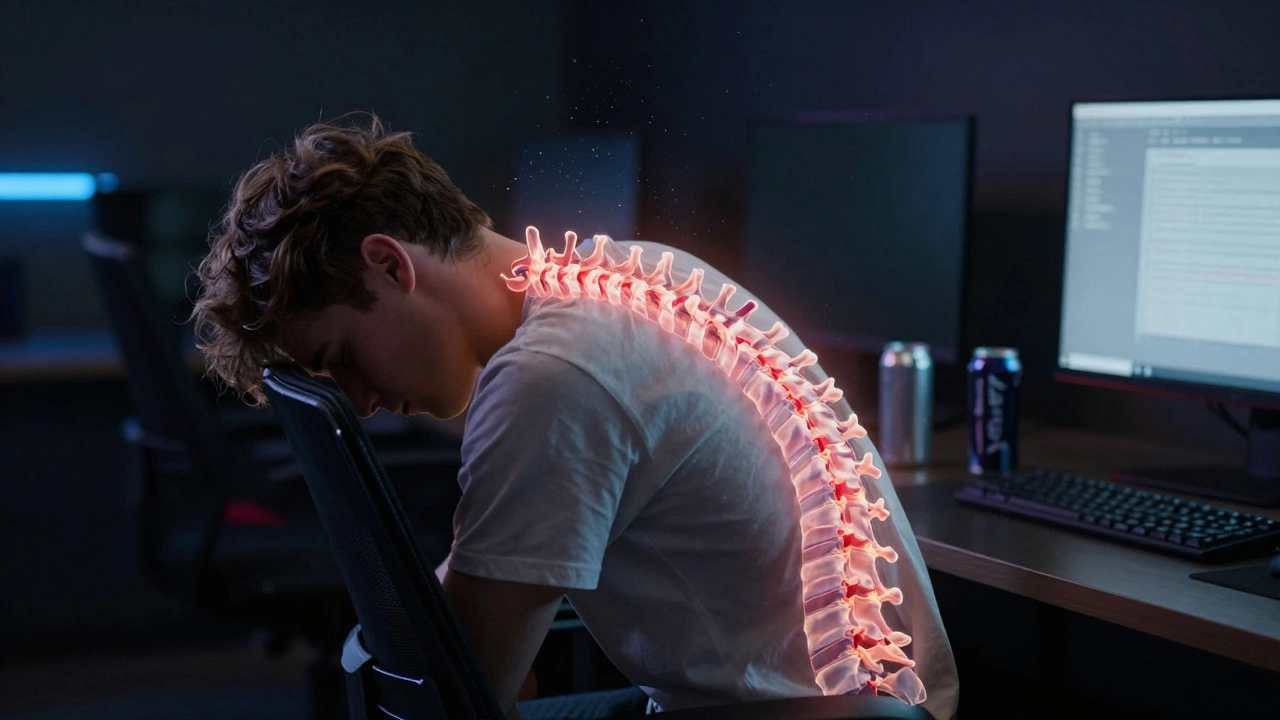
Many gamers spend hours hunched over a screen, leaning forward, shoulders rounded, neck craned-sometimes for six, eight, even ten hours a day. It feels normal because it’s routine. But your spine doesn’t think it’s normal. Every minute you sit like that, your back pays the price. The long-term effects aren’t just discomfort. They’re real, measurable damage to your spinal structure.
What Happens to Your Spine When You Gamers
Your spine isn’t meant to stay bent forward for hours. It’s designed to move, shift, and support your body in a neutral position. When you sit slumped in a chair, your head leans forward. For every inch your head moves ahead of your shoulders, it adds about 10 pounds of extra pressure on your neck and upper back. That means if your head is 6 inches forward, you’re loading your spine with an extra 60 pounds of strain. That’s like carrying a dumbbell the whole time you play.
This forward head posture doesn’t just hurt your neck. It changes the natural curve of your cervical spine. Over time, the curve flattens or even reverses. Studies from the University of Sydney found that gamers who played more than 4 hours daily showed measurable loss of cervical lordosis-the natural inward curve of the neck. This isn’t temporary. Once the curve changes, it can take months of physical therapy to correct, if it’s reversible at all.
The Domino Effect: From Neck to Lower Back
It doesn’t stop at your neck. When your upper body leans forward, your lower back compensates. Your pelvis tilts backward, flattening the natural curve in your lumbar spine. That puts pressure on your discs, especially between L4 and L5. These are the most common spots for herniated discs in young adults-and they’re rising fast among teens and young adults who game heavily.
A 2024 study in the Journal of Orthopaedic & Sports Physical Therapy tracked 320 gamers aged 16-25 over 18 months. Those who sat without support for more than 5 hours a day had a 47% higher chance of developing chronic lower back pain compared to those who took breaks and used proper posture. The pain didn’t start as sharp. It crept in: a dull ache after long sessions, then stiffness in the morning, then pain that made it hard to stand up straight.
Why Your Chair Is Part of the Problem
Most people think it’s just about being lazy or not sitting up straight. But the real issue? The furniture most gamers use isn’t built for long-term sitting. Office chairs are often too high or too low. Gaming chairs look cool but rarely offer real lumbar support. Many just have a small, stiff cushion that pushes your lower back forward instead of supporting it.
True lumbar support means the curve of the chair matches the curve of your spine. It shouldn’t just press into your back-it should hold your pelvis in a neutral position. If you’re sitting on a chair with no support, your lower back muscles have to work overtime just to keep you upright. That’s why you get tired so fast. Your muscles aren’t built to hold you in a bad position for hours.
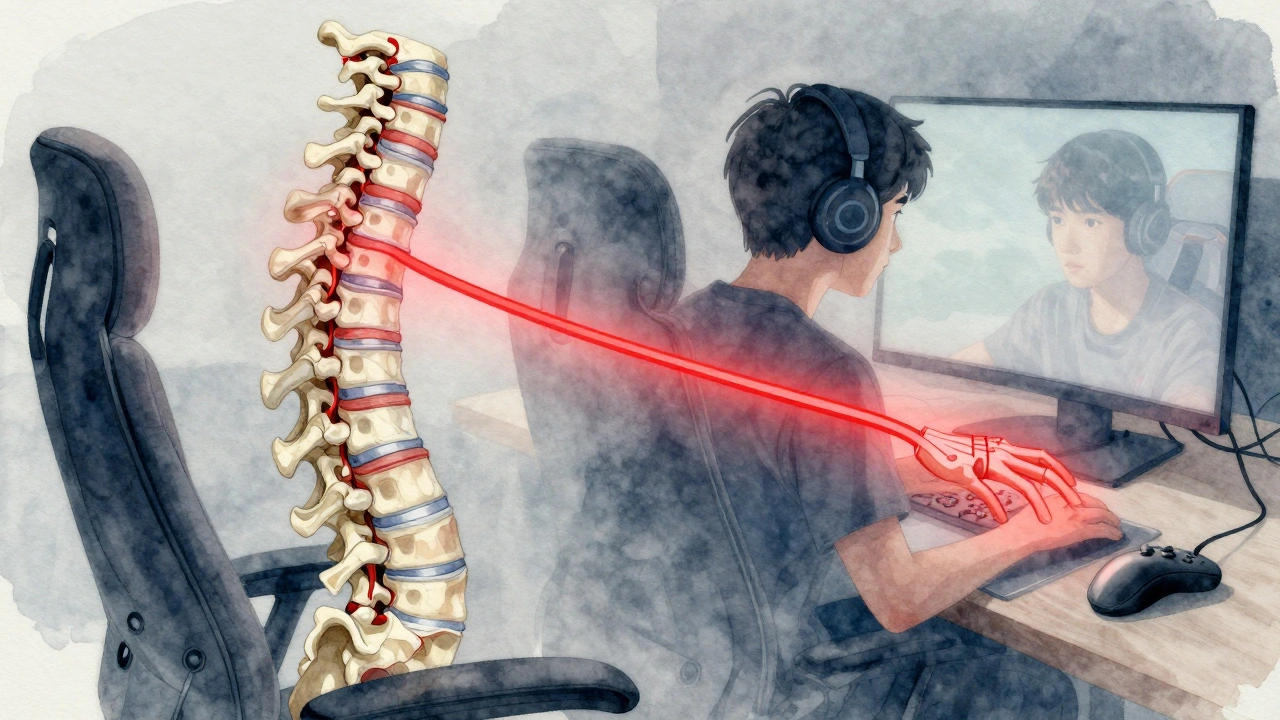
How Gaming Posture Affects Your Shoulders and Arms
While your spine is twisting out of shape, your arms are getting their own punishment. Holding a mouse or controller for hours with your elbows bent at 90 degrees and shoulders hunched creates tension in your rotator cuffs. Your neck muscles tighten to compensate, pulling your shoulders up toward your ears.
This isn’t just "shoulder pain." It leads to thoracic outlet syndrome-a condition where nerves and blood vessels between your collarbone and first rib get pinched. Symptoms include numbness in your fingers, tingling in your arms, and even cold hands. One gamer in his early 20s developed this after playing 8 hours a day for 6 months. He had to stop gaming completely for 3 months and do daily physical therapy to regain feeling in his hands.
Real Fixes That Actually Work
You don’t need to quit gaming. You just need to change how you sit.
- Feet flat on the floor-if your feet dangle, your pelvis tilts, and your lower back loses support. Use a footrest if needed.
- Knees at hip level-this keeps your spine aligned. If your knees are higher than your hips, your lower back flattens.
- Screen at eye level-raise your monitor so the top of the screen is level with your eyes. No more looking down.
- Use a lumbar roll-a rolled towel or a small cushion placed at the small of your back helps restore your natural curve.
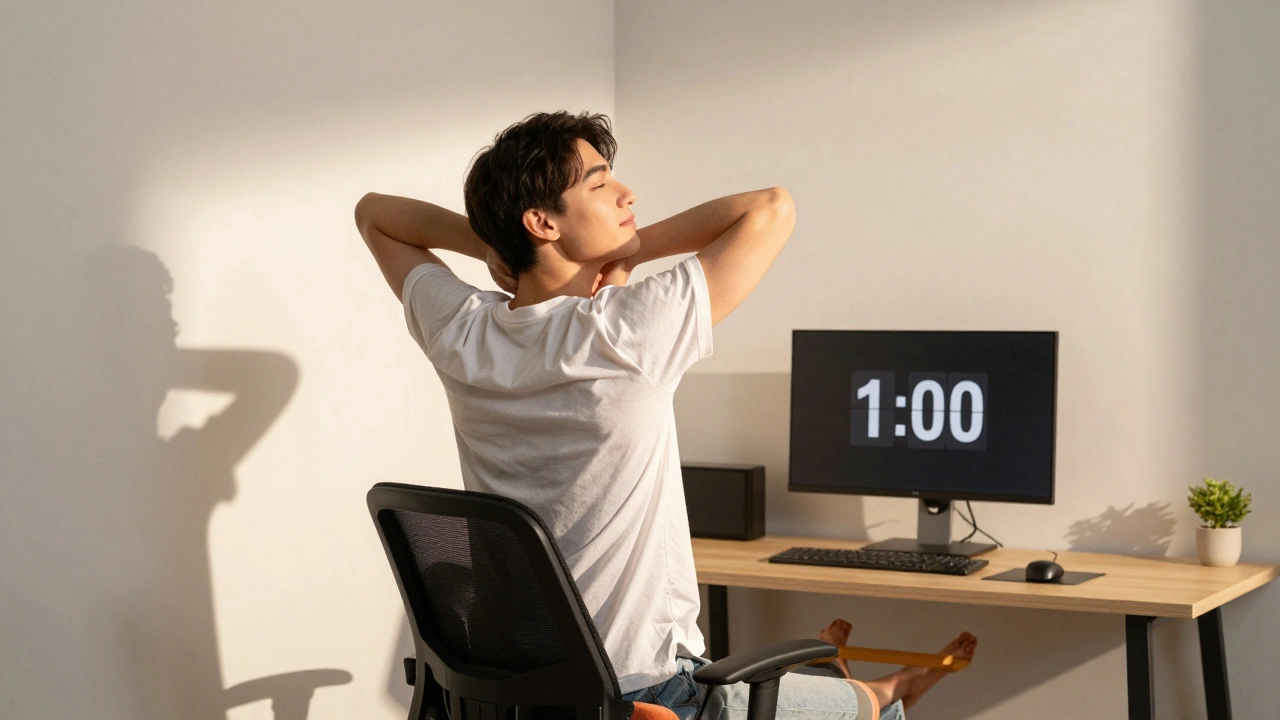
- Take a 5-minute break every hour-stand up, walk around, stretch your neck side to side, roll your shoulders backward 10 times. Set a timer.
One gamer, 19, started using a simple $15 lumbar cushion and set a timer to stand up every hour. Within 3 weeks, his chronic neck pain disappeared. He didn’t change his game time-he just changed his posture.
What About Standing Desks and Ergonomic Gear?
Standing desks aren’t magic. If you stand slouched with your arms out, you’re still stressing your spine. The key is movement. Alternating between sitting and standing every 30 minutes is better than sitting for 4 hours straight. But even standing needs support: your monitor should still be at eye level, and your elbows should be at 90 degrees.
Specialized gaming ergonomic chairs exist, but most are overpriced gimmicks. Look for chairs with adjustable lumbar support, seat depth, and armrests that can be lowered. Brands like Herman Miller or Steelcase have models that work for gaming. But you don’t need to spend $1,000. A $200 chair with real adjustability beats a $600 "gaming" chair with flashing lights and no support.
When to See a Professional
Not every ache needs a doctor. But if you’re experiencing:
- Pain that radiates down your arm or leg
- Numbness or tingling in your hands or feet
- Loss of bladder or bowel control (rare but serious)
- Pain that wakes you up at night
-you need to see a physical therapist or spine specialist. These aren’t "just growing pains." They’re signs of nerve compression or disc issues. Early intervention can prevent permanent damage.
It’s Not Just About Gaming
The habits you build while gaming carry over. Slouching at your desk, hunching over your phone, leaning into your laptop-these all add up. Gaming just makes it worse because of the duration. The same spine that gets damaged from 8 hours of gaming will also hurt from 4 hours of scrolling and 3 hours of working.
Fixing your posture isn’t about being perfect. It’s about awareness. Every time you sit down to play, ask yourself: Is my head balanced over my shoulders? Are my feet flat? Is my lower back supported? If the answer is no, adjust. Then move. Your spine will thank you.