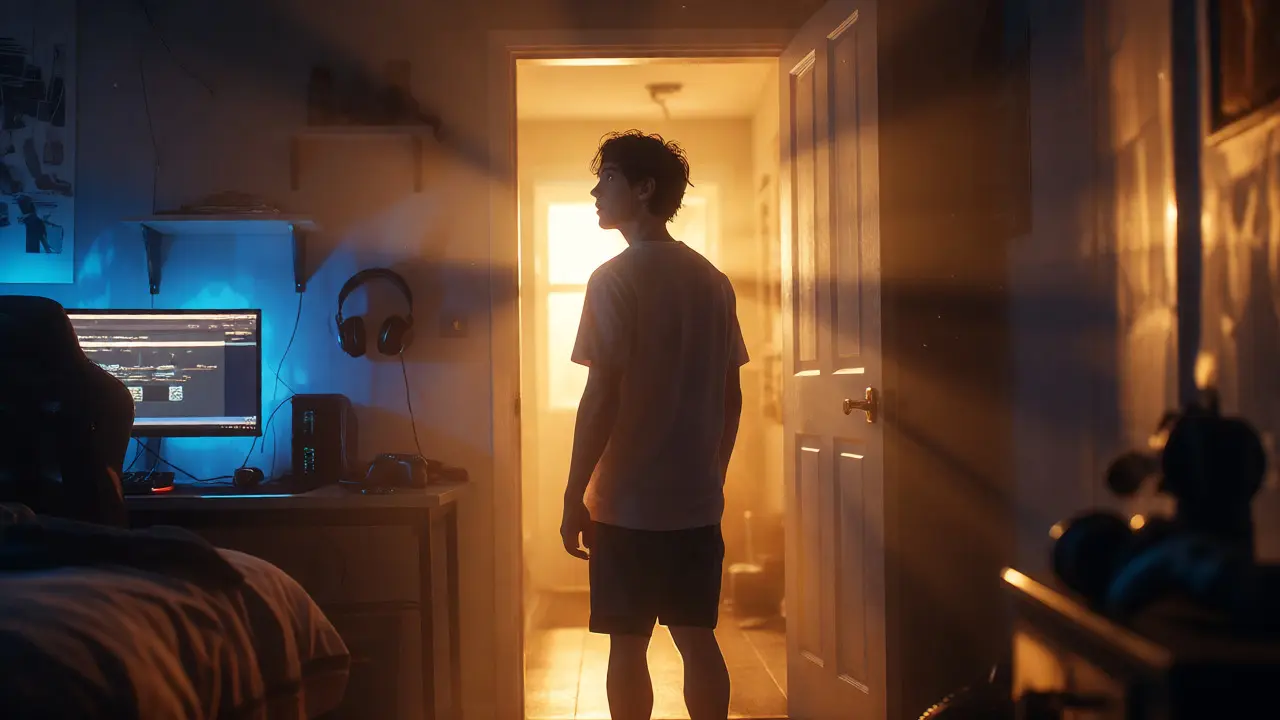
You close the laptop. The fan spins down. The room is quiet-too quiet. You’ve just quit video games, a habit that likely consumed hundreds or thousands of hours of your life. Now you’re standing in the doorway of your actual life, and it feels like you forgot how to speak the language. This isn’t just about missing out on raids or ranked matches; it’s about realizing that the social skills you relied on for years were often mediated by screens, avatars, and chat boxes.
Many people assume that if they played multiplayer online games, they are socially competent. They aren’t wrong, but they are incomplete. Online interaction has rules. It has mute buttons. It has respawns. Real life doesn’t. When you step away from the console or PC, you face a sudden drop in dopamine and a spike in social anxiety. Your brain, wired for instant feedback loops, suddenly finds human conversation slow, ambiguous, and risky. But here is the good news: social skills are not fixed traits. They are muscles. And right now, yours are atrophied, not broken. Here is how you rebuild them, one awkward conversation at a time.
The Dopamine Crash and Why Small Talk Feels Impossible
Video games are engineered to be hyper-stimulating. They provide clear goals, immediate rewards, and constant visual feedback. Human interaction? It’s messy. You might talk for ten minutes and get nothing back but a nod. For a gamer’s brain, this feels like a bug. This phenomenon is often called the dopamine crash. When you remove the high-intensity stimulation of gaming, normal life feels flat by comparison.
This affects your ability to engage in small talk. In games, communication is usually functional: "Enemy spotted," "Heal me," "Push left." It’s efficient. In real life, most conversation is phatic-it’s there to build rapport, not just transfer data. If you try to apply gaming efficiency to a coffee shop chat, you’ll come off as cold or abrupt. You need to retrain your brain to value the "inefficient" parts of talking: the pauses, the laughter, the irrelevant anecdotes.
Expect the first two weeks to feel boring. That’s withdrawal. Don’t interpret boredom as a lack of social skill; interpret it as your baseline resetting. Once the noise stops, you can actually hear what people are saying.
Decoding Non-Verbal Cues You Missed Behind the Screen
In text-based chats or voice comms, you miss 70% of communication. Facial expressions, posture, eye contact, and tone of voice carry the emotional weight of a conversation. Gamers often develop "text-brain," where they analyze words for logical traps rather than reading the room for emotional cues.
To fix this, start observing without participating. Go to a park, a café, or a library. Watch people interact. Look for these specific signals:
- Eye Contact: Is it steady, darting, or avoiding? Avoidance often means discomfort or submission, not necessarily disinterest.
- Open Posture: Are arms crossed? Is the body turned toward or away from the speaker?
- Mirroring: People who like each other subconsciously copy each other’s gestures. If someone leans in when you lean in, you’re connecting.
Try this exercise: Next time you talk to a cashier or a barista, focus entirely on their face, not your order. Notice if they smile with their eyes (a genuine Duchenne smile) or just their mouth. This low-stakes practice helps recalibrate your emotional intelligence without the pressure of maintaining a long conversation.
From Avatar Identity to Authentic Self-Presentation
In games, you curate an identity. You pick the armor, the class, the username. You control how you are perceived. In real life, you have no avatar. You are just you, flaws and all. This vulnerability scares many ex-gamers. They fear that without the "cool factor" of their gaming achievements or guild rank, they have nothing to offer.
You do. But you need to find new hooks. Gaming interests are still valid, but you must translate them into real-world equivalents. Did you enjoy strategy games? You might enjoy board game nights or chess clubs. Did you like RPGs? Try improv comedy or creative writing workshops. These activities bridge the gap between structured fun and open-ended socializing.
Stop trying to impress people with your past gaming stats. Start sharing stories about what you’re learning now. Vulnerability builds connection faster than competence. Saying, "I’m actually pretty bad at remembering names, so bear with me," is more charming than listing your K/D ratio from three years ago.

Practical Steps to Rebuild Conversation Stamina
You don’t need to become a party animal overnight. You need to build stamina. Think of social interaction like running: if you haven’t run in five years, you don’t start with a marathon. You walk around the block.
Here is a progressive overload plan for your social muscles:
- Level 1: Micro-Interactions. Make eye contact and say "Good morning" to neighbors or colleagues. Do not stop to talk. Just acknowledge existence. Goal: Reduce avoidance behavior.
- Level 2: Low-Stakes Questions. Ask a stranger a simple question that requires more than a yes/no answer. "Do you know if this bus stops at Main Street?" Listen to the answer. Say thank you. Walk away. Goal: Practice listening without planning your next line.
- Level 3: Structured Socializing. Join a group activity where the focus is on a task, not on talking. Rock climbing gyms, pottery classes, or volunteer shifts. The shared activity provides natural conversation starters. Goal: Interact while distracted by a task.
- Level 4: Unstructured Hangouts. Invite one friend or acquaintance for coffee. No agenda. If silence happens, let it happen. Goal: Tolerate ambiguity.
Notice the shift from digital to physical. Physical presence forces you to manage your own energy levels. In games, you can rage-quit. In real life, you have to sit through the awkward pause. Embrace it. Awkwardness is just the friction of two separate realities rubbing against each other.
Navigating Friendships and Loneliness
A major hurdle is losing your gaming friends. Often, these relationships were purely digital. When you quit, those connections fade because they lacked a physical or non-gaming foundation. This creates a vacuum of loneliness.
Don’t rush to replace them. Instead, audit your current offline relationships. Who have you neglected? There is likely a cousin, a former colleague, or a neighbor you haven’t spoken to in months. Reach out. Be honest. "Hey, I’ve been cooped up lately and realized I miss catching up. Want to grab lunch?"
Be prepared for rejection. Not everyone will want to hang out. That’s okay. It’s not a reflection of your worth; it’s a reflection of their schedule or interest level. In gaming terms, not every lobby wants you. Move on to the next queue.
Also, beware of "gaming nostalgia" friendships. If you meet up with old gaming buddies just to play games again, you haven’t really quit. Set boundaries. If you meet, go outside. Walk. Eat. Talk about something other than loot boxes.

Handling Overstimulation and Sensory Issues
Real-world environments are loud, bright, and unpredictable. For someone coming from the controlled environment of a headset, a crowded bar can be overwhelming. This sensory overload can trigger irritability or shutdowns, which others might misinterpret as rudeness.
Manage your input. Wear earplugs in noisy places if needed. Choose venues with lower lighting if possible. Have an exit strategy. Knowing you can leave after 30 minutes reduces anxiety. Control gives you confidence.
Furthermore, practice grounding techniques. If you feel overwhelmed, focus on one physical sensation: the temperature of your drink, the texture of the chair. Bring yourself back to the present moment instead of retreating into your head.
| Feature | Gaming Environment | Real-Life Interaction |
|---|---|---|
| Feedback Loop | Immediate (XP, Level Up) | Delayed (Trust builds over time) |
| Communication Style | Directive, Concise | Exploratory, Nuanced |
| Failure Consequence | Low (Respawn, Retry) | Medium (Awkwardness, Lost Opportunity) |
| Identity Control | High (Avatar Customization) | Low (Authentic Self) |
| Social Risk | Mute/Block Button | No Undo Button |
Common Pitfalls to Avoid
One big mistake is trying to compensate for lost gaming time by overscheduling. You fill every evening with events, leaving no time for rest. Burnout kills social progress. Keep some evenings free for solitude. Solitude is different from loneliness. Solitude is recharging; loneliness is craving connection without having it.
Another pitfall is judging others harshly. You might look at people scrolling on their phones at dinner and think, "They’re zombies." Remember, you were one of them six months ago. Empathy is the glue of social rebuilding. Assume everyone is struggling with their own version of digital addiction or social anxiety.
How long does it take to feel comfortable socially again?
There is no fixed timeline, but most people notice significant improvement within 3 to 6 months of consistent practice. The first month is usually the hardest due to dopamine withdrawal. By month three, if you are actively engaging in low-stakes interactions, the anxiety typically decreases as your brain rewires its reward system to appreciate human connection.
What if I have nothing to talk about anymore?
This is common. You spent hours consuming content, so you may feel empty. Start small. Read one article a day, watch one documentary, or try a new hobby. Curiosity fuels conversation. You don’t need to be interesting; you need to be interested. Ask questions about what others are doing, and listen genuinely. People love talking about themselves.
Should I tell my friends I quit gaming?
Yes, but keep it brief. Don’t make it a moral crusade. Simply say, "I’m taking a break from gaming to focus on other things." If they ask why, give a simple reason. Most friends will respect the boundary. If they mock you, it reveals more about their insecurity than your decision.
Is it normal to feel lonely even when surrounded by people?
Absolutely. Digital connections often provided a sense of belonging without the vulnerability of real intimacy. Transitioning to real-life connections requires deeper engagement, which takes effort. Feeling lonely in a crowd is a sign that you crave meaningful interaction, not just proximity. Use that feeling as motivation to deepen one or two key relationships rather than seeking broad approval.
Can I still play games occasionally?
Yes, moderation is key. The goal isn’t total abstinence forever, but breaking the compulsive cycle. If you choose to play, set strict time limits and prioritize playing with real-life friends in person. Treat gaming as a dessert, not the main course. If you find yourself skipping real-life obligations to play, you may need to cut back further.
Your Next Steps
Rebuilding social skills after quitting video games is a journey of rediscovery. You are learning to navigate a world without HUDs, minimaps, or quest markers. It will feel clumsy at first. You will stutter. You will miss jokes. You will feel bored. But slowly, the colors of real life will return. The conversations will become richer. The connections will become deeper.
Start today. Put the controller down. Go outside. Say hello to someone. That’s the only quest that matters right now.