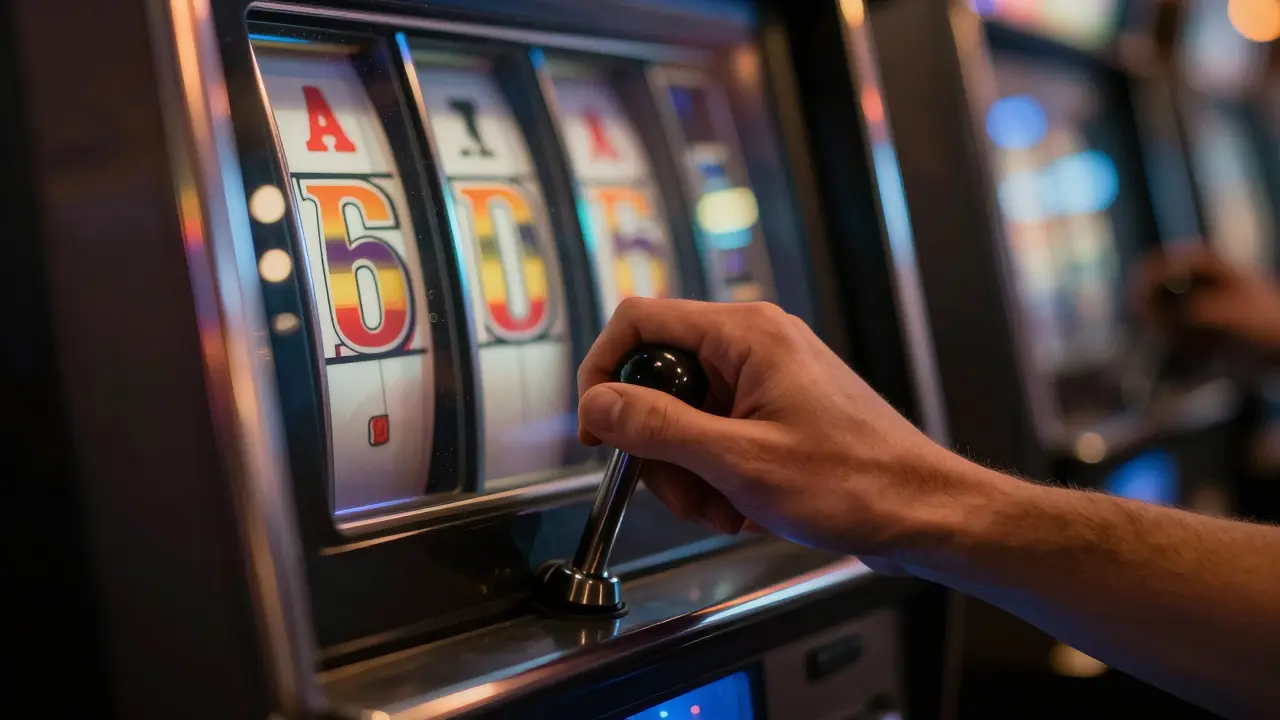
Imagine winning a slot machine. Your heart races, your palms sweat, and for a split second, you feel like the luckiest person on earth. But then the reels stop, and you lose. For most people, that loss is just a loss-a small financial hit and a reason to move on. For problem gamblers, however, that same loss can trigger a surge of excitement almost identical to a win. Why? Because their brains are misfiring a specific chemical signal known as reward prediction error (RPE).
RPE is the brain’s way of calculating surprise. It measures the gap between what you expected to happen and what actually happened. When reality beats expectations, the brain releases dopamine. When it falls short, dopamine drops. In healthy individuals, this system keeps us learning efficiently. In those with gambling disorder, the system becomes distorted, turning uncertainty into a high and making the chase more addictive than the prize itself.
The Neuroscience of Surprise: What Is Reward Prediction Error?
To understand how gambling goes wrong, we first need to look at how learning works. Reward prediction error is a computational concept in neuroscience where neurons adjust their firing rates based on the difference between predicted and actual rewards. This process is heavily mediated by dopamine, a neurotransmitter often misunderstood as just a "pleasure chemical." In reality, dopamine is a teaching signal. It tells your brain which actions were better or worse than expected.
Here is how it plays out in a simple scenario:
- Expectation: You flip a coin expecting heads. Your brain prepares a baseline level of dopamine.
- Outcome A (Win): You get heads. The outcome matches or exceeds expectation. Dopamine spikes slightly above baseline. You learn: "Flipping coins is good."
- Outcome B (Loss): You get tails. The outcome is worse than expected. Dopamine dips below baseline. You learn: "Flipping coins is risky."
In a standard environment, this feedback loop helps you optimize behavior. If you keep losing, dopamine stays low, and you eventually stop flipping the coin. But in a casino, the rules are different. The odds are fixed, but the timing is random. This randomness creates a unique neurological trap.
Why Uncertainty Becomes a Drug for Problem Gamblers
Research using functional magnetic resonance imaging (fMRI) has revealed a striking anomaly in the brains of people with gambling disorder. While healthy controls show a clear distinction between wins and losses, problem gamblers often show increased activation in the ventral striatum-a key reward processing area-even when they lose money.
This suggests that for these individuals, the *uncertainty* of the outcome is the primary driver of the dopamine release, not the monetary value. When the outcome is unknown, the brain anticipates a potential gain. If the gamble is highly volatile (like slots or lottery tickets), the range of possible outcomes is wide. This wide range maximizes the potential RPE signal.
Consider two types of bets:
- Low Volatility: You bet $10 and win $11. The surprise is minimal. The RPE is small.
- High Volatility: You bet $10 and either win $0 or $500. The surprise is massive. The RPE is huge.
Problem gamblers tend to prefer high-volatility games because the neural "high" from the anticipation and the subsequent shock of the result is more intense. Their brains have learned to associate the *variance* of the outcome with reward, rather than the net profit. This is why a near-miss on a slot machine feels so powerful; the brain registers the narrow escape from a total loss as a positive deviation from the worst-case scenario, triggering a dopamine burst similar to a win.
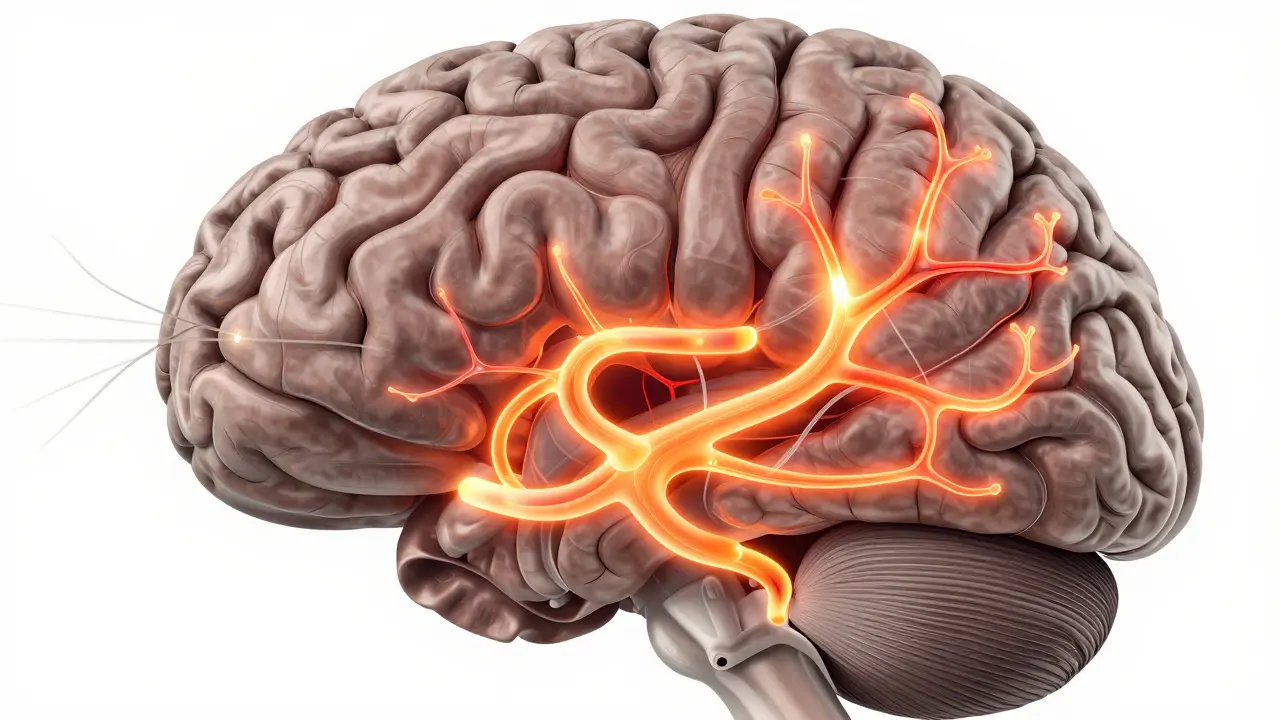
Dopamine Dysregulation and the Role of the Striatum
The core issue lies in how dopaminergic neurons encode value over time. In early stages of gambling, the brain correctly associates the action (pulling the lever) with the reward (money). However, as the habit forms, the association shifts. The cue (the sound of the machine, the visual pattern) starts predicting the reward before the action is even taken.
This shift moves the processing center from the prefrontal cortex (decision-making) to the basal ganglia (habit formation). Specifically, the caudate nucleus and putamen become hyperactive in response to gambling cues. For problem gamblers, the RPE signal becomes decoupled from the actual financial outcome. Even if they are losing money consistently, the unpredictability maintains a baseline level of dopaminergic activity that feels rewarding.
Furthermore, chronic exposure to intermittent reinforcement (winning sometimes, losing mostly) leads to neuroplastic changes. The receptors in the striatum may downregulate, requiring larger surges of dopamine to achieve the same feeling of satisfaction. This tolerance mechanism forces the gambler to increase stakes or frequency to maintain the neural "high," deepening the cycle of debt and compulsion.
Comparing Healthy vs. Compulsive Learning Signals
The difference between a recreational player and a problem gambler isn't just behavioral; it's structural and functional. Below is a comparison of how the two groups process a typical gambling session:
| Feature | Healthy Learner | Problem Gambler |
|---|---|---|
| Primary Driver | Net Monetary Gain/Loss | Uncertainty and Variance |
| Dopamine Response to Loss | Decrease (below baseline) | Minimal decrease or no change |
| Brain Region Activated | Prefrontal Cortex (Control) | Ventral Striatum (Reward/Habit) |
| Near-Miss Reaction | Mild frustration | High arousal, perceived as close to win |
| Long-Term Adaptation | Reduces betting after losses | Increases betting to recover losses |
This table highlights a critical insight: for the problem gambler, the brain treats a loss less as a punishment and more as data point in a complex probability game. The RPE signal doesn't say "stop," it says "try again, the next one might be different."

The Role of Intermittent Reinforcement Schedules
B.F. Skinner’s work on operant conditioning established that behaviors reinforced on an intermittent variable ratio schedule are the hardest to extinguish. Slots machines use exactly this schedule. You don’t know how many pulls it will take to win. This uncertainty maximizes the RPE magnitude.
In a stable environment, if you press a button and get food 100% of the time, your brain quickly predicts the reward. The RPE approaches zero because there is no surprise. Learning stops. But in a casino, the reward is never guaranteed. The brain remains in a state of heightened alertness, constantly updating its predictions. For a problem gambler, this state of perpetual prediction error is chemically addictive. The brain craves the *process* of resolving uncertainty, not just the result.
Implications for Treatment and Intervention
Understanding that RPE is altered in problem gamblers changes how we approach treatment. Traditional cognitive-behavioral therapy (CBT) focuses on changing thought patterns. While effective, it may not fully address the underlying neural miswiring. Emerging treatments aim to target the dopaminergic system directly or retrain the brain’s prediction mechanisms.
One promising avenue is neurofeedback, where patients learn to monitor their own brain activity in real-time. By visualizing the activity in the ventral striatum, they can practice calming the reward response when exposed to gambling cues. Another approach involves pharmacological interventions that modulate dopamine receptor sensitivity, potentially resetting the baseline for RPE calculations.
For families and support networks, recognizing that the gambler is chasing a neurological signal rather than just money can reduce blame. The "chasing