Key Takeaways for a Balanced Setup
- Use a 'Gamified Life' approach to make chores feel like quests.
- Tie high-value gaming sessions to completed real-world milestones.
- Focus on 'intrinsic rewards' (feeling good) rather than just 'extrinsic' (prizes).
- Set hard boundaries using physical timers to avoid the 'just one more turn' trap.
Understanding the Dopamine Loop
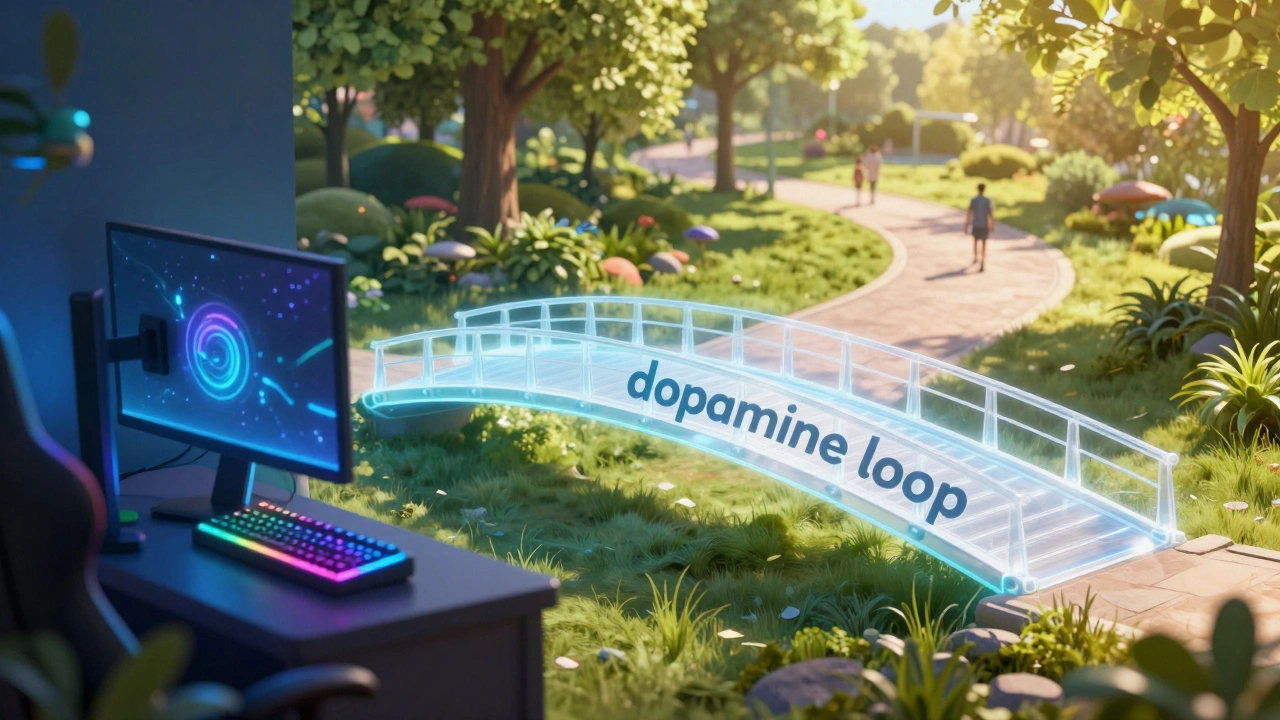
Before you can fix your habits, you have to understand why they're hard to break. Dopamine is a neurotransmitter in the brain that plays a major role in how we feel reward and pleasure. Games use something called a variable ratio schedule-you don't know when the next reward is coming, which makes you keep clicking. When you step away from the screen, the real world feels slow and boring because it doesn't give you a gold star every five minutes.
To build healthy gaming goals, you have to bridge that gap. You aren't trying to quit gaming; you're trying to stop the game from owning your schedule. The goal is to shift your brain from seeking only digital validation to finding value in physical health and mental clarity.
Building Your Real-Life Quest Log
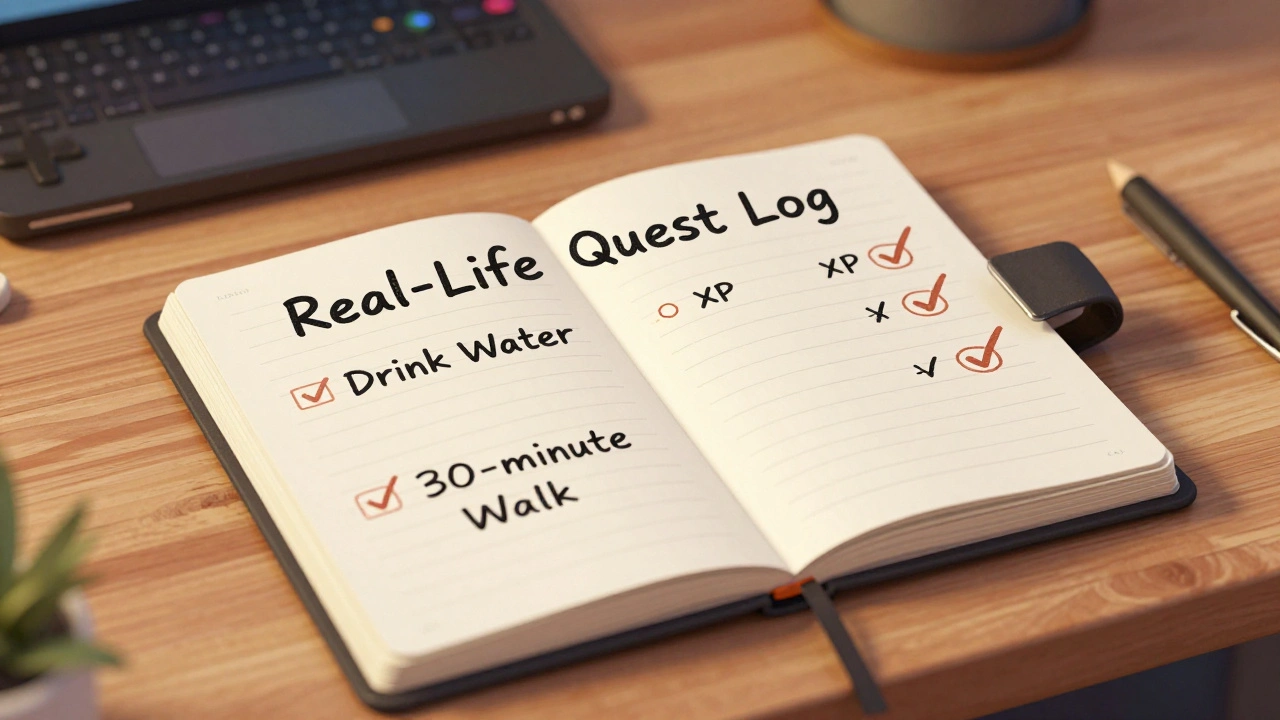
If you love checking off achievements, why not do the same with your day? The trick is to treat your responsibilities as "prerequisites" for your gaming time. Instead of saying "I'll play after I'm done with work," create a concrete quest log.
For example, a "Daily Health Quest" might look like this:
- Drink 64oz of water (+10 XP)
- 30-minute walk outside (+20 XP)
- Clear the dishwasher (+15 XP)
- Read 10 pages of a book (+10 XP)
Once you hit a certain XP threshold-say 55 XP-you unlock a "Gaming Session" reward. This turns the act of procrastination into a strategic game. You're no longer avoiding chores; you're grinding for the right to play your favorite RPG. This method utilizes Positive Reinforcement, which is the addition of a reinforcing stimulus following a behavior that makes it more likely that the behavior will occur again in the future.
Tiered Reward Systems for Long-Term Goals
Not every goal should be rewarded with the same amount of game time. If you reward yourself with four hours of gaming for simply brushing your teeth, you're inflating your reward economy. You need a tiered system that mirrors a game's progression levels.
| Tier | Effort Required (Example) | Reward (Gaming Access) |
|---|---|---|
| Common | Daily chores, 20-min exercise | 1 Hour of Casual Play |
| Rare | Completing a work project, gym session | 2 Hours of Focused Gaming |
| Epic | Weekly goal met, deep cleaning house | An all-night gaming session (Weekend) |
| Legendary | Month-long habit streak (e.g., 30 days of gym) | New game purchase or hardware upgrade |
By categorizing rewards, you prevent burnout and keep the incentive high. If you always treat every small win as a huge victory, the gaming reward loses its value. When you finally hit that "Legendary" tier, the feeling of accomplishment is genuine because it's backed by actual effort.
Combatting the "Just One More Turn" Syndrome
We've all been there. It's 11 PM, you're almost done with a match of League of Legends or a turn in Civilization, and suddenly it's 3 AM. This is where biological clocks clash with game design.
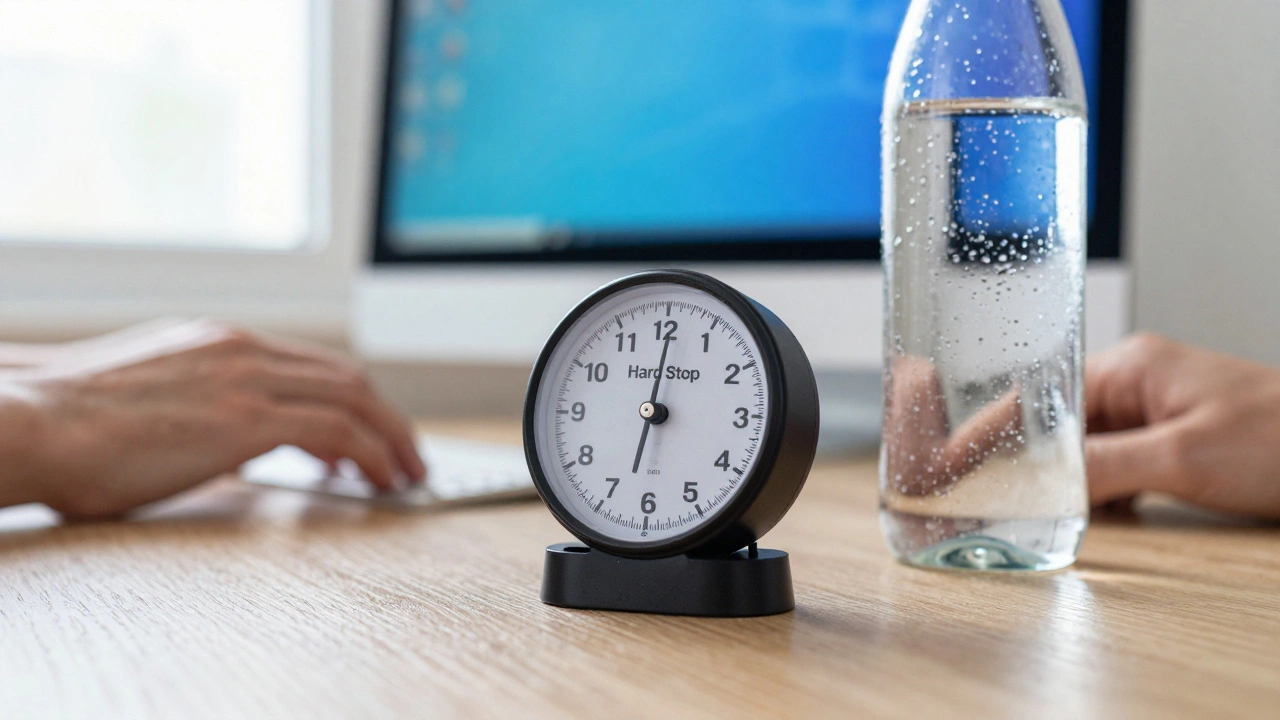
To stop this, implement a "Hard Stop" mechanism. Using a digital alarm is often too easy to ignore-you just hit snooze. Instead, use a physical Pomodoro Timer or a mechanical kitchen timer placed across the room. This forces you to physically stand up and move to turn off the alarm, breaking the hypnotic spell of the screen.
Once you're standing, ask yourself: "Am I actually enjoying this, or am I just trying to finish the loop?" Often, we keep playing not because it's fun, but because we're chasing the feeling of completion. Recognizing this allows you to step away without feeling like you're missing out.
Physical Health as a Gaming Buff
Think of your body as your primary character. If your "stats" are low-meaning you're dehydrated, sleep-deprived, or stiff from sitting-your in-game performance actually drops. Reaction times slow down, and decision-making becomes sluggish.
Integrate "Physical Buffs" into your rewards. For every hour of gaming, commit to a five-minute "stretch break." Focus on your wrists, neck, and lower back. This isn't just about health; it's about maintaining the longevity of your hobby. Carpal Tunnel Syndrome is a condition where the median nerve is compressed as it passes through the wrist, and it can permanently end a gaming career if ignored.
Try a rule where you can only unlock your next gaming session after a "hydration check." If your water bottle is full and you've drank it, you're clear to play. This simple link ensures that your basic biological needs aren't sacrificed for a digital achievement.
Dealing with Relapses and "Binge Days"
You will fail sometimes. You'll skip your workout and spend twelve hours in a virtual world. The mistake most people make is the "all-or-nothing" mentality. They think, "I've already ruined my day, so I might as well keep going." This is a cognitive distortion.
Instead, treat a binge day as a "debuff" period. You don't need to punish yourself, but you do need to recalibrate. The next day, increase the requirements for your rewards slightly. Maybe instead of 55 XP for gaming, you need 70 XP. This creates a natural incentive to get back on track without the crushing guilt that usually leads to more avoidant gaming.
Remember, the goal isn't perfection; it's a sustainable relationship with your hobby. If you find that you cannot stop gaming even with these systems, it might be time to look into Cognitive Behavioral Therapy, which is a type of psychological treatment that helps people identify and change destructive thought patterns. Professional help isn't a sign of failure; it's a strategic upgrade to your mental health.
What if I don't feel motivated to do real-life chores?
Start smaller than you think. If 55 XP feels like too much, start with a "Tutorial Level." Only require one simple task-like making your bed-before you can play for 30 minutes. Once your brain associates the task with the reward, you can slowly increase the difficulty.
How do I handle gaming with friends who don't have boundaries?
Be transparent about your goals. Tell your group, "I'm hopping on for two hours, then I have to head out." By setting the expectation early, you're less likely to be swayed by "just one more game" requests. Most friends will actually respect the discipline.
Can I use gaming as a reward for studying?
Yes, but be careful with the timing. Avoid gaming immediately before a big test or sleep, as the high stimulation can make it hard to focus or wind down. Use it as a "Final Boss" reward at the end of a long study block.
What are some non-gaming rewards I can use?
Try rewards that promote different types of dopamine. A favorite snack, a walk in a park, or a social outing with friends. Diversifying your rewards prevents you from becoming overly dependent on screens for happiness.
How do I track my XP and rewards without it becoming another chore?
Keep it analog. A simple whiteboard or a notebook on your desk works best. Avoid using an app on your phone if possible, as the act of opening your phone often leads to distractions like social media, which defeats the purpose of the system.
Next Steps for Implementation
If you're ready to start, don't try to implement every tier and quest today. That's a recipe for burnout. Instead, choose three "Common" tasks you'll do tomorrow. Decide exactly how much gaming time those tasks earn you, and stick to it for one week.
If you find yourself struggling to stick to the plan, check your environment. Is your console right in front of you? Maybe move the controller to a different room until the tasks are done. The more "friction" you add between yourself and the game, the easier it is to prioritize your health. Once you feel the physical and mental benefits of a balanced life, the gaming sessions will actually feel more rewarding because you've truly earned them.