
You just finished a focused work session. You feel good. So you open a mobile game for "five minutes" to celebrate. Two hours later, you’re still tapping the screen, eyes glazed, wondering where your evening went. Sound familiar? This isn't a lack of willpower. It’s a design flaw in how we reward ourselves.
Most people treat rewards as a simple transaction: do hard thing, get fun thing. But if that fun thing is engineered by billion-dollar companies to be addictive, you aren't rewarding yourself-you're feeding a loop. The goal here isn't to ban fun or live like a monk. It’s to build reward systems that give you genuine satisfaction without hijacking your brain's dopamine pathways.
The Dopamine Trap in Modern Rewards
Your brain doesn't distinguish between earning money and getting a loot box drop. Both trigger a release of dopamine, a neurotransmitter associated with motivation and pleasure. In the wild, this kept us hunting and gathering. Today, tech companies exploit this system. They use variable ratio reinforcement-the same psychological trick used in slot machines-to keep you engaged. If every pull of the lever gave you ten dollars, you'd stop when you were full. But because the payout is random, you keep pulling, hoping for the jackpot.
When you use video games, social media scrolls, or even certain productivity apps as rewards, you are often engaging with these high-velocity, low-satisfaction triggers. The problem isn't the activity itself; it's the intensity of the stimulus compared to the effort required to start it. A quick scroll on Instagram gives a higher dopamine hit per second than reading a book. Your brain, being an efficiency machine, chooses the path of least resistance. Over time, this raises your baseline threshold for stimulation, making normal life feel boring and making it harder to focus on tasks that require delayed gratification.
Auditing Your Current Reward Loop
Before you can fix the system, you need to see it clearly. Most people operate on autopilot, reaching for their phone the moment a task ends. To break this, you need to audit what actually works versus what just numbs you.
Try this for three days: Keep a simple log. When you finish a task, write down what you did next and how you felt five minutes later. Did you feel rested? Energized? Or did you feel guilty, anxious, or strangely empty? Often, we mistake relief from boredom for true rest. If your "reward" leaves you feeling more drained than before, it’s likely triggering a gaming urge rather than providing recovery.
| Reward Type | Dopamine Profile | Recovery Effect | Gaming Risk |
|---|---|---|---|
| Mobile Games | High spike, rapid decay | Mental fatigue | Very High |
| Social Media Scroll | Variable spikes, infinite feed | Attention fragmentation | High |
| Walking Outside | Slow, steady release | Restorative | Low |
| Cooking a Meal | Delayed, deep satisfaction | Mindful engagement | Low |
Designing Friction-Based Rewards
If you want to avoid the trap, you need to introduce friction. Not the bad kind that stops you from working, but the good kind that prevents accidental binging. High-risk rewards should require effort to access. If playing a video game requires you to plug in a console, find the controller, and load up, that’s friction. If it’s just opening an app on your home screen, that’s zero friction.
One effective strategy is the "Physical Barrier" method. Keep your gaming devices in another room or in a drawer. If you want to play, you have to get up and go get them. This small pause allows your prefrontal cortex-the part of your brain responsible for decision-making-to catch up with your impulses. Often, the urge passes during those few seconds of movement.
Another tactic is time-boxing with hard stops. Use a physical timer, not a phone alarm. Set it for 15 minutes. When it rings, you stop. No "one more level." This trains your brain to associate the reward with completion, not endless continuation. It turns a potentially all-consuming activity into a defined event.
Shifting to Somatic and Creative Rewards
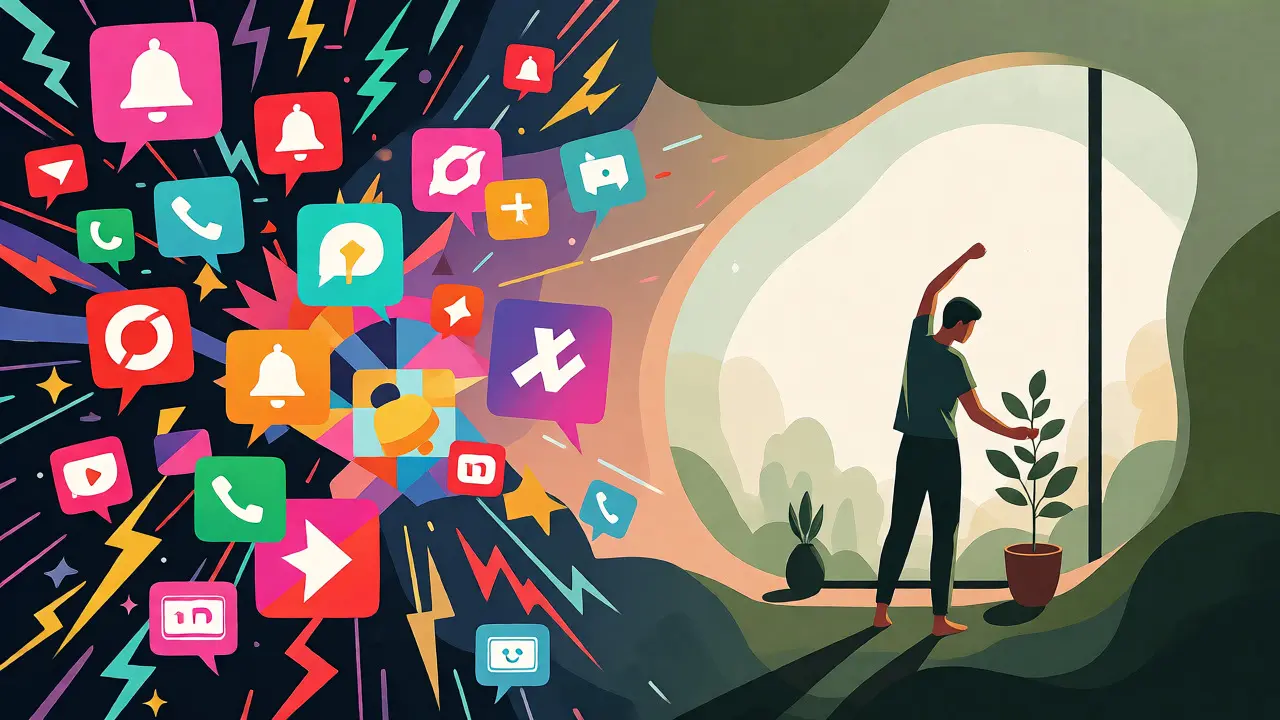
The most sustainable rewards engage your body or creativity rather than just your visual cortex. These are called somatic or active rewards. They provide a sense of agency and tangible progress, which combats the helplessness often felt after passive consumption.
Consider swapping digital breaks for physical ones. Stretching, doing push-ups, or simply standing by a window looking at distant objects helps reset your visual system and reduces eye strain. These activities don't trigger the same compulsive loops because they have natural endpoints. You can only stretch so far. You can only do so many pushups before you’re tired. The feedback loop is immediate and honest.
Creative micro-habits also work well. Sketching for ten minutes, writing a few journal entries, or tending to houseplants provides a sense of care and creation. Unlike gaming, where you consume content, here you produce something. This shift from consumer to creator changes the neurochemical signature of the reward. It feels less like a hit and more like nourishment.
The Role of Social Connection
Loneliness is a major driver of gaming urges. Many online games offer a sense of community and achievement that real life sometimes lacks. If you isolate yourself while working, your brain craves connection. Replacing gaming with meaningful social interaction can reduce the urge significantly.
This doesn't mean you need a party. A brief chat with a colleague, calling a friend, or even interacting with a barista can satisfy the social hunger. However, be careful with digital communication. Texting can easily slide into scrolling. Voice calls or face-to-face interactions are safer bets because they require presence and attention, preventing the mindless drift into other tabs.

Implementing the "Earned Rest" Protocol
To make these changes stick, structure your day around earned rest rather than stolen leisure. Define clear boundaries between work blocks and reward blocks. During work, eliminate distractions. During rest, commit fully to the chosen activity.
- Pre-commit: Decide what your reward will be before you start working. If you decide afterwards, you’ll pick the easiest option (usually your phone).
- Environment Design: Make healthy rewards easy (keep walking shoes by the door) and unhealthy ones hard (uninstall the game app).
- Reflect: After your reward period, take ten seconds to notice how you feel. Reinforce the positive feelings of true rest.
This protocol relies on intentionality. By planning ahead, you remove the decision fatigue that often leads to defaulting to high-dopamine traps. You are taking control of your dopamine economy, spending it on things that actually pay off in energy and mood.
Troubleshooting Common Pitfalls
You might slip up. That’s normal. The key is not to spiral into guilt, which often triggers more seeking behavior. If you binge, acknowledge it, analyze what triggered it (stress? boredom? hunger?), and adjust your environment accordingly.
Also, beware of "replacement addiction." Sometimes, people swap video games for another high-stimulation activity, like binge-watching TV shows or eating sugary snacks. The mechanism is similar. Always ask: "Is this activity restoring me or draining me?" If it drains you, it’s not a reward; it’s a pacifier.
Why do I feel worse after playing video games?
Video games often provide high-frequency, low-quality dopamine hits. While pleasurable in the moment, they can lead to mental fatigue and a subsequent crash. Additionally, if you feel guilty about the time spent, the negative emotion overrides the initial pleasure, leaving you feeling drained rather than rested.
Are all games bad for recovery?
No. Some games, particularly slower-paced narrative or puzzle games, can be relaxing. The issue arises with highly competitive, multiplayer, or loot-box-driven games that encourage continuous play. If you can set a timer and stop when it goes off, the game is likely serving as a healthy hobby rather than an addiction trigger.
How long does it take to reset my dopamine baseline?
Research suggests that reducing high-stimulation inputs can begin to lower your tolerance within two weeks. However, significant changes in neural pathways may take several months of consistent practice. Be patient and focus on gradual reductions rather than cold-turkey bans.
What is a good alternative to phone scrolling?
Good alternatives include reading a physical book, taking a short walk, practicing mindfulness meditation, or engaging in a hands-on hobby like drawing or cooking. These activities engage different parts of the brain and provide restorative effects without the compulsive loop of infinite feeds.
Can productivity apps become addictive too?
Yes. Apps that use gamification elements like streaks, badges, and points can trigger similar dopamine responses. If checking your productivity stats becomes a compulsion that distracts you from actual work, it has crossed the line from tool to trap.