
Imagine a teenager sitting in a classroom, heart racing, unable to focus because of anxiety spiking from home issues. Or picture a student who just lost a parent and doesn't know where to turn for immediate emotional support. For many young people, the school building is the only place they feel safe enough to ask for help. School-Based Crisis Services are designed exactly for these moments. They act as a critical safety net, connecting students with mental health professionals directly within their educational environment.
You might wonder why schools are taking on this role. Isn't therapy supposed to happen at a private clinic? The reality is that access is often the biggest barrier. Transportation costs, insurance gaps, and long waitlists keep many families away from traditional providers. By embedding support into the school day, we remove those hurdles. This approach isn't about turning teachers into therapists; it's about creating a structured pathway for care that meets kids where they already spend most of their time.
What Exactly Are School-Based Crisis Services?
At its core, this model integrates mental health resources into the daily operations of a school. It’s not just about having a counselor available during lunch breaks. A robust system includes trained staff, clear protocols for emergencies, and partnerships with local community health organizations. When a student faces an acute crisis-like suicidal ideation, severe trauma, or panic attacks-the response needs to be immediate and coordinated.
These services typically operate on two levels: universal prevention and targeted intervention. Universal prevention involves teaching all students coping skills and emotional regulation through curriculum. Targeted intervention focuses on specific students identified as high-risk. Think of it like a triage system in a hospital. Not everyone needs the same level of care, but everyone gets screened and supported based on their needs.
The goal is stability. If a student feels overwhelmed, they shouldn't have to miss class to see a therapist across town. Instead, they step out for thirty minutes, speak with a licensed professional, and return to learning. This minimizes academic disruption while maximizing emotional recovery.
Why Traditional Models Often Fail Students
Let’s look at the numbers. According to recent data from the National Alliance on Mental Illness, nearly half of all lifetime mental illness begins by age 14. Yet, the average delay between symptom onset and treatment is eleven years. That’s a massive gap. Why does it exist? Mostly due to logistical friction. Parents work full-time jobs. Kids have sports or homework. Finding a slot for a weekly appointment can feel impossible.
Traditional Therapy requires transportation, scheduling flexibility, and often upfront payment or complex insurance verification. For low-income families, these barriers are insurmountable. Even middle-class families struggle with the time commitment. School-based services bypass these issues entirely. The provider comes to the student. The session happens during the school day. There’s no driving, no waiting rooms, and usually no cost to the family if covered by Medicaid or school grants.
Furthermore, stigma plays a huge role. Walking into a mental health clinic can feel exposing for a teenager. Walking into a counselor’s office inside their own school feels normal. It’s part of the routine. This subtle shift in context makes it easier for hesitant students to engage with help.
The Key Players in the Support System
Who actually provides this help? It’s rarely just one person. Effective crisis response relies on a team. Understanding who does what helps clarify how the system works.
| Role | Primary Responsibility | Typical Qualifications |
|---|---|---|
| School Counselor | General guidance, short-term counseling, academic support | Master’s degree in Counseling |
| School Psychologist | Assessments, crisis evaluation, behavioral plans | Specialist or Doctoral degree |
| Social Worker | Family outreach, resource connection, case management | Licensed Clinical Social Worker (LCSW) |
| Community Partner | Long-term therapy, specialized psychiatric care | Licensed Therapist/Psychiatrist |
School counselors are your first line of defense. They handle everyday stressors and identify red flags. But when a situation escalates, school psychologists step in. They are trained to assess risk levels quickly. Is this student safe? Do they need immediate hospitalization? These decisions require clinical expertise beyond general counseling.
Social workers bridge the gap between school and home. They talk to parents, check on housing stability, and connect families with food banks or legal aid. Sometimes, the crisis isn’t just emotional-it’s practical. A kid acting out might be hungry or facing eviction. Social workers address the root causes.
Finally, community partners provide depth. If a student needs weekly trauma-focused cognitive behavioral therapy, the school might contract with a local nonprofit to provide that service on-site. This partnership model ensures students get specialized care without leaving campus.
How the Process Works in Practice
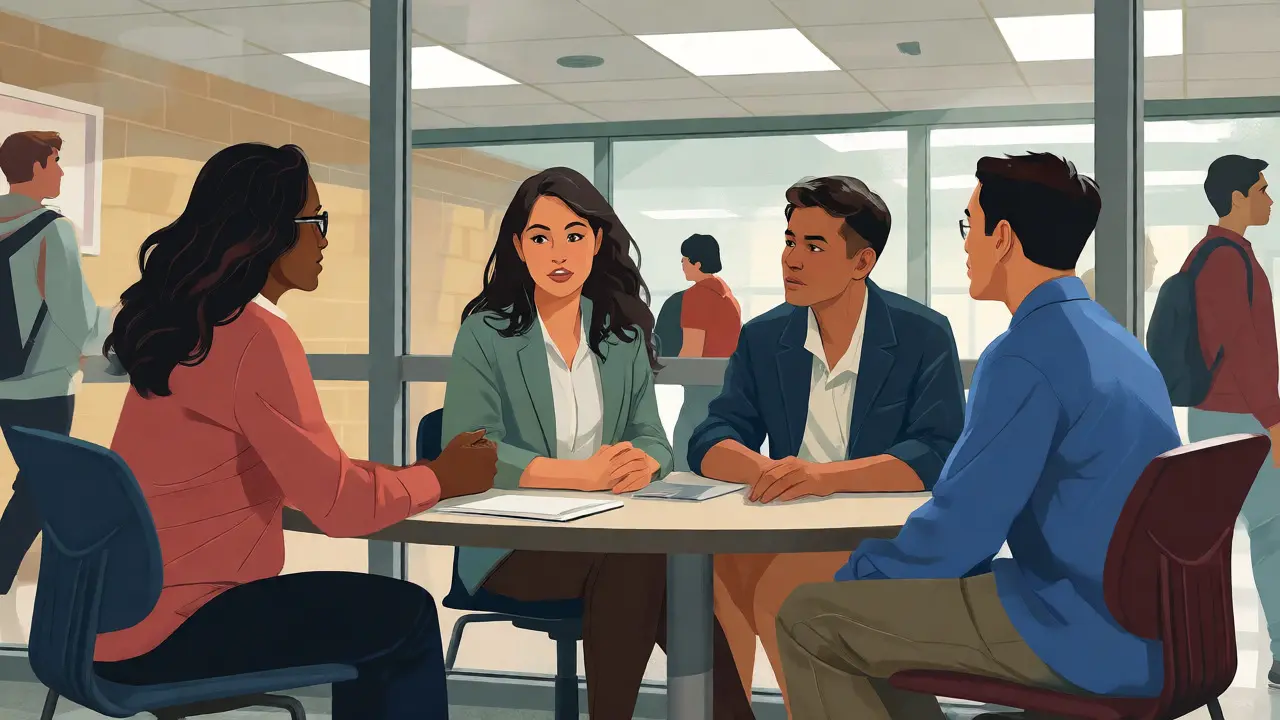
So, what happens when a student is in crisis? Let’s walk through a typical scenario. Sarah, a tenth-grader, stops coming to class. Her teacher notices she’s withdrawn and tearful. The teacher flags this concern to the front office. Within an hour, a counselor speaks with Sarah.
During this initial conversation, the counselor uses active listening techniques. They don’t jump to advice. They ask open-ended questions: "What’s been weighing on you lately?" If Sarah mentions feeling hopeless, the counselor initiates a risk assessment. This is a standardized tool used to determine the severity of suicidal thoughts or self-harm risks.
If the risk is low, the counselor schedules follow-up sessions. If the risk is moderate, they might involve the school psychologist for a deeper evaluation. If the risk is high-meaning Sarah has a plan and intent-the school activates its emergency protocol. This could mean calling 988 (the Suicide & Crisis Lifeline) or arranging transport to an emergency room.
Throughout this process, communication with parents is vital. Schools must balance confidentiality laws with parental rights. Generally, parents are notified unless there’s a specific legal reason not to. Transparency builds trust. Families need to know their child is being taken seriously.
Benefits Beyond the Immediate Crisis
Crisis services do more than stop a meltdown. They change the culture of the school. When students see that mental health is treated with the same urgency as a broken arm, they become more willing to seek help early. Prevention becomes possible because problems are caught before they explode.
Academic performance improves too. A student who feels emotionally stable can concentrate better. Attendance rates rise because fewer students miss school due to unaddressed anxiety or depression. Teachers report fewer disruptive behaviors in classrooms, allowing them to teach rather than manage constant conflicts.
There’s also a ripple effect on peer relationships. Group counseling sessions, often facilitated by social workers, teach empathy and conflict resolution. Students learn to support each other. This creates a healthier social environment, reducing bullying and isolation.

Challenges and Realistic Expectations
It’s not perfect. Funding is always tight. Many schools rely on temporary grants to hire additional staff. When those grants end, positions might disappear. This instability can disrupt continuity of care. A student might build a relationship with a therapist, only for that person to leave mid-year.
Burnout among school staff is another real issue. Teachers aren’t therapists, yet they often absorb the emotional weight of student struggles. Without proper training and boundaries, educators can feel overwhelmed. Professional development on trauma-informed practices helps, but it’s not a cure-all.
Privacy concerns also linger. Some parents worry that sharing information with school staff will label their child. Clear policies on data sharing and consent are essential. Schools must demonstrate that records are secure and used only for support purposes.
How Parents Can Advocate for Their Child
If you’re a parent, you play a crucial role. Don’t wait for a crisis to start conversations. Ask your child’s school about their crisis response plan. Who do they call? What are the hours of operation? Knowing these details ahead of time reduces panic when something goes wrong.
Stay engaged with the support team. Attend meetings if invited. Share relevant history with counselors-medical diagnoses, family changes, previous treatments. The more context they have, the better they can tailor their approach. Remember, they are partners in your child’s well-being, not adversaries.
Encourage your child to use these resources. Normalize asking for help. Say things like, "It’s okay to talk to someone when you’re stressed." Your attitude sets the tone. If you view mental health care as essential, your child likely will too.
Do school-based crisis services cost money?
Most basic services provided by school counselors, psychologists, and social workers are free for students enrolled in public schools. However, specialized long-term therapy provided by community partners might involve sliding scale fees or insurance billing. Always check with the specific school district for their policy.
Will my child’s grades suffer if they attend counseling during school hours?
Usually, no. Sessions are scheduled strategically to minimize missed instruction. In fact, addressing mental health issues often leads to improved focus and attendance, which can boost grades over time. Schools aim to balance emotional support with academic continuity.
Is everything my child says to the school counselor confidential?
Generally, yes, with exceptions. Counselors maintain confidentiality unless there is a risk of harm to self or others, abuse/neglect suspicions, or court orders. Parents should review the specific consent forms signed at enrollment to understand local privacy laws.
What happens if a student needs more help than the school can provide?
The school acts as a referral hub. Staff will connect the family with external specialists, such as psychiatrists or intensive outpatient programs. Social workers often assist with navigating insurance and scheduling these external appointments to ensure a smooth transition.
Are teachers trained to handle crises?
Teachers receive basic training in recognizing warning signs and de-escalation techniques. They are not expected to provide therapy. Their role is to observe, report concerns to qualified staff, and maintain a supportive classroom environment until professional help arrives.