
Imagine you’re a game developer in Cape Town. You’ve built a hit mobile title with cosmetic skins and energy systems. You’re ready to launch globally, but one question looms large: will the South African regulator classify your game as a "gamble"? If yes, your launch date slips by six months while you wait for a license. This isn't hypothetical; it's the daily reality for studios navigating South Africa’s regulatory framework is a complex mix of provincial gambling laws and emerging digital asset rules that directly impacts how games can make money.
The core tension lies in the definition of "skill" versus "chance." For years, this distinction was blurry. But as the market matures, the lines are getting sharper. Understanding these lines isn't just legal homework; it determines whether your monetization strategy survives or gets shut down.
The Legal Landscape: Who Holds the Power?
In South Africa, gaming regulation isn't centralized under a single federal agency like in some other countries. Instead, it’s fragmented across nine provinces. Each province has its own Gambling Board and specific legislation. However, they all operate under the umbrella of the National Gambling Act of 2004. This act defines what constitutes gambling: wagering on an event where the outcome depends on chance, skill, or a combination of both, with the expectation of winning something of value.
For digital games, the key player is the National Gambling Board (NGB) is the national oversight body that coordinates policy and advises provinces on new forms of gambling, including online and mobile platforms. While the NGB doesn't issue licenses directly to most commercial operators (that’s done provincially), it sets the tone. If the NGB signals that a certain mechanic looks too much like a lottery, provincial boards tend to follow suit.
There is also the role of the Competition Commission of South Africa (CCSA). In recent years, the CCSA has started looking at how big tech companies dominate app stores and payment processing. If your game relies heavily on third-party payments that might be seen as anti-competitive, you could face scrutiny here too. It’s a two-front battle: one against gambling regulators, and one against competition authorities.
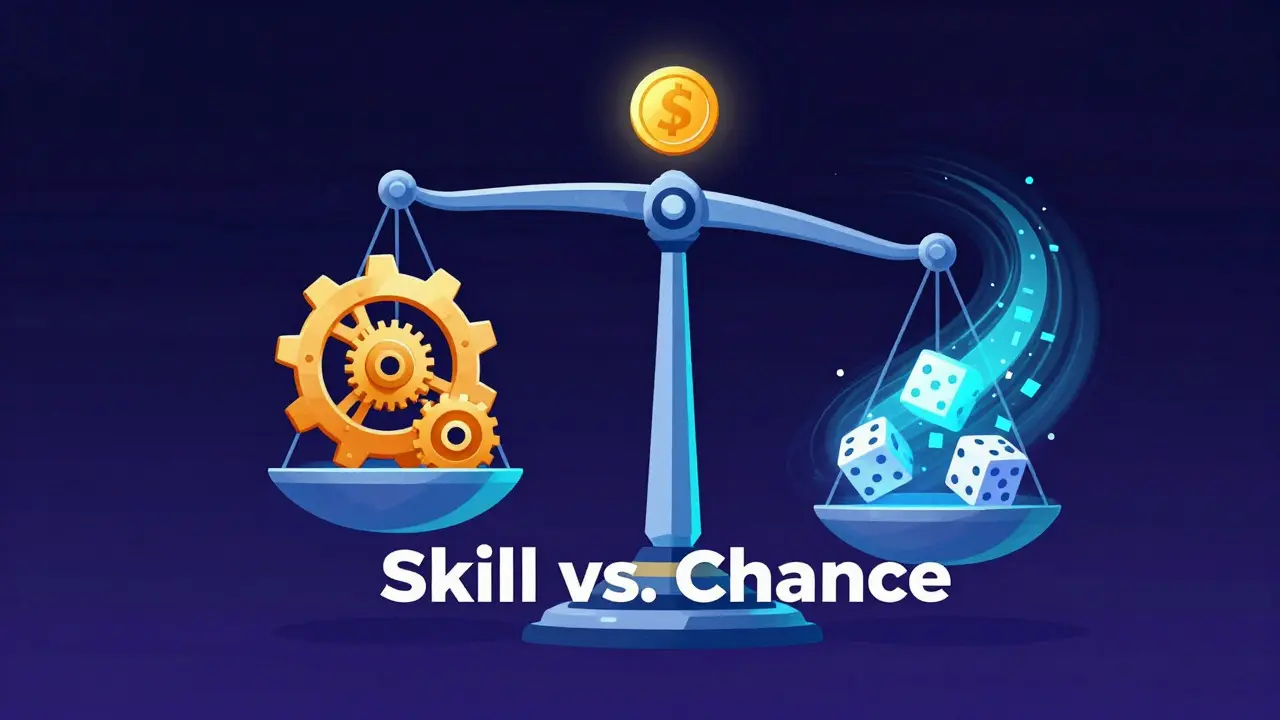
Defining the Line: Skill vs. Chance
This is the heart of the matter. The law says if skill predominates over chance, it’s not gambling. So, how do regulators measure "predominance"? There is no simple formula, but there are established heuristics used by legal experts and compliance officers.
- Player Agency: Does the player have meaningful choices that affect the outcome? In a pure slot machine, the answer is no. In a poker game, the answer is yes.
- Probability Distribution: How random is the outcome? If 90% of the result depends on a random number generator (RNG) and only 10% on player input, regulators lean toward classifying it as chance-based.
- Value of Prize: Is the prize cashable? Can it be converted to real-world currency easily? If yes, the scrutiny increases.
Let’s look at a concrete example. Consider a popular mobile puzzle game. Players pay coins to open "boxes" containing random stickers. Some stickers are rare. Can players sell these stickers to other players for real money? If yes, it’s often treated as a form of secondary market gambling. If the stickers are purely cosmetic and non-transferable, it’s generally considered safe entertainment. The difference is subtle but legally critical.
Monetization Models Under Scrutiny
Not all ways of making money from games are created equal in the eyes of the law. Here is how different models stack up against current regulatory trends in South Africa.
| Model | Risk Level | Regulatory View | Compliance Requirement |
|---|---|---|---|
| Premium Buy-to-Play | Low | Standard software sale | None specific to gambling |
| Cosmetic Skins (Non-Cashable) | Low | Entertainment product | Clear disclosure of odds if randomized |
| Loot Boxes (Cashable/Transferable) | High | Potential gambling mechanism | Provincial License + Odds Disclosure |
| Battle Passes | Medium | Hybrid model; depends on rewards | Review reward structure for chance elements |
| In-Game Betting | Very High | Explicit gambling | Full Gambling License + Age Verification |
The "Loot Box" row is where most developers get stuck. Since the Belgian Court of Arbitration ruled in favor of stricter controls in 2018, global standards have tightened. South Africa hasn't passed a specific "loot box law," but provincial boards have been issuing guidance notes suggesting that if the contents of a box have inherent monetary value or can be traded, they fall under gambling regulations. This means you need to disclose the probability of dropping each item, just like a casino must display jackpot odds.
The Role of Data Privacy and Payments
You can’t talk about monetization without talking about data. To process payments and verify age (a requirement for any gambling-adjacent product), you need user data. This brings in the Protection of Personal Information Act (POPIA). POPIA is South Africa’s version of GDPR, and it’s strict. You need explicit consent to collect biometric data or sensitive financial info. More importantly, you need to ensure that your data processors (like Stripe or local banks) are compliant.
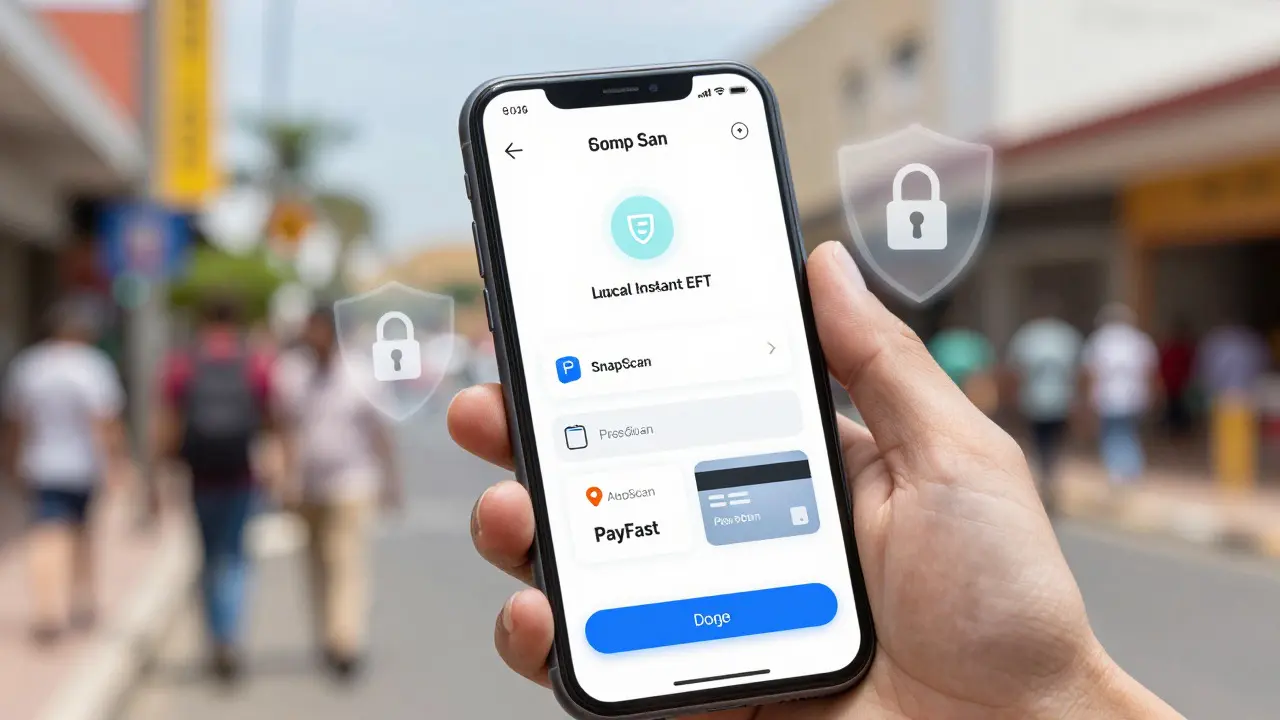
Payment processing is another hurdle. While credit cards and PayPal are common, many South African players prefer instant EFT (Electronic Funds Transfer) via apps like SnapScan or PayFast. Integrating these local payment gateways is crucial for conversion rates, but it also adds a layer of compliance. These providers often have their own terms regarding high-risk transactions. If your game is flagged as "high risk" by a payment processor due to its monetization model, fees can spike or accounts can be frozen. Proactive communication with payment partners about your regulatory status can prevent these headaches.
Practical Steps for Compliance
If you’re planning to launch or update a game in South Africa, don’t wait for a fine to teach you the rules. Here is a practical checklist to keep you on the right side of the law.
- Audit Your Mechanics: Map out every instance where randomness affects the player’s acquisition of value. Ask: Can this be sold? Can it be exchanged? If yes, flag it.
- Consult Local Counsel: Don’t rely on generic international advice. Hire a lawyer who specializes in South African provincial gambling law. The differences between Gauteng and Western Cape can be significant.
- Implement Transparent Odds: Even if you think you’re safe, displaying drop rates builds trust and provides a defense if challenged. Use clear, accessible UI elements to show probabilities.
- Age Verification: Implement robust age gates. Regulators are increasingly cracking down on minors accessing potential gambling mechanics. Use ID verification where necessary.
- Monitor Provincial Updates: Subscribe to newsletters from the various provincial gambling boards. Policy shifts happen fast, especially around digital assets.
One pro tip: Keep detailed records of your design decisions. If a regulator asks why you chose a specific RNG algorithm, having a whitepaper explaining the math behind your "skill vs. chance" balance will save you hours of legal back-and-forth.
Future Trends and What to Watch
Where is this heading? Two major trends are shaping the next few years. First, the rise of blockchain gaming. Tokenized assets create a native secondary market, which almost automatically triggers gambling classifications unless carefully designed. Second, the push for consumer protection. South African consumers are becoming more savvy. There is growing public pressure for clearer labeling of "gacha" mechanics. Expect voluntary industry standards to become de facto requirements, even if not yet codified in law.
Also, keep an eye on the convergence of esports and betting. As esports grows in popularity, the line between watching a tournament and betting on it blurs. Regulators are preparing frameworks for this, which could impact how free-to-play games integrate live-event features.
Frequently Asked Questions
Do I need a gambling license for a standard mobile game in South Africa?
Generally, no, if the game is based primarily on skill and does not offer cash prizes or transferable assets. However, if you include loot boxes with valuable, tradeable items, you may need a license depending on the province. Always consult local legal counsel to assess your specific mechanics.
What is the difference between a skin and a gambling item?
A skin is typically a cosmetic change that cannot be sold for real money. A gambling item is one that has intrinsic monetary value or can be traded on a secondary market for cash. The ability to convert the item into real-world value is the key factor that triggers regulatory scrutiny.
How does POPIA affect game monetization?
POPIA requires you to obtain explicit consent before collecting personal data, including payment information. It also mandates that you clearly state how long you will keep the data and who has access to it. Failure to comply can result in fines and damage to player trust, which indirectly hurts monetization through lower retention.
Are provincial regulations identical across South Africa?
No. While they all follow the National Gambling Act, each province can add specific conditions, fee structures, and enforcement priorities. For example, one province might be more lenient on digital odds disclosure than another. You must check the specific board in the province where your primary users reside or where your company is registered.
What happens if I get fined for non-compliance?
Fines vary by province and severity. They can range from administrative penalties to heavy financial levies. More damaging is the reputational hit. Once labeled a non-compliant operator, it becomes harder to secure payment processing and partnerships. Immediate rectification and transparent communication with regulators are the best ways to mitigate long-term damage.