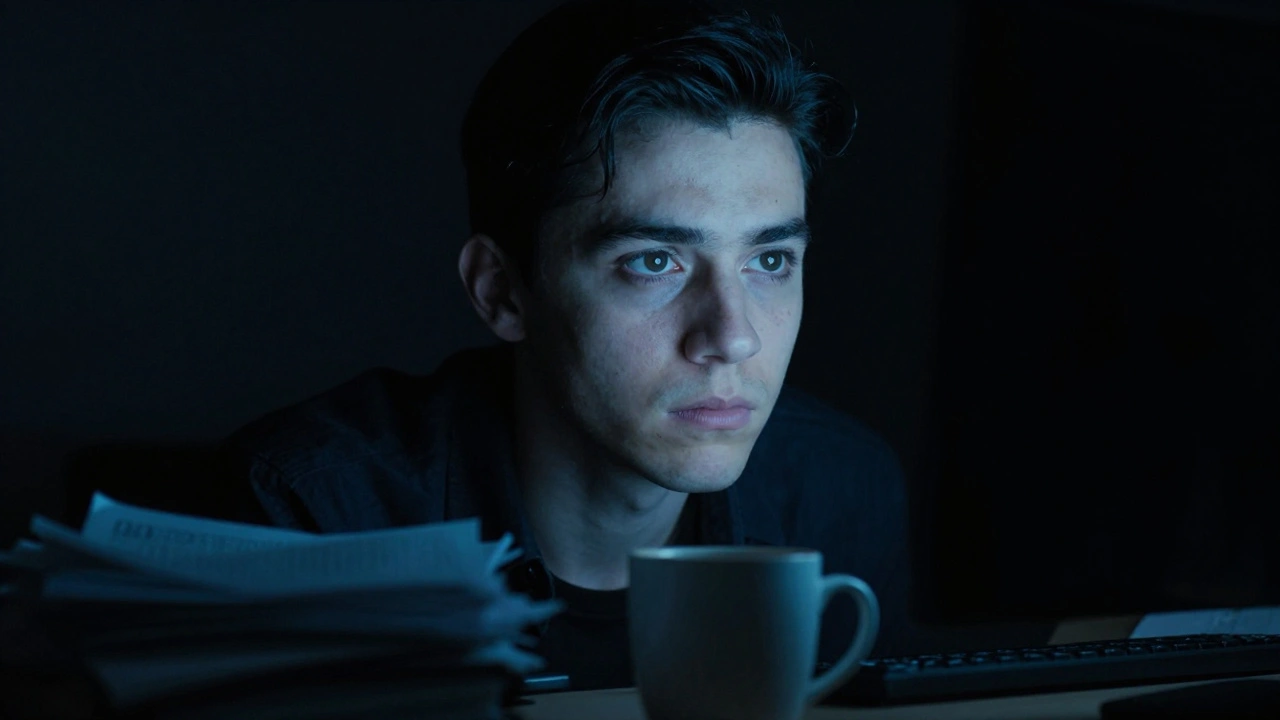
You’ve been staring at the screen for hours. The boss fight in your favorite RPG is impossible, but you keep trying anyway. You’re not doing it because you love the challenge; you’re doing it because the alternative-facing a pile of unpaid bills, a toxic work environment, or just the crushing weight of loneliness-is worse. This isn’t just "playing games." This is using video games as a primary mechanism to avoid dealing with real-world stressors. It’s a trap that feels like relief until it becomes a cage.
We often hear about gaming addiction as if it were a moral failing or a lack of willpower. But modern psychology points to something more complex: maladaptive coping is a strategy that provides immediate relief from distress but causes long-term harm. When stress hits, our brains crave a dopamine hit to neutralize the cortisol spike. Games are engineered to deliver exactly that. The problem arises when gaming stops being a hobby and starts being the only way you can function emotionally.
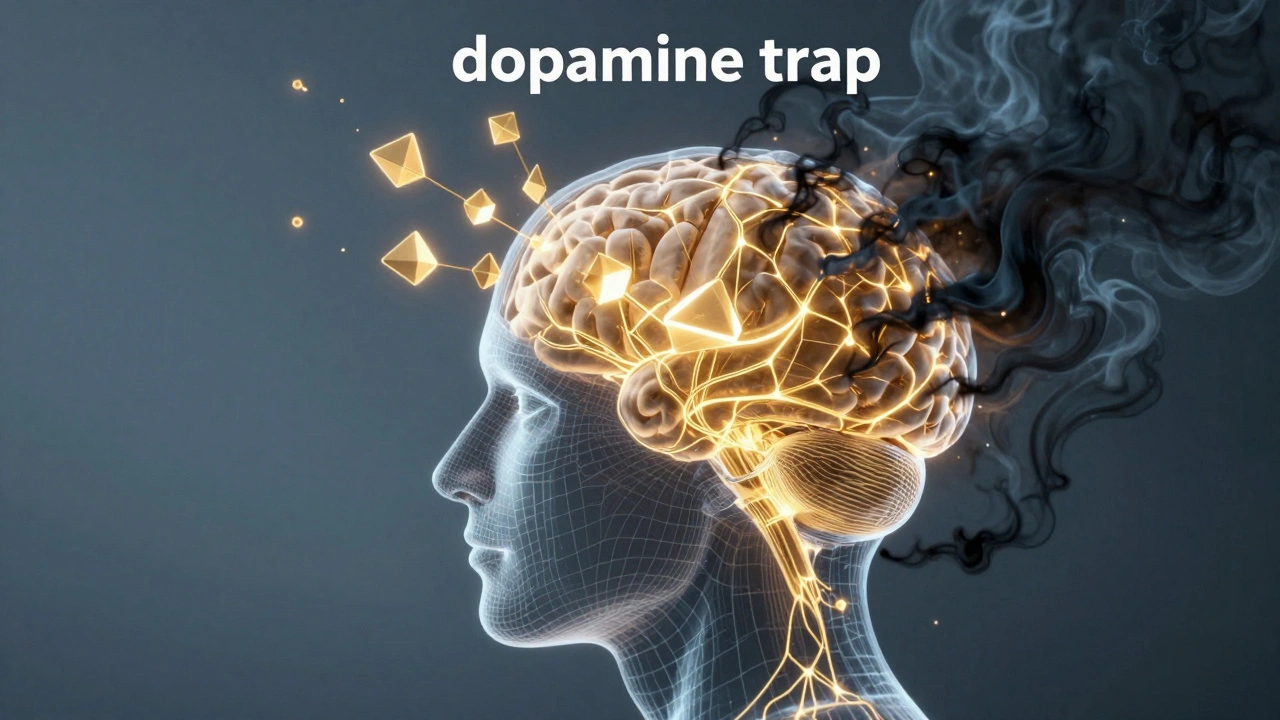
The Dopamine Trap: Why Games Feel Like Relief
To understand why we turn to screens when life gets hard, we have to look at brain chemistry. Stress triggers the release of cortisol, which puts your body in a state of high alert. Your heart races, your muscles tense, and your mind loops through worst-case scenarios. Now, imagine logging into an online shooter or a cozy simulation game. Within minutes, you’re focused on a clear objective. You shoot an enemy, you build a house, you complete a quest. Boom. Dopamine.
Dopamine is a neurotransmitter associated with pleasure, reward, and motivation. In the context of gaming, this chemical reward is predictable and controllable. In the real world, rewards are messy. You might work hard on a project and get fired. You might try to make friends and get rejected. In a game, effort usually equals progress. This predictability is addictive for a stressed brain. It offers a sense of agency that reality has stripped away.
This creates a feedback loop known as the escape-reward cycle is a behavioral pattern where avoidance leads to temporary relief, reinforcing the avoidance behavior. You feel stressed → You play to escape → You feel better temporarily → Real-life problems worsen → You feel more stressed → You play more. Over time, the threshold for satisfaction rises. You need longer sessions and more intense games to achieve the same level of numbness.
Signs You Are Using Games to Avoid Reality
It’s easy to dismiss heavy gaming as just a passion. Many people are passionate gamers who maintain healthy lives. The difference lies in function. Is gaming adding joy to your life, or is it subtracting pain? Here are concrete signs that your gaming habits have shifted from recreational to maladaptive:
- Time distortion: You plan to play for one hour, but three hours vanish without you noticing. You lose track of meals, sleep, or hygiene.
- Emotional regulation dependency: You cannot handle negative emotions (anger, sadness, anxiety) without immediately opening a game. If your internet goes down during a stressful day, you panic or rage.
- Neglect of responsibilities: Bills go unpaid, chores pile up, or work performance drops because gaming takes priority. You justify this by saying you’ll "catch up later," but "later" never comes.
- Social isolation: You cancel plans with friends or family to stay online. Virtual interactions feel safer than real ones because they are low-stakes and reversible.
- Irritability when interrupted: Being asked to stop playing triggers disproportionate anger or withdrawal. This is a sign of psychological dependence.
If you recognize these patterns, it doesn’t mean you’re broken. It means your current coping toolkit is insufficient for the stress you’re facing. Gaming became the band-aid because no other solution was available or effective at the time.
The Psychology of Control and Competence
Why do we choose games over exercise, meditation, or talking to a friend? Often, it’s about control. Psychologist Carol Ryff’s model of psychological well-being highlights "personal growth" and "environmental mastery" as key components of health. When you feel powerless in your job, relationship, or financial situation, your sense of environmental mastery plummets.
Games restore this sense of mastery. In Minecraft, a sandbox video game allows players to build structures and explore procedurally generated worlds. You can create order out of chaos. In competitive titles like League of Legends, a multiplayer online battle arena game features strategic team-based combat requiring skill and coordination. You can prove competence through rank and stats. These virtual achievements provide a hit of self-efficacy that real life denies you.
However, this is a false equivalence. Virtual competence does not translate to real-world resilience. In fact, it erodes it. Every hour spent leveling up a character is an hour not spent building skills, fixing relationships, or solving practical problems. The gap between your virtual success and real-world stagnation widens, increasing shame and driving you further into the game.
Breaking the Cycle: Practical Steps to Reclaim Agency
Quitting cold turkey rarely works. If gaming is your primary stress reliever, removing it without replacing it leaves you vulnerable to a crisis. You need a phased approach that addresses both the habit and the underlying stress.
1. Identify Your Triggers
Keep a simple log for one week. Note what happened right before you felt the urge to game. Was it a critical email? A lonely evening? A feeling of boredom mixed with anxiety? Understanding the trigger helps you address the root cause rather than just the symptom. For example, if loneliness drives your gaming, joining a local club or calling a friend might be a healthier substitute than an MMO raid.
2. Implement Friction
Make gaming harder to start. Delete shortcuts, log out of accounts, or move your console to a less accessible room. Behavioral psychologists suggest that adding even small barriers can break automatic habits. Use apps like Freedom, a productivity software tool that blocks access to distracting websites and applications across devices. to enforce limits during work or study hours.
3. Replace, Don’t Just Remove
You need new sources of dopamine and control. Start small. Go for a 10-minute walk. Cook a simple meal. Read a physical book. These activities offer lower intensity rewards than gaming, but they build real-world competence. Over time, your brain rewires to find satisfaction in tangible achievements.
4. Seek Professional Support
If your gaming is severely impacting your life, consider therapy. Cognitive Behavioral Therapy (CBT) is particularly effective for addressing maladaptive coping. Therapists can help you develop healthier emotional regulation strategies and tackle the underlying issues causing your stress.

Gaming vs. Other Coping Mechanisms
| Strategy | Immediate Relief | Long-Term Impact | Skill Building |
|---|---|---|---|
| Gaming (Maladaptive) | High | Negative (Isolation, Neglect) | Low (Virtual only) |
| Exercise | Medium | Positive (Health, Mood) | High (Discipline, Endurance) |
| Meditation | Low/Medium | Positive (Mindfulness, Calm) | Medium (Focus, Awareness) |
| Socializing | Medium | Positive (Connection, Support) | High (Communication, Empathy) |
| Creative Hobbies | Medium | Positive (Expression, Pride) | High (Creativity, Patience) |
Notice how gaming ranks high in immediate relief but fails in long-term impact. This is the hallmark of maladaptive behavior. Healthy coping mechanisms may require more effort upfront, but they compound positively over time.
Reframing the Narrative: From Addiction to Adjustment
Stop calling yourself an "addict." Labels stick and can become self-fulfilling prophecies. Instead, view your gaming habit as a misguided attempt to cope. You weren’t weak; you were adapting to stress with the tools you had. Now that you recognize the cost, you can choose better tools.
Remember, balance is the goal, not abstinence. Many adults enjoy gaming responsibly. The key is intentionality. Play because you want to, not because you need to escape. Set boundaries. Check in with your emotions. And if you slip up, don’t spiral. Progress is rarely linear.
Your life is happening offline. The quests there are harder, the graphics aren’t as polished, and there are no respawn buttons. But the rewards are real. Connection, purpose, and peace of mind cannot be downloaded. They must be built, one difficult, beautiful day at a time.
How do I know if my gaming is harmful?
If gaming interferes with your work, relationships, health, or daily responsibilities, it is likely harmful. Pay attention to whether you use games to avoid emotions or tasks. If stopping causes significant distress or anger, it may indicate dependency.
Can gaming ever be a healthy coping mechanism?
Yes, in moderation. Gaming can be a great way to relax, socialize, and solve problems. It becomes unhealthy when it is the exclusive or primary method for dealing with stress, leading to neglect of other life areas.
What are some alternatives to gaming for stress relief?
Physical exercise, mindfulness meditation, creative hobbies like painting or writing, spending time in nature, and connecting with friends or family are all effective alternatives. These activities promote long-term well-being rather than just temporary distraction.
Does quitting gaming cold turkey work?
Cold turkey often fails because it removes the coping mechanism without providing a replacement. A gradual reduction combined with developing new healthy habits is usually more sustainable and effective for long-term change.
When should I seek professional help for gaming addiction?
Seek help if you cannot reduce your gaming despite wanting to, if it causes severe conflict in your relationships, or if it leads to depression, anxiety, or physical health issues. Therapists specializing in behavioral addictions can provide tailored support.