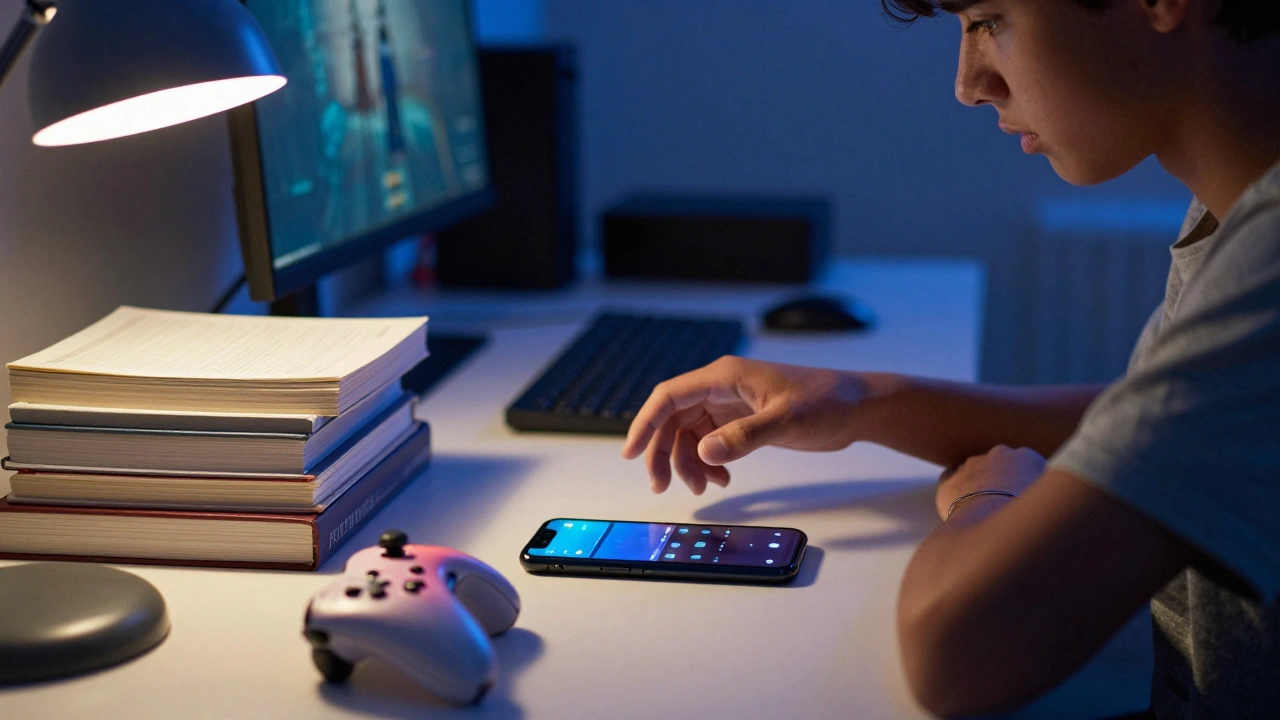
The Dopamine Trap Breaking Your Focus
You sit down at your desk with a stack of textbooks. You tell yourself you have two hours of reading ahead. Ten minutes later, your thumb taps the notification sound on your phone. You decide to check Discord. Suddenly, twenty minutes have vanished into a random raid lobby. By dinner, you haven't opened a single book. This isn't laziness. It is a chemical conflict happening in your brain.
Video Game Overuse creates a feedback loop where high-reward activities make low-stimulation tasks feel painful. When we play competitive games, our brains release neurotransmitters like dopamine constantly. Winning a match gives us a hit. Solving a puzzle gives us a hit. Losing even triggers engagement. Compare this to opening a history textbook. There is no immediate reward. The feedback is delayed until the exam week.
Your brain has been trained to prefer the instant gratification of gaming. Fixing this requires rewiring how you seek reward. You are not broken; your reward system is just currently calibrated for entertainment rather than education. To get your life back, you need to understand that study habits require a different type of fuel than gaming does.
Understanding the Reward Gap
Most people try to force themselves to study immediately after quitting a long gaming session. They sit there, staring at notes, feeling miserable. Why? Because your baseline expectation for stimulation is too high. Imagine running a marathon after sitting in a car for six hours. Your muscles aren't ready. Your attention span works the same way.
We need to look at the mechanics of attention. When you game, you are actively engaging multiple senses. Visuals, sound, touch, strategy. Studying often involves passive reading or writing. The switch is jarring. The gap between these two states creates frustration. This is where many students give up and return to the screen. They think they lack discipline, but they actually lack a transition protocol.
| Activity | Dopamine Trigger | Sustained Effort Needed | Reward Delay |
|---|---|---|---|
| Gaming | Immediate (Visual/Audio) | High Intensity | Minutes |
| Studying | Delayed (Understanding) | Low Intensity/Steady | Weeks/Months |
This table illustrates why switching is so hard. The effort feels similar, but the payoff timeline is different. You cannot expect your brain to treat them equally. You must bridge the gap by lowering the barrier to entry for studying.
Rebooting Your Brain Chemistry
The first step in repairing your routine is a reset period. You don't need to quit gaming forever, but you do need a pause button. A digital detox isn't about suffering; it is about recalibration. During this time, aim for three days of zero screen-based gaming. Not social media, not videos, not controllers. Just real-world interaction.
What should you do instead? Boring things help. Read a physical book. Go for a walk without headphones. Organize your room. These activities lower your arousal level. When your brain stops expecting constant visual fireworks, mundane tasks start to feel manageable again. This is the foundation. Without lowering your baseline, any attempt to study will feel like torture.

Building a Friction-Free Study Environment
Once you have calmed the storm, you need to set up an environment where studying is easier than gaming. If your gaming controller is right next to your keyboard, you will lose. You must separate the zones physically.
- Create a Dedicated Desk: Only allow books and pens on the surface. No monitor other than the study one.
- Phone Jail: Put your phone in another room. Silence notifications completely.
- Visual Cues: Keep your study materials visible. If the textbook is hidden in a bag, you won't start.
This concept is called friction management. Every second you save searching for distractions is a second spent working. Make the bad habit hard and the good habit easy. If you want to check social media, make yourself stand up and walk five feet to do it. That small act of inconvenience breaks the autopilot mode.
The Pomodoro Transition Method
You cannot jump straight to three-hour study blocks. Your attention span is damaged. Use the Pomodoro Technique a time management method using intervals. It was designed for exactly this reason.
- Set a timer for 15 minutes. Yes, fifteen. Not twenty-five yet.
- Work until the timer rings.
- Take a 5-minute break. Stand up. Stretch. Look away.
- Repeat four times, then take a longer break.
Why start at 15? Because success breeds momentum. When you finish 15 minutes of focused work, your brain registers a win. This releases a small amount of dopamine naturally. Over weeks, you can increase the interval to 25 or 45 minutes. Never force your mind to hold focus beyond its current limit or you will burn out and revert to gaming.

Managing the Withdrawal Sensations
When you stop gaming for hours, you might feel restless. You might itch to grab the controller. This is withdrawal. It feels like boredom, but it is actually neurochemical demand. Acknowledge the feeling. Tell yourself, 'This is my brain craving sugar.' Then drink water. Wait 20 minutes. The urge will fade.
Many students fail because they mistake restlessness for lack of motivation. It is not laziness. It is a biological reaction to sudden removal of high-stimulation inputs. Be kind to yourself during these moments. Push through the discomfort window, and usually, the urge passes within an hour.
Long-Term Sustainability and Balance
The goal here is not to become a robot who never plays games. Gaming is fun and can be relaxing. The issue was overuse disrupting your primary responsibilities. Once you have rebuilt your discipline, you can reintroduce gaming as a reward.
Set strict rules for your return. For example, one hour of gaming is allowed only after four hours of focused schoolwork. You must enforce this. Do not let guilt consume you if you slip up. Life happens. Just restart the timer immediately. Consistency matters more than perfection. A week of perfect habits followed by a crash is less effective than steady progress with occasional minor bumps.
Finally, track your progress. Keep a log of study sessions. Seeing the numbers add up provides a different kind of satisfaction than a virtual achievement. You are building real skills that last a lifetime, not just skins or ranks.
How long does it take to fix gaming addiction?
It typically takes 21 to 30 days to reset your dopamine baseline. However, full behavioral change depends on consistency. Most students see significant improvement in focus within two weeks of reducing screen time and introducing structured study blocks.
Can I still play games while studying?
You should not play games while studying. Gaming is a high-focus activity that competes for the same cognitive resources needed for learning. Treat gaming as a scheduled break, not a background habit.
What if I feel anxious when I can't game?
Anxiety during withdrawal is common. Try physical exercise to burn off nervous energy. Engage in hobbies that involve hand movements, like drawing or cooking, to occupy your mind without screen stimulation.
Is deleting games the best solution?
Deleting games helps reduce temptation, but it does not teach discipline. Better to limit access through parental controls or timers, so you learn to manage the habit yourself in the long run.
How do I stay motivated when the material is boring?
Connect the material to real-life outcomes. Remind yourself that this knowledge leads to specific goals like a career or travel. Use active recall techniques like flashcards to make studying interactive rather than passive reading.